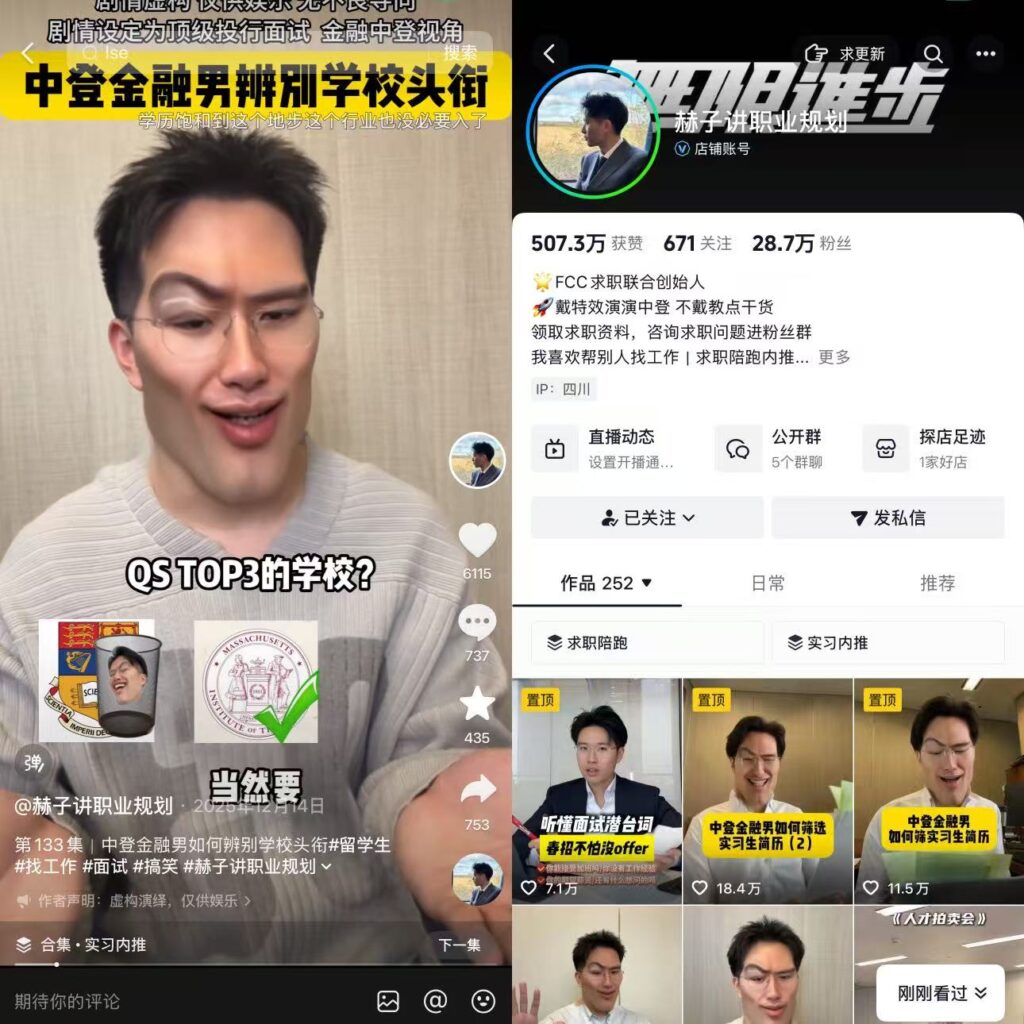
“Rebecca! Put him in the talent pool!” This sentence has become iconic across Douyin , also know as Chinese Tiktok. Who’s rebecca? Why put him in the talent pool? This trend all started with a content creator named “Hezi”, who has been giving hints that Chinese students who studies abroad never spend effort in school works and wouldn’t be competitive in the job markets in his content. He often post plots of some students who study overseas get rejected in the job market. And all of a sudden, there’s a trend on this platform laughing, making fun of the international students, leaving comments like “useless”, “spoiled rich kids” under their posts. And this kind pf emotion spread so wide that even I have experienced it myself, by receiving 300+ comments and 100k viewers on my post about receiving the offer from USYD.
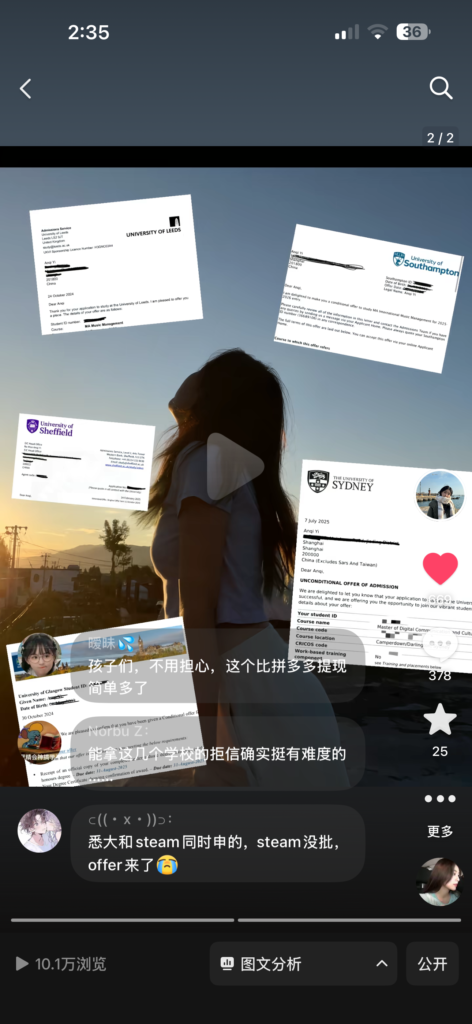
Now you probably gets confused by this phenomenon, how can international students suffer from hate speech, how can this even happen? As hate speeches were normally against the what so called “minority groups”, and when it comes to this term, you’re probably thinking about groups of people like racial minorities or LGBTQ+ people. But the truth is, anyone of us could suddenly become the target group of hate speech. Just like a sentence I really like — “nobody can ever be in a main stream”, its crucial to notice that all of us could suddenly become a what so called “vulnerable group”. And that’s why such thing like hate speech should be combated.
I’m writing this blog to discuss and analyze the case that Chinese overseas students suffering from hate speech in digital platforms. And before we start, I would like to justify that the term “Chinese overseas students” means Chinese students who studied overseas, instead of International students who study in China.
Defining hate speech
According to Gelber (2017), hate speech takes place in public, targets the the group of people defined as “systemically marginalized group” — a community that faces long-term, institutional exclusion in society.
In the meantime, the speaker usually has authority or power over the targeted group or field of discussion. This power can be formal, informal, or structural. This power lets the speech normalize and spread harmful, discriminatory ideas.
Also, hate speech is an act of subordination. It reinforces structural inequality by setting unfair limits on what marginalized people can say or how they can be heard. It silences the target group, makes their oppression feel “normal”, and harms their safety and dignity.
And once we have defined hate speech by analyzing its target group. Its obvious that the Chinese overseas students are eligible to be called “systemically marginalized group” by the following reasons:
1: The content creator who took the lead of this trend has gained high authority in field
2: The right to argue for themselves has been taken away for Chinese overseas students.
The speakers spreading hate speech hold informal and structural power. Douyin influencer Hezi, now has over 280k followers and over 5 million like in total. By using labels like “Australian overseas students” to describe the entire group; his videos claiming “studying abroad is just spending money to buy degrees” gained millions of views via Douyin’s algorithm, which favors controversial content—this is informal power. Structurally, platform algorithms and a social atmosphere of emotional venting allow such speakers to spread harmful ideas, as seen when netizens and some media followed Hezi’s lead to exaggerate “low-quality overseas student” cases, normalizing prejudice.
Also, this hate speech acts as an act of subordination, silencing overseas students and reinforcing inequality. When Chinese students at Imperial College London protested the anonymous account’s discriminatory posts and demanded an apology, they only received a perfunctory response, failing to eliminate harm. Most overseas students, busy with studies abroad and don’t have energy to participate online debates, in this way their voices are drowned out. And if they do, the quantity can’t compete with the massive netizens who spread hate speech. This silence normalizes their oppression, making derogatory labels and discrimination common in online spaces, further reinforcing their marginalized status.
Even if most of these contents appears in forms of jokes, teasing, or casual comments, its sheer volume still causes harm to the reputation and mental health of international students. As it has now become a trend, when these negative remarks keep appearing again and again, it gradually build up a exclusionary atmosphere, where the public was immersed in this opinion. What seems harmless to one person can feel over whelming when thousands of people say the same thing. Over time, these constant jokes and sarcastic comments erode students’ sense of security and their ego. Even if no single post is severely aggressive, the collective effect leaves them feeling attacked, isolated, and unvalued. As a result, many international students suffer from anxiety, self-doubt, and emotional stress that cannot be
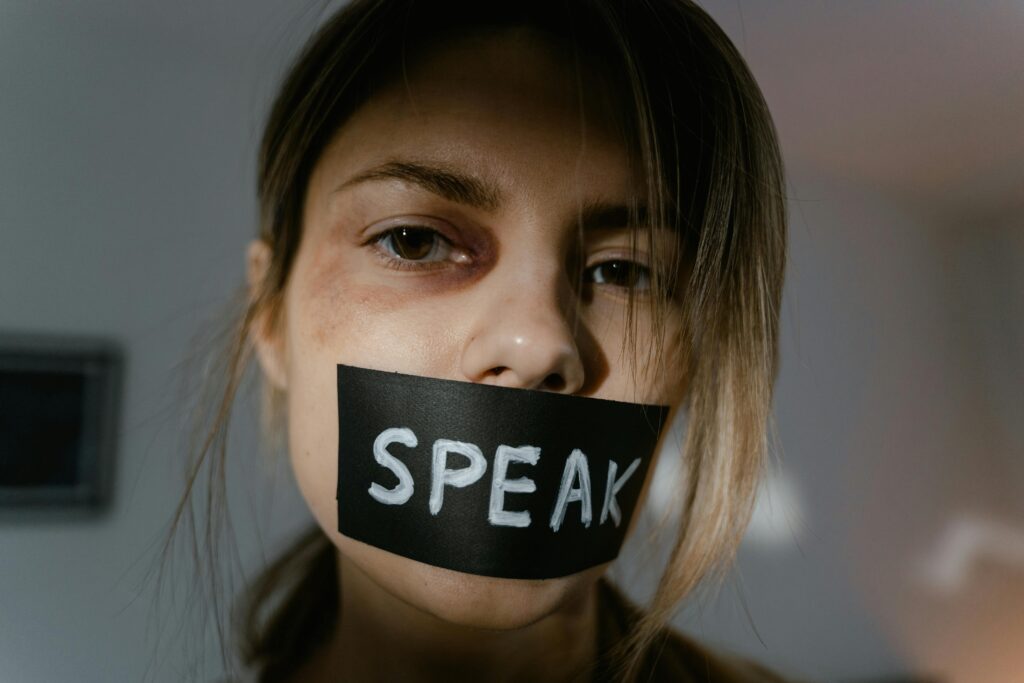
Credit:https://www.pexels.com/zh-cn/photo/7699377/
Three main types of hate speech
Hate speech against international students in China may rooted in multiple deep-seated social and psychological factors. By analyzing the contents about hate speech against overseas students that I scrolled in the digital platforms, I catagorized them into three main types.
First of all, its the psychological imbalance being enlarged by this digital platform. With the background of limited domestic educational resources and competitive job market in the country. A lot of people at home see international students as taking up unfair advantages. They think these students are skipping the cutthroat Gaokao (aka college entrance test) and domestic job competition, grabbing top-tier overseas education resources that “should have not belong” to them, and even coming from wealthy families that buy their way into good schools. This sense of unfairness brews resentment, and people carried out with angry words to express that frustration and anxiety.
Then there’s the problem of stereotypes and labeling. Social media love to share extreme, one sided stories: a student posting a vacation photo gets called “a spoiled rich kid”, someone sharing an opposite idea that they learned in foreign countries may be labeled as “unpatriotic”. This hating atmosphere negative all their words and thoughts, even if its just a objective facts, as long as it comes out from a oversea student’s mouth, its got negative label. As a result, hardly anyone talks about the late night spend on essays, the language barriers, and the homesickness. These oversimplified labels stick. When students share new perspectives or lifestyles from abroad, they just dismiss them as “foreignized” or “out of touch”, instead of seeing it as normal growth from living in a new country.
On top of that, there comes a brand new perspective of judging international students, that “its a waste of time and money”
The widespread social anxiety has pushed people to vent on easy targets. Between intense academic pressure, tough job markets, and the stress of keeping up with peers, many people feel stuck and upset. And so they transfer their anxiety about financial problem into the digital platforms. International students become an easy scapegoat–they’re a visible group that’s different, so it’s simple to direct all that frustration at them. And let’s not overlook online anonymity–hiding behind a username makes people feel no accountability. They can say cruel things they’d never say face-to-face, and hateful posts spread fast because they spark drama, drawing more people into the bashing (Zhang, 2023).
How does jokes become hate speech
Although we have identified these contents as hate speech, but it does start as a sense of humor. And although these hate speech has always been there on digital platforms, it was never a such strong trend. According to my observation, there’s two main reason contributing to it.
The first one is the fact that the number of international students has increased to a large extend ever after the pandemic. And the second one is the first content creator(Hezi) that observe people’s attention on international students. These two factor both contribute the this situation.
After the pandemic, the number of Chinese students studying abroad rebounded rapidly and expanded on a large scale, which first brought them widespread social attention. Then, Douyin influencers like Hezi took the lead in making related content, further pushing this group into the public eye, and finally making the topic of overseas students a hot focus of online attention.
According to statistics from the Overseas Chinese Affairs Office Of The State Council, “In 2025, the number of Chinese students returning from overseas studies reached 535,600, while the number of students going abroad exceeded 570,000 during the same period.”(Ministry of Education of the People’s Republic of China, 2026)
This rapid expansion made overseas students no longer a small and rare group, of people, but a common phenomenon that people often hear about. Such a big change naturally attracted public attention, while the young generation love posting contents online—discussions about overseas students became more and more frequent on social media, and people began to pay more attention to their study and life.
However, the key factor that made overseas students gain massive social attention was Douyin influencers like Hezi. He took the lead in releasing videos mocking and labeling overseas students. By using exaggerated filters and sarcastic tone, his contents went viral. As said “humour was both controlled and controlling and masculine hegemonic power was reinforced through extreme and offensive humour (Plester, 2013).” And in the meantime, by kept using this formula to produce contents “making fun of” overseas students, together with the help of Douyin’s algorithm, which favors controversial content, his videos quickly got a lot of views, likes and comments, becoming popular on the platform. In this stage, his words became not just jokes, but a kind of hate speech, although there were no direct insulting vocabularies.
On the other hand, thinking from the platform audit perspective, it haven’t been that smart to tell whether its a joke or hate speech, “Facebook continues to find it challenging to detect and respond to hate speech content across dynamic speech environments, multiple languages and differing social and cultural contexts…(Sinpeng et al., 2021)”,same as Douyin. As the saying goes “comedy is the art of being offensive”, this subtle differences makes it really difficult to tell the difference when it comes to platform cencorship.
As Hezi’s videos became popular, more and more netizens began to pay attention to the topic of overseas students. Related topics often appeared on Douyin’s hot search list, attracting more people to participate in the discussion. Hezi continued to release similar content to attract traffic, and other netizens also followed to post related comments and videos. This formed a cycle: the more attention the topic got, the more content was created, and the more content there was, the more social attention it attracted.
In short, the rapid expansion of the number of overseas students after the pandemic laid the foundation for them to gain social attention, while influencers like Hezi took the lead in creating controversial content and the platform algorithm promoted its spread. Together, these factors made overseas students a hot topic that received widespread social attention.
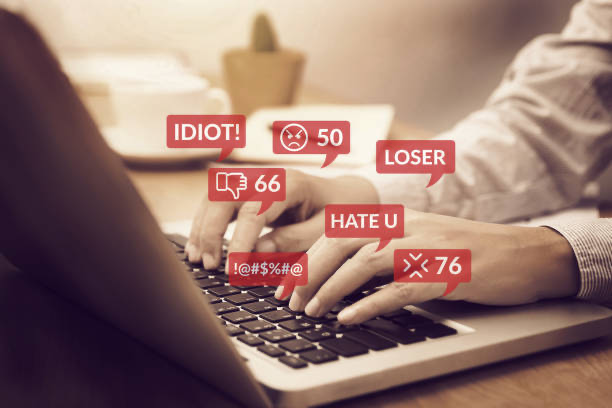
Credit:https://www.pexels.com/zh-cn/search/hatespeech/
Humor can be used for control and to reinforce power, and people are often afraid to speak up against these “jokes” for fear of being ridiculed. The line between jokes and hate speech is blurry, and platforms like Douyin struggle to detect this subtle form of hate speech due to its reliance on context, language, and cultural nuances.
Influencers are using sarcasm and exaggerated content, with algorithms that supports controversial posts, can make these “jokes” go viral, spreading , and normalizing harmful ideas.
And most importantly, anyone could become the victim of hate speech, especially on digital platforms, where information spread so fast. We definitely don’t want a future worrying everyday about being attacked online while taking advantage of the digital era.
And that’s why we should take this topic seriously, and I encourage everyone to speak up whenever they feel like they’re experiencing hate speech.
References
References
1. Gelber, K. (2017). Hate speech and democracy: Race, gender, and the politics of free speech. Cambridge University Press.
2. Plester, B. (2013). When is a joke not a joke? The dark side of organizational humour. ANZAM 2013 Conference Proceedings
3. Sinpeng, A., Martin, F., Gelber, K., & Shields, K. (2021). Facebook: Regulating hate speech in the Asia Pacific. University of Sydney and University of Queensland.
4. Ministry of Education of the People’s Republic of China (2026). 535,600 returning students, a new record high! This cohort of overseas students “vote with their feet”. Guancha.cn. Retrieved from http://www.gqb.gov.cn/news/2026/0410/61974.shtml
5. MART PRODUCTION. (n.d.). Woman with mouth taped shut representing hate speech awareness[Photograph]. Pexels. https://www.pexels.com/zh-cn/photo/7699377/
6. Pexels. (n.d.). Hate speech [Image collection]. https://www.pexels.com/zh-cn/search/hatespeech/
Be the first to comment