When “Woke Games” Turned into a Collective Siege
The Sweet Baby Inc. Controversy and the Chaos It Reflects in Gaming Culture
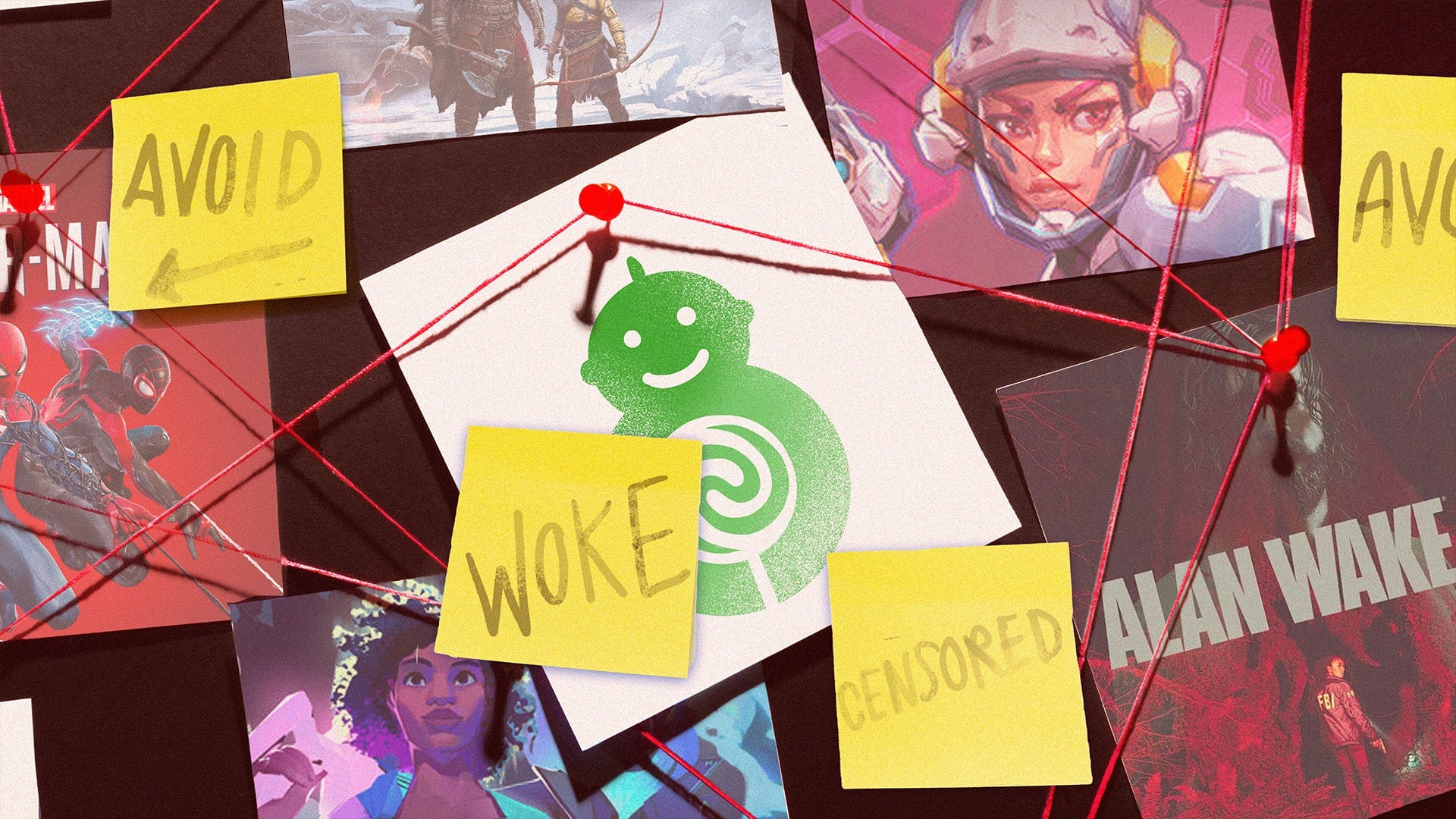
In 2024, a small company called Sweet Baby Inc. suddenly became a massive target online. Sweet Baby is a narrative consulting firm that primarily assists game studios with storylines, characters, and issues of diversity and representation. But online, it has taken on a much greater significance: it has become a symbol of everything certain players despise about “woke games.” Recent reports have detailed how the company and its employees became the focal point of a massive backlash, facing wave after wave of angry posts, conspiracy theories, and harassment. (Farokhmanesh, 2024; Francis, 2024).
This is not a story about whether Sweet Baby should be shielded from criticism. It should not be protected. People have the right to dislike games, and the right to dislike storylines, characters, and creative trends. The real question is: why do debates about diversity in gaming so often devolve from rational discussion into harassment?
This is precisely why this case matters. Sweet Baby is not the whole problem; it is merely a vivid microcosm of a broader issue. Inclusion of minority groups in the gaming industry has consistently been viewed as a threat. Online platforms have fueled the spread of this atmosphere. And the people most deeply affected are often those expected to silently endure it all. (Shaw, 2011; Massanari, 2017; Nissenbaum, 2018; Sinpeng et al., 2021).
This has never been about just one company

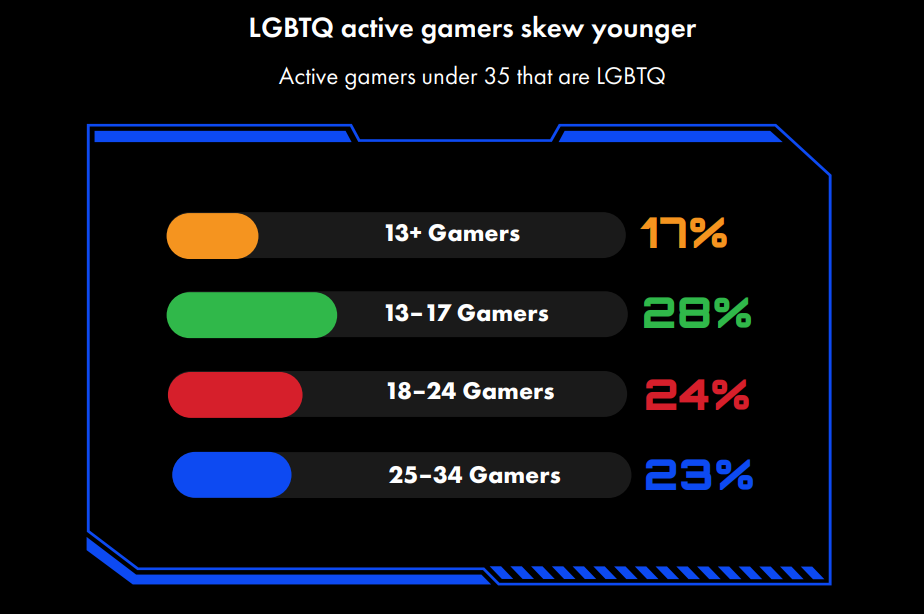
The intense backlash surrounding Sweet Baby did not occur within a calm, inclusive cultural environment. It emerged in a gaming world where harassment is already commonplace, particularly against those viewed as “outsiders.” GLAAD’s 2024 Gaming Report reveals that 52% of LGBTQ players reported experiencing harassment while gaming online. The report also found that 42% of players have avoided a game because they anticipated being harassed, while 27% have quit a game for the same reason. These figures are significant because they demonstrate that abuse in gaming is far from mere background noise. It shapes who feels safe participating and who believes staying away is the safer choice. (GLAAD, 2024).
This phenomenon confirms the experiences of many players firsthand. While the gaming world is often described as an open, welcoming community, in reality, not everyone feels equally included. For some, joining a match, using voice chat, posting on forums, or simply being visible as a queer, transgender, female, or non-white person can carry additional risks. Therefore, when controversies like “Sweet Baby” erupt, they do not land in a neutral space, but rather in a cultural environment where many already know that “visibility” invites hostility.
This is crucial because it shifts the lens through which we interpret the situation.
Sweet Baby did not “cause” the gaming community to become hostile. What makes this backlash significant is how quickly pre-existing tensions can erupt. Once a topic touches on gender, race, sexual orientation, or inclusivity, it easily transcends a mere artistic debate and evolves into a struggle over “who belongs here.”
Who counts as a “real gamer”?
One reason this phenomenon occurs so frequently is that the label “gamer” is still not viewed as neutral. Adrienne Shaw’s article offers valuable insights on this. Her point is not merely that women, queer people, and people of color play games too, but that “playing games” and “identifying as a gamer” are not the same thing. Some people, despite playing games extensively, still feel that the label does not apply to them. Shaw found that gender particularly influences this perception; many women and gender-diverse players are less likely to identify as gamers, even when gaming is clearly a significant part of their lives. (Shaw, 2011).

This is crucial because it shows that “gamer” is not just about your behavior, but also about the image that comes to mind when people hear the word—an image that is often too narrow. Shaw argues that the solution is not merely to prove that marginalized groups also buy and play games—because that still treats them as a special, peripheral audience. Her core argument is that we need to examine how the gaming industry is structured and who it has regarded as its core from the very beginning. (Shaw, 2011).
For some gamers, this isn’t merely a consulting firm doing routine industry work; it feels like proof that games are being altered by outsiders. Consequently, the source of the anger lies not merely in a company’s suggestions regarding plot or characters, but in who holds the right to shape games, whose values are prioritized, and who feels at home within gaming culture.

This is precisely why debates about diversity in the gaming industry are so sensitive. These debates are rarely solely about plot, dialogue, or design. Beneath these surface-level disputes often lies a deeper struggle over identity. Some players still act as if games inherently belong to certain specific groups of people, and not to others. Once this mindset takes root, even the slightest change can be perceived as an intrusion.
Why Do These Disputes Spread So Rapidly?
Adrienne Massanari’s research on Reddit and Gamergate remains highly relevant. She points out that the platform not only accommodates toxic culture but actively fuels its growth. In her research, Reddit’s voting system, the way content spreads across communities, the ease of creating new groups, and the platform’s lenient handling of offensive content all combined to amplify the presence of anti-feminist and misogynistic groups, making them more visible. She refers to these patterns as “toxic technoculture.” (Massanari, 2017).
This perspective aligns closely with the “Sweet Baby” incident. The essence of the matter was not merely that a large number of users happened to take offense at the same thing at the same time. The more critical issue lay in how these reactions spread. One angry post became ten, ten became screenshots, screenshots became memes, and memes became videos. Subsequently, these videos and discussion threads create the illusion of a massive, common-sense consensus that this company is “the problem.” The initial frustration quickly escalates into a movement.

This is precisely one of the reasons people often underestimate the role of platforms. They view harassment as a behavior triggered entirely by individuals. Of course, individuals matter, but the surrounding systems are equally important. Platforms make certain content easier to replicate, spread, and transform into collective sentiment. A comment that might have once existed only in a corner of the internet can now be endlessly recycled, tied to a specific target, and used to incite more people to join the same wave of anger.
In this sense, the problem lies not merely in the existence of hostile speech, but in the fact that such speech is amplified by systems designed for speed, visibility, and instantaneous response. This is why the backlash surrounding gaming issues feels so overwhelming. It is not simply a matter of “wrong views,” but of how easily those wrong views can spread.
Why Context Matters
Here, Helen Nissenbaum’s perspective offers an unexpected insight. Although she is discussing privacy rather than gaming, her theory of “context” applies equally well here. Her core argument is that we should not judge online behavior solely based on what platforms allow, what companies want, or what industry norms dictate. While these factors are certainly important, they are far from sufficient. We must also ask: What kind of social space is this? What values does it uphold? What kinds of behavior make sense here? (Nissenbaum, 2018).
For the gaming industry, this is a far better approach than the tired old questions. Too many people defend ugly online behavior by claiming, “That’s just how the internet works,” “People are just debating,” or “Platforms can’t control user speech.” But these responses are all too superficial. Just because a phenomenon spreads quickly doesn’t mean it’s healthy; just because a platform can accommodate certain content doesn’t mean it should become the norm; and just because anger drives clicks doesn’t mean it helps build a better culture.
If we view games as social spaces, a more meaningful question is: what kind of culture should games foster? They should be able to accommodate differences, criticism, and debate, but they should also support the gaming experience, engagement, creativity, and community cohesion. Once this standard is established, those common excuses fall flat. A culture where certain groups are viewed as intruders the moment they reveal themselves is not “passionate”—it is toxic.

Context also helps us understand why the same phrase can take on different meanings in different situations. Phrases like “forced diversity” or “politics in games” may sound like ordinary criticism when taken in isolation. But when they appear repeatedly within a flood of comments that portray women, queer people, or ethnic minorities as the culprits responsible for declining game quality, their meaning shifts. It is no longer merely a complaint; it gradually evolves into a means of pushing certain people to the margins of the culture.
The Problem with “Just Criticizing”
This is perhaps the most challenging aspect of this topic, as people tend to swing to extremes. On one hand, everything is dismissed as hate; on the other, everything is defended as “just an honest opinion.” Neither reaction is helpful.
Not all complaints about diversity are motivated by hatred. Not all players who dislike a particular character or story have ulterior motives. People have the right to think a game is clumsy, preachy, shallow, or poorly written. A healthy cultural environment should accommodate these voices.

But boundaries still exist, and they are crucial. Normal criticism sounds like this: “I don’t think this character is well-developed,” or “I don’t like how this theme was handled.” In contrast, inflammatory rhetoric sounds like this: “These people are ruining games,” “Kick them out of the industry,” or “The gaming world is being taken over.” At this point, the target of the attack is no longer just the work itself, but the very existence of certain people.
This is why the “Sweet Baby” incident is so significant. It reveals just how quickly a “discussion” can devolve into something far uglier. Once public discourse shifts from “I don’t like this creative choice” to “people like this shouldn’t even be here,” the substance of the conversation is no longer about the game itself. It becomes a question of who is considered a legitimate participant in gaming culture. (Farokhmanesh, 2024).
Why Content Moderation Always Misses the Mark
Another reason this issue keeps resurfacing is that platforms often struggle to address this kind of hostility. The Facebook/APAC report offers an explanation. The report notes that harmful speech is deeply influenced by language, culture, and context, and when platform rules are too broad, detached from reality, or overly general, they often fail to recognize the harm involved. The report also found that administrators of LGBTQ+ groups are often forced to handle hateful content on their own, and the platform’s lack of response leads to “report fatigue”—where people feel that reporting is futile and eventually choose to stop reporting altogether. (Sinpeng et al., 2021).

This perspective applies very well to the gaming industry. Much of the harmful content in games does not appear particularly severe on its own. It might be a joke, a meme, repeated insults, or a hypocritical “concern” for diversity. A single comment may not seem serious. But a hundred comments pointing in the same direction can quickly create a hostile atmosphere. Platforms are often better at detecting obvious abuse but struggle to address this slow and persistent exclusion.
This creates a deeply unfair dynamic. The targets are often the very people expected to block, report, explain, and endure it all. They must prove the harm exists while they’re in the thick of it. Meanwhile, the bystanders can treat the whole thing as entertainment. This is one reason why these moments feel so exhausting. The heaviest burden falls on those who are least able to ignore it.
The More Subtle Consequence: People Choose to Withdraw
The impact doesn’t always result in sensational public scandals. Sometimes, it’s more subtle. Some stop using voice chat; some stop posting in community spaces; some stop signing their names to public work; some decide that participating in discussions simply isn’t worth the stress.
GLAAD’s data confirms this phenomenon of withdrawal. Many LGBTQ players report avoiding or leaving games due to harassment. This means the harm extends beyond the emotional realm. It alters who remains visible within gaming spaces. It changes who speaks up, who creates, who participates—and who quietly disappears. (assets.glaad.org) (GLAAD, 2024).

This is precisely one of the cruxes of the problem. Exclusion isn’t always overt, nor does it necessarily manifest as bans or rules. Sometimes, it works by making participation more taxing for certain people than for others. If you can make someone feel that the cost of “staying here” is high enough, there’s no need to expel them outright.
What lessons should we draw from this?
The lesson of the Sweet Baby Inc. incident isn’t that people should stop criticizing games. The real lesson is that the gaming industry still doesn’t know how to prevent criticism from escalating into a mob attack. (Shaw, 2011; Massanari, 2017; Nissenbaum, 2018; Sinpeng et al., 2021).
Taken together, the conclusion is quite clear. The reason inclusivity for minority groups in the gaming industry sparks such intense controversy is not that diversity itself is divisive, but because gaming culture still harbors outdated assumptions about “who truly belongs in this circle,” and platforms have amplified the spread of these assumptions, while content moderation mechanisms are often too weak to address the actual hostility that exists effectively.
Sweet Baby did not create this problem; it merely made it more glaringly obvious
Reference List
Farokhmanesh, M. (2024, March 14). The small company at the center of “Gamergate 2.0.” WIRED. https://www.wired.com/story/sweet-baby-video-games-harassment-gamergate/
Francis, B. (2024, March 11). Why are Valve and Discord permitting harassment against Sweet Baby Inc.? Game Developer. https://www.gamedeveloper.com/business/why-are-valve-and-discord-permitting-harassment-against-sweet-baby-inc-
GLAAD. (2024). The state of LGBTQ inclusion in video games. https://assets.glaad.org/m/5ab9a335d607edcd/original/2024-GLAAD-Gaming-Report.pdf
Massanari, A. (2017). #Gamergate and The Fappening: How Reddit’s algorithm, governance, and culture support toxic technocultures. New Media & Society, 19(3), 329–346. https://doi.org/10.1177/1461444815608807
Nissenbaum, H. (2018). Respecting context to protect privacy: Why meaning matters. Science and Engineering Ethics, 24(3), 831–852. https://doi.org/10.1007/s11948-015-9674-9
Shaw, A. (2011). Do you identify as a gamer? Gender, race, sexuality, and gamer identity. New Media & Society, 14(1), 28–44. https://doi.org/10.1177/1461444811410394
Sinpeng, A., Martin, F., Gelber, K., & Shields, K. (2021). Facebook: Regulating hate speech in the Asia Pacific. University of Sydney & University of Queensland.
Be the first to comment