Have you ever noticed that when you browse the web or watch short videos, you usually receive a push recommendation video or an advertisement related to the topic you were discussing with a friend on other applications, and wondered if your phone was listening in? I’m sure most mobile phone users have experiences like this to some extent. There is no doubt that these are all the result of artificial intelligence (AI) and algorithmic systems working behind the scenes. Or perhaps some of you have experienced having your job application rejected by a AI system within just a few seconds. When such things happen, people are easily able to imagine artificial intelligence as a super-intelligent brain, which can process all manner of data generated by our daily activities with flawless logic, without understanding the full picture of it. In this blog post, I will guide you step by step to reveal the mysteries of artificial intelligence, automation and the data systems behind them. Artificial intelligence is not an independently operating agent; it is profoundly influenced by human labour and the large-scale consumption of environmental resources on our planet. By understanding the various myths we have been fed, we hope to begin calling for better digital governance and to regain control in this digital-driven world.
Myth: The ‘Clever Hans’ Illusion

Picture from: https://en.wikipedia.org/wiki/Clever_Hans
First, let us travel back to the late nineteenth century to meet a horse named Hans; this will help us better understand our current misconceptions about artificial intelligence. Crawford (2021) records this remarkable horse in his book ‘The Atlas of AI: Power, Politics, and the Planetary Costs of Artificial Intelligence’. At that period, this horse from Germany was highly popular across Europe. The horse was said to be able to solve math problems, tell the time, and even spell out words by tapping its hooves on the ground. Subsequently, huge crowds were attracted to watch Hans’s performances, while the trainer of Hans truly believed that he had unlocked the animal’s ability to calculate. However, a scientific investigation committee finally uncovered the truth: Hans did not possess the capability of mathematical calculation. Instead, the horse was able to accurately pick up on the questioner’s unconscious body language, posture and breathing signals, and would immediately stop tapping the ground the moment people displayed the subtle expression of relief that came with finding the correct answer. In the 21st century, artificial intelligence acts as the horse named Hans. We are all amazed by its capabilities the first time we encounter it. Just like Hans, AI systems cannot independently process relatively complex problems, but based on the clues and data we input into the AI platform, they can output the content we desire. We cannot view artificial intelligence as possessing an independent, entirely objective mind, just like humans. On the contrary, it is concrete and material, composed of natural resources, fuel, human labour, history and classification.
Fuel: The End of Data and Privacy
Although we now understand that the core of artificial intelligence is fueled by large amounts of data, we must acknowledge that the pace of its development has indeed far exceeded our imagination. But how did we reach this stage? Who is supplying such vast amounts of data to artificial intelligence? News reports frequently highlight how every aspect of our digital communications is being indiscriminately mined for information. What exactly is behind this?
Flew (2021) mentions that everyone places great importance on privacy protection, but people often simply click ‘accept all’ when browsing the web or encountering pop-up windows without hesitation. This is because the technology industry has created an environment where it is almost impossible to refuse. Digital service terms and conditions are often vague, offering users only an ‘all or nothing’ choice. As these documents grant digital platform operators absolute discretion, it is difficult for users to give a truly informed and free agreement (Flew, 2021). How many of us have been frustrated by the intricate details and tiny font size of a website’s privacy policy? If you choose to accept everything, there is a risk that your personal data could be leaked without you realising it; yet if you choose not to accept one or two of the terms, you will be unable to browse the website properly.
Moreover, valuable data frequently bypasses existing privacy laws to enter the databases of tech giants directly. As we use social media platforms, the digital traces we leave behind, such as search histories, likes and shares, are directly processed by algorithms and converted into ‘fuel’ for artificial intelligence. Flew (2021) created the concept of ‘surveillance capitalism’ to describe this system: our human experiences are unilaterally treated as free raw materials, fed into machine intelligence, and used to guide and control our behaviour in ways that are profitable.

Picture from: https://mashable.com/article/anthropic-used-mostly-ai-to-build-claude-cowork-tool
In recent months, numerous news reports have emerged regarding generative AI companies, and the most notable one has been the case that The Guardian (2025) reported involving AI giant Anthropic and book authors over the unauthorised use of copyrighted books to train AI models. Consequently, the authors succeeded in the lawsuit, reaching a massive settlement of $1.5 billion with Anthropic company. The company was accused of scraping and downloading vast quantities of copyrighted works on a massive scale without permission to train its large language models. Meanwhile, an increasing number of companies are bringing legal action over AI piracy issues; giants such as Disney and Universal Studios are also accusing AI image-generation companies like Midjourney of using copyrighted images in their creations.
In the Anthropic case, we can see this as a victory for the protection of human digital labour and a restriction on AI companies. For a long time, AI companies have treated the entire internet, including the digital output of ordinary people, such as articles and photographs. AI companies seem to see these resources as infinite and free, freely browsing and learning from our digital properties. However, the substantial damages awarded to the book author in this case demonstrate that AI’s ‘intelligence’ is entirely built upon the unpaid exploitation of humanity’s digital labour. Yet, these resources have now shifted from being free to being subject to payment; AI companies must pay a suitable price for the fruits of ordinary people’s labour. For when our privacy and intellectual property are absorbed into algorithmic black boxes without consent, so-called ‘AI progress’ is a form of digital piracy on an epic scale.
Cost: Losses to the Earth and Humanity
Picture from: https://en.wikipedia.org/wiki/Hyperscale_computing
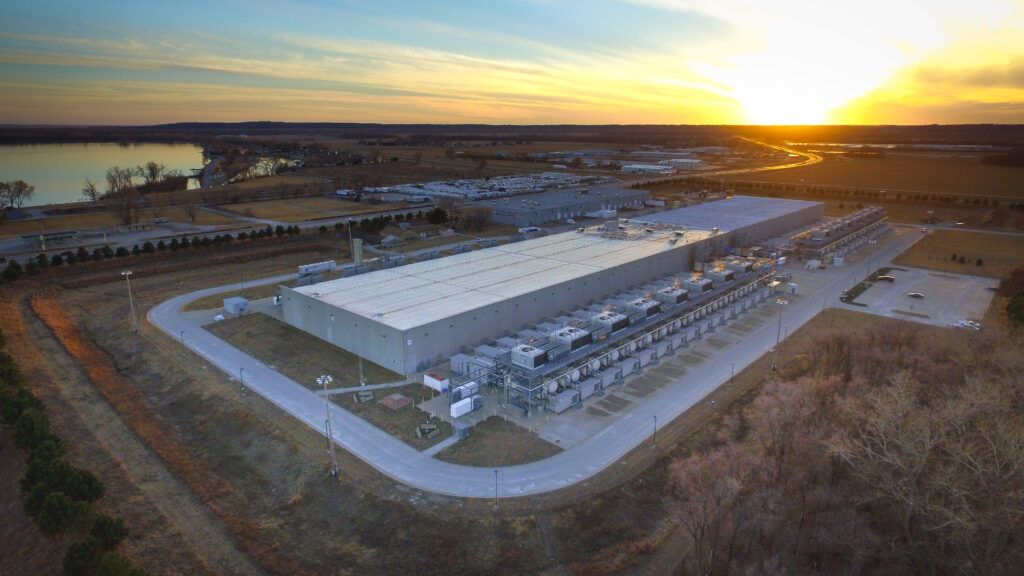
Of course, the operation of artificial intelligence is inseparable from the consumption of vast amounts of energy, and a significant number of researchers have begun to investigate the extent of the damage caused by AI companies’ mining of the Earth’s existing resources. For example, Luccioni et al. (2023) conducted a comprehensive life-cycle assessment of the large language model known as BLOOM. They found that training this single model alone emits approximately 50.5 tonnes of carbon dioxide, a figure that already accounts for equipment manufacturing and energy-based operational consumption. These expansive systems require millions of GPU hours of compute time for training and consume vast amounts of electricity. Although some researchers, such as Patterson et al. (2022), believe that the adoption of advanced hardware and geographical optimisation measures may ultimately help stabilise and further reduce the carbon footprint of machine learning, the current expansion of gigawatt-scale artificial intelligence is placing immense pressure on the environment.
A simple AI prompt you type into your phone may correspond, in the physical world, to a bottle of fresh water that has simply evaporated, and greenhouse gases released into the atmosphere. AI’s ‘intelligence’ is built upon an extremely crude physical extraction from nature. These environmental impacts are related to our future livelihoods.
Impact: Community Livelihoods and Environmental Crisis
Currently, technology companies are rushing to construct ‘hyperscale’ AI data centres to process the vast amounts of data required by new AI models, but local communities are rising in opposition.
The Guardian (2026) reported that in early 2026, the National Association for the Advancement of Coloured People (NAACP) and local residents launched a Clean Air Act lawsuit against Elon Musk’s xAI company over the construction of its new ‘Colossus’ mega-data centre in Memphis, Tennessee. To keep this vast AI brain running, xAI has installed more than 30 natural gas turbine generators on-site. These generators not only emit large quantities of greenhouse gases and harmful exhaust fumes, but also generate industrial noise levels as high as 105 decibels (equal to a jet plane flying overhead). The communities bearing this pollution are low-income, marginalised groups in the area, which already face extremely high rates of asthma.

Picture from:https://www.nrdc.org/stories/ai-boom-stressing-grid-it-doesnt-have-be-way
Similarly, Southern Environmental Law Centre (2026) reported that some community groups in Stokes County, North Carolina, launched a major lawsuit seeking to block a large-scale development project known as the ‘Delta Project’. Local authorities have rezoned nearly 2,000 acres of farmland for use as a site for a hyperscale AI data centre, which makes local residents feel fear. This is because maintaining these large AI servers requires millions of gallons of water for cooling, a vast number of diesel generators, and unimaginable amounts of electricity, and all of these will bring severe air and noise pollution to the peaceful rural community, threatening people’s living environment.
Such lawsuits are becoming increasingly frequent. As The Associated Press (2026) reported, US Congress members introduced the ‘AI Data Centre Construction Moratorium Act’ in recent weeks. This piece of legislation aims to impose a nationwide pause on the construction of all new AI data centres until robust environmental, privacy and worker protection measures are in place. As the lawmakers have pointed out, a single AI data centre may consume as much electricity as 100,000 households, which would not only drive up utility costs for ordinary citizens but also consume local water resources.
Future: Regaining Control
The increasing engagement of AI systems in our daily lives and work seems inevitable, but this is not absolutely. Due to the rapid development of AI technology, the convenience and regulation of AI are currently controlled by a small, privileged elite, such as those who work on Wall Street and in Silicon Valley. Currently, we have no way of knowing how many resources AI consumes or how much of our private data it accesses. Therefore, we must formulate a series of policies to address this issue, ensuring transparency and openness.
When we treat AI as magic, we are effectively sending AI companies a free pass to abuse our personal data and natural environment at will. The protests and lawsuits occurring in 2026 serve as a warning bell, reminding us that we must stop deifying AI. Just like the clever horse Hans, AI is performing a trick, which is an extremely complex one driven by human intervention. When we remove the veil of mystery, we see energy consumption, pollution emissions and the misuse of personal data, which are the true driving forces behind AI tools. The resources consumed by this ‘fuel’ are far more precious, so we must formulate policies that treat data protection and environmental conservation as issues inherently linked to the development of artificial intelligence. Only in this way can we curb the unrestricted power currently held by AI enterprises.
Reference lists:
Crawford, K. (2021). The Atlas of AI: Power, Politics, and the Planetary Costs of Artificial Intelligence. Yale University Press.
Flew, T. (2021). Issues of Concern. In T. Flew, Regulating platforms (pp. 79–86). Polity.
Luccioni, A. S., Viguier, S., & Ligozat, A.-L. (2023). Estimating the carbon footprint of BLOOM, a 176B parameter language model. Journal of Machine Learning Research, 24(253), 1–15. https://jmlr.org/papers/volume24/23-0069/23-0069.pdf
Patterson, D., Gonzalez, J., Holzle, U., Le, Q., Liang, C., Munguia, L.-M., Rothchild, D., So, D. R., Texier, M., & Dean, J. (2022). The Carbon Footprint of Machine Learning Training Will Plateau, Then Shrink. Computer, 55(7), 18–28. https://doi.org/10.1109/MC.2022.3148714
Southern Environmental Law Center. (2026). A rural community steps up to stop data centers. https://www.southernenvironment.org/news/a-rural-community-steps-up-to-stop-data-centers/
The Associated Press. (2026). Sanders, Ocasio-Cortez push bill to impose AI data center moratorium. AP News. https://apnews.com/article/data-centers-ai-electricity-sanders-aoc-65651bd28c3d911d18eeb46cd54f4c75
The Guardian. (2025). AI startup Anthropic agrees to pay $1.5bn to settle book piracy lawsuit. https://www.theguardian.com/technology/2025/sep/05/anthropic-settlement-ai-book-lawsuit
The Guardian. (2026). ‘A different set of rules’: Thermal drone footage shows Musk’s AI power plant flouting clean air regulations. https://www.theguardian.com/environment/2026/feb/13/elon-musk-xai-datacenters-air-pollution-mississippi
Be the first to comment