
It Is Not Just About Bad Users
Online hate speech is often discussed as mainly caused by the publication of offensive content by a few harmful users, but this explanation is too simple. The research cited in this article shows that the situation is more complicated:
social media platforms are not only carriers of hate speech, but also help shape hate speech so that it can spread, become more widespread and integrate into the normal daily environment.
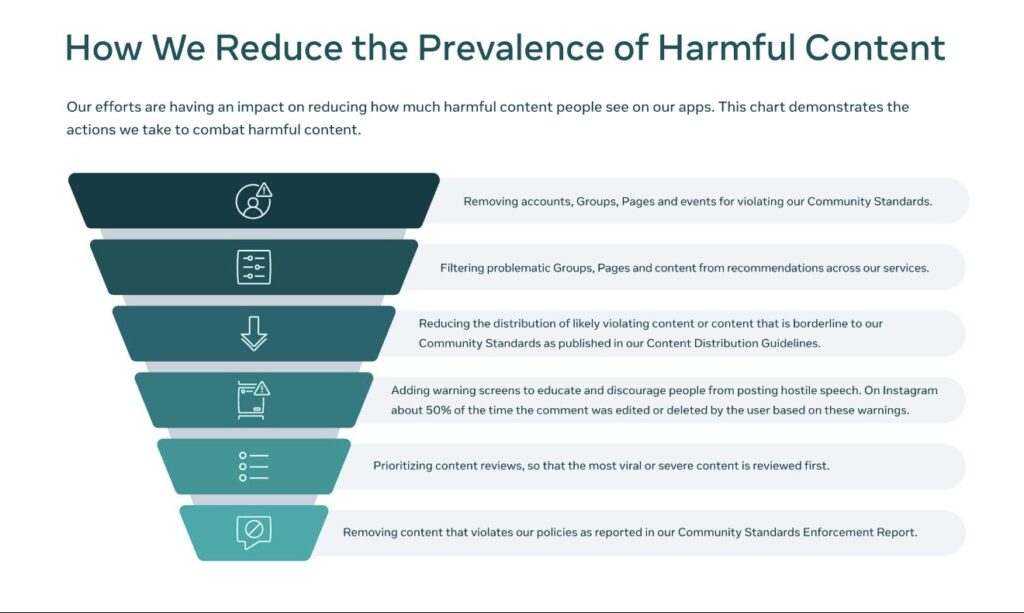
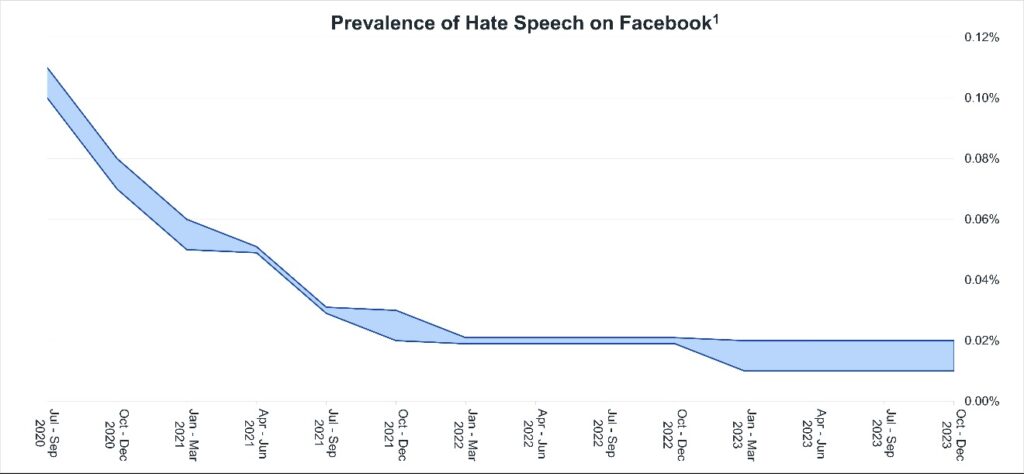
Terry Flew regards governance as inherent in the power of the platform itself in his book Regulating Platforms, which means that content review is not just a technical task, but also involves who makes the rules and how to implement them. These rules and whose interests are prioritized and so on. Research by Sinpeng and his colleagues on Facebook in the Asia-Pacific region shows that hate speech largely depends on language, culture and local background, so a single content review model cannot be equally effective everywhere. Adrienne Massanari’s research on Reddit shows how platform design, algorithm ranking and community structure support harmful online culture, not just fail to stop them. Overall, these research results show that online hate speech is not only about bad content. This also involves systems that make it easier to generate, spread and get rewards for harmful content. This article believes that platforms can reduce some hazards through content review, but their existing systems are often still creating conditions for online hatred to breed.
Source:Meta Transparency Center
A useful entry point is platform governance. Flew’s book is valuable because it regards the platform as an institution with actual power, rather than just a passive carrier that carries users’ comments. This is very important: because once the platform becomes an institution, the decision-making about sorting, screening, labeling and content deletion is essentially a governance behavior. In practice, this means that content review is never just a neutral service hidden in the user agreement, but a social and political mechanism that determines what users can see and cannot see. The core problem is that platform companies often pretend that content review is just a “pure technical problem” and is only used to filter harmful content. However, relevant research shows that review always reflects a set of specific standards with strong rules, positions and human judgment: what is acceptable speech, acceptable risks, and what It is an acceptable user. This is particularly crucial in the discussion of hate speech, because the boundary between “harmful” and “allowable” speech is rarely consistent in different languages, cultures and political environments. A rule that seems clear in the English context may become vague, one-sided or even invalid in other scenarios. Therefore, the real problem of governance is not whether the platform should intervene, but whether its actions are transparent, responsible and flexible enough to adapt to the needs of diverse communities.
Why Facebook Struggles With Context
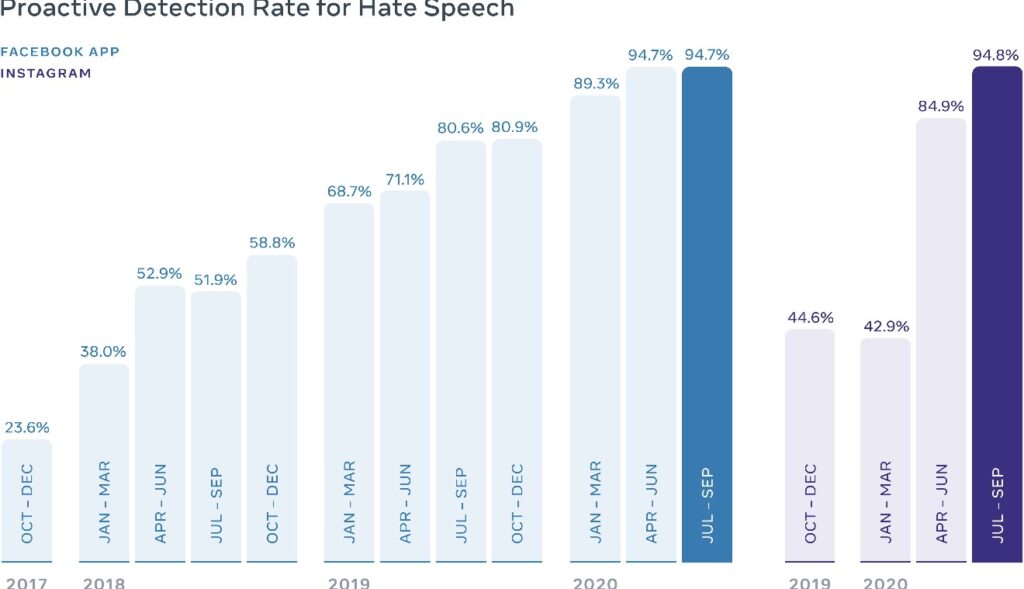
The Facebook report released by Sinpeng and his team made this issue more specific. The report investigates how Facebook deals with hate speech in the Asia-Pacific region and emphasizes the importance of local context in identifying harm. The public summary points out that the report analyzes hate speech on Facebook’s public homepage, especially the content related to the LGBTQ+ group, and suggests more consultation with the groups affected by abuse, while improving the audit mechanism. This is very important, because hate speech is sometimes not clear at a glance. It may appear through secret language, local expression, political slogans or obscure and inflammatory speech, which is difficult for automated systems to identify. For example, in some parts of Southeast Asia, hate speech against LGBTQ+ groups often uses insulting words with specific cultural colors or expressions with religious metaphors, which cannot be identified by global English audit tools; in Australia, targeted abuse against aborigines is often used with local colonial history. The relevant historical insulting words and obscure expressions cannot be marked by ordinary automation systems. The pursuit of a large-scale audit model has the best effect on harmful content that is easy to classify, but the most harmful content is often the most difficult to classify.
Therefore, the report reveals a major limitation of platform governance: if the platform does not understand the local meaning, it may mistakenly delete the content and miss the most harmful content, or even both at the same time.
From this perspective, this report is not only a case study on Facebook, but also proves that online hatred cannot be solved by applying a single universal audit model to all social and political environments.
Source:Meta Transparency Center
When Platform Design Makes Things Worse
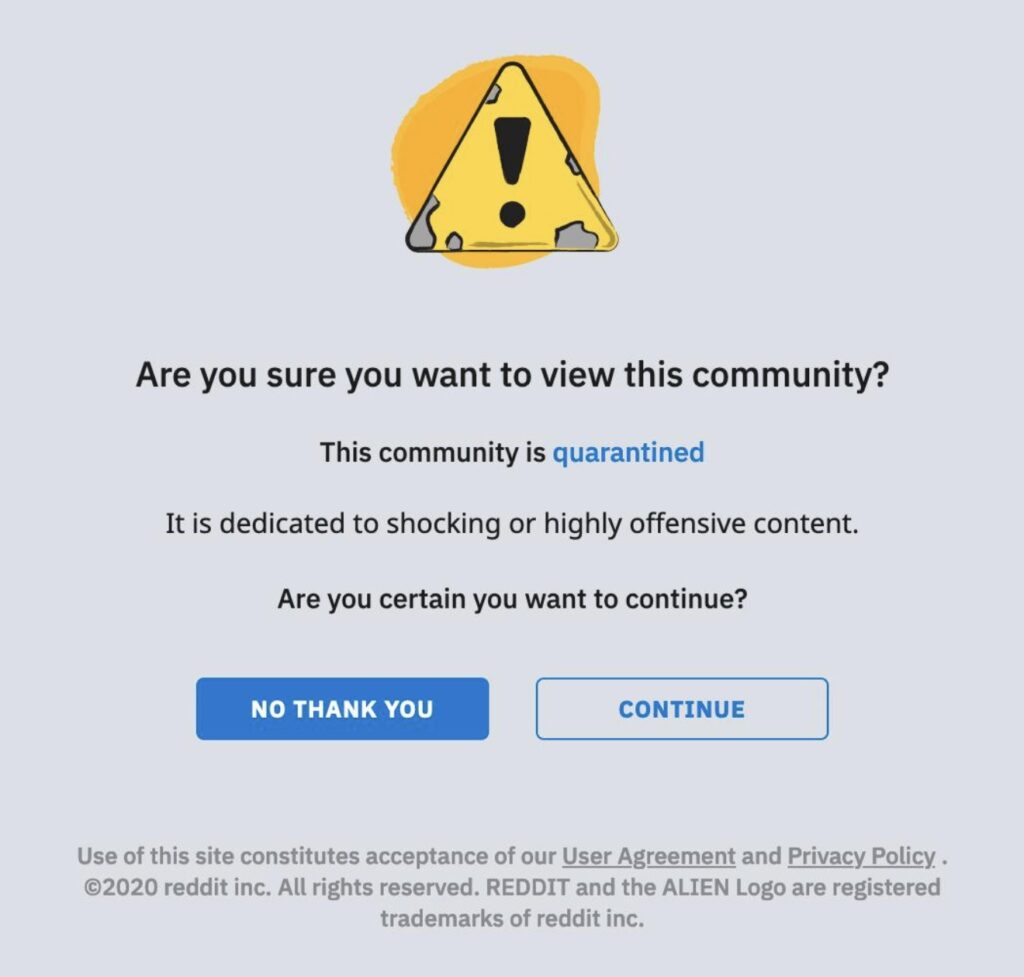
Massanari’s article on Reddit adds a new dimension to this argument, because it shows that the harmful network culture is not only a failure of the audit mechanism, but also a design-level problem. Her research on #Gamergate and The Fappening pointed out that the design, algorithm structure and platform rules of Reddit have invisibly contributed to a bad technical culture. The article specifically mentions that Reddit’s karma points system, the content aggregation mechanism of each sub-section, the convenience of creating new sub-sections and user accounts, the governance structure, and the relevant policies for offensive content, all of which provide fertile soil for anti-feminist and misogynistic activities. This is very important, because it will break away from the model of simply blaming individuals, but begin to focus on the problems of the platform itself. If a platform rewards attention, dissemination speed, repeated posting and extreme emotional expression, even if the platform claims not to encourage hateful content, hateful or inflammatory content will get higher exposure.
In other words, the platform may not intend to promote hatred, but the system it builds may benefit from it.
Massanari’s research helps to explain why deleting a post or an account often does not solve the problem. The deeper problem lies in the structure of the platform environment – it is this structure that allows such posts to be rewarded, disseminated and spread repeatedly.
Source:Reddit Help Center
This more macroscopic structural perspective is supported by a broader research literature on cyber racism and hate speech. The systematic review and commentary of Matamoros-Fernández and Farkas’ combing the latest progress in the study of racism and hate speech in the field of social media. This is crucial because it shows that the field is increasingly seeing cyber hate as a recurring platform problem rather than a series of isolated events. This change of perspective is very important for evaluating solutions. If hate speech is regarded as a rare individual phenomenon, then obviously the best countermeasure is to delete the content and punish the account. But if hate speech is understood as a problem in the platform architecture, then the solution must be more comprehensive. It needs to include transparency, context expertise, and attention to the most affected social groups. At the same time, we must face the fact that the auditing behavior itself may also cause harm. Excessive deletion will suppress the voice of marginalized groups, and insufficient deletion will expose them to harm.
Therefore, the relevant literature makes us realize that content review is not the final solution, but only a tool in the broader governance problem.
One of the reasons why this problem is so difficult is the scale. A platform that serves millions or even billions of users must make corresponding audit decisions very quickly, and the speed is often not conducive to careful judgment and context distinction. Another reason is the incentive mechanism. Platform enterprises are expected to protect users from harm, but they also benefit from attention and user participation. This contradiction is crucial, because hatred and anger are very conspicuous forms of content that easily trigger interaction. Even if the platform deletes some obvious abusive content, it may still benefit from this overall rule that makes the conflict profitable. This is also the reason why these documents can confirm and complement each other: Flew helps to explain the institutional power behind platform decision-making, Massanari shows how platform design can give rise to bad culture, and Sinpeng and others show that when the local context and local meaning are ignored, the platform execution often It will be invalid. In the end, a governance system that seems to be strong on paper but is actually very fragile. The platform can come up with community norms, reporting tools and automation systems, but these tools can only operate effectively when they are supported by manual judgment, local context knowledge, and willingness to modify the platform’s own preset premises.
Source:Reddit Help Center
What This Means for Everyone Online
This discussion also involves issues at the democratic level. The harm of hate speech lies not only in insulting or intimidating individuals, but also reshaping the public participation space, making some people feel afraid to speak out, not being seen or unwelcome. Once this happens, the damage will go far beyond the original post itself. It will affect who can participate in public discussions, whose voices are valued, and which communities can feel safe and continue to stay in cyberspace. For this reason, it is too one-sided to simply attribute this issue to the conflict between freedom of speech and censorship. The more meaningful question is whether the current platform environment supports the meaningful participation of all people, or whether it will selectively tolerate harm to vulnerable groups. Facebook’s relevant report is particularly useful in this regard, because it shows that communities that have become the target of hate speech often do not receive sufficient support from the platform and hope for fuller consultation. This points to a realistic revelation: content review cannot rely only on top-down design, but must include the opinions of the group that are most likely to be attacked. Otherwise, even if the platform claims to be solving the problem, the most affected users will still be exposed and helpless.
The strongest response, then, is not to imagine that one policy can eliminate online hate completely. Instead, platforms need governance that is more transparent, more accountable, and more responsive to context. That means clearer reporting processes, more consistent enforcement, better communication about moderation decisions, and more investment in human reviewers who understand local languages and cultural references. It also means acknowledging that platform design is part of the issue. If ranking systems reward controversy, if community structures isolate users into hostile enclaves, and if moderation tools are too blunt to distinguish harm from context, then the platform itself will keep creating the very conditions that keep producing the problem. Flew’s account of regulation helps show why this cannot be left entirely to companies; Matamoros-Fernández and Farkas show that the issue belongs within a wider field of social media research on racism and hate; Massanari shows how platform systems can nurture toxic cultures; and Sinpeng et al. show that moderation has to be sensitive to regional and community differences. The strongest conclusion is therefore not that platforms are powerless, but that their power must be made accountable.
If platforms helped create the environment in which hate spreads, then they cannot be treated as neutral referees in fixing it.
They are part of the problem, and they must be part of a more responsible solution.
The last revelation is that the discussion about hate speech should not be simply reduced to the “good behavior” of the platform. A more reasonable way of thinking is to think from the perspective of common responsibility. Platforms need to establish mechanisms that amplify less abuse and harm, but the government, researchers and civil society are also responsible. Flew’s research is important because it reminds us that regulation is not simply a question of yes or no, but about what kind of digital environment we want to create. In this sense, the goal should not be to build a completely pure Internet, because it is not realistic. The goal should be to build an environment with less harm: in such a platform environment, communities can report misconduct, auditors can understand the specific context, and harmful patterns can be detected before upgrading. These documents do not think that content review is useless, but point out that for a huge structural problem, review alone is far from enough. This is the most important point to remember when thinking about online hate speech. It’s easy to follow the worst posts, but it’s more difficult and necessary to pay attention to the systems that continue to produce these contents.
References
Flew, T. (2022). Regulating platforms. Polity Press.
Massanari, A. (2017). #Gamergate and the Fappening: How Reddit’s algorithm, governance, and culture support toxic technocultures. New Media & Society, 19(3), 329–346. https://doi.org/10.1177/1461444815608807
Matamoros-Fernández, A., & Farkas, J. (2021). Racism, hate speech, and social media: A systematic review and critique. Television & New Media, 22(2), 205–224. https://doi.org/10.1177/1527476420982230
Sinpeng, A., Martin, F., Gelber, K., & Shields, K. (2021). Facebook: Regulating hate speech in the Asia Pacific. The University of Sydney. https://doi.org/10.25910/j09v-sq57
Be the first to comment