
Figure 1 from https://www.linkedin.com/pulse/tiktok-douyin-8-major-product-differences-richard-heathcote/
Have you ever opened any social media applications just to scroll for a minute and then suddenly realised that you have been there far longer than you meant to? It usually starts as a simple, casual choice. But before you know it, the app becomes a nonstop stream of videos that feel perfectly matched to your interests. Whether it is entertainment or everyday life content, the platform keeps bringing you more of what you just watched. It feels effortless and fun, and sometimes it can even feel a little addictive. That raises a bigger question: Are we really picking what we watch, or are these platforms quietly nudging our choices?
What makes this happen is the recommendation system that decides what shows up on your screen. TikTok and Douyin use algorithms that react to what you do. They pay attention to what you watch, what you like, and how you interact, then treat those actions as clues about what you might want next. Over time, your feed becomes more personalised. It starts to feel familiar and even predictable. The videos you see are not appearing by chance. They are arranged in a way that keeps you engaged and encourages you to stay.
The tricky part is that most people do not really see how the system works. It is often hard to tell why one video appears while another never does. Because the process is not very transparent, the influence of the algorithm can be easy to miss. Seen this way, TikTok and Douyin are doing more than organising content. They shape what users are exposed to and influence how people take in information online, often in a way that feels natural, while still gently guiding behaviour.
What is algorithmic governance?
At first, algorithmic governance may seem too far away or too complicated. It’s easier to understand when we think about what happens before something goes online. It may seem like people are free to make their own choices when they open a platform. But those choices have already been made. The system has already figured out what will show up and what won’t. Before content gets to the screen, algorithms sort, rank, and filter it. This is what Just and Latzer (2017) call “algorithmic selection”. It’s not just the sorting that matters, it’s also the power to decide what is important. When that choice is made, users can no longer choose from everything that is available. They are picking from what the system has already chosen for them.
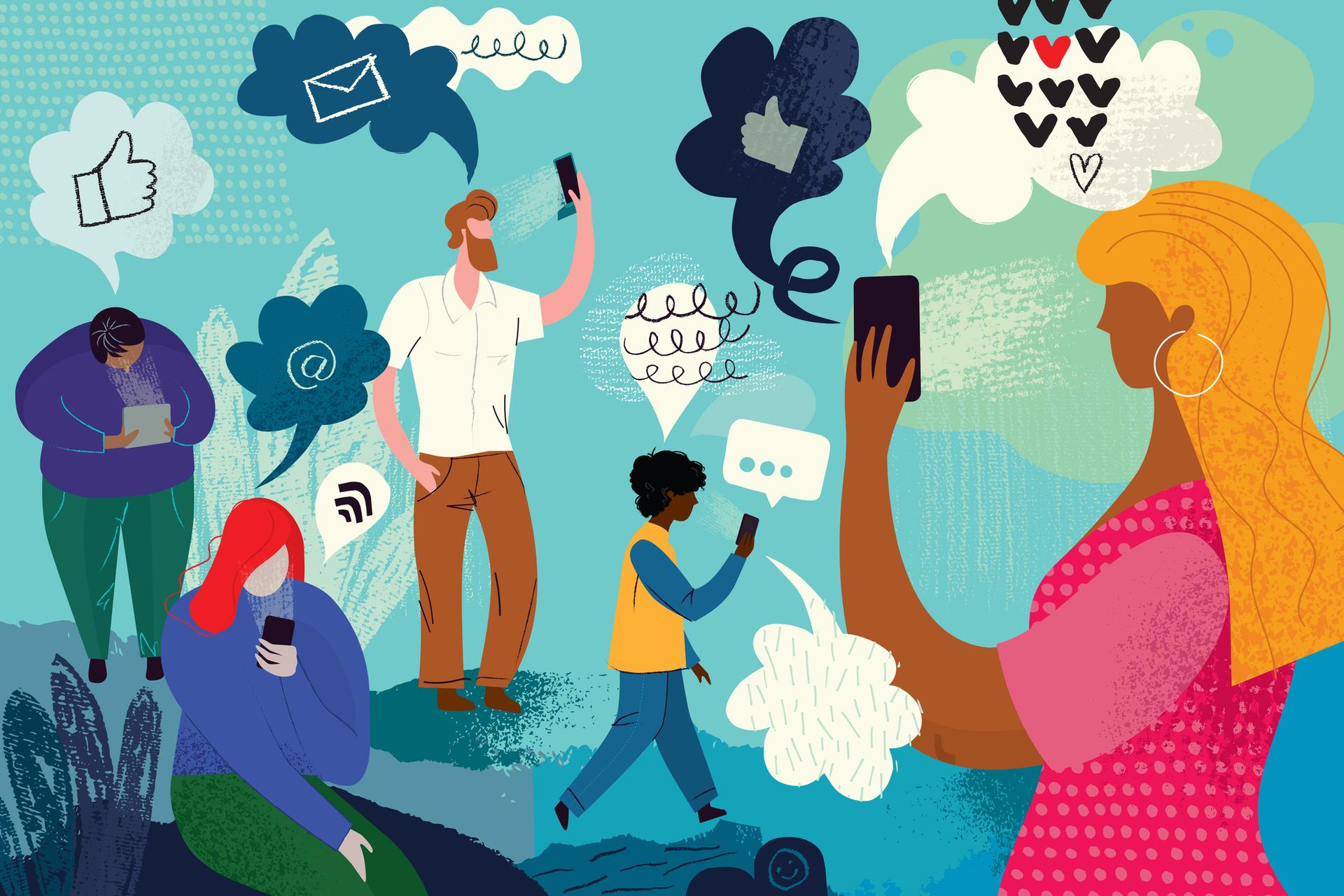
Figure 2 from https://time.com/7308120/secret-algorithms-behind-social-media/
This kind of government doesn’t need rules or clear directions. Nobody tells users what to do directly. It works by being seen instead. People are more likely to notice content that shows up more often. People are more likely to watch things that they notice. If you watch something, it’s more likely to be shown again. This makes a pattern over time. Some content keeps coming back, but other content slowly fades away. Flew (2021) says that this is how platforms get people’s attention. Things that people see over and over can start to seem important, natural, or normal. In this way, the system does not make people act a certain way. It makes the space where behaviour happens.
Platforms need data to keep this system going. Every little thing counts, like how long someone watches, if they pause, or if they scroll away. These actions turn into signals. The system gathers them and uses them to guess what the user will do next. Then it changes what you see on the screen. Andrejevic (2019) says that automated systems can keep an eye on a lot of people and respond almost right away. This makes a loop. The user affects the system by what they do, and the system affects the user by changing what they see. This loop gets stronger over time. It slowly makes things that are familiar or interesting less so, even if the user doesn’t know it’s happening.
Most people don’t know how this works. They only see the end result. They can see a feed, but they can’t see how it was made. Pasquale (2015) calls this a “black box”. The choices are still secret, even though their effects can be seen everywhere. This makes it hard to ask questions about what’s going on. Asking why one piece of content shows up and another doesn’t isn’t easy. Crawford (2021) also reminds us that these systems are shaped by the way they are set up and the goals they have. That means they are not fair. They are made to keep people’s attention and get them involved. Noble (2018) shows that this can sometimes repeat or strengthen biases that are already there. It may seem like a simple stream of content, but there are deeper priorities that decide what to show.
The problem of algorithmic governance
A deeper issue with algorithmic governance is not just about what content appears on our screens, but how it gradually reshapes the way we make judgements. At first, the system feels useful. It saves time and effort. Users do not have to search much or compare different options. The platform simply shows what seems to fit their interests. This makes the experience feel easy and smooth. But in the process, part of the decision-making work is quietly taken away from the user.
Judgement is not something people simply have. It is something that develops over time through choosing, comparing, and questioning. When these moments become less frequent, that ability does not remain unchanged. It slowly weakens. As Just and Latzer (2017) suggest, algorithms do more than organise information. They also shape how people come to understand what is relevant or important. In this situation, users are not only consuming content. They are also getting used to accepting what is presented, instead of thinking through it themselves. The problem is not only that some options are missing. It is that the habit of questioning those options begins to fade.
This shift is easy to overlook because everything still feels natural. The content remains relevant and often feels personal. Users may feel that they are simply following their own interests. However, those interests are being reinforced again and again through repeated exposure. Flew (2021) points out that platforms guide attention rather than directly control behaviour. Here, that guidance becomes subtle but powerful. Users are not told what to choose. Instead, they are placed in an environment where making choices requires less effort. Over time, judgement becomes less of an active process and more something the system quietly takes over.
A system that shapes what becomes possible to see
Video from https://www.youtube.com/watch?v=7zC8-06198g
In his TED talk, TikTok CEO Shou Zi Chew describes the app as an interest-based platform that helps people discover content beyond their usual circles. Instead of focusing on who you follow, TikTok pays attention to what you do. It then uses those actions to suggest videos you might not have come across on your own (Chew, 2023). This is part of what makes TikTok feel open and easy to explore. It can feel like your options are expanding rather than narrowing. At first, it seems like the algorithm is simply giving you more to watch.
That idea becomes less simple once we look at what “interest” really means here. TikTok does not know your interests in any fixed way. It works them out from your behaviour. Small actions matter. How long you watch, whether you pause, replay, or scroll away. These moments are turned into signals. Over time, the system builds a sense of what seems to hold your attention. So interest is not just something you bring with you. It is something that takes shape as you use the app. Just and Latzer (2017) point out that algorithms do more than organise information. They help decide what counts as relevant. On TikTok, relevance is closely tied to engagement. Videos that keep people watching are pushed forward, while others appear less often.
This also changes what “discovering content” actually looks like. The feed may feel open, but it is not neutral. It is constantly being filtered. Videos are tested, ranked, and then either shown to more people or quietly held back. Andrejevic (2019) describes this as a system that is always watching and adjusting. On TikTok, this means the feed keeps shaping itself based on what works. Certain styles and formats show up again and again. Not because they are the only content available, but because they fit the system’s logic. By the time a video reaches you, many unseen decisions have already shaped that moment.
Watching also starts to feel different in this kind of space. It does not feel like making one choice after another. It feels more like moving through a stream. Schellewald (2021) describes this as being “carried along” by the algorithm. One video leads into the next with almost no pause. It becomes easy to keep watching without really deciding to continue. TikTok does not force people to behave in a certain way, but it shapes the situation in which those choices happen.
At the same time, most users do not really see how this process works. Klug et al. (2021) found that people often have only a vague idea of how TikTok’s algorithm operates. Because the system stays in the background, the feed feels natural. It can feel like it simply reflects your personal taste. But what looks like a wide range of choice has already been shaped behind the scenes. Some content is made easier to find, while other content quietly fades out of view.
When the system decides who you are similar to
When people scroll through Douyin, it often feels like the feed understands them very quickly. Videos seem to match their taste almost immediately, even when they have not spent much time on the platform. This feeling creates the impression that the system is learning about the individual. However, what is happening is not only about the individual user. It is also about how the system places that user in relation to others.

As Figure 3 shows, Douyin uses collaborative filtering to group users based on shared patterns of behaviour. Instead of focusing only on what one person watches, the system looks for similarities across many users. If two people show similar viewing patterns, they are treated as belonging to the same category. Content that works for one person can then be recommended to another, even if that second user has never shown direct interest in it. In this way, recommendation is not only based on personal preference. It is shaped by how the system defines similarity between users.
This changes how control works. The platform does not need to predict exactly what a user wants. It only needs to decide which group the user belongs to. Once that classification is made, the range of content becomes structured around that position. Just and Latzer (2017) argue that algorithmic systems construct reality by defining what is relevant. On Douyin, relevance is not only about content. It is also about identity. Being placed into a category means being exposed to a certain set of repeated patterns, while other possibilities remain outside that category and are less likely to appear.
Zhao (2021) helps explain why this feels so accurate. The recommendation system is highly efficient at matching users to patterns that already exist in the data. This creates a strong sense of personalisation. However, that feeling can be misleading. It does not necessarily mean the system understands the individual in a deep way. It shows that the system is effective at assigning users to groups that behave in similar ways.
Also, the effects of this system do not stay at the level of recommendation. Over time, they begin to shape how users relate to the platform itself. Liang and Ye (2025) suggest that Douyin does not only organise content, but also shapes how users imagine what is worth watching and creating. When certain types of content appear repeatedly within a category, they start to feel more familiar and more appropriate. Users may gradually adjust their expectations, tastes, and even their own behaviour to fit these patterns. What begins as classification can slowly turn into alignment. In this sense, the system does not only decide what users see. It also influences how users come to position themselves within the platform.
Conclusion
So, do algorithms really control what we see and do online? Looking at TikTok and Douyin, the answer is not completely yes, but it is not no either. No one is forcing us to watch a video or stay on the app. We are still the ones scrolling and deciding what to engage with. But those decisions are not made in a fully open space. What we see, what feels relevant, and even how we are grouped have already been shaped before we notice it. Over time, this starts to matter. Algorithms may not control us directly, but they quietly shape what we are able to choose and how those choices unfold.
References
Andrejevic, M. (2019). Automated culture. In Automated media (pp. 44–72). Routledge.
Crawford, K. (2021). The atlas of AI: Power, politics, and the planetary costs of artificial intelligence (pp. 1–21). Yale University Press. https://doi.org/10.2307/j.ctv1ghv45t
Flew, T. (2021). Regulating platforms (pp. 79–86). Polity.
Just, N., & Latzer, M. (2017). Governance by algorithms: Reality construction by algorithmic selection on the internet. Media, Culture & Society, 39(2), 238–258. https://doi.org/10.1177/0163443716643157
Klug, D., Qin, Y., Evans, M., & Kaufman, G. (2021, June). Trick and please: A mixed-method study on user assumptions about the TikTok algorithm. In Proceedings of the 13th ACM Web Science Conference 2021 (pp. 84–92).
Liang, M., & Ye, L. (2025). Algorithmic pedagogy: How Douyin constructs algorithmic imaginaries for content creators. Platforms & Society, 2, 29768624251365615.
Noble, S. U. (2018). A society, searching. In Algorithms of oppression: How search engines reinforce racism (pp. 15–63). New York University Press.
Pandaily. (2025, April 18). Douyin’s algorithm transparency drive: Rare insights from China’s TikTok. Substack. https://open.substack.com/pub/pandaily/p/douyins-algorithm-transparency-drive
Pasquale, F. (2015). The need to know. In The black box society: The secret algorithms that control money and information (pp. 1–18). Harvard University Press.
Schellewald, A. (2021). On getting carried away by the TikTok algorithm. AoIR Selected Papers of Internet Research.
TED. (2023, April 22). TikTok CEO Shou Chew on its future — and what makes its algorithm different | Live at TED2023 [Video]. YouTube. https://www.youtube.com/watch?v=7zC8-06198g
Wei, S., & Yan, P. (2023, March). Measuring users’ awareness of content recommendation algorithm: A survey on Douyin users in rural China. In International Conference on Information (pp. 197–220). Springer Nature Switzerland.
Zhao, Z. (2021). Analysis on the Douyin TikTok mania phenomenon based on recommendation algorithms. In E3S Web of Conferences (Vol. 235, Article 03029). EDP Sciences.
Be the first to comment