Fan circles Attacks, Self-Protection, and Platform Negligence
During the 2024 Paris Olympic Games, the most prominent phenomenon on the Internet was undoubtedly the explosive rise of sports Fan circles.Fans patiently sorted out the detailed support guide to popularize the background of the players and the rules of watching the game for the general audience.
They updated the athletes’ training schedule in real time, dug deep into the inspirational stories of the players’ growth, and also put outdoor big screens, online opening screens and other support.advertisements in major cities at their own expense, and simultaneously did data punching and topic rankings to protect the popularity of the players.
Everything was full of a hot atmosphere of support, full of tolerance and support, so that the sports cohesion of the new era bloomed in a new way.

Source: Xiaohongshu
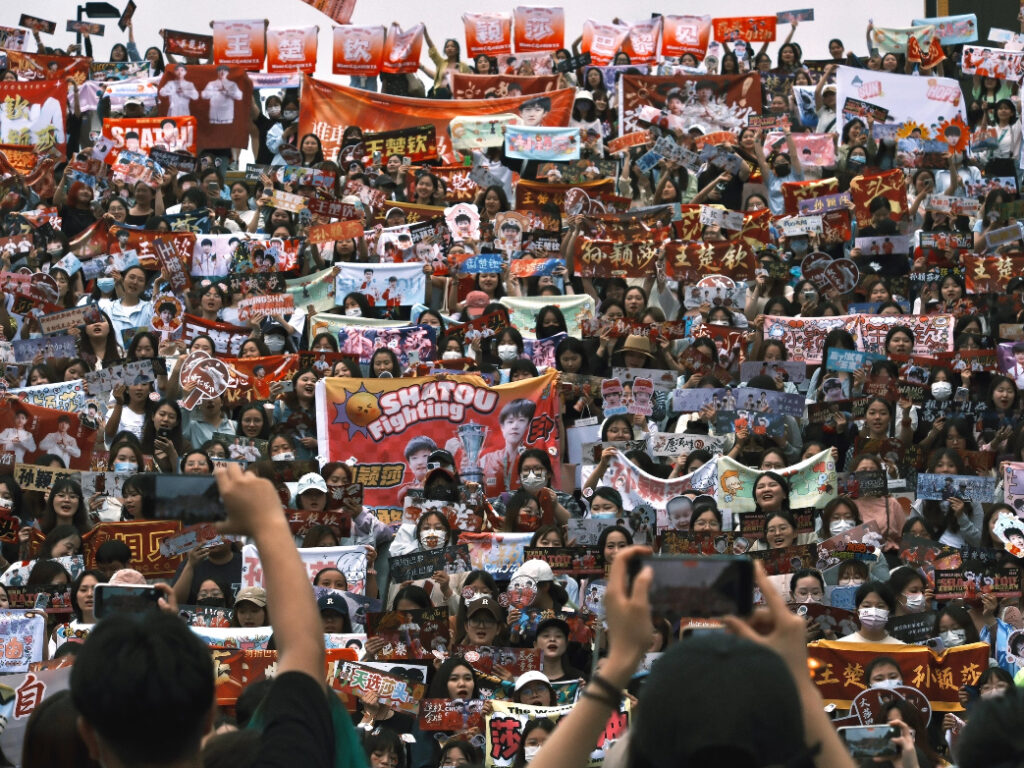
Source: Xiaohongshu
But soon, discordant notes began to appear.
On the field is competition, and off the pitch is online violence – the dilemma of sports Fan circles.
In the women’s singles table tennis final of the Paris Olympic Games on August 4, 2024, Chen Meng defeated Sun Yingsha 4-2 to win the gold medal.
After the game, a blogger on the scene posted an article exposing the chaos in the audience: she cheered for Chen Meng, only to be shushed and heckled by the crowd.
Within 24 hours of winning the championship, Chen Meng encountered a lot of online abuse and false rumors.
This post was just a true record of the scene, which was soon flooded by thousands of abusive comments.
Extreme fans scolded her for slandering the players and being unpatriotic, and also sent private messages to attack her.
The next day, the blogger said that she was physically and mentally exhausted by the online violence.
She just wanted to watch the game rationally and respect every athlete, but he attracted so much malice.
Finally, she said that she would never dare to publicly express her views on the athletes, and she would only watch the game silently in the future.
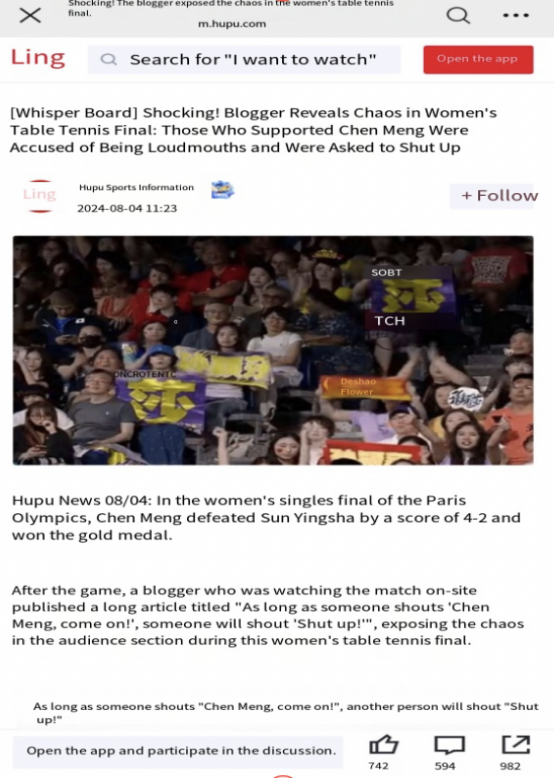
Source: Hupu Sports, 2024
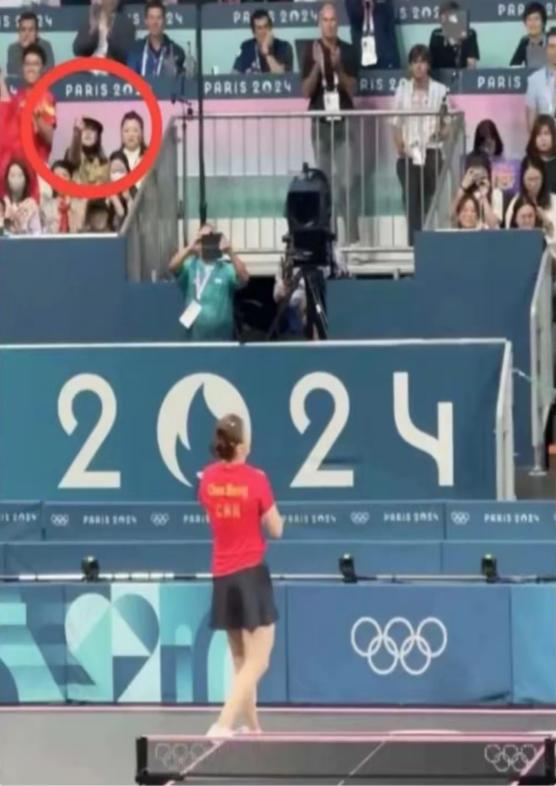
Source: Hupu Sports, 2024
Her account was reported and banned in bulk, but the abuser’s harassment was not held accountable.
Of course, it is not only ordinary fans who have this kind of encounter.
According to users the target also includes professional sports reporters who dare to criticize the behavior of the Fan circles, and even former Olympic champions who publish objective comments.
This is not the first time that the sports Fan circles has created a public opinion storm.
As early as the 2016 Rio Olympic Games, Zhang Jike and Ma Long’s fans broke out the famous “Guodie War“, which was recognized as the starting point of the Fan circles in the field of table tennis in China, and 2016 was therefore known as the “first year of the Fan circles in Chinese table tennis” (China NewsWeek, 2024).
This conflict was thoroughly fermented on Weibo, and the number of retweets and comments on related topics is hundreds of thousands or even millions, and the number of participants is huge.
In the Olympic women’s singles duel between Chen Meng and Sun Yingsha in August 2023, there were similar irrational abuses on the scene and on the Internet.
At that time, the Weibo platform only took banning measures on hundreds of illegal accounts, which failed to curb the chaos from the root cause.
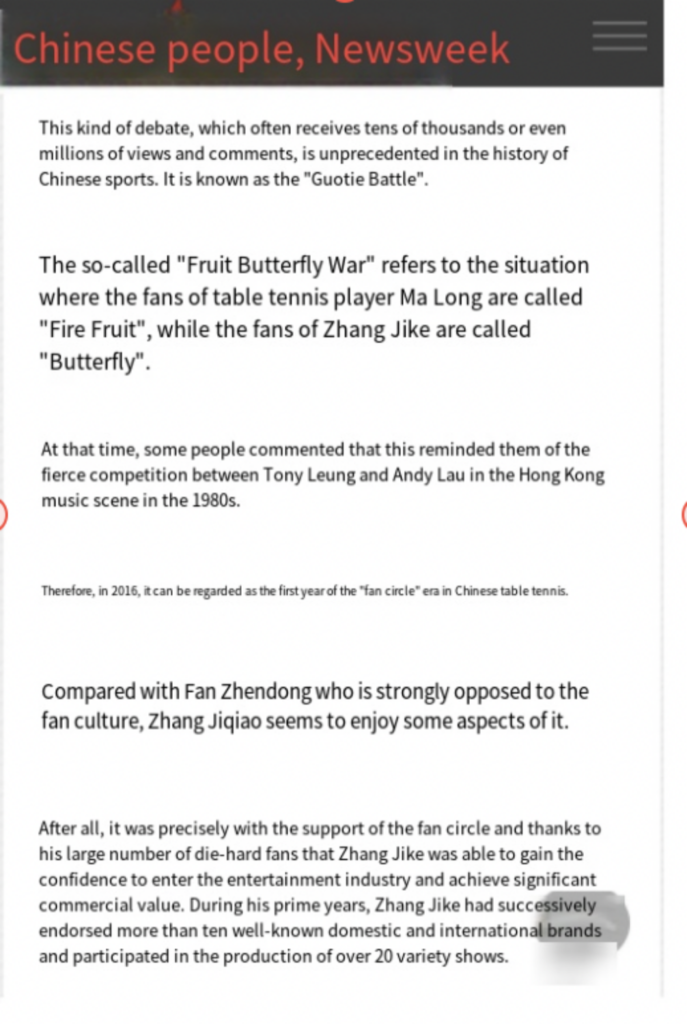
Source: Newsweek; Weibo Official
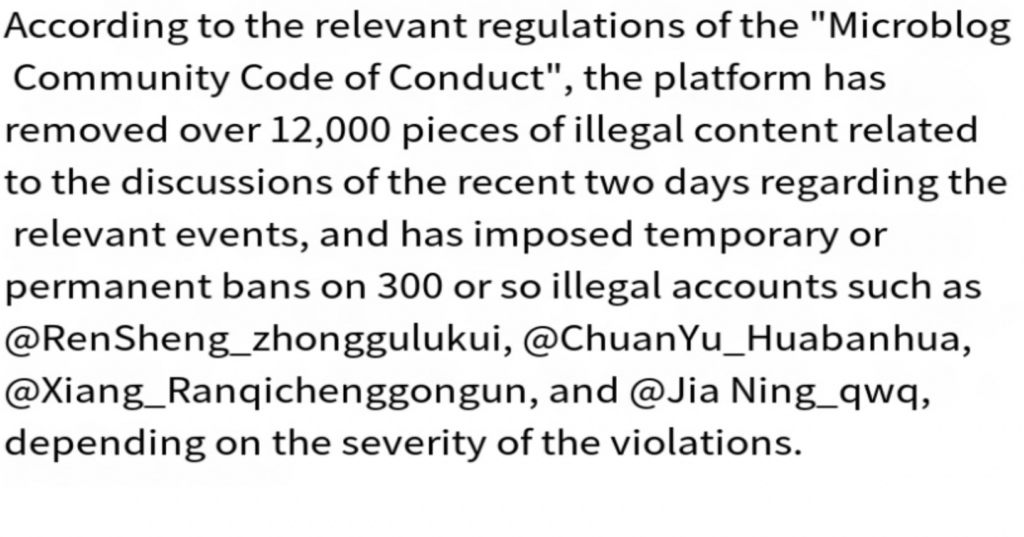
Source: Newsweek; Weibo Official
The rise of the sports Fan circles is of positive significance.
Sports stars who compete for the glory of the country have attracted a lot of attention, and the support of fans has promoted the sports industry and the “fan economy”, helping the spread and development of sports.
But without correct guidance, this love will deteriorate and become a weapon to stab others.
“Zero cost” online violence under traffic logic
This kind of double standard of platform content review and governance, I have encountered a similar situation not long after I entered the platform.
On June 19, 2025, I published a post entitled “Table Tennis Zero Basic Forehand Attack Ball Disassembly” with only 10 likes.
Another dynamic in the same period – “Complaining about the uneven distribution of table tennis resources in China” has a guiding post with up to 18,000 likes.
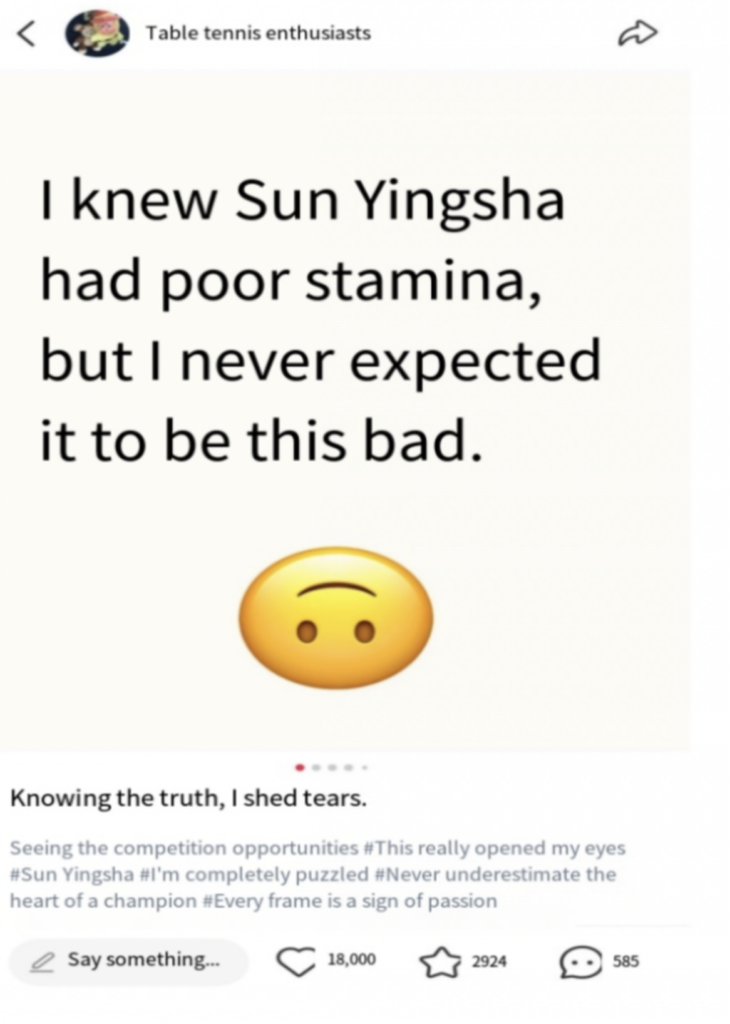
Source: Original screenshot
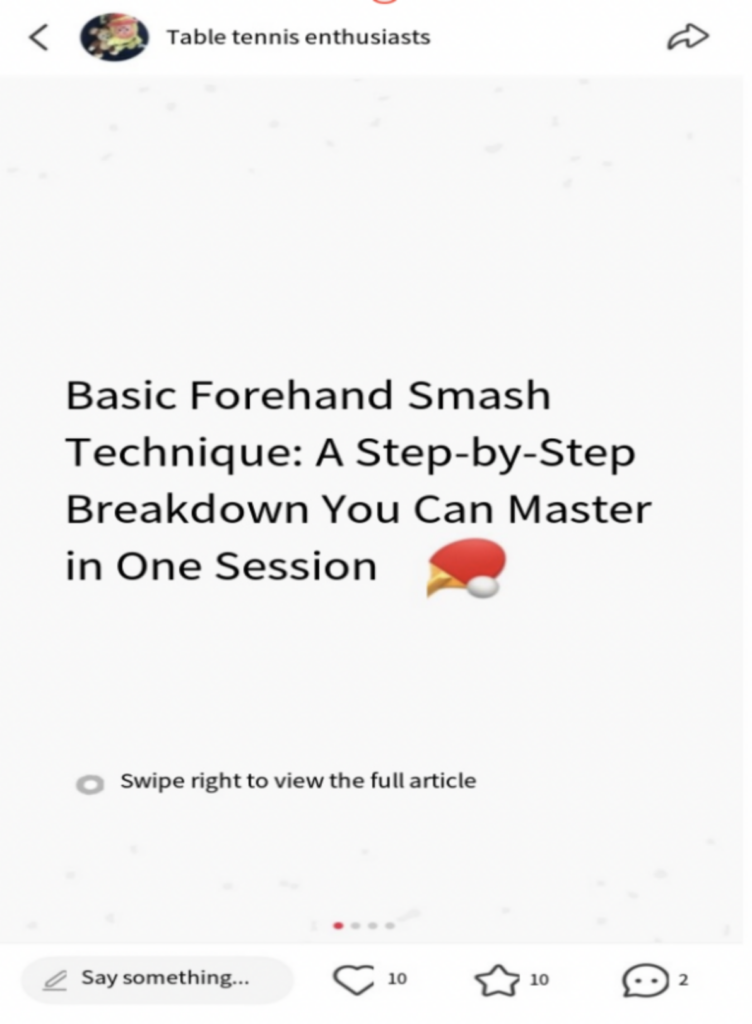
Source: Original screenshot
This phenomenon directly shows that the platform’s Design Choice is condoning network harm.
In order to pursue interaction and commercial interests, the platform has abandoned the safety and rationality of public discussion.
This way of governance that lacks responsibility and constraints eventually makes rational sports comments ostracized in a hostile network environment, and also makes targeted abuse and personal attacks in the Fan circles struggle, almost without paying any price. ( Flew, 2021)
If you browse a few more fan homepages, you will see more serious Online Harms, targeted hate speech and doxxing.
Fans have a strong spiritual attachment to idols and put a lot of effort into shaping their “perfect image” and cannot tolerate any criticism and questioning.
Fan circles attack has strong instantaneous explosive power and high-density characteristics.
In the platform ecology, there are only antagonistic “comrades-in-arms” and “opponents”, and there is no neutrality.
Fans weaponize the functions of the platform, set up an anti-criticism task forces, use multiple accounts for batch operation, and perpetuate the Toxic culture of Coordinated Harassment through “Hashtag hijacking”,”Coordinated hashtag smearing” and control comments, and wantonly suppress different voices (Massanari, 2017).

Source: Weibo
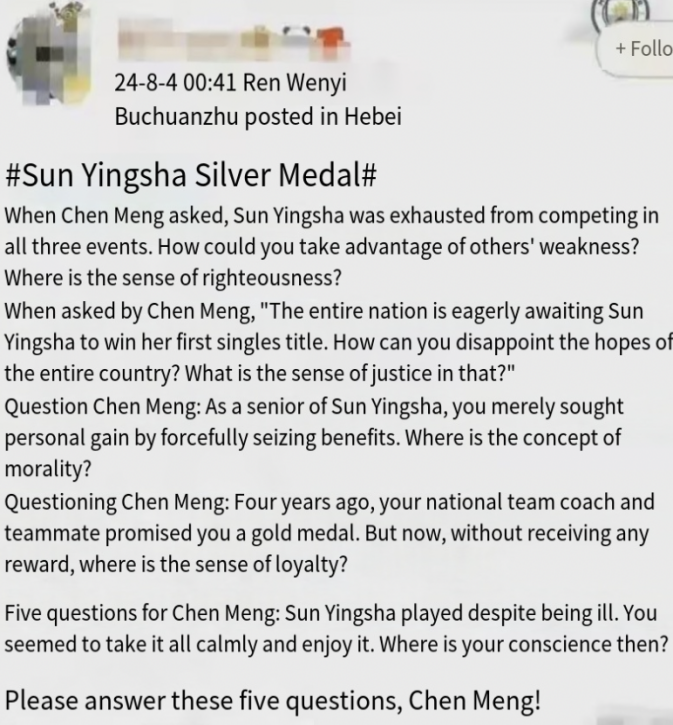
Source: Weibo
The Global Online Survey on the Effects of False Information and Hate Speech released by UNESCO states that such behaviors can cause serious harm to the physical and mental health of others.
Data shows that 67% of global Internet users have witnessed hate speech and 74% of adults have been harassed on the Internet.
Now the crisis is seriously eroding the sports world (UNESCO & Ipsos, 2023).
Look at the “strategic silence” of the platform: the money logic behind the traffic
It’s so fierce, why doesn’t the platform care? After all, money talks. In the eyes of the platform, Fan circles users are the “perfect battery” to support the financial report – extremely active and high, heavy spenders, producing massive data in 24 hours (Roberts, 2019, pp 33–72).
If it is severely cracked down, it is equivalent to cutting off the source of profit. Therefore, the platform chooses the “structural incompetence” of governance such as “strategic silence”, which is essentially a knife to the perpetrator.
Capital even takes advantage of the desire to win or lose from “fans” to “harvest users”. In the face of the cold money logic, the pain of being abused by the Internet is insignificant.
Due to the closure of the whole governance structure, it is difficult for us to judge whether this practice is deliberately protecting high-flow fan groups.
The platform holds great management power, but rarely assumes the corresponding regulatory responsibility (Gillespie, 2010).
This governance dilemma of power and responsibility imbalance is also confirmed in the practice of social media platforms in the Asia-Pacific region.
The platform enjoys the power to intervene, but hardly assumes the responsibility at the regulatory level ( Sinpeng et al., 2021).
“Coding languages and “context collapse”
The current Fan circles has already evolved a kind of “drug resistance” in the chaos of Context Collapse.
Fans skillfully use Pinyin abbreviations, consonant Inside jokes and specific Emojis to piece together coded language that only insiders can understand.
#191# motorcycle # party guys #cm
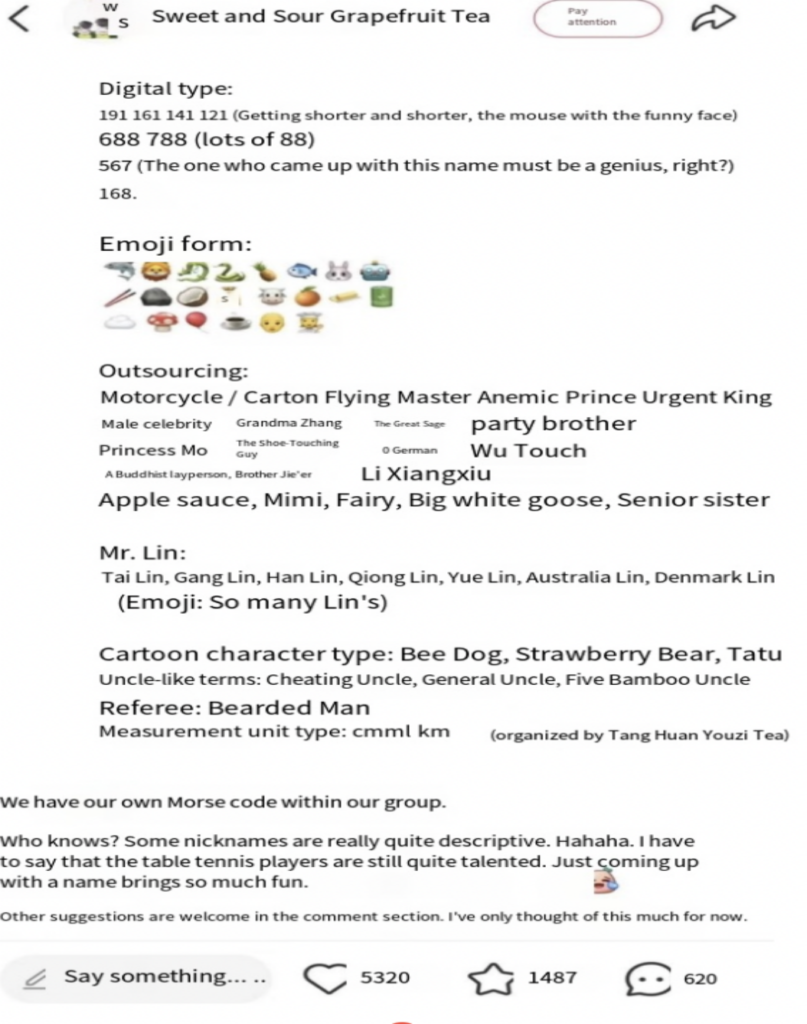
Source:
Xiaohongshu
They accurately took advantage of the system’s desire for extreme emotions to probe on the edge of the audit red line, and forced the platform into a maze that outsiders could not understand, machines could not control, and victims could not escape. ( Bi & Xinyou, 2025)
This requires the principle of paying attention to the obligation of the platform.
The platform must bear legal responsibility to ensure the safety of the service at the design level, instead of passively handling the content after the injury occurs.
When the platform does not act, state intervention will intervene (Woods & Perrin, 2021).
In August 2024, the Beijing police criminally detained a 29-year-old woman who maliciously spread rumors about athletes after the Olympic final.
After this real legal action, Weibo suddenly cleaned up more than 50,000 Fan circles posts and banned more than 800 relevant illegal accounts.
By April 2026, the Cyber Security Bureau of the Ministry of Public Security reported that the Olympic diving champion Quan Hongchan was subjected to online violence, which once again confirmed this dilemma of governance.:
Xu, a 31-year-old man, created a diving “Fan circles” WeChat group, made many insulting remarks against Quan Hongchan, maliciously trampled on her to cause war, and was finally administratively detained for ten days and fined according to law.
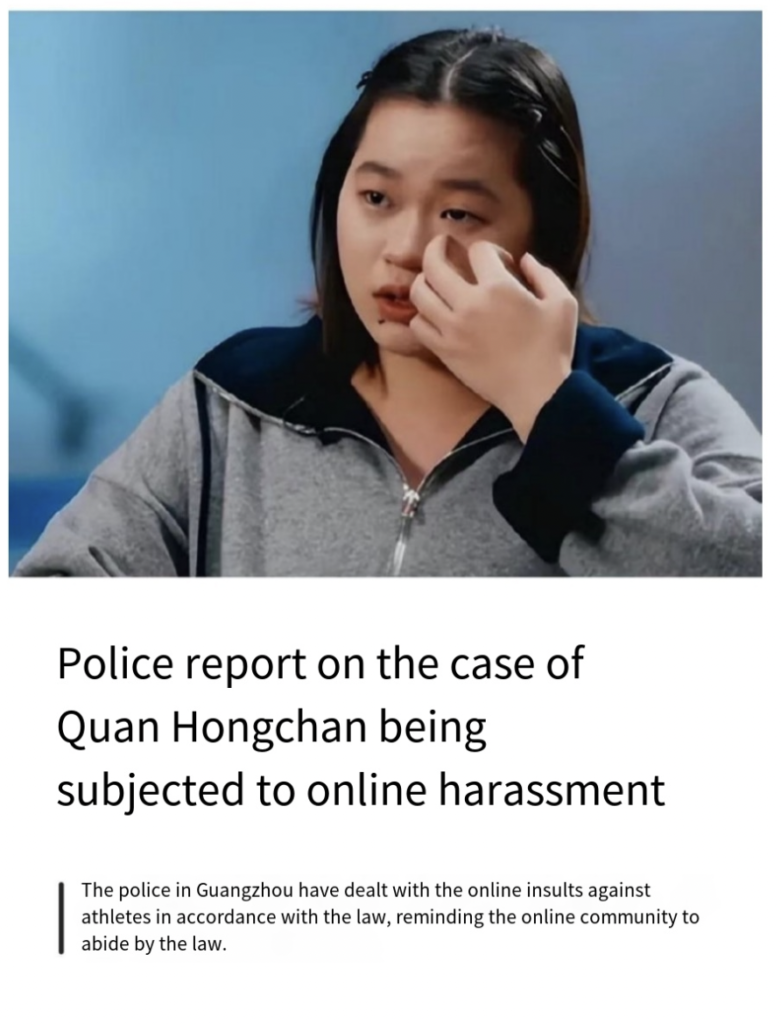
Source: Guangzhou Public Security Bureau, 2026
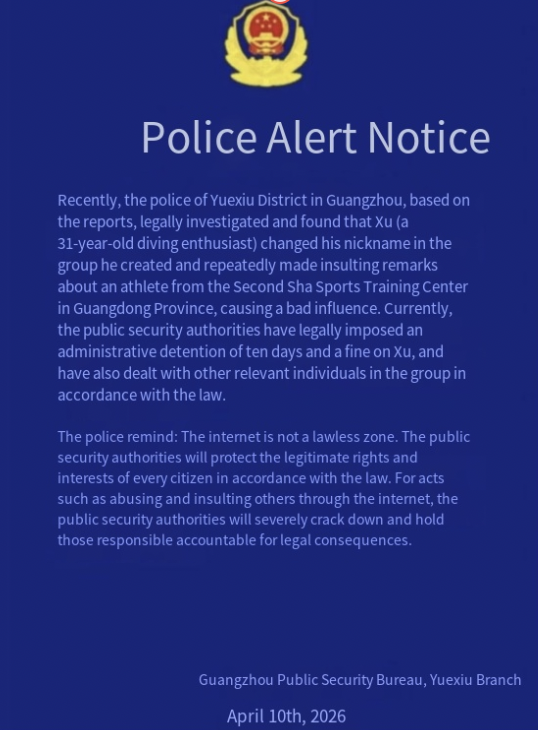
Source: Guangzhou Public Security Bureau, 2026
This proves that the platform has the ability to audit efficiently, but they often choose not to act before external authority pressure.
The good news is that global supervision has begun to take effect.
In 2024, the “Qinglang” action of the Central Cyberspace Information Office will focus on rectifying the problem of cyber violence on 18 head network platforms such as TikTok and Weibo (Dai, 2024).
The European Union’s Digital Services Act (DSA) will officially take effect in February 2024, requiring large platforms to control systemic risks such as cyber violence and hate speech.
It has been in effect for two years now. ( European Commission, 2026).
The transnational regulatory consensus shows that the platform can no longer blame users for the contradictions caused by governance negligence under the pretext of “technical neutrality”.
The collapse of digital trust
When “love” becomes a dagger and rules become shackles that bind freedom of speech, it is far more than a line of code being destroyed.
Our trust in digital civilization is under threat.
As long as the platform puts traffic above their duty of care , Barlow’s dream of independent cyber space will never come true.(Barlow, 1996).
We can’t accept such a digital world: if we want to enter, we must first “cover our mouths”.
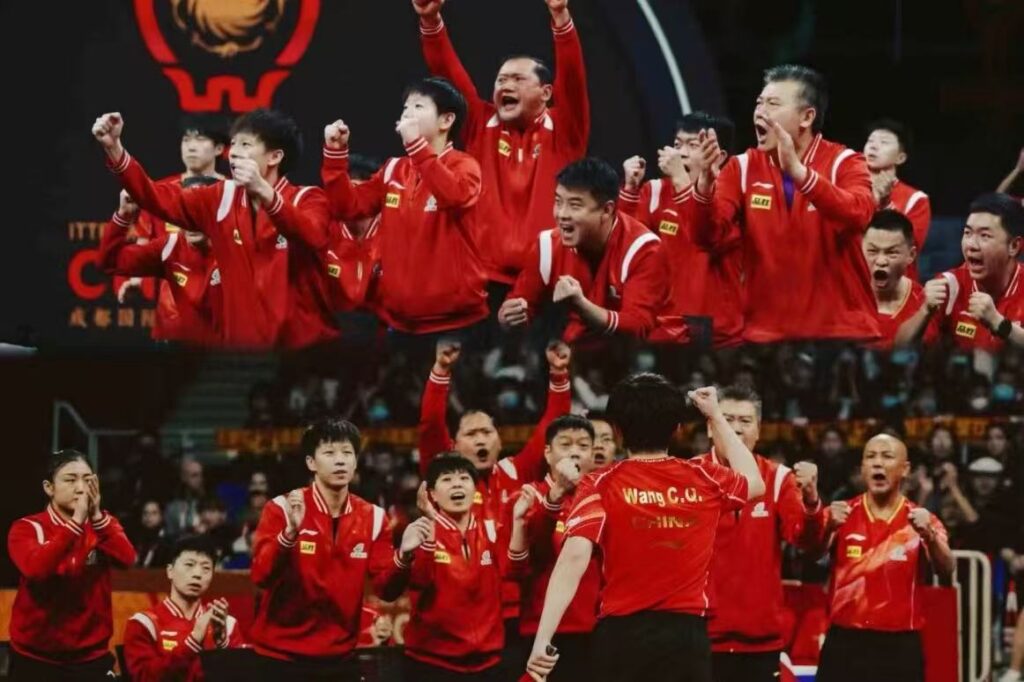

Source: International Table Tennis Federation (ITTF), 2024
It is time to demand that platforms move beyond platform negligence and re-establish a space for open and rational sportsmanship.
References
Flew, T. (2021). Hate Speech and Online Abuse. In Regulating Platforms (pp. 91–96). Polity.
Sinpeng, A, Martin, F, Gelber, K & Shields, K 2021, Facebook: regulating hate speech in the Asia Pacific, Final Report, Department of Media and Communications, University of Sydney & School of Political Science and International Studies, University of Queensland, viewed 12 April 2026, https://r2pasiapacific.org/files/7099/2021_Facebook_hate_speech_Asia_report.pdf
Massanari, Adrienne (2017) #Gamergate and The Fappening: How Reddit’s algorithm, governance, and culture support toxic technocultures. New Media & Society, 19(3): 329–346.
Roberts, Sarah T. (2019) Behind the Screen: Content Moderation in the Shadows of Social Media. New Haven, CT: Yale University Press, pp. 33-72.
Gillespie, T. (2010). The politics of ‘platforms’. New Media & Society, 12(3), 347–364.
Woods, L., & Perrin, W. (2021). Obliging platforms to accept a duty of care. In J. Bayer, B. Holznagel, P. Korpisaari, & L. Woods (Eds.), Perspectives on platform regulation: Concepts and models of social media governance across the globe (pp. 77–97). Nomos.
Dai, Y. (2024). Analysis of the Problems and Countermeasures of Cyber Violence. Open Journal of Legal Science, 12(6), 4051–4056. https://doi.org/10.12677/ojls.2024.126575
Hupu Sports. (2024, August 4). Shocking! Blogger exposes chaos at women’s table tennis final: Cheering for Chen Meng scolded to shut up by many people [Online forum post]. Hupu. https://m.hupu.com/bbs/627482022.html
China NewsWeek. (2024, August 8). How Sports Circles Caught the Fan Culture Virus. https://www.inewsweek.cn/wh/2024-08-08/22794.shtml
Bi, Y., & Xinyou, dong. (2025). Volume 32, Issue 1, January 2025, Journal of Sports Science. Journal of Physical Education, 32(1), 52–60. https://statics.scnu.edu.cn/pics/tyxk/2025/0117/1737075254501708.pdf
UNESCO & Ipsos. (2023). Global survey on the impact of online disinformation and hate speech. UNESCO. https://www.unesco.org/sites/default/files/medias/fichiers/2023/11/unesco_ipsos_survey.pdf
European Commission. (2026, February 17). Two years of the Digital Services Act ensuring safer online spaces. https://commission.europa.eu/news-and-media/news/two-years-digital-services-act-ensuring-safer-online-spaces-2026-02-17_en
Barlow, J. P. (1996). A declaration of the independence of cyberspace. Electronic Frontier Foundation. https://www.eff.org/cyberspace-independence
People’s Daily Online. (2026, April 10). Guangdong police punish man over online abuse of Olympic champion. https://peoplesdaily.pdnews.cn/china/er/30051864864
Be the first to comment