Who Really Controls the Internet?
Have you ever been scrolling through your social media feed and wondered as to why some posts seem to be on the top, and the others seem to have disappeared completely? There is a concern raised by many people (The Cornery, 2026). Or why certain accounts are just blocked out, and others, which propagate harmful or offensive information stay running?
The Internet Is Not What You Think! Source: The Cornery (2026).
Let’s start with a simple idea. During the early 1990s, the internet was envisioned as an area of radical freedom, a place where anyone, anywhere could speak without the threat of being controlled or censored. This vision of the freedom of expression preconditioned the way in which numerous individuals continue to think about online platforms nowadays.
However, things have changed. With the rise of platforms like social media, search engines, and content-sharing sites, the internet is no longer just an open space. Not only do they create order, screen, rank, and occasionally cull, but they are also influencing how we watch, think, communicate, and engage on the internet.
In the present times the utilization of social media sites, search tools and content sharing websites do much more than just being a content host. They filter, classify, prioritize and sometimes filter out information or not only that which we browse, but the way we think and communicate on the Internet. And which is the actual query of the real individual who runs the Internet.
Platforms, Power, and Digital Governance
How Platforms Became Our New Governors
The tools and services perspective of digital platforms has become irrelevant to grasp why digital platforms are so powerful today. We need to quit considering digital platforms as instruments or services in an attempt to value the power of digital platforms in the present-day era. This is not just platform management but a form of governance – private companies creating and enforcing rules that shape online behavior, visibility and participation.
Indeed, platforms today serve very similar functions to governments. They establish regulations, policies, and create global-level communication.
Platforms govern us by:
• setting rules
• shaping visibility
• deciding what stays online
• deciding what gets removed
According to Flew (2021), the digital platforms currently possess a very peculiar power, a convergence of financial influence, political weight, and means of controlling communication. In contrast to the usual use of traditional media companies with the main aims at the production and distribution of the content, the structure of the whole environment where communication happens is organized by the platforms. It is they who are the ones who determine the flow of information, what information is amplified and what is not seen.
Simultaneously, these platforms are not state but rather the private companies. The regulations that govern the life online, as Suzor (2019) points out, are not democratic in the way they are developed, but companies establish their conditions of services. By agreeing to these terms, the users get to agree to a regime of governance to which they have minimal control over and can do little to oppose.
Your Data Isn’t Just Data – It’s Power
Whereas platforms regulate what we say and perceive, it is the platform that form how we are perceived as users. Among their most dramatic means of doing so is datafication which refers to the process concerning everyday activities and transforming them into data, which can be managed, analyzed, and monetized. Each time you press the button, like, share, and stop a video, some information is formed. With time, such data can be used to create comprehensive user profiles that can be used to anticipate preferences, behavior and even feelings. It is then used to tailor the content (news feeds, adverts, etc) by the algorithms to generate digital experiences that are highly customized (Zuboff, 2019).
Datafication gives platforms power to:
• predict your behavior
• shape your feed
• influence your attention
• manipulate your interests
The platforms are in a position to affect what the users watch, what they interact with and eventually how the users act. This is not merely regarding advertising, but it concerns influence over attention, interests and involvement in the online space. Where should the line between free speech and harm be drawn?
Free Speech or Safe Spaces? The Trade-Off
Increased strength of platforms is of particular concern with regard to the question of free speech. The initial vision of the internet finance the unlimited expression and it implied that everyone could express their thoughts without being disturbed. This ideal has however, not been easy to maintain in practice. Online platforms have now turned into the locations of considerable damage, hate speech, harassment, and misinformation.
Due to that, platforms have been pressurized to censor content. They are also supposed to unnecessary clean up toxic matters, defend the susceptible customers, as well as ensure safe habitats. However, this is a challenging task to balance. On the one hand, lack of moderation would enable destructive material to be distributed which can lead to lack of trust and result in actual harm. Alternatively, excessive aggressiveness when moderating can lead to oppression of opposition to expression, which is a cause of censorship and discrimination.
Content Moderation: Who Decides What Stays Online?
Digital platforms are difficult to control with content moderation due to their size and design. Every single content cannot be checked individually with millions/even billions of users. The human ones are based on a mix of the automated systems and human moderators, each having its limitations in place. According to Suzor (2019), certain types of intervention, especially of the infrastructure level, are blunt by nature. To illustrate, with a platform deleting a whole account or a web site, the harmful materials are not the only ones gone; all the other materials related to it are also deleted. This provokes the issue of excesses and unintended consequences.
In addition, the decisions on moderation are in many instances irregular. Shear the same may not be considered in the same way based on the context, pattern of reporting or algorithmic detection. Cultural differences also have a factor in that things that are deemed to be okay in one setting may be viewed as objectionable or even criminal in other regions. Such problems are not merely technical, but highly political as well. Moderation entails the judgment of values, norms and acceptable behavior. However, such choices are not always accountable and transparent, being made by the private companies.
What Happened When X (Twitter) Changed the Rules
Let’s illustrate it with our famous Musk. None of the examples of these problems can be more vivid than the example of X (previously Twitter) after Elon Musk had its acquisition in 2022. Musk once stated that he is a free speech absolutist, which he would like to make the platform an environment of free and unfettered expression (see Figure 2).
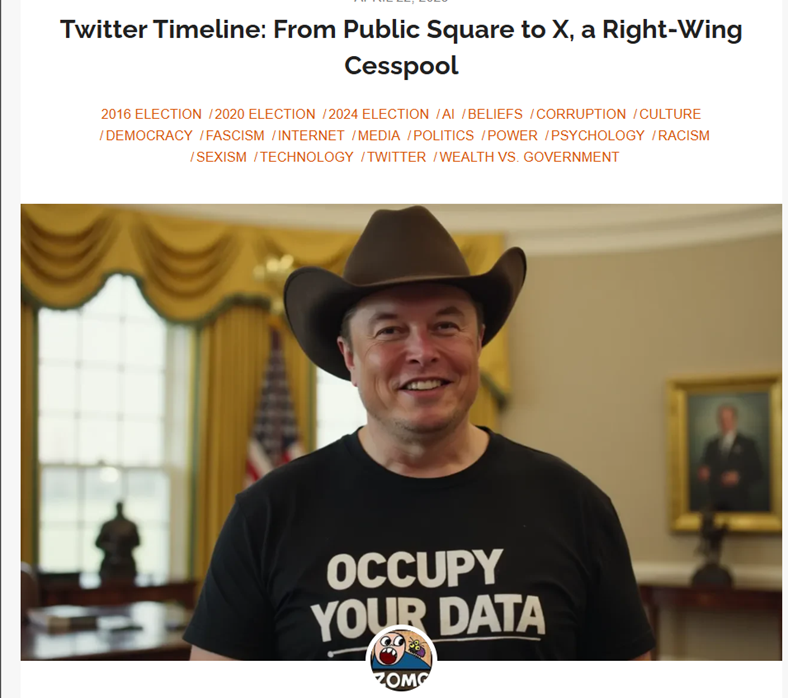
Figure 2. Twitter’s political shift after Musk’s takeover. Source: Doctor Paradox (2025).
But as soon as revolution had set in, the evolutions it brought very clearly showed how difficult this vision is. Less content moderation became one of the important changes.
X reinstated accounts that had been previously banned, as well as reduced some moderation teams and policies. This was to limit censorship that Musk and his followers considered to be extreme. According to the Conversation report, hate speech increased after the policy shift.
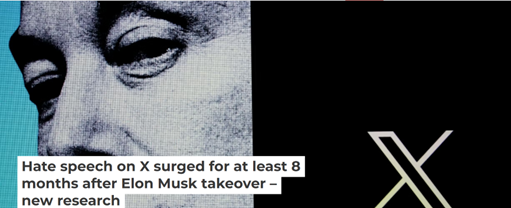
Figure 3. Hate speech increased after Musk’s policy changes.
This case exemplifies a basic conflict of governance: even minimizing moderation is a form of governance since platforms are incapable of avoiding setting the limits of permissible speech. There is even the decision on whether to admit more speech which is itself a governance. X altered the perception of what is sensibly expressed within the global context through policy alterations of moderation. The definition of what is free speech and what is harm is not given predetermined values, but on platforms, this is actively created through decisions.
While another argument that resonates Suzor (2019) puts forward in the case is that online life is in fact made through platforms. The changes in policies were mostly guided by the vision of one owner as opposed to governments that are constrained by legal and democratic means. The unilateral policy alterations by Musk depict how the control of platforms is centered in the hands of the private individuals whose actions can change the way speech in the world is governed without any public scrutiny.
In the meantime, the blowback on the advertisers is another element to the plot. Many companies have even feared to advertise on X since they believed that their messages could not be shared with such offensive or controversial messages. This confirms that platform governance is not an empty location/devoid of any influence, but it is also stipulated by economic pressure. Practically, platforms need to strike a balance between user interaction, citizen outlook, and financial state-of-affairs- all of which may draw moderation policies one way or the other. In a general view, the X case study presents the key conflict of the digital governance.
Last but not least, the fact that X is being transformed demonstrates that the notion of a truly neutral platform is not a realistic one. Determinations concerning what moderate, algorithms and rules cannot but infuse the discourse of the citizens. The actual issue is, though, not just whether or not platforms should control speech, but in what manner and who should control, whom should be in control.
Why Governments Can’t Keep Up with Big Tech
Considering the massive influence that platforms have now, it may be intuitive that the governments must intervene and control the platforms in a more efficient manner. Nonetheless, in reality, it has become incredibly challenging to control digital platforms. A key problem is the dislocation of the territories of platforms and legal territories. There are companies such as X, Meta, or Google that are working in several countries at the same time, but laws are usually applied on the national level. This creates a disjointed regulatory picture, with various nations having contradictory regulations regarding content, privacy, as well as data protection.
Another important obstacle, which Flew (2021) notes, is the platform power cuts across different spheres of activities previously controlled differently. Platform related issues may include competition law (monopolies), media regulation (content), consumer protection (user rights), and data protection (privacy). Nevertheless, in many instances these regions are subject to various legal systems and bodies and thus should not be regulated in a way that is harmonized.
Lastly, underlying is a tension between regulation and innovation. It is possible that governments fear putting too many strict rules on them and will therefore, not put the right measures to ensure that the country is not impacted by the technologies through stifling of economic growth. Meanwhile, the lack of regulation means that the sites can use it to keep operating with minimal regulation, which strengthens the power asymmetries that the regulation is trying to correct. And this puts us in a fix. Consequently, the platform power and regulatory capacity disparity is ever-expanding with pressing concerns over the future of digital policy and governance.
So… Who Should Control the Internet?
The fact is, digital platforms have been so infused into our every-day lives that we find it hard to remember the kind of power they have. What began as mere communication aids have now proven to be potent systems that influence information, behavior and mass conversation. On the one hand, the motivation to safeguard some basic digital rights, such as privacy and freedom of expression is high. On the other hand, an equivalent urgency to combat on-line wrongdoings like misinformation and hate speech or harassment exists. It is no longer a question of whether the internet is controlled but who controls it, which method and in whose best interest.
Consequently, platforms still continue to play in an arena where their sway would in most occasions surpass that of the conventional systems of control. Not only in the future, but also in the present a question constantly relates to the process of how platforms are made to be controlled, but instead towards defining how digital space should be governed.
Bibliography
Doctor Paradox. (2025). Twitter Timeline: From Public Square to X, a Right-Wing Cesspool. https://doctorparadox.net/twitter-timeline/
Flew, T. (2021). Regulating platforms. Cambridge: Polity Press.
Flew, T., & Gillett, R. (2021). Platform power and policy in transforming media environments. Media International Australia, 178(1), 7–18.
Jensen, M. (2025). Hate speech on X surged for at least 8 months after Elon Musk takeover – new research. The Conversation. https://theconversation.com/hate-speech-on-x-surged-for-at-least-8-months-after-elon-musk-takeover-new-research-249603
Suzor, N. P. (2019). Lawless: The secret rules that govern our lives. Cambridge University Press.
Gillespie, T. (2018). Custodians of the internet: Platforms, content moderation, and the hidden decisions that shape social media. Yale University Press.
Gorwa, R., Binns, R., & Katzenbach, C. (2020). Algorithmic content moderation: Technical and political challenges in the automation of platform governance. Big Data & Society, 7(1), 2053951719897945. https://journals.sagepub.com/doi/pdf/10.1177/2053951719897945?src=getftr
The Cornery. (2026). The Internet Is Not What You Think!. https://www.youtube.com/watch?v=qTmrqeFb9r4
Zuboff, S. (2019, January). Surveillance capitalism and the challenge of collective action. In New labor forum (Vol. 28, No. 1, pp. 10-29). Sage CA: Los Angeles, CA: Sage Publications. https://www.oru.se/contentassets/911b03b7ff614b14a58782b9ee183bf2/zuboff-2019.pdf
Be the first to comment