A choice that does not feel like a choice
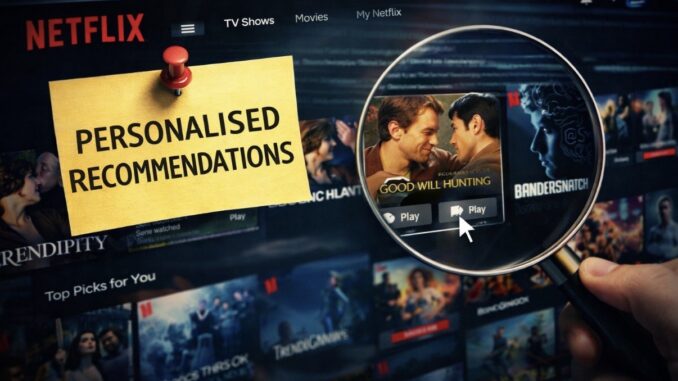
It is time for relaxation in Netflix. We start the application, see the title, and in seconds we know whether we want to view the film. This process seems easy and straightforward, but have you ever considered that the first impression is not random?
Netflix not only offers recommendations about what to watch but also defines how the film will be shown to the user. The same title may appear differently based on the profile viewing it. This factor is not as trivial as it may seem at first glance because this process demonstrates how recommendation systems can be used not only to assist the user in finding appropriate content but also for manipulating attention and prediction of users’ behavior.
When the poster sparked a racial controversy
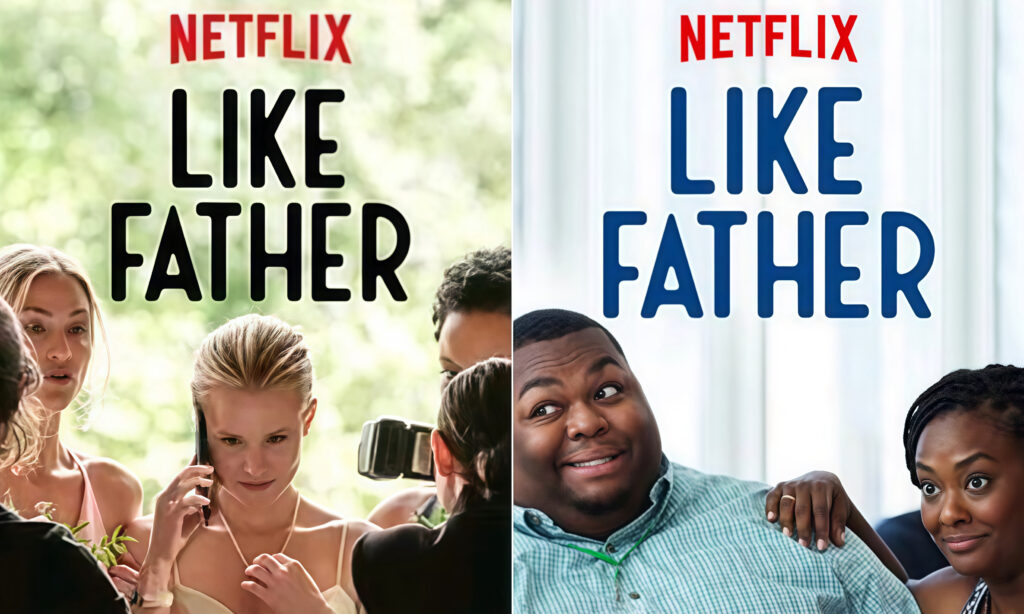
Image source: The Guardian (2018).
According to The Guardian, some Black customers stated that Netflix was using posters with Black actors on the covers of movies and shows where they only had supporting roles (Iqbal, 2018). It is important to note that this issue was not just about misrepresenting their titles on the poster. This was an indicator that Netflix made certain presumptions about who would like to see which faces on posters and used this knowledge while promoting its titles.
In response, Netflix argued that it never asked for any users’ racial or ethnic backgrounds and the customised posters were a function of watching habits rather than demographics (Iqbal, 2018). That makes sense to an extent. Nevertheless, this case of racism raised another key point: Is it possible for the recommendation engine of a service provider to create a racial bias without asking about race? The answer may not be so simple, but it is worth mentioning since it reveals certain aspects that are usually invisible to the users. In addition to recommending the titles, Netflix was also choosing which visual representation of that title would be shown to different viewers.
This means that when evaluating Netflix recommendations, the poster must be viewed as a part of the whole recommendation process. When choosing which image of the same movie to show, Netflix was no longer simply describing the content. Instead, the company was interpreting it, packaging it, and predicting which poster will work better for the particular user.
The controversial nature of the debate lies in the fact that it brought an invisible procedure to light. Users rarely wonder about the reason for the selection of a certain image over another one. However, in this instance, the distinction was evident enough to make the user suspicious. It proves that not only is the impact of recommendation perceived as a purely theoretical concept, but the users can also recognize when an attempt at personalization crosses the boundary and becomes misrepresentation or manipulation. While Netflix considered the procedure to be effective targeting, the users perceived it as the act of reducing them to a simple guess of their identity and preferences.
A recommendation is also a first impression
It is not just about which titles end up on the screen, but also how they are presented to a consumer before clicking on them. The picture on the cover of the film provides the first visual hint. It could make a movie seem romantic, sinister, amusing, touching, or thrilling without knowing anything about the story itself. According to the technical blog of Netflix, artwork personalization technology allows choosing the image that would draw the interest of a certain member (Chandrashekar et al., 2017). Since there is no room for more than one picture in a spot, the choice must be optimal for that viewer.
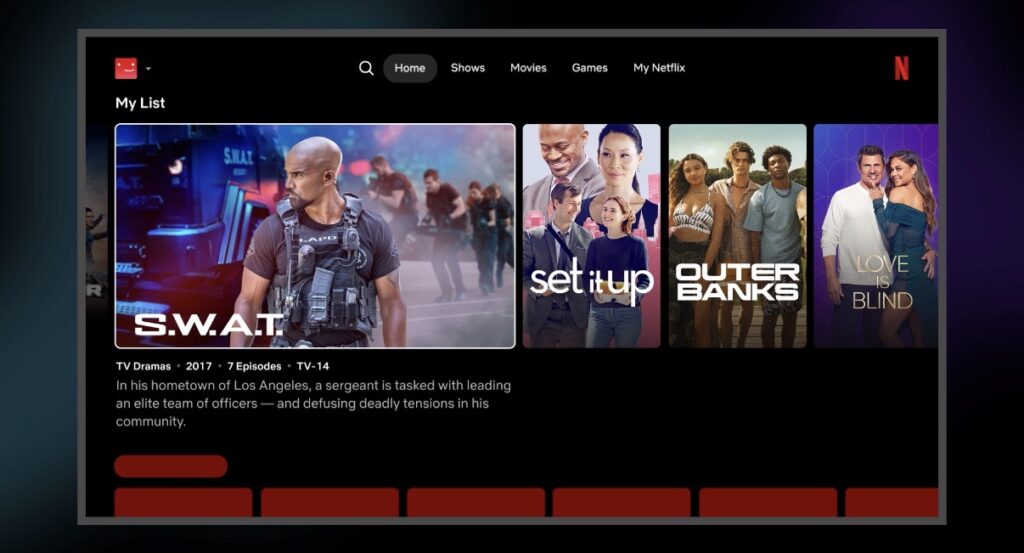
Image source: Author’s screenshot of Netflix Tudum (2025),accessed April 2026.
That means recommendation is not just ranking, it is also framing.
While users may believe they are choosing freely from a large catalogue, but their attention has already been influenced by a visual cue that has been selected for them. That is significant since, according to Gillespie (2017), media platforms not only store the data but actively select, distribute, and process it, applying their business logic in the process. As such, the personalized poster selection on Netflix represents an especially vivid example of that concept in action.
Following Flew’s (2021) definition of platform governance, one can say that it is built into the architecture of the network itself. Governance of Netflix takes place through recommendation rows and visual cues, selecting not only the available content but making it relevant and interesting to view. That understanding makes any idea of “neutral recommendation” rather untenable.
How Netflix learns your attention
Individualized posters are only possible because Netflix collects and interprets large amounts of behavioural data.Based on information obtained from the Netflix Help Center website, personalized recommendations are made based on factors such as what users have watched, how they have rated titles, what they searched for, what time they watched, and how similar users have interacted with the platform (Netflix, n.d.).In essence, personalization is only possible through profiling. A behavioral profile is built to understand what kind of viewer you are, which is used to determine what and how content is presented to the user.
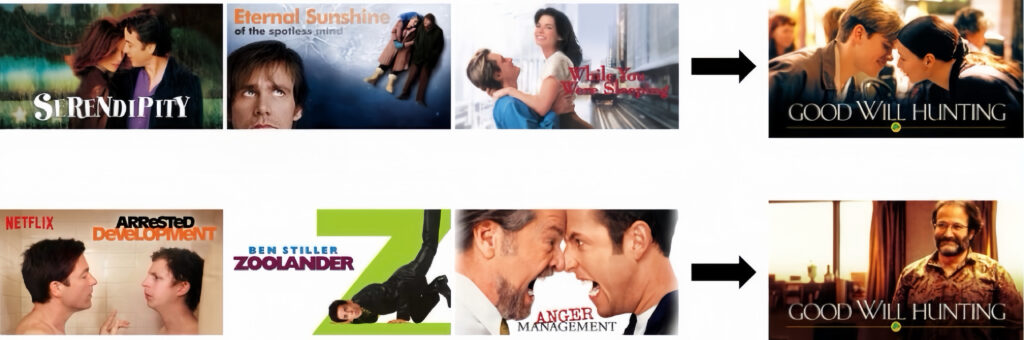
Image source: Created by the author, accessed April 2026.
While such processes often feel invisible, they are based on a range of routine actions. A viewer stops at a certain title, ends watching another one, leaves yet another one unfinished, or continues going back to a certain genre every night. All these actions by themselves do not carry a special meaning but taken altogether they form a pattern that allows for forming the basis for future decision-making. Over time, Netflix learns not only the preferences of a user but also how they should be presented in order to retain his/her attention. This makes the whole process of personalization much more complex than it can initially seem. Here, Netflix is not responding to already existing preferences but rather creates models of preferences based on routine activities and then uses them to generate new content. Such a mechanism explains why some people believe that Netflix understands them well without making any effort and without knowing anything about how these conclusions were reached.
Crawford (2021) argues that data-driven systems should not be treated as neutral tools, because they are shaped by institutional priorities and relations of power. The Netflix recommendation engine fits this argument well, as it operates seamlessly for users without them recognizing the underlying processes. The classification and optimization of predictions happen all the time through constant behavior tracking and interface changes.
Why this matters politically? Suzor (2019)’s argued that digital platforms regulate their users based on regulations that often remain unseen. Most people do not know exactly why they are seeing one poster rather than another, or why some titles repeatedly return to the top of the homepage. They see the result, but not aware of the mechanism behind it. There exists an information asymmetry here. Netflix is privy to all the details of the regulatory system at work and what it aims to achieve; users, meanwhile, are limited to the interface itself.
Recommendation is not just about matching content with taste. It is also about deciding which version of a title a user gets to see first. That is a significant form of platform power.
The 2018 controversy therefore matters not only because it involved race, but because it briefly exposed how much power the platform has over visual framing.
Bandersnatch and the limits of viewer control
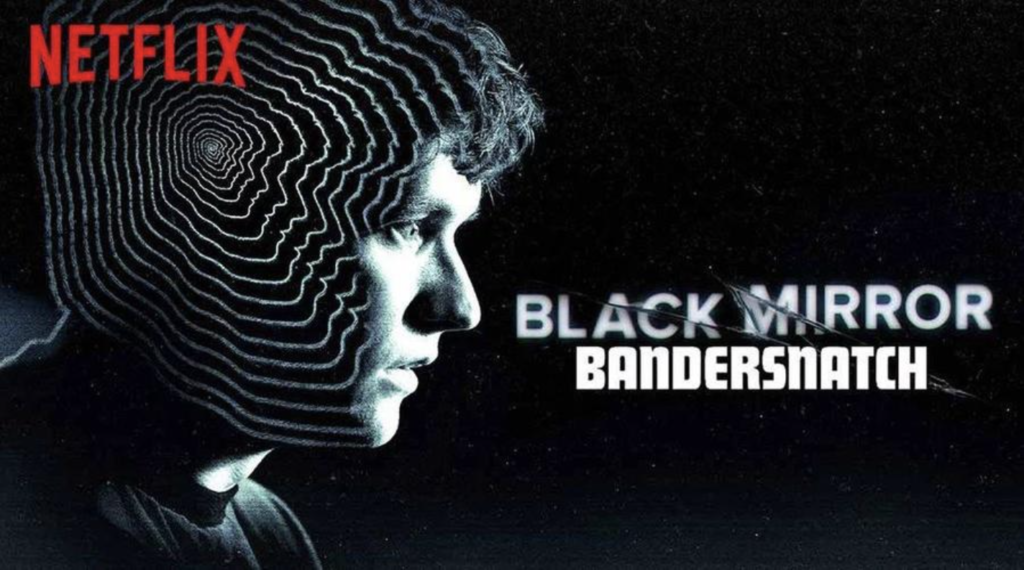
Unlike the poster controversy, <Black Mirror: Bandersnatch> made “choice” visible. Viewers were directly asked to select one path or another. Besides, the interactive nature gave viewers the impression that Netflix was delivering a more active and democratic form of viewing. In this sense, Bandersnatch looked like a platform giving users more control.

Image source: Author’s screenshot from Netflix, accessed April 2026.
However, Netflix began removing most of its interactive titles in 2024, and in 2025 even Bandersnatch will no longer be available to watch, as the company abandoned this type of content (Peters, 2024; Peters, 2025). This shift is revealing. Netflix stepped back from a form of storytelling where platform control was highly visible and users were clearly aware of their choices. At the same time, it continued to invest in much quieter systems of recommendation and interface personalization.
Netflix once experimented with visible forms of choice, but it has continued investing much more heavily in invisible systems of guided choice. The company continued developing and enhancing recommendation ranking, and personalized artwork among other things. In fact, the research department at Netflix has kept publishing results of research regarding the ways to enhance personalized recommendation of artwork, even using language-based systems (Netflix Research, 2026).
Bandersnatch shows the difference between visible choice and invisible choice. While watching Bandersnatch, users were aware that their choices were preprogrammed in a way. However, on the standard Netflix homepage, viewers usually overlook the fact that their choices are similarly determined. It is a more subtle process involving ranking, forecasting, and interface design.
Why “neutral” is the wrong word
At this point, the word “neutral” becomes hard to defend. The recommendation engine used by Netflix can truly assist the users in finding interesting things to watch. Additionally, it can facilitate navigating in the highly saturated environment of media. However, being useful does not necessarily mean being neutral. By trying to ensure more clicks and engagement, Netflix creates its own set of goals that affect how information will be filtered.
According to Netflix, the purpose of the recommendation process is to help users discover titles they will enjoy and improve the overall experience for members (Netflix, n.d.). This appears to make sense, but it is equally true that recommendation plays an inherent role in the subscription model used by the platform. In practical terms, this means that the factors such as engagement, click-throughs, retention, and continuous viewing play a critical role in the process.
What is more important to note here is not that Netflix is evil or that personalization must always mean manipulation. The stronger point is that convenience and neutrality are not the same thing. A system can be useful and still shape behaviour in ways users do not fully understand. It can feel personal while still serving platform priorities. Meanwhile, it can reduce friction while also narrowing the range of what gets noticed.
That is what the poster controversy helps expose. For recommendation is not merely a matter of matching tastes to content. Rather, it involves the selection of a suitable emotional signal for the target audience. Once recommendation operates at that level, it becomes less like a neutral library tool and more like a form of guided attention.
Netflix is choosing more than you think
So why does Netflix show you that cover in the first place? Not just because it “knows” your taste. It shows you that cover because platforms do not sit back and wait for users to pick their options. Platforms intervene to make the conditions for decision-making possible well before you hit the button. Netflix markets this intervention as convenience, yet convenience cannot be entirely impartial when it comes from a platform that determines the choices available to you, how those choices are presented, and which of them is more likely to attract your attention. The key point here is not about Netflix suggesting content that is perfectly tailored to you. It is about the extent to which Netflix holds the power to define what is worth watching.
The next time a title stands out to you on Netflix, the more interesting question may not be
“Do I want to watch this?”
but
“Why was this made to stand out to me?”
References
Amat, F., Chandrashekar, A., Jebara, T., & Basilico, J. (2018). Artwork personalization at netflix. Proceedings of the 12th ACM Conference on Recommender Systems – RecSys ’18. https://doi.org/10.1145/3240323.3241729
Crawford, K. (2021). Atlas of AI: Power, politics, and the planetary costs of artificial intelligence. Yale University Press.
Flew, T. (2021). Regulating platforms. (pp. 72-79). Polity.
Gillespie, T. (2017). Regulation of and by platforms. In J. Burgess, A. Marwick, & T. Poell (Eds.), The SAGE handbook of social media (pp. 254–278). SAGE.
Iqbal, N. (2018, October 21). Film fans see red over Netflix “targeted” posters for black viewers. The Guardian. https://www.theguardian.com/media/2018/oct/20/netflix-film-black-viewers-personalised-marketing-target
Netflix. (n.d.). How Netflix’s recommendations system works. Netflix Help Center. https://help.netflix.com/en/node/100639
Netflix Research. (2026, February 24). Netflix artwork personalization via LLM post-training. https://research.netflix.com/publication/netflix-artwork-personalization-via-llm-post-training
Peters, J. (2024, November 4). Netflix is removing nearly all of its interactive titles. The Verge. https://www.theverge.com/2024/11/4/24287857/netflix-removing-interactive-titles-games
Peters, J. (2025, May 9). Netflix is removing Black Mirror: Bandersnatch. The Verge. https://www.theverge.com/news/663933/netflix-black-mirror-bandersnatch-kimmy-schmidt-removal
Suzor, N. P. (2019). Lawless: The secret rules that govern our digital lives. Cambridge University Press.
Be the first to comment