
Last Month, as the final part of their ‘As Equals’ series on Gender Equality, CNN exposed a Global Rape Academy. In a shocking expose, CNN uncovered a sub-culture online where Men via messaging platforms, such as Telegram and other chat rooms associated with Adult Websites, would communicate and detail information on how to sexually assault women (Vandoorne, Fox, Kennedy, Stubbs, & Chacón, 2026).
As part of the investigation, CNN reporters contacted Piotr (a fake name) via Telegram in a chatroom called ‘Zzz’ (Vandoorne et al, 2026). This Chatroom is one of many spaces where men in the ‘sleep porn’ community come together to discuss, educate, and even sell ways to drug and sedate women (often, their own partners) so they can sexually assault them. This assault is sometimes filmed, and shared online to adult sites – in the article CNN references the site ‘motherless.com’, which is ‘home to more than 20,000’ ‘sleep porn’ content’ (Vandoorne et al, 2026).
CNN reported that in February alone, Motherless received 62 million visits, with some sleep content having views of ‘Hundreds of thousands of views’ (Vandoorne et al, 2026). Now it’s worth noting that not all 62 million visits would’ve been to view such content, as Motherless houses many categories of adult content. This is of course not to absolve Motherless, nor minimize the severity and seriousness of sleep pornography, but it is important to clarify as there has been a lot of reaction on social media – likely this is a far more niche community than the 62 Million headline. What is important however is not debating what the accurate number is, and working out how we make this number zero and keep women safe online.
So what can be done?
The Dominique Pelicot Case and The Introduction to Online Communities of Abuse

Before we look at ways to police, or govern this type of abuse, it’s important to understand the context, as well as what the legal precedent is so far.
In 2024, Dominique Pelicot, and 50 other men, were convicted the mass rape and drugging of Gisele Pelicot, Domique’s wife of over 50 years (Vandoorne et al, 2026).
“While drugged unconscious by him, she was raped over 200 times by 70 men, not all of whom could be tracked down by police” (Vandorne et al, 2026)
What is shocking is how police became aware of these messages. Dominique was initially arrested in 2020 at a supermarket for attempting to film up the skirts of female customers.
‘Whilst investigating the upskirting, police officers confiscated his hard drive, laptop and phones and found hundreds of images and videos of his wife of 50 years being raped, opening one of the most horrifying sex offense cases in modern French history.’ (Vandoorne, Kennedy, Baum, Fox, Dotto, Stubbs, Schrickel and Manley, 2024)
Dominique instigated, and met these men on an online ‘dating site’ called Coco, in a chatroom called ‘Without Her Knowledge’. In this chatroom, where sexual abuse is normalised, Dominique could go under aliases and ‘establish a framework to organise the abuse of his wife’ (Vandoorne et al, 2024). Had his real life infractions not been caught, one hates to wonder how much longer the abuse of Gisele may have continued for.
The Legal Fallout Online

Dominique would admit to all the various charges against him. He, alongside 50 other men have been arrested (Vandoorne et al, 2024). Dominique received 20 years in jail, however some men received lighter sentences, or even walked away free. The defense argument is that they had assumed Gisele had provided consent, via Dominique.
The men committing the crimes is one part of this problem – what about the platforms that allowed such communities to grow? Following these investigations, Coco, the dating site that Dominique used to arrange the abuse of Gisele, has now been taken down.
This is in step with laws in Australia around revenge porn laws and the ‘online safety act’ or the ‘Take it Down Act’ in the US. Both Countries state that the sharing of nude, or sexual image or video of someone without their consent is a crime, and there are also various legal mechanisms to remove this content from the internet.
The removal of this content is a good step, but is obviously no solace to someone like Gisele. Removing this content, whilst an important legal function, doesn’t rectify the long term abuse she unknowingly was a victim to. Coco is also one of many places where these people meet online, so shutting down doesn’t stop this behaviour from happening elsewhere.
It is also worth mentioning the age verification laws in Australia, which apply to Social Media companies, as well as adult websites. From an adult website perspective, some sites such as pornhub, have outright banned Australians in protest to these new laws. There are many debates around this issue which we will not delve into, however one thing is for certain: Adult websites take notice and do update their governance when laws are changed. Perhaps this can shed some light on a path forward in the context of policing ‘Sleep Porn’ communities.
Understanding Communities of Abuse

So how do these communities form online? In the CNN report, they quote Sandrine Josso, who herself was victim of sexual assault, calls communities like Sleep Porn, which Piotr and Dominique are part of as, ‘Schools of Violence’, or even ‘Rape Academies’ (Vandoorne et al, 2026).
We can use an academic lens to understand these communities. Adrienne Mansanari, in viewing two prominent cases in ‘The Fappening’ – where ‘illegally acquired nudes of celebrities were distributed – and Gamergate – a hashtag movement used to harass female game developers, players and journalists – establishes a concept he calls a ‘Technoculture’ (Massanari, 2017).
Massanari’s notion of a technoculture are online communities which ‘demonstrate retrograde ideas of gender, sexual identity, sexuality, and race and push against issues of diversity, multiculturalism, and progressivism’ (Massanari, 2017). Technoculture ‘often relies an Othering of those perceived as outside the culture, reliance on outmoded and poorly understood applications of evolutionary psychology,
and a valorization of masculinity masquerading as a peculiar form of “rationality.”(Massanari, 2017).
What makes the cultures unique is that it relies on ‘sociotechnical channels to coordinate and harassment (Massanari, 2017). The people that make up technocultures most likely wield a deeper understanding of the internet, and use platforms that are more niche, or simply harder to access.
In the CNN expose, they reference how members of the ‘Sleep’ community, would use the dark web, or accept payments for content, or sedatives, via Crypto. These are channels that are very much not yet dominantly used in the mainstream, and add a layer of complexity to police abusive technocultures.
Using the lens of Technocultures sheds an interesting light on the cases of Piotr and Dominique and the ‘Rape Academies’ they were apart of. Whilst Massanari is referring to more mainstream channels, in Reddit and 4Chan, The ‘Zzz’ and ‘Without Her Knowledge’ group chats on Coco and Telegram alike certainly seem to fit in this ‘sociotechnical channel’ definition key to a technoculture (Massanari, 2017).
If we return to the fallout of Dominique Pelicot’s case, Coco was shutdown. But as we understand above, the people that form these technocultures have a level of tech savvy-ness that they will always find new platforms, or even ways around platforms like pornhub outright banning users.
Understanding a Multistakeholder Approach and Policing Platforms
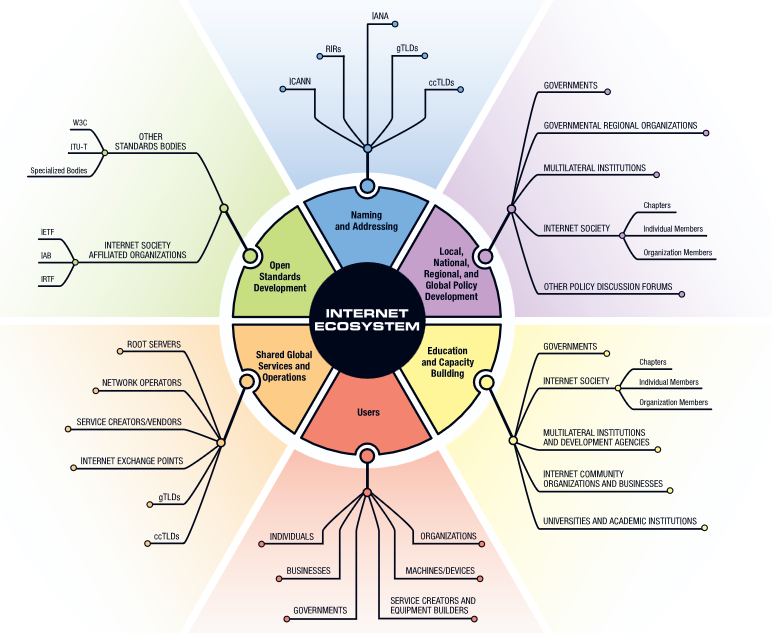
Clearly there are challenges and complexities involved in policing technocultures. The like the members of the technocultures, there are multiple channels, platforms and stakeholders involved. It’s why simply blocking Coco, or banning access to sites, doesn’t work.
A leading framework to both view and govern the internet is the Multistakeholder approach.
“The Internet was developed by the public and private sectors, academia, and civil society,
harnessing the shared technical expertise of a global community of equals. Today, much
of the Internet’s infrastructure is operated across borders and by a range of different
stakeholders. It is a complex but robust ecosystem where each part of the Internet can
rely on many other parts working together but often independently.” (Internet Society, 2016).
Therefore, to govern the internet, it requires that all stakeholders that make up the ecosystem of the internet play it’s part in how we govern it. As the various stakeholders that make up the internet ecoystem evolves, so does our way of governing it.
One such method of governance is content moderation. There are various mechanisms available that platforms use to do this. Reddit for example, has user moderation, with ‘moderators’ of a subreddit responsible. This was exposed during The Fappening, as Media and Government stepped in, which lead to governance changes at Reddit with the platform banning certain users, as well as the r/thefappening subreddit (Massanari, 2017).
A user approach alone clearly didn’t work for Reddit – it certainly wouldn’t work in the case of Motherless and sleep porn. Motherless claims to be a ‘moral free file host where anything legal is hosted forever’ (Vandoorne et al, 2026).
We are therefore shifting our view away from the culture, and the content itself, but the platforms that house it. The issue content moderation with user content, is that it’s a ‘catch-as-catch-can’ (Roberts, 2019). In the case of revenge or sleep porn, where a victim has not given consent to the sharing of explicit content, the damage has already been done and there isn’t enough at stake for the platform hosting or fostering this content to swiftly act and remove this content.
This is a view Martin Moore and Damian Tambini explore, in that to regulate a platform requires a focus on the ‘design of the service, its business model, the tools the platform provides for users, and the resources it devotes to user complaints and user safety, as each of these aspects influences information flows across the platform.’ (Moore & Tambini, 2021). That is to say, by fundamentally challenging the foundations of the platform, such as its business model, the platform itself will be forced to update it’s own self governance, just like we saw with Reddit in the example of The Fappening.
How then could we apply this multistakeholder thinking to a better model of governance of the platforms, not the users?
A Duty of Care Approach And A Reduction of Harm
One option could be for governments to more strictly create a legal framework that encourages platforms hold more of a duty of care for it’s users. Users in the context of sleep porn, has to be understood as consumers of content, up-loaders of content, and people in the content itself. That is, a duty of care, or in the instance sleep porn technocultures, very clear demonstration of consent in the creation of such content.
Moore & Tambini establish a duty of care model that can be a step in the multistakeholder approach of policing technocultures. Their view is, instead of trying to police every bit of content uploaded, we approach this similarly to architecture and spaces (Moore & Tambini, 2021). They reference regulations in public and private spaces, where ‘In general, there should be adequate lighting and ventilation, fire extinguishers, and exits’ (Moore & Tambini, 2021). They also reference workplace laws, where it’s on the onus of the employer to ensure the adequate safety of their staff (Moore & Tambini, 2021).
Applying this view to technocultures therefore puts the onus on the platform that houses these communities. Moore & Tambini suggest that an independent regulator, bound by the Humans Rights Act, and it’s role is not to censor content, but the choice architecture at the systems level of the platform (Moore & Tambini, 2021). By putting human rights as the focus, it allows us to properly assess the risks of harm of it’s users.
To view this in the context of ‘Sleep Porn’ technocultures, it could go even one step further with ‘at risk’ content, or even simply a blanket requirement of a provision of consent from it’s users. This would mean all actors of any content proving consent of the content they’re featuring in.
Building on this, the penalty for housing content that has either failed to provide this consent, or worse, resulted in systemic abuse, such as with Gisele Pericot, the platform which housed this content would be liable to pay a fine for any real world cases of abuse linked to content on their platform.
This approach of duty of care, builds upon already existing laws around Revenge Porn, and the requirement of consent. As we’ve seen with rules around age verification, and the threat of hefty fines, adult content platforms are swift to act. By shifting the focus of reducing harm, this may be a way to protect and avoid cases like Dominique Pelicot, and Sleep Porn Technocultures.
References
Congressional Research Service. (n.d.). LSB11314: Online safety and content moderation—Selected legal issues. U.S. Congress. https://www.congress.gov/crs-product/LSB11314
Department of Infrastructure, Transport, Regional Development, Communications and the Arts. (n.d.). Current legislation. Australian Government. https://www.infrastructure.gov.au/media-technology-communications/internet/online-safety/current-legislation
eSafety Commissioner. (n.d.). Police and legal help. Australian Government. https://www.esafety.gov.au/key-topics/image-based-abuse/police-and-legal-help
eSafety Commissioner. (n.d.). Social media age restrictions. Australian Government. https://www.esafety.gov.au/about-us/industry-regulation/social-media-age-restrictions
FEMINIST [@feminist]. (2024, April 17). A months-long investigation by CNN has exposed a global network where men share tactics for drugging and sexually… [Instagram post]. Instagram. https://www.instagram.com/p/DXNEpskjJRj/
Internet Society. (2016). Internet governance: Why the multistakeholder approach works. Internet Society.
Massanari, A. (2017). #Gamergate and The Fappening: How Reddit’s algorithm, governance, and culture support toxic technocultures. New Media & Society, 19(3), 329–346.
McGowan, J. (2024, September 17). Major porn sites have blocked Australian users to protest new laws – will kids be better off? The Conversation. https://theconversation.com/major-porn-sites-have-blocked-australian-users-to-protest-new-laws-will-kids-be-better-off-277835
Ockenden, W. (2014, October 28). The Fappening: How celebrity photo hacks happen and how to protect yourself. ABC Technology. https://www.abc.net.au/technology/articles/2014/10/28/4116140.htm
Reuters. (2024, September 17). Dominique Pelicot admits to rape charges in French court. ABC News. https://www.abc.net.au/news/2024-09-17/dominique-pelicot-admits-to-rape-charges-in-french-court/104363260
Roberts, S. T. (2019). Behind the screen: Content moderation in the shadows of social media. Yale University Press.
Rothman, M. (2016, October 27). Jennifer Lawrence nude photo hacker sentenced to 18 months. ABC News. https://abcnews.com/Entertainment/jennifer-lawrence-nude-photo-hacker-sentenced-18-months/story?id=43131556
Vandoorne, S., Fox, K., Kennedy, N., Stubbs, E., & Chacón, M. (2026). Expose: Rape and assault online. CNN. https://edition.cnn.com/interactive/2026/03/world/expose-rape-assault-online-vis-intl/index.html
Vandoorne, S., Haddad, M., Kennedy, N., Mackintosh, E., & Chacón, M. (2024). “Dominique Pelicot organized the mass rape of his wife. Texts show how he operated. CNN. https://edition.cnn.com/interactive/2024/12/europe/gisele-pelicot-france-case-messages/
Woods, L., & Perrin, W. (2021). Obliging platforms to accept a duty of care. In M. Moore & D. Tambini (Eds.), Regulating big tech: Policy responses to digital dominance (pp. 93–109). Oxford University Press.
Be the first to comment