Introduction: Why Privacy Still Matters
Whenever you scroll through social media, online shop and even in a city where there are CCTV cameras, you are creating data. Such information as your whereabouts, likes and dislikes, friends, and even your face can be gathered, saved, and utilized in a manner that you could never have imagined. Privacy that once was considered as the mere right to “be left alone”, has turned out to be one of the most disputed problems in digital governance. As Suzor (2019) believes, platforms become the rule-makers of our digital lives, which is, in most cases, meaningless when participation by users is concerned.
This blog covers the history of privacy, its importance and what governments and sites are doing (or not) to ensure its protection. I believe that privacy is not dead, but it is being transformed with referencing to the case studies like the Cambridge Analytica one and the recent changes in the Australian privacy laws. However, as long as we do not consider privacy as a right to be a core of digital, we would strip democracy, equality and human dignity.
What Do We Mean by Privacy?
The traditional definition is attributed to Warren and Brandeis (1890) who defined the privacy as the “right to be left alone”. Intrusive photography and newspapers were the issue of that time. In current times, privacy is not about being alone but rather more about the power to regulate personal information; who obtains it, what is done with it and whether individuals can consent to it with any meaning (Nissenbaum, 2010).
Helen Nissenbaum redefines privacy as the integrity of context: information is only supposed to flow in a manner that is social context. To use a medical condition as an example, it is not wrong to tell your doctor about it and would not assume that the information will be sold to advertisers (Nissenbaum, 2018). In this school of thought, it is emphasized that privacy is relative as it is based on trust and circumstances.
Variations Across Cultures
Everywhere, privacy is not perceived in the same way. It is also safeguarded in accordance to jurisdictional and cultural differences. The issue of privacy in the United States is based on choice and control. People have a choice over what to disclose, yet corporations take advantage of ambiguous permission forms (Warren and Brandeis, 1890). Privacy as a human right is considered in Europe. Both the European Convention on Human Rights and GDPR codify privacy as well as dignity and the freedom to express themselves (Flew, 2021). Privacy in China is of lower priority to the state and business concerns, and simplifying data protection as a means of control, not empowerment, (Massé, 2023). Privacy is a legal concept in Australia but has traditionally been weak in enforcement, but in 2025 was reinforced by reforms (One, 2025).
This variety demonstrates why international platforms find it difficult to reconcile privacy expectations in different jurisdictions. As Karppinen (2017) mentions, digital rights cannot be separated due to human rights, and they are often understood differently.
Case Study: Cambridge Analytica
The case of Cambridge Analytica, which happened in 2018, is one of the most notorious instances of how the violation of digital privacy can disrupt the democratic procedure. The political consulting firm was exposed by a whistleblower called Christopher Wylie who disclosed that the company had collected up to 87 million Facebook users’ data using an apparently harmless personality test named This Is Your Digital Life. Something that seemed a fun online exercise has turned out to be a complex data-mining exercise aimed at creating psychological profiles of the voters (Flew, 2021). Micro-targeting of individuals with customized political advertisements was subsequently applied using these profiles in the Trump presidential campaign and in the Brexit referendum.
The vulnerability of online consent was revealed by the scandal. The users who viewed the quiz were not aware that any personal data including data of their friends would be weaponized in politics. This proved that consent in the digital world is usually not meaningful and buried in complicated terms of service agreements that a small number of people read and comprehend (Suzor, 2019). Essentially, the users were deprived of the control over their data, and the power disparity between platforms and users was noted.
Another significant problem was the lack of transparency. Facebook originally refuted the extent of the breach and only acknowledged the magnitude of the data abuse under the pressure of the masses and the investigations of the media. This closedness showed the priority of platforms in reputation management instead of accountability. According to Nissenbaum (2010), privacy is tied to the integrity of the context but Facebook actions went against the wish of the users who thought that their information was limited to social interactions and not political interference.
There was also poor accountability. Though the U.S federal trade commission imposed a fine on Facebook worth 5 billion dollars in 2019, the critics pointed out that the fine was relatively small, relative to the revenue that facebook generates in a year. In the case of a corporation of the scale of Facebook, the fine was chalked in as the cost of doing business and not a deterrent (Flew, 2021). This brought up more general concerns regarding the ability of the current regulatory frameworks to discipline tech giants who’s economic might is bigger than the financial strength of several governments.
The implications of the scandal go beyond Facebook. It has shown the extent to which data may be used to corrupt democratic institutions through voter manipulation. According to scholars like Goggin et al. (2017), the outbreak of the incident signified the risks of the information asymmetry where platforms have access to immense amounts of personal information and users are not aware of what is being done with it. Cambridge Analytica demonstrated that privacy breaches are not only personal damages but can also influence the political results and damage the faith to the democratic system.
Lastly, the case raised international controversies on regulation. The scandal strengthened the urgency of the General Data Protection Regulation (GDPR) that became effective in 2018 and aimed to provide individuals with a more prominent control over their data in Europe. It also led to the calls of reforming the Privacy Act in Australia, with the most recent changes, which came in the year 2025, establishing more robust safeguards against the abuse of personal data (One, 2025). Cambridge Analytica, in this regard, was not merely a scandal, but a trigger of change in legal and policy on a global level.
This case remains a turning point in digital governance, showing how privacy violations can undermine democracy itself.
Why Digital Privacy Is Harder Today
The digital platforms have transformed the game. Geolocation and behavioral data is continuously collected by Smartphones, apps, and sensors (Goggin et al., 2017). You can not consent to infinity terms of service by clicking on I agree without informed choice (Suzor, 2019). AI and facial recognition increase surveillance, which may be unknown to the populace (Humphry et al., 2023).
As Goggin et al. (2017) observe, the society is experiencing a growing problem since not only is information digitized but also can be repurposed infinitely. Privacy has ceased to be an isolated incident but a flow of data within a system.
Whose Privacy Gets Protected?
Privacy does not have an equal access. According to Marwick and boyd (2019), disadvantaged groups of people, such as the poor communities, activists, children, in most cases, have no ability to opt out of the surveillance. Children are spied upon by their parents because it is safe. The activists are monitored by the state. The poor people are forced to sell the information in order to get simple services.
This brings up ethical issues: do the wealthy have a right to privacy or is it a right of the poor? The fact lies in the fact that the process of gaining privacy is particularly hard when a person has already been marginalized in some other spheres of life.
Profiling and Digital Redlining
Targeted advertising is one example on how privacy meets with discrimination. Dark ads also enable advertisers to present other messages to other groups, and it is commonly invisible. In the year 2022, Facebook was prohibited in its use of the ethic affinity type of targeting, which infringed upon the US Fair Housing Act.
Algorithms used in profiling are potentially instrumental in propagating inequality such as excluding individuals to housing, jobs, or services due to race, gender, or even age. The auditing algorithms and transparency are getting increasingly vocalized (Flew, 2021). Profiling turns into digital redlining when there is no monitoring.
User Attitudes: What Do People Think?
Surveys show mixed feelings. In Australia, 90% of respondents in 2023 understood why privacy matters, but only 21% felt confident in their knowledge. Many care but do not know what to do (OAIC, 2023). Young people (12–17) often misunderstand “data privacy,” though culturally diverse youth show stronger awareness (Humphry et al., 2023). Globally, professionals and those who have experienced violations are more concerned, while older users often believe “privacy no longer exists” (Goggin et al., 2017).
This gap between concern and action highlights the need for better education and regulation.
Regulation: GDPR vs Australia’s Privacy Act
The GDPR that was adopted in 2016 and that became effective in 2018 has an international scope. It is applicable to any business dealing with the data of the EU citizens. Rights consist of access, erasure, portability and objection. Some of the principles are lawfulness, fairness, minimization, accuracy, storage limits, integrity, and accountability (Flew, 2021).
The Privacy Act of Australia, which was initially enacted in 1988, was revised in 2025. Reforms enacted a statutory tort to enable individuals to sue in regard to severe invasions, a minimum age of 16 to open social media accounts, anti doxxing, criminal punishments, greater enforcement authority of the OAIC, and Children Online Privacy Code (One, 2025).
These changes demonstrate that Australia is getting up to date, but critics say that industry-specific changes to advertising are in consumers’ favour (Kemp, 2023).
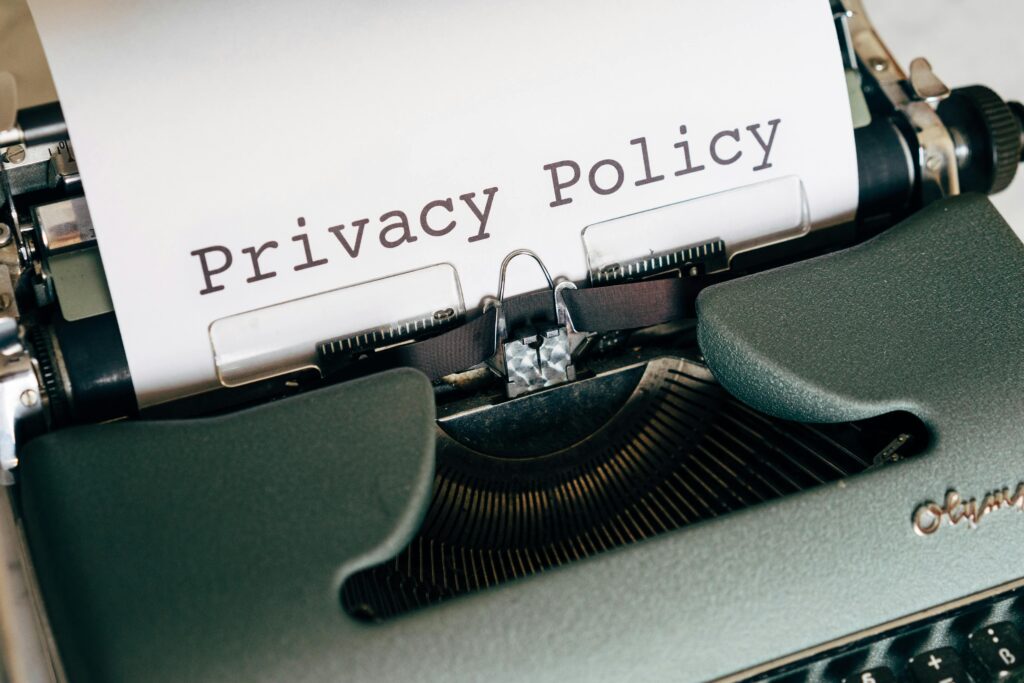
Picture from:https://www.pexels.com/zh-cn/photo/4160125/
The Privacy Trade Off
Here is the unwanted reality: we tend to sell the privacy in favor of convenience. Social connectivity, personalized recommendations, and free applications all are based on the collection of data. The question arises how much are we ready to lose?
Suzor (2019) is reminding us that platforms are effective to make the rules of the digital life. The end user license agreement is not readable; the permission is too deep and the choice of not wanting it is mainly unattainable. Such asymmetry exposes the users to vulnerability.
Case Study under consideration: Facial Recognition in the Street.
Facial recognition is on the proliferation -airports to shopping malls. Although it is being marketed as a means of increasing security, there are enormous privacy issues. There can be no consent; you can not choose not to be scanned in the streets. Prejudice is present, as women and individuals of color have a greater probability of mistakes (Chen and Cheung, 2018). There is the likelihood of surveillance creep and the data gathered due to safety is used to market or even police.
The Privacy Act reforms in Australia and the AI Act in Europe are only starting to address these problems, although their enforcement is still infrequent.
Summary: The Digital Right to Privacy.
Privacy is not merely a matter of keeping secrets behind the doors- it is about being dignified, autonomous and democratic. A human right implies it cannot be sold to another under contracts. It should not just be left to the goodwill of corporations and should be safeguarded by the governments. Breach by platforms should be accountable. Digital rights cannot be separated and attached to human rights as Karppinen (2017) argues. The absence of privacy affects all other freedoms; freedom of expression, equality and security.
Conclusion: Where Do we begin here?
We are currently living in a world that each click, swipe, and share creates data. The issue of privacy protection cannot be addressed by personal precautions only; it is mandatory to implement systemic changes. Better legislation such as GDPR and Australian 2025 reforms are positive moves, however, implementation and education are vital. To the common users, the dilemma is about striking a balance between the convenience and the care. Ad blockers, special passwords, and privacy are helpful, but eventually, it is up to the platforms and regulators.
The takeaway? Privacy is not near death, it is becoming. And in the platform generation, the protection of digital rights is the defense of democracy itself.
References
Chen, Z. T., & Cheung, M. (2018). Privacy perception and protection on Chinese social media: a case study of WeChat. Ethics and Information Technology, 20(4), 279–289. https://doi.org/10.1007/s10676-018-9480-6
Flew, T. (2021). Platforms on trial. Intermedia, 46(2), 24-29.
Goggin, G., Vromen, A., Weatherall, K. G., Martin, F., Webb, A., Sunman, L., & Bailo, F. (2017). Digital rights in Australia. Digital Rights in Australia (2017) ISBN-13, 978-0. https://papers.ssrn.com/sol3/papers.cfm?abstract_id=3090774
Humphry, J., Boichak, O., & Hutchinson, J. (2023). Emerging online safety issues: co-creating social media with young people-research report. Emerging Online Safety Issues-Co-creating social media education with young people-Research Report.
Karppinen, K. (2017). Human rights and the digital. In The Routledge companion to media and human rights (pp. 95-103). Routledge. https://www.taylorfrancis.com/chapters/edit/10.4324/9781315619835-9/human-rights-digital-kari-karppinen
Marwick, A. E. boyd, d.(2019). Understanding privacy at the margins. International Journal of Communication, 12(9).
Massé, E. (2023). Data protection: why it matters and how to protect it. Access Now. https://www.accessnow.org/data-protection-matters-protect/
Nissenbaum, H. (2010). Privacy in context. In Stanford University Press eBooks. https://doi.org/10.1515/9780804772891
Nissenbaum, H. (2018). Respecting context to protect Privacy: Why meaning matters. Science and Engineering Ethics, 24(3), 831–852. https://doi.org/10.1007/s11948-015-9674-9
Office of the Australian Information Commissioner (OAIC). (2023). Australian Community Attitudes to Privacy Survey 2023. OAIC. https://www.oaic.gov.au/engage-with-us/research-and-training-resources/research/australian-community-attitudes-to-privacy-survey/australian-community-attitudes-to-privacy-survey-2023
One, K. D. (2025). Australian privacy Law changes 2026: Get fined $50M or turn it into a 7-Figure revenue stream | Digital One. Digital One Agency. https://digitaloneagency.com.au/australian-privacy-law-changes-2026-get-fined-50m-or-turn-it-into-a-7-figure-revenue-stream/
Suzor, N. P. (2019). Lawless: The secret rules that govern our digital lives. Cambridge University Press.
Warren, S. D., & Brandeis, L. D. (1890). The right to privacy. Harv. L. Rev., 4, 193.
Be the first to comment