Introduction: The Rise of Algorithmic Content on Social Media
Social media has now become an indispensable part of most people’s daily lives. Compared with earlier media platforms, beyond offering simpler operation, more powerful functions, and faster performance, we can also notice some characteristics that seem different from those of a few years ago. First, although the content each person sees on social media is not exactly the same, there appear to be many repeated viewpoints and similar pieces of content across different users’ feeds. These similar ideas keep appearing continuously in people’s accounts, which raises some questions. Why are these particular types of content so prevalent? Why do they appear in front of people in this way? What determines which content is shown to users? To explore this, we need to introduce a few concepts, namely algorithms and artificial intelligence. In fact, it is these systems that are “filtering” information for each of us. While some people believe that such computer technologies are neutral, this view is increasingly being challenged. This article will examine this issue in detail and reveal whether algorithms and artificial intelligence are truly neutral tools or whether other mechanisms are shaping their direction and influence.

Conceptual Foundation
First, we will clarify these concepts to reduce the difficulty of understanding. The first question is, what exactly is an algorithm? An algorithm is a technical term frequently used in computer science, and it can be understood as a set of instructions for a computer, usually consisting of code written by programmers in programming languages. This code forms a series of finite, well-defined, and executable steps that transform input into output (Wikipedia Contributors, 2019). This means that the rules expressed by an algorithm are explicit and must terminate upon completion. In today’s rapidly advancing field of computer science, there are generally two types of algorithms. One is rule-based algorithms, which rely on logic predefined by programmers; in simple terms, the computer strictly follows the program, making the rules relatively fixed but less flexible. The other is learning-based algorithms, which allow computers to use their CPU and GPU to perform neural network learning, meaning that computers can generate more adaptive outputs through learning (Wikipedia Contributors, 2019). Learning-based algorithms are closely related to modern artificial intelligence. Artificial intelligence is an interdisciplinary field that can be understood as a system composed of algorithms, data, and deep learning (Wikipedia, 2019). Therefore, the essence of AI is learning patterns from data. A simple example is feeding a computer many images of humans and telling it that these are humans; after some time, the computer learns to recognize them. Similarly, if a computer is given a large amount of text along with explanations of meaning, it can learn to write articles. As a result, data plays a crucial role in the field of AI, because without data, AI can hardly function. When training AI, elements of everyday life need to be converted into data, such as human behavior, relationships, and even emotions being encoded as data and labels. This process is known as datafication (Wikipedia, 2019). Algorithms and AI have also driven the automation of computer tasks. Traditional automation, for example, allows computers to execute fixed tasks at specific times based on algorithms, which is predictable but not very intelligent. However, with the development of AI, automation has become more intelligent. Real-world examples include driver assistance systems, intelligent customer service, and algorithmic recommendation services. After introducing these key concepts, many people may consider AI to be a powerful, objective, and rational tool. In reality, however, this understanding is overly simplistic and reflects a form of technological determinism. Technology is never neutral; rather, it is embedded within social structures of power (Crawford, 2021).
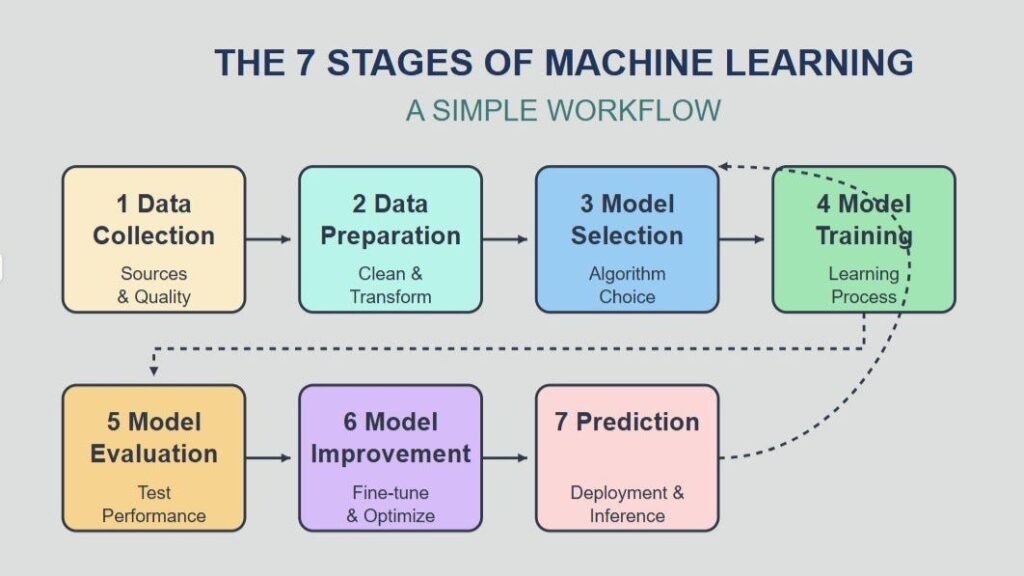
Although AI algorithms can “think” independently, learn on their own, and generate outputs, this does not mean that AI is an autonomous agent capable of operating entirely on its own. As Crawford (2021) points out, the functioning of AI relies on vast amounts of data, human labor, and computational resources. However, these infrastructures are never neutral; they are deeply rooted in human society and are closely connected to economic and political forces. In other words, those who control data, algorithms, labor, and technology hold a certain degree of power in the algorithmic domain (Crawford, 2021). Therefore, structurally speaking, artificial intelligence cannot be understood simply as a purely technical tool.
Mechanisms of Bias
I believe many people will naturally ask a question: since we are using media platforms developed by technology companies, do the algorithms of these platforms tend to favor the interests of those companies? The answer is almost certainly yes. If a company releases a product, that product must align with the company’s values. As a result, platform algorithms are designed to continuously make decisions that benefit the company (Crawford, 2021). A simple example comes from Noble (2018), who points out that Google is essentially an advertising company rather than a public information institution, because when users search on Google, advertisements are often placed in prominent top positions. This reflects how Google designs its search algorithms to serve its own interests. In addition, the logic behind search engine recommendations is also influenced by other forms of value. Certain types of information and headlines tend to attract more clicks, so search engines are highly likely to prioritize such content. This means that what users see first is not necessarily the most useful or the most accurate information, but rather content that is more profitable (Noble, 2018). Therefore, algorithms can be understood as a kind of system for registering power, reinforcing existing social structures (Crawford, 2021). Those who control data, labor, and technology also gain greater power to shape reality, along with stronger commercial capabilities, and it is precisely algorithms that grant them the ability to construct the world itself.
In most people’s understanding, algorithms are expected to process data in a “neutral” way. For example, when using a search engine, people assume that the results they see are the most accurate and relevant. If I search on Google whether smoking is a good or bad habit, the platform will usually provide a rational and seemingly neutral answer. However, things do not always develop in such a straightforward direction. In some cases, this seemingly “neutral” mechanism may actually reinforce social biases (Noble, 2018). In one example, Safiya Umoja Noble found that when she entered the term “black girls” into a search engine, a large amount of explicit content appeared in the results. This outcome revealed the presence of racial bias within search engine systems. Noble (2018) argues that this is not a technical error, but rather the result of multiple interacting factors, including user click behavior, search engine optimization practices, advertising logic, and historical and cultural racial stereotypes. This suggests that algorithms are not simply “discovering” the world, but actively “reconstructing” it. Moreover, such biases do not remain at the individual level; they are continuously amplified by algorithms. This happens because search engine algorithms carry a form of “authority,” meaning that content placed higher tends to receive more clicks, and those clicks in turn push the content even higher. This cycle amplifies biases and presents them as “mainstream,” leading to the intensified visibility of issues such as racial discrimination, gender inequality, and social stratification across platforms (Noble, 2018).
So where do these online biases come from? Crawford (2021) points out that data is never equivalent to objective truth. Instead, data is often “selected” and “constructed,” and in this process, a large amount of information is ignored, reducing complex individuals or events into calculable “data.” For example, a person with certain visible characteristics may be described as a suspect. This may not necessarily be true, but it reinforces existing social perceptions and biases toward such individuals (Crawford, 2021). This phenomenon, often described as the “loss of context,” shows that bias is already embedded in the data before it is fed into algorithms. Algorithms themselves cannot automatically correct these issues; instead, they tend to optimize for dominant patterns and perceived accuracy, further embedding these biases into people’s perceptions (Crawford, 2021). Therefore, the problem does not lie in the algorithm itself. Rather, the algorithm’s dependence on data, which is currently unavoidable, means that it inherits the inequalities present in that data. At the same time, people’s trust in algorithms makes these biases even more difficult to detect.
Consequences & Manipulation
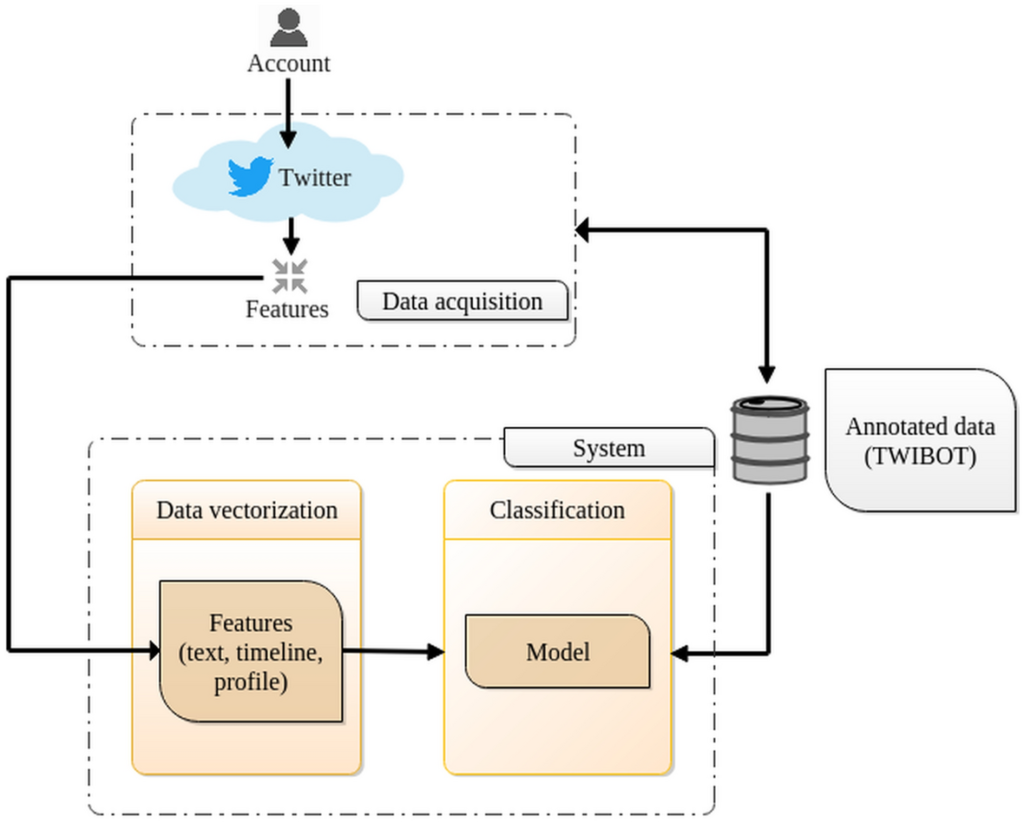
Users of social media often believe that trending topics are the result of “natural” discussions among users, but reality is often misleading, as some so-called user-generated trending content is not truly organic and is instead shaped by algorithmic ranking, automated accounts, and data manipulation (Bolsover & Howard, 2018). This involves an important concept known as computational propaganda, which refers to the use of automated accounts and platform algorithms to control the public information environment, where the key is not what is being said but the control of information flow, the manipulation of visibility, and the reshaping of the structure of public opinion (Bolsover & Howard, 2018). According to a case study by Bolsover and Howard (2018), a large portion of political content on Twitter actually comes from a very small number of highly active accounts, with about 30 percent of 1.17 million tweets generated by highly active users and the top 100 accounts alone contributing 28 percent of the content, which shows that social media platforms are not spaces where every user’s voice is equally represented but can instead be dominated by a small number of accounts. More concerningly, a significant proportion of these high-exposure accounts are automated bots (Bolsover & Howard, 2018), and these bot accounts, driven by algorithms and AI, function as automated tools that can post content at scheduled intervals and in large volumes, averaging more than 70 posts per day, with some exceeding 100 posts, operating in a mechanical and programmatic manner much like workers on an assembly line (Bolsover & Howard, 2018).
The content and viewpoints posted by these bots are often neither intelligent nor rational, and in fact some users can quickly recognize their presence. However, the real power of bots lies in their deep understanding of platform mechanisms. For example, they can frequently post content with the same hashtags and comments, artificially creating the appearance of “trending” topics (Bolsover & Howard, 2018). Even more concerning is that these bot accounts can follow each other, like each other’s posts, and repost one another’s content. As a result, when large numbers of bots amplify the same topic in an explosive manner, platform algorithms may mistakenly interpret this activity as genuine popularity or valuable content, and therefore push it to more real users, among whom some will inevitably believe or accept the information. This is why the real danger of computational propaganda lies not only in spreading false information, but in manipulating the conditions of public discourse and promoting messages that can negatively influence the broader environment and people’s perceptions. For example, groups such as the “1989 bot group” and the “Pan-Asia group” have spread anti-Chinese government messages, which can significantly affect people’s judgments, emotions, and political attitudes, and may even lead to highly misleading conclusions (Bolsover & Howard, 2018).
Conclusion: Rethinking the Neutrality of Algorithms
In conclusion, when we discuss artificial intelligence and algorithms, we may be inclined to imagine them as rational and objective “technical tools,” but as the scholars’ perspectives and cases presented earlier have shown, reality is often far more complex. Algorithms rely on data, are embedded in commercial logics, and serve existing power structures, which means that these systems not only determine what we are able to see but also indirectly shape how internet users understand the world. Therefore, rather than blindly following the outputs of these technologies, it is better to approach the information we encounter with a more critical perspective. At the same time, technology companies need to make the logic behind algorithms and artificial intelligence more transparent and fairer, so that these systems can have a more positive impact on society.
Reference List
Amit Kharche. (2025, May 6). The 7 Stages of Machine Learning: A Complete Guide from Data to Prediction. Medium. https://medium.com/%40amitkharche/the-7-stages-of-machine-learning-a-complete-guide-from-data-to-prediction-0f58782504a4
Bolsover, G., & Howard, P. (2018). Chinese computational propaganda: automation, algorithms and the manipulation of information about Chinese politics on Twitter and Weibo. Information, Communication & Society, 22(14), 2063–2080. https://doi.org/10.1080/1369118x.2018.1476576
Crawford, K. (2021). Atlas of AI: Power, Politics, and the Planetary Costs of Artificial Intelligence. Yale University Press.
Gould, W. R. (2019, October 21). Are you in a social media bubble? Here’s how to tell. NBC News. https://www.nbcnews.com/better/lifestyle/problem-social-media-reinforcement-bubbles-what-you-can-do-about-ncna1063896
Mendoza, M., Providel, E., Santos, M., & Valenzuela, S. (2024). Detection and impact estimation of social bots in the Chilean Twitter network. Scientific Reports, 14(1), 6525. https://doi.org/10.1038/s41598-024-57227-3
Noble, S. U. (2018). Algorithms of Oppression: How Search Engines Reinforce Racism. New York University Press.
Wikipedia. (2019, February 18). Artificial Intelligence. Wikipedia; Wikimedia Foundation. https://en.wikipedia.org/wiki/Artificial_intelligence
Wikipedia Contributors. (2019, May 27). Algorithm. Wikipedia; Wikimedia Foundation. https://en.wikipedia.org/wiki/Algorithm
Be the first to comment