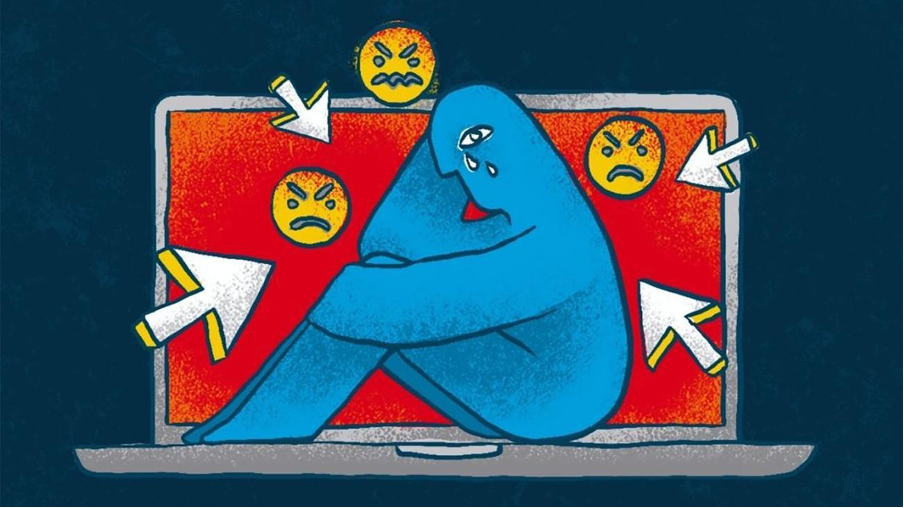
Social media platforms usually present themselves in a similar way. They say they support free speech, care about user safety, and keep improving their content moderation systems. At first, this sounds good. Platforms such as Facebook, Instagram, X, and YouTube all have community rules, reporting tools, and moderation teams. However, hate speech, harassment, and other harmful content are still very common online. This creates an important question: if moderation is already part of platform governance, why does so much harmful content still remain on these platforms?
In this blog post, I believe that the persistence of online hate is not only due to the inadequacy of the content review mechanism, but also because the platform’s construction itself is contradictory. On one hand, the platform claims to protect users from harm; on the other hand, the system they have designed rewards users for attention, quick responses, emotional responses, and the creation of conflicts. Due to this contradiction, content review is often too late, has limited scope, and lacks balance. Therefore, the problem is not only that the platform fails to effectively remove harmful content, but also that their system itself may actually facilitate the spread of harmful content.
Hate speech is not only about offence
A good place to start is the meaning of hate speech. In many public discussions, hate speech is often treated as speech that simply offends people or hurts their feelings. But this understanding is too simple.
Sinpeng et al. (2021) explain that hate speech should not be understood only as speech that causes offence. They argue that it can cause harm both immediately and over time, especially when it targets people because they belong, or are seen to belong, to a marginalised group. This definition is important because it shows that hate speech is not only emotional. It is also social and political. Hate speech can make some groups seem less welcome, less equal, and less safe in public life.
This is particularly important in the online environment, as harmful content is not always easy to identify. Some hate speech is very direct and may include foul language, public insults, or obvious threats. However, many online hate speech does not appear in such an obvious form but is disguised as jokes, sarcasm, repeated mockery, obscure language, or packaged as “normal viewpoints” in comments. In many online spaces, after people post harmful content, they will evade responsibility by claiming it was “just a joke”. Even so, its harm still exists in reality.
Flew (2021) also helps explain this issue. He discusses hate speech as speech that encourages or stirs up hatred against a group, and he points out that it does not need to be openly violent to be harmful. Speech can still be dangerous when it presents a group as inferior, shameful, or threatening.
This means that if the platform’s definition of hate speech is too narrow, a large amount of harmful content will still remain on the internet. The reason they remain there is not because they are harmless, but because the platform fails to fully recognize their harmfulness.
Platforms are not neutral
The second issue is how platforms themselves are understood. Platforms often act as if they are neutral spaces where users simply post content and the company only steps in when necessary. But I do not think this view is accurate.
Platforms are not merely vehicles for speech; they also shape the way information is disseminated. Their algorithms determine which content is more likely to be viewed. Their interfaces encourage users to like, share, comment, and interact quickly. Their systems typically reward content that evokes strong emotional resonance because such content can continuously attract users. This means that platforms are not passive spaces; they actively organize communication.
Because of this, moderation cannot only be understood as removing harmful posts after they appear. Harmful content may already have spread widely before moderation even begins. A hateful or abusive post can move quickly through recommendation systems, repost chains, and highly active comment sections. When moderation happens later, the damage may already be done.
Flew (2021) is useful here because he shows that questions about harmful content are also questions about platform governance more broadly. They are connected to business models, algorithms, internal company culture, and responsibility.
So when harmful content spreads, it is not enough to say that moderation failed. In many cases, platform design itself helped that content travel further and faster.
Why moderation often does not work well
Even if we accept that platforms are not neutral, we still need to ask why moderation often does not work well for people who experience harm online.
Sinpeng et al. (2021) give a very clear answer. In their report on Facebook and hate speech in the Asia Pacific, they argue that hate speech is highly dependent on language and context, and that these things are not well captured by Facebook’s automated systems or by its global Community Standards. They stress that local knowledge is necessary in order to identify harmful speech properly and understand how serious the harm is for targeted groups.
This is of crucial importance because it indicates that content moderation is not merely a technical issue, but also a cultural and political one. Phrases that seem harmless to outsiders may have a long history of humiliation, exclusion or threat within specific communities. If a platform adopts the same broad set of rules in numerous countries, languages and historical contexts, it often overlooks these contexts.
Sinpeng et al. (2021) also show that Facebook’s own definition of hate speech does not fully capture all the experiences of those targeted by hateful content. In other words, some harmful content stays online not because it was carefully judged as acceptable, but because the platform’s categories do not fully reflect the forms of harm that users actually face.
Their case studies make this even clearer. They found that LGBTQ+ page administrators in several Asia-Pacific countries often faced hate speech on Facebook, but many said that content they reported was not removed. Some became discouraged and stopped reporting because they felt the system was ineffective. The report describes this problem as “reporting fatigue” (Sinpeng et al., 2021).
I believe this reveals an important issue in platform governance. The platform encourages users to report harmful content, but in reality, the burden of identifying the harmful content, collecting evidence, repeatedly reporting, and waiting for action to be taken often falls on those groups that are already under attack. Therefore, although the platform keeps saying it is safe, most of the actual work is pushed onto the users.
Platform culture also matters
Definitions and enforcement are not the whole story. Harmful content also spreads because of platform culture.
Massanari (2017) uses the idea of “toxic technocultures” to show that some platforms do not only contain harmful behaviour. Their culture and design can make this behaviour easier, more visible, and more normal.
This matters because not all harmful content looks extreme. Sometimes harmful behaviour becomes part of everyday online interaction. Repeated mockery, sexist jokes, racist humour, pile-ons, or coded harassment can become normal in some digital spaces. When that happens, people may no longer see it as a serious problem. It starts to look like ordinary participation.
For many users, online harms are not confined to extremist groups; they can also occur in fan communities, comment sections, retweet cultures, and other ordinary online environments. People may get involved merely to seek attention, follow others, or because the platforms make such behavior seem normal and low-risk.
Flew (2021) makes a related point when he connects toxic technocultures and gender-based harassment to platform culture and to the people and systems involved in building algorithmic environments. His argument suggests that algorithmic governance cannot be separated from platform governance more generally. The way a platform is built affects what kinds of behaviour become more visible and more accepted.
This helps to explain why even when there are rules in place, harmful content still continues to emerge. If the overall environment of the platform still encourages conflict, hostility and the pursuit of attention, then relying solely on rules will not be able to completely solve the problem.
A current example: Meta’s 2025 policy change

A recent case helps show this contradiction clearly. In January 2025, Meta announced a major change in its approach to moderation. In its official statement, the company said it would end its third-party fact-checking program in the United States and move to a Community Notes model. Meta also said it would allow more speech by removing some restrictions on topics it described as part of mainstream discussion, while focusing more on illegal and high-severity violations (Meta, 2025).
Meta presented this change as a way to support expression and reduce moderation mistakes. However, this is exactly where the contradiction becomes visible. If a platform says it is reducing mistakes by loosening restrictions, we should ask: mistakes for whom? A platform may think it is protecting free expression, but vulnerable groups may experience the same policy change as weaker protection against harm.
This concern was not only theoretical. After Meta’s announcement, Brazil’s government expressed serious concern and said that the company’s changes to its hate speech policy did not fit Brazil’s legal framework and were not enough to protect fundamental rights (Reuters, 2025, January 14). Later, Meta’s own Oversight Board also criticised the company’s policy overhaul. It argued that the changes were introduced too quickly and without enough evidence of proper human rights due diligence (Paul & Wang, 2025).
I think this example is very important because it shows that the balance of freedom of speech is not only a technical issue but also has political significance. “More speech” sounds positive and simple, but its effect is not the same for everyone. When protective measures are weakened, vulnerable groups often bear greater risks. In some contexts, content can be removed very quickly when it is seen as politically sensitive, while other harmful content may remain online for much longer. This difference shows that moderation is often shaped by power.
What should be done?
If online hate is a structural problem, then the solution cannot simply be to delete more posts. Removing harmful content is important, but it is not enough.
Woods and Perrin (2021) propose a “duty of care” approach. This approach suggests that platforms should be responsible not only for individual pieces of content, but also for how their services are designed and operated overall.
This makes sense because online harm is not caused only by one post or one user. It is also shaped by reporting systems, transparency, moderation processes, staffing, algorithmic ranking, and design choices. If platforms create environments where harmful content spreads easily, then policy should address those broader systems.
Sinpeng et al. (2021) also make practical recommendations that are useful here. They argue that platforms need more local expertise, better engagement with affected communities, clearer moderation procedures, and more transparency about reporting and appeals.
In my view, there are three main lessons.
First, platforms need broader and more context-sensitive definitions of harm. If hate speech changes across languages and cultures, moderation rules need to reflect that.
Second, regulation should focus more on systems, not only on individual pieces of content. This means asking how platforms are designed, how complaints are handled, and whether enforcement is fair and clear.
Third, platform governance should not be treated as only a technical issue. It is also a public issue about power, safety, responsibility, and whose voices are protected.
Conclusion
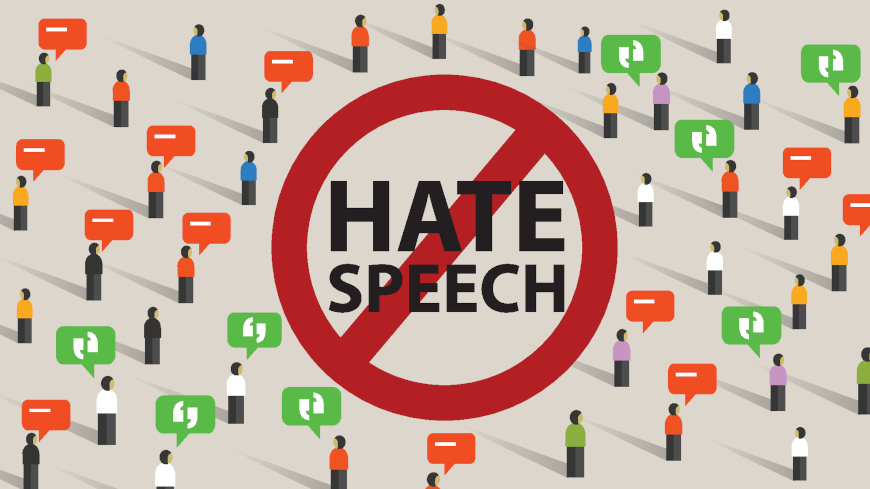
Online hate still spreads on social media not because moderation does not exist, and not because platforms have no rules. It spreads because platform systems are full of contradictions. Platforms say they want safety, but they also reward speed, conflict, and visibility. They say they support users, but often leave much of the work of identifying and reporting harm to those same users. They say they defend free speech, but often avoid admitting that speech online is already shaped by design, algorithms, and business interests.
So the main question is not simply whether platforms moderate content. They will check but the more important question is what kind of moderation they practise, whose interests it serves, and whether the platform itself makes harm more likely.
When we look at the issue in this way, online hate no longer seems like an accident. The inevitable outcome of the governance approach of digital platforms.
Reference
Flew, T. (2021). Regulating platf. Polity.
Hutchinson, J. (2026). ARIN6902 digital polic [PowerPoint slides]. University of Sydney.
Massanari, A. (2017). #Gamergate and The Fappening: How Reddit’s algorithm, governance, and culture support toxic technocultures. New Media & Society, 19(3), 329–346. https://doi.org/10.1177/1461444815608807
Meta. (2025, January 7). More speech and fewer m. About Meta. https://about.fb.com/news/2025/01/meta-more-speech-fewer-mistakes/
Reuters. (2025, January 14). Brazil says Meta hate speech policy changes do not. https://www.reuters.com/world/americas/brazil-seriously-concerned-about-meta-changes-hate-speech-policy-2025-01-14/
Paul, K., & Wang, E. (2025, April 23). Meta’s oversight board rebukes company over policy overhaul. Reuters.https://www.reuters.com/sustainability/boards-policy-regulation/metas-oversight-board-rebukes-company-over-policy-overhaul-2025-04-23/
Sinpeng, A., Martin, F. R., Gelber, K., & Shields, K. (2021). Facebook: Regulating hate speech in the Asia Pacific. Department of Media and Communications, The University of Sydney, and School of Political Science and International Studies, T
University of Sydney. (2026). ARIN6902: Digital policy & governance week 6 hate speech, online harms and moderation tutorial slides [PDF slides].
Woods, L., & Perrin, W. (2021). Obliging platforms to accept a duty of care. In M. Moore & D. Tambini (Eds.), Regulating big tech: Policy responses to digital dominance (pp. 93–109). Oxford University Press. htthttps://doi.org/10.1093/oso/9780197616093.003.0006