Image from: https://www.freedomforum.org/is-hate-speech-illegal/
·Introduction
In the minds of many people, the Internet is a platform that allows anyone to express any different viewpoints, with a high degree of freedom and interactivity.
However, the current internet environment has undergone a series of changes. The emergence of more and more hate speech has made the internet environment worse.
For instance, some people post racist remarks on the internet, which is detrimental to racial unity. Some others publish various statements about national division on the internet, which seriously affects the Internet environment and can cause online harm.
This raises a question: Now that inappropriate remarks are prevalent on the internet and have received a lot of clicks and shares, should the platforms be held responsible for this?
In my opinion, most platforms advocate freedom of speech, and as the carriers of these remarks, the platforms have, to some extent, spread their dissemination. Therefore, the platforms are obligated to take responsibility.
If the platforms do not intervene in these inappropriate remarks, obviously, the atmosphere of this platform will deteriorate further, and more and more people will think that this platform is irresponsible, thereby affecting the development of this platform.
Moreover, how to intervene is also a question worth considering. Excessive leniency and excessive prohibition are not rational decisions.
Therefore, how the platforms control the degree of responsibility is also a topic worth pondering.
·What is hate speech?
So, what is hate speech? If hate speech is just ordinary verbal abuse, it might not be considered a very serious issue because minor disputes on the internet rarely have real-world consequences and thus do not lead to conflicts.
However, hate speech is different from ordinary offensive remarks. It can cause direct harm to individuals or groups (Sinpeng et al., 2021).
Therefore, hate speech is not only extremely insulting language, spreading like a chronic poison throughout society, destroying the inclusive environment of society and weakening individuals’ sense of security in society (Waldron, 2012).
Hate speech has the following characteristics.
First, it targets a group rather than an individual. For example, racial discrimination remarks are a typical example of hate speech because it is an attack on a specific group. Additionally, provoking gender discrimination and attacking sexual minorities are also typical examples of hate speech.
Second, hate speech is usually derogatory and discriminatory. It generally portrays a certain group as inferior or unworthy of respect. This kind of labeling of others is extremely unethical and can easily give the public a stereotype.
Third, the harm caused by hate speech is real. Its influence is usually wide-ranging and can damage the mental health of others.
Fourth, the groups affected by hate speech are often special or vulnerable groups. These remarks can exacerbate social inequality, keeping them in a disadvantaged position, and is not conducive to their survival and development.
Therefore, hate speech is an immoral act and should be blamed by society.
· Why is hate speech considered a serious issue?
On the internet, there are numerous offensive remarks on every platform every day, but these disputes have little impact and are not given much attention by society.
However, hate speech is different from ordinary disputes. It is a multi-dimensional issue.
Firstly, it is a moral issue because these remarks are insulting and hurtful, completely going against moral standards.
Secondly, it is a social issue because hate speech often leads to a series of reactionary actions, such as demonstrations and violent conflicts, which can easily cause social unrest and is detrimental to social stability.
Thirdly, it is also a legal issue. In some countries, publishing hate speech is illegal.
Therefore, hate speech has always been a highly concerned and emphasized issue.
The reason why hate speech is valued by society is mainly because it is almost targeted at minority or vulnerable groups, such as people of color, women, and indigenous people. These groups are often in a disadvantaged position in society and they need protection rather than being violated. Publishing hate speech against these groups completely violates the social moral standards.
Even more terrifying is that as hate speech becomes more prevalent, these remarks are likely to be normalized, and more and more netizens will see these remarks and be affected. When these groups are repeatedly given low-status and vulnerable labels, it is very likely that they will be given special impressions by society, thereby exacerbating discrimination.
Moreover, social platforms are not completely neutral. Even the platforms may amplify these remarks and empower them through the platform, and these remarks will spread more widely and be more easily seen. Therefore, the platforms should be responsible for this and should not accelerate the spread of hate speech.
·Real-life cases of hate speeches
On the internet, hate speech is rampant and has even seeped into real life. Recently, in Perth, Australia, a hate speech incident targeting the LGBTQ community occurred. This case clearly demonstrated that hate speech is not only present on the internet but can even affect people’s lives.
From ABC News, some discriminatory flyers targeting the LGBTQ community were placed in the streets and mailboxes of Perth residents. The flyers included personal information of each person and false accusations that some of them were pedophiles (Leaver & Gibson, 2026). These hate speeches had a significant impact on some residents’ daily lives.
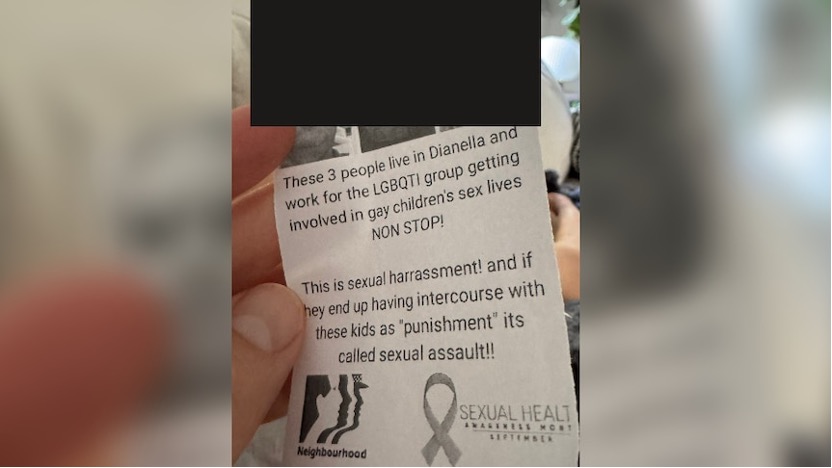
Fortunately, this incident drew the attention of the Western Australia police, and it indicated that all those who distributed the flyers might face legal charges (Leaver & Gibson, 2026). This incident was a clearly malicious defamation case, which not only affects social stability but also causes varying degrees of psychological trauma to the victims and even affects their real lives.
Moreover, the LGBTQ community itself is a minority group, and such malicious defamation would further marginalize them in society. Most importantly, the ABC News website has many reports on hate speech, proving that such incidents are still occurring frequently.
On digital platforms, these hate speeches tend to spread more rapidly, thereby being further amplified.

Image from: https://www.bbc.com/news/articles/cqj9kgxqjwjo
According to a report by Spring (2026) from BBC, some insiders have revealed that social platforms allow more harmful content to appear on people’s browsing pages, with the aim of attracting attention. What is even more shocking is that the internal engineers of Meta were informed that they could modify the algorithm to recommend harmful content, thereby competing with TikTok (Spring, 2026).
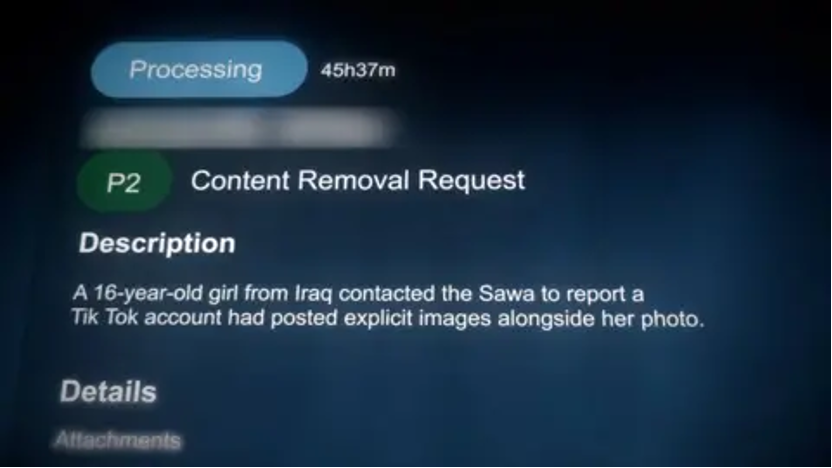
Image from: https://www.bbc.com/news/articles/cqj9kgxqjwjo
These shocking cases have made people rethink the significance of the Internet. The current digital environment is no longer completely safe and healthy.
The underlying logic of such incidents is that the platform manipulates the recommendation system through algorithms, and the recommendation system tends to recommend content that is eye-catching. As a result, the probability of harmful content coming into the public’s view significantly increases.If the platform does not strengthen its review mechanism, these harmful contents will become more rampant.
This kind of phenomenon also indicates that digital platforms are not completely neutral. The algorithms and management of these platforms are subject to human intervention, and they determine which content is more likely to appear on public platforms.
Therefore, the emergence of hate speech is not entirely the responsibility of those who make these remarks. The algorithms and recommendation systems of the platform amplify these harmful contents, allowing them to be further disseminated and thus affecting the victims. Therefore, the platform should bear some responsibility for this.
·Does the platform necessarily have to be held responsible for hate speech?
Image from: https://www.sydneycriminallawyers.com.au/blog/is-hate-speech-a-crime-in-australia/
Regarding whether the platform should be responsible for hate speech, different people hold different views.
On one hand, some people believe that as the carrier of information, the platform needs to ensure the security of the online environment, so it is necessary to be responsible for these harmful contents.
On the other hand, some people think that digital platforms advocate freedom of speech. If they intervene too much, it may lead to a decrease in the number of people expressing their opinions online. Both sides hold different opinions and it is difficult to reach a conclusion through debate.
From the supporters’ perspective, the platform itself is not neutral. The platform determines which types of content are more likely to be recommended, thereby increasing the risk of the wide spread of harmful content.
And hate speech already exists on various digital platforms, and the platform’s recommendation system further spreads these contents, leading to a series of negative effects.
And digital platforms have great power and influence among contemporary publics, and many people completely cannot do without the digital community in their daily lives. In contrast, the platform should undertake the obligation to be responsible for harmful content.
However, the opponents believe that the platform should promote freedom of speech and has no obligation to be responsible for hate speech. Because freedom of speech is one of the core values of digital platforms, so digital platforms should provide users with an environment where they can express themselves freely, rather than overly interfering with users’ freedom of speech.
If the platform is responsible for harmful content, then how to define harmful content will also become a problem, because this is a very subjective judgment and there is hardly a perfect judgment standard, which will easily lead to misjudgment and may also cause the abuse of authority by the platform.
However, these viewpoints have certain limitations.They completely ignore the harm to the relevant groups caused by hate speech and the negative influence of these harmful contents.
Therefore, the issue is not whether the platform should manage or not, but whether the platform should assume certain responsibilities for harmful content in an environment that ensures freedom of speech. And how to balance freedom of speech and the intervention of harmful content will be a problem that the platform should focus on thinking about.
· How to further address the issue of hate speech
Regarding the issue of hate speech, efforts made by a single party alone are simply not sufficient. It requires the joint efforts of the government, platforms, and individuals to have a chance to address the problem of hate speech effectively.
At the government level, legislation can be used to make harmful content such as hate speech illegal. Although legislative actions regarding hate speech may lead to restrictions on freedom of speech, restricting hate speech can effectively uphold social justice (Brown, 2017).
Furthermore, social media platforms should also take responsibility for what happens on their platforms. Although how to define harmful content remains a challenge at present, the platform still needs to make efforts to improve the definition of harmful content and establish relevant review mechanisms to reduce the appearance of harmful content in the public view.
In addition, the platform is also obligated to improve its algorithms and recommendation mechanisms, reducing the dissemination of harmful content. This can, at the technical level, curtail the spread of harmful content and minimize the damage to the network.
At the individual level, ordinary netizens should also enhance their ability to identify information when they are online. If they come across harmful content, they should click on the report button, and as a result, the platform will reduce the push of such content. Of course, this is not a mandatory obligation. However, if every ordinary netizen has such a mindset, the internet environment will become much cleaner.
However, these measures did not achieve the goal of protecting freedom of speech. This is about finding the greatest balance between freedom of speech and reducing online harm.
·Conclusion
In conclusion, hate speech has become a significant issue in the international community today. It can affect individuals on a personal level and international relations on a broader scale. This indicates that the harm caused by hate speech on the internet needs to be addressed.
In this regard, the platform should bear responsibility, but it should not resort to coercive measures for intervention. Moreover, while taking intervention measures, the platform also needs to uphold the principle of freedom of speech.
At present, this remains a difficult problem that requires continuous efforts from multiple parties.
Reference list:
Brown, A. (British law professor). (2017). HATE SPEECH LAWS, LEGITIMACY, AND PRECAUTION: A REPLY TO JAMES WEINSTEIN.(Symposium: Hate Speech and Political Legitimacy). Constitutional Commentary, 32(3), 599.
Freedom Forum. (n.d.). Image. https://www.freedomforum.org/is-hate-speech-illegal/
Leaver, K., & Gibson, M. (2026, March 18). Call for tougher anti-vilification. penalties as hate flyers target Perth LGBTQIA+ community. Abc.net.au. https://www.abc.net.au/news/2026-03-18/homophobic-flyers-left-in-perth-letterboxes-lgbtqia-targeted/106468902
Nedim, U. (2020). Image. https://www.sydneycriminallawyers.com.au/blog/is-hate-speech-a-crime-in-australia/
Sinpeng, A., Martin, F. R., Gelber, K., & Shields, K. (2021). Facebook: Regulating. Hate Speech in the Asia Pacific. Department of Media and Communications, The University of Sydney. https://hdl.handle.net/2123/25116.3
Spring, M. (2026, March 16). Meta and TikTok let harmful content rise after evidence outrage drove engagement – whistleblowers. https://www.bbc.com/news/articles/cqj9kgxqjwjo
Waldron, J. (2012). The Harm in Hate Speech. Harvard University Press. http://www.jstor.org/stable/10.2307/j.ctt2jbrjd
Be the first to comment