Recently, a coffee shop in a certain area was complained about “refusing children under the age of 12 to enter”, which instantly caused a heated discussion on social platforms.
Some children’s parents complained indignantly: This is completely discrimination against children, and children also have human rights. They have the right to enter private commercial premises. At the same time, it is extremely inconvenient for families with children to go out, and “child-friendly” should be a social responsibility. On the other hand, some childless people applauded, thinking that children’s noise would affect the experience of other consumers. Since this store does not allow it, it is completely possible to change it. There is no need to force everyone to like their children.
Why does the bulletin board of a cafe evolve into an outbreak of social conflict on the Internet? With the help of the algorithm, this local friction is no longer just a debate about seats, but also a war of identity defense.
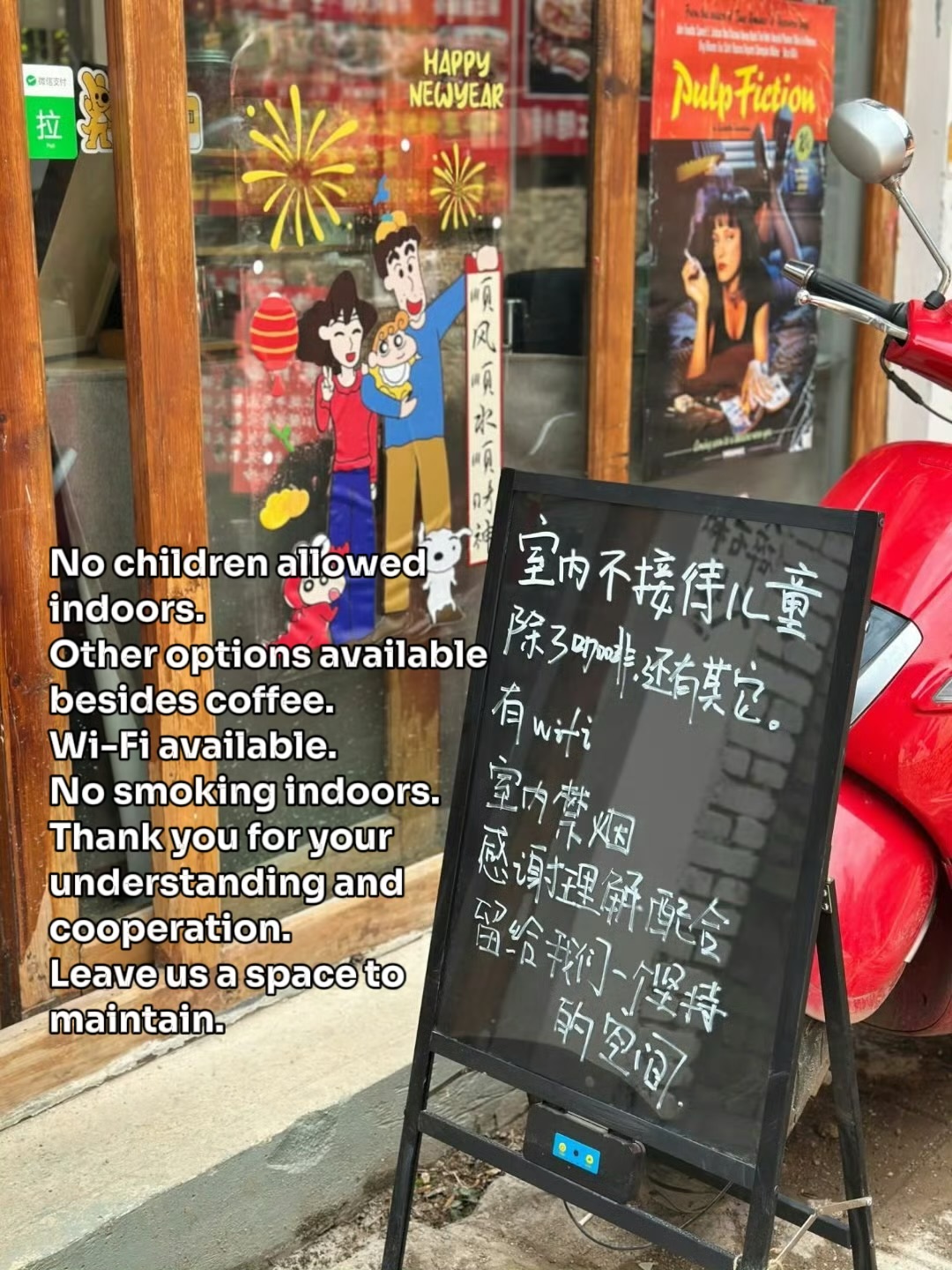
From “noise” to “discrimination”, why do we have antagonism?
This kind of opposition is not accidental. As Guan and Chen (2025) pointed out in the study, differences in social identity can trigger threat perceptions, which leads individuals to adopt discourse “othering” strategies to marginalize, demean and demonize certain societies. Identity. Under the influence of social media and algorithms, this phenomenon has become more violent.
Network ID creates a unique environment for unacceptable behaviors to occur in the real world. Because the real-time response of the opposite user to the speech cannot be seen, the commentator can freely interpret the information and choose the response method with minimal cognitive or emotional pressure. At the same time, compared with face-to-face interaction, the feedback cycle generated by network response is longer. This Dehumanization means that the negative reaction caused by speech does not immediately produce social punishment (Suler, 2004). The screen deprives emotional communication in real life and simplifies the figure “people” to “avatars” and “comments” without emotions. After giving the other party a set of “identity labels”, the commentator can uprightly defend his position and attack others wantonly.

For childrenless people, parents are simplified into a group that “only cares about children and ignores public morality”; while for parents, the infertile group is “indifferent, selfish and lack of compassion”. This single labeling behavior is counteractive to online arguments, making the quarrel rise from “negotiable space allocation and consumption issues” to “identity opposition issues”.
There are two main types of interpersonal and intergroup threats: realistic threats and symbolic threats (Guan & Chen, 2025). In terms of safety and resources, “quiet” is a scarce resource in urban life. People are willing to pay an “environmental premium” far more than the actual cost of coffee for the quiet atmosphere provided by the cafe. In this case, childless people believe that children’s crying is a violation of their right to consume and environmental services. At the same time, they feel that they are forced to bear the unpaid emotional labor of “patience” for other people’s parenting behavior. Therefore, these people subconsciously believe that children will pose a real threat to them.
In terms of value orientation and worldview, some parenting groups believe that this “ban” means that society does not tolerate the growth of young children. Thus, it is elevated to the demeaning of the identity of childcare and the denial of the value of social reproduction. At the same time, it also deprives families with children of the right to exercise the right of normal consumption. If the “No Kids Zone” is let to develop into a social trend, the activity area of families with children will be greatly compressed. Under the combined effect of realistic threats and symbolic threats, parenting groups also develop hostile feelings against childless people.
At the same time, because social media algorithms push extreme cases of children making trouble in public places, the brain will generate Availability Heuristic. This is a kind of cognitive bias. People will judge the frequency of an event according to the difficulty of searching for the corresponding instance in their minds (Tversky & Kahneman, 1973). And events with strong emotions are easier to remember. When the brain mistakenly thinks that this individual conflict has become the norm in public space, users will have invisible psychological defense before entering the cafe. Once the relevant element appears in reality, the consumer’s defense mode will be activated, triggering the anxiety that has been acquired. So as to launch predictive or hypothetical attack comments. Ribeiro and others have also conducted large-scale data analysis through empirical research. They tracked how users gradually shifted from focusing on daily topics to extreme topics under the guidance of algorithms. This also proves that the algorithm has existed and will continue to radicalize users (Ribeiro et al., 2020).
Hate speech disparages individuals based on characteristics associated with their membership in a so Cial group, thereby attacking their social identity (Guan & Chen, 2016). When group identity is threatened, ingroup members will regard outgroup as a threat or common enemy in order to gain a sense of belonging (Tajfel, 1974). Therefore, accusing childless people of being “selfish” is also a psychological mechanism for self-comfort. By defining the other party as a morally flawed “outgroup”, the parenting group logically re-established its sense of moral superiority as a social devotee, thus offsetting the frustration of being expelled. On social media, this kind of attack is amplified by algorithms. Parents support each other in the comment section, strengthening the consensus that “we are victims/contributors”. Driven by regaining group self-esteem, speech has become more radical.
How does the algorithm expand the contradiction?
In this layered emotional progression, the contradictions gradually become irreconsistible. The algorithm keenly captures the hostility between groups and amplifies them infinitely on social media platforms.
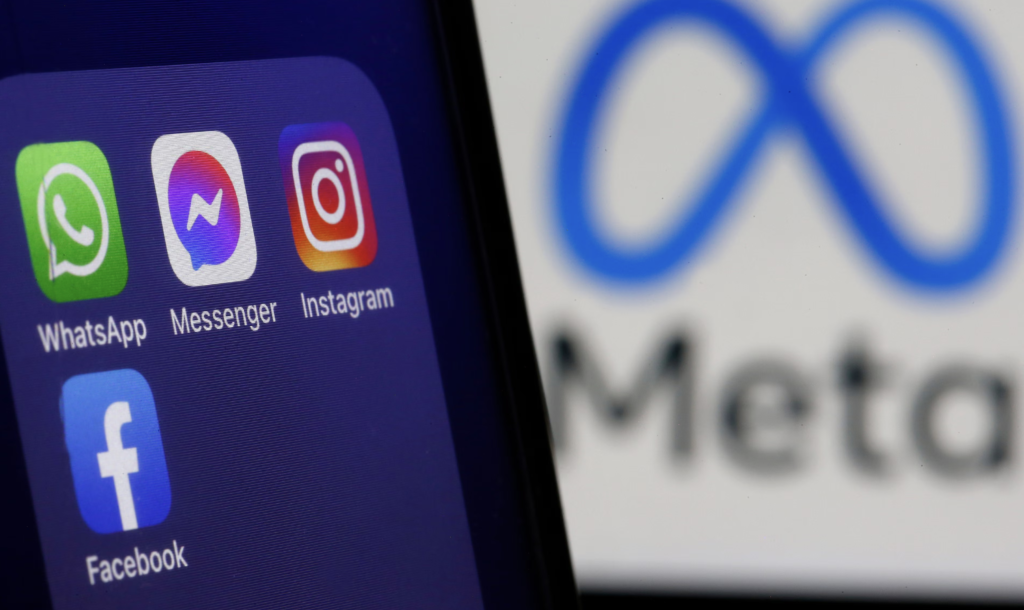
Hate Speech is usually used in academic definitions to express a speech that is harmful enough to be regulated. Mere offense and emotional injury should not be regulated by the norms of speech in the law (Sinpeng et al., 2021). This means that groups that are not systematically marginalized (such as race, religion, sexual orientation, etc.) cannot be protected by hate speech laws. In the Community Standards (2022) disclosed by Meta (Facebook/Instagram), Article 12 “Hateful Conduct” is the rule standard for its global governance. The original text is as follows:
“We define hateful conduct as direct attacks against people — rather than concepts or instituti Ons — on the basis of what we call protected characteristics (PCs): race, ethnicity, national origin , disability, religious affiliation, caste, sexual orientation, sex, gender identity, and serious di Season. “
Therefore, in social media platforms, parental identity or lifestyle is not a protected feature. Attacking them as “selfish” or “unqualified” will not be marked as Hate Speech in the algorithm. Although these remarks may be biased, they are protected free speech in the platform logic.
Since these comments will not be judged as illegal, the algorithm will regard them as popular content according to the “interactive popularity” they bring. The system usually uses binary classification, labeling and other methods to predict human identity and conduct complex evaluations. The Internet itself is a typical virtual fence (Andrejevic, 2007). Through the data collection mechanism of the platform, users in various places and any activity will be included in the scope of monitoring within the fence and classified. And this practices of classification in artificial intelligence systems enforce hierarchies and magnify i N equity (Crawford, 2021).
On the Internet, the classification method of this algorithm predicts the possible position of users in the future and makes preferences for them by learning the user’s past behavior or preferences. In the cafe event, the algorithm will monitor the user’s likes, comments and page dwell time, etc., to give users a narrow label of “child fear” or “parenting” and continue to push the content of the corresponding tag. This invisibly enclosed digital fence for users makes it more difficult for users to look at arguments from other perspectives.
The current platform itself is not neutral. It is the platform that determines the choose-of-the-go and push mechanism of the algorithm, thus determining what kind of information appears in front of the user.
At the beginning of the rise of the Internet in the 1990s, it was only a neutral platform to provide communication and network services. As a condoits, it is regarded as a link between content creators and content users. Therefore, the Internet service provider at that time did not need to be responsible for the content disseminated by users through its platform. Until the rise of Web2.0 in the early 21st century. This concept refers to software and applications that can take advantage of the network effect and become better with the increase in the number of users (O’Reilly, 2005). In 2010, Big Tech such as Apple, Google joined the development queue. The Internet is gradually becoming a framework for large-scale collaboration or social sharing. The company collects a large amount of users’ data and personal information from digital platforms, so as to generate more accurate search results for individuals (Flew, 2021).
And when companies or platforms have the ability to intervene in content, they will give priority to amplifying those extreme conflicts with impact. Higher exposure, click rate and page dwell time directly mean higher attention, profit and revenue. Therefore, the original partial little things were recommended to everyone’s homepage by the algorithm. The user’s vision is manipulated in this way.


When users are surrounded by these invisible instructions, they actually fall into a “black box” that they can’t resist. Even if users realize that they are surrounded by the digital fence, there is no clear channel to question or break this push. Social media platforms not only hope to have full control over the screening and review of content, but also try to maintain their neutrality in front of the public. In order to avoid pointing out, they chose to hide the duplicate content review and complaint handling process (Suzor, 2019). Few users will carefully read the dozens of pages of terms and conditions of service.
Therefore, when users read the comment section of the cafe controversy, they will mistakenly think that this is real public opinion. Even if users are attacked in the comment area, the only thing they can do is click the “Report” button. However, the process and standards of reporting are not transparent. The result is often only passing or not passing. The platform will only argue that it is just a tool to provide services. This is a very irresponsible way to extract resources. In reality, the quarrel about No Kids Zone may cause the shopkeeper to lose business and reputation. But on the platform, this kind of anger is regarded as a data resource. The resulting social anxiety or identity opposition is borne by each user. At the same time, the platform has never set up a corresponding mechanism to repair these destroyed social relations.
The Missing Link: Human Care
This status quo forces us to rethink what the root of the problem is. The platform will use the algorithm to amplify the local friction and push it to the home page of the whole platform users. In fact, it doesn’t depend on what the user said. It depends on what the platform chooses to let more people see. At present, some platforms choose to give priority to pushing content of opposition or argument to get traffic. This is the neglect of humanistic care by business logic. However, the real solution should not simply show the argumentative views of ingroup or outgroup members. What’s more important is to let different member groups see each other’s difficulties. A platform with humanistic care, its algorithm should have the ability to identify the possibility of “sympathy” in the future. Compared with pushing a short video of a child crying, a discussion post on the dilemma of parenting in public space is obviously more conducive to the mutual understanding of the two parties to the debate.
As the actual manager of contemporary public life, the platform should assume the responsibility of maintaining social stability while obtaining benefits. Business goals should not be the only end of technology. Big Tech manages not only data, but also human emotions and relationships. For users, there is a specific and warm person behind every identity tag.
Patience and understanding are the way out for human beings to use technology to civilization.
References
Andrejevic, M. (2007). ISpy : surveillance and power in the interactive era. University Press Of Kansas.
Crawford, K. (2021). Atlas of AI: Power, Politics, and the Planetary Costs of Artificial Intelligence. Yale University Press.
Flew, T. (2021). Regulating Platforms. Polity Press.
Guan, T., & Chen, X. (2025). Threat Perception, Otherness and Hate Speech in China’s Cyberspace. Journal of Contemporary China, 1–16. https://doi.org/10.1080/10670564.2025.2475051
Meta. (2022). Hateful Conduct | Transparency Center. Meta.com. https://transparency.meta.com/policies/community-standards/hateful-conduct/
O’Reilly, T. (2005, September 30). What Is Web 2.0. Oreilly.com. https://www.oreilly.com/pub/a/web2/archive/what-is-web-20.html
Oman, E. (2017). Perceived Social Distance in Online Environments and Their Impact on Political Discourse.
Ribeiro, M. H., Ottoni, R., West, R., Almeida, V. A. F., & Meira, W. (2020). Auditing radicalization pathways on YouTube. Proceedings of the 2020 Conference on Fairness, Accountability, and Transparency, 131–141. https://doi.org/10.1145/3351095.3372879
Sinpeng, A., Martin, F. R., Gelber, K., & Shields, K. (2021). Facebook: Regulating Hate Speech in the Asia Pacific. Ses.library.usyd.edu.au. https://hdl.handle.net/2123/25116.3
Suler, J. (2004). The online disinhibition effect. CyberPsychology & Behavior, 7(3), 321–326. https://doi.org/10.1089/1094931041291295
Suzor, N. P. (2019). Lawless: The Secret Rules That Govern Our Digital Lives. Cambridge University Press. https://doi.org/10.1017/9781108666428
Tajfel, H. (1974). Social Identity and Intergroup Behaviour. Social Science Information, 13(2), 65–93. https://doi.org/10.1177/053901847401300204
Tversky, A., & Kahneman, D. (1973). Availability: a Heuristic for Judging Frequency and Probability. Cognitive Psychology, 5(2), 207–232. ScienceDirect. https://doi.org/10.1016/0010-0285(73)90033-9
Be the first to comment