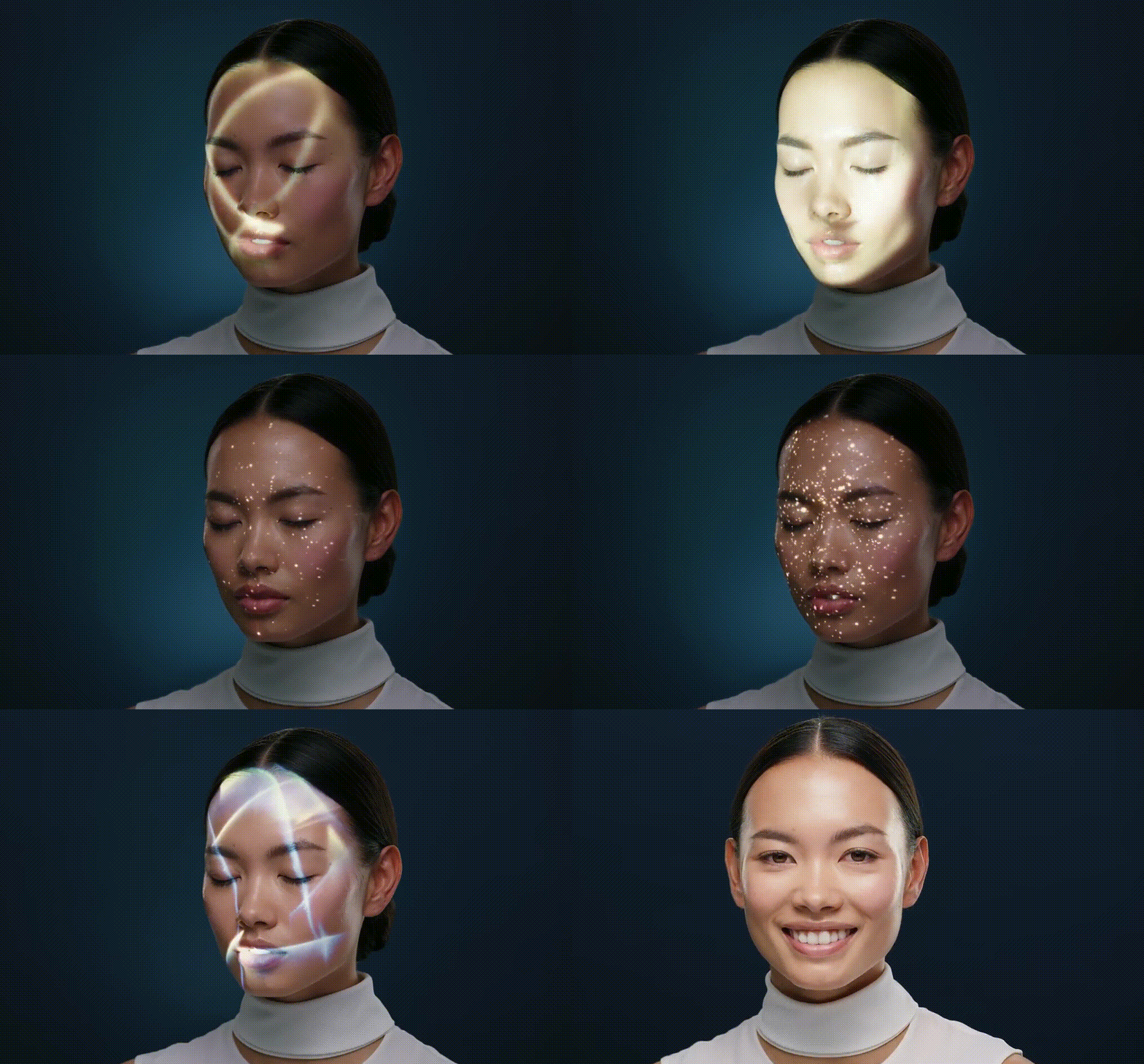
Have you ever come across the incredibly realistic “Bold Glamour” AI beauty filter on TikTok? Or have you ever used the AI removal function in photo editing apps like Meitu, Xingtu, or Canva? These emerging digital technologies and services make us look perfect and attractive on social media platforms, to the extent that we have long been accustomed to using these convenient AI functions and are willing to share them with friends around us.
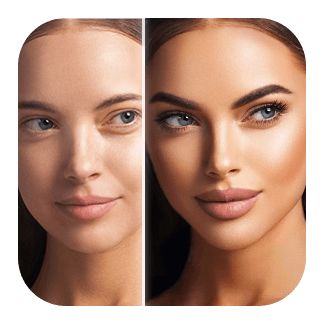


There is no denying that we are in an era where the “aesthetic economy”and “digitalization” are intertwined. On digital platforms, anyone has the opportunity to have a more refined and attractive face and figure than in reality. The public enjoys this kind of “perfection” on digital platforms, and some KOLs (social media creators with a certain influence) are also reaping a large number of fans and attention through this function on the platform. It can be converted into real money in their pockets.
This business logic drives each of us to unconsciously participate in this digital experience.
Since last year, an AI called DouBao has gained popularity in China after upgrading its image beautification function. Users only need to upload a picture that needs processing and input a command, and it can quickly add the desired effects to the picture for them, such as adding a sunny effect or converting a casual photo into a formal ID photo.

However, we seem to ignore a problem: when we reshape our appearance or photos through AI algorithm, are we inadvertently turning our facial features or body information into digital assets for others? Can the platforms’ privacy regulation or the “Cookies” we accept really safeguard the privacy of our “faces”? Have our faces become digital assets of the platforms?
The actual situation is far more complicated than we imagined.
Those “Tyrannical terms” and “Cookies” that we never read
When users download TikTok or other photo editing and video-making apps for the first time, they are required to check the box to agree to the privacy terms and policies. However, it is easy to notice that if we do not check the box for “Agree” or “Accept”, we simply cannot start the account registration process! On this interface, there is often no option for “Disagree” or “Not Accept”.
So, most of us (users) for the sake of efficiency and convenience, do not read the data privacy terms carefully but directly tick “agree” or “accept all cookies” and can’t wait to start using the functions we want. This is actually a seemingly “democratic” promise of the platform. In fact, these terms give the operators great power, and their main purpose is still to maintain the interests of the operators.(Suzor NP, 2019)

At the same time, within the software, we are also confronted with such a situation of “forced” choice. Take the Xingtu app as an example.
When using AI functions such as making hair more lustrous or eliminating passers-by, a pop-up window will appear, stating, “AI functions require uploading photos to the cloud database for processing. Do we agree?”.
Some people with a very strong sense of personal privacy protection will choose not to use this function at this step, but many people will still choose to agree in this situation. Because for a user who is seriously editing a photo and planning to send it to Moments, the cost of refusing is relatively high.

According to the “Global Digital Consumer Report” released at the end of 2025, users’ behaviors have shown astonishing contradictions. Over 80% of the respondents expressed concerns about submitting their facial data, but in the face of specific filter functions or benefits, 74% of the users still chose to agree.
The pop-up windows and terms of the platforms ostensibly play a role in protecting data and balancing the relationship between operators and consumers, but in reality, this is the platform inducing users to cede some of their privacy through functions and services. The essence of these terms is to safeguard the commercial interests of the platform rather than protect the rights of users.
| Survey dimensions | Data performance (Statistics for 2025-2026) |
| The proportion of users who claim to be very concerned about the leakage of facial data | 82% |
| The proportion of people willing to upload photos to the cloud in order to use AI-enhanced functions | 68% |
| The proportion of users who have read the privacy agreement of the photo editing application in full | Less than 3% |
| The proportion of users who directly click “Agree” when encountering the pop-up window that says “Upload to the cloud to use” | 74% |
In the research of digital governance, this phenomenon is known as the “Privacy Paradox”. People verbally attach great importance to privacy, but when faced with the specific temptation of certain functions, they often choose to compromise (Susan Barnes, 2006).
As for where the photos we upload to the cloud database for processing will end up, it seems that people have chosen “not to think about it”, or perhaps they dare not think about it.
TikTok’s privacy policy update in 2026: A kind of concern
In January 2026, TikTok carried out a major business split to avoid a complete global ban. The current US business is operated by an entity named TikTok USDS Joint Venture LLC. Although 80.1% of its equity is held by American consortia such as Oracle and Silver Lake, this equity change led to an update of TikTok’s relevant usage policies, including provisions on data privacy.
In this policy update, TikTok has for the first time clearly listed the scope of its collection or management of “sensitive personal information”. According to the latest privacy agreement, when users use the AI beautification tools within the platform (such as effect generators or drawing assistants), the system will record all of the following:
– Every prompt we input and any minor modifications we make to the generated results.
– All the original photos we upload for training our exclusive effects.
– our voice recordings and the “voiceprints” extracted from them by the algorithm.
On January 30, 2026, a report from Internet Safety Labs indicated that TikTok’s data collection is systematic. In addition to biometric information such as photos, the platform also collects “precise geolocation data”.
Although TikTok claims that this requires a user’s secondary authorization, some scholars have pointed out that even if the location function is not explicitly enabled, the platform may still infer a user’s approximate location through device information and environmental recognition in images. In the past, our understanding of “photo editing” was more about manual and static processes.
But today’s AI filters are completely different.
They rely on computer vision and GANs (Generative Adversarial Networks). The moment you turn on the camera, the system has already started recognizing a large number of details on your face.
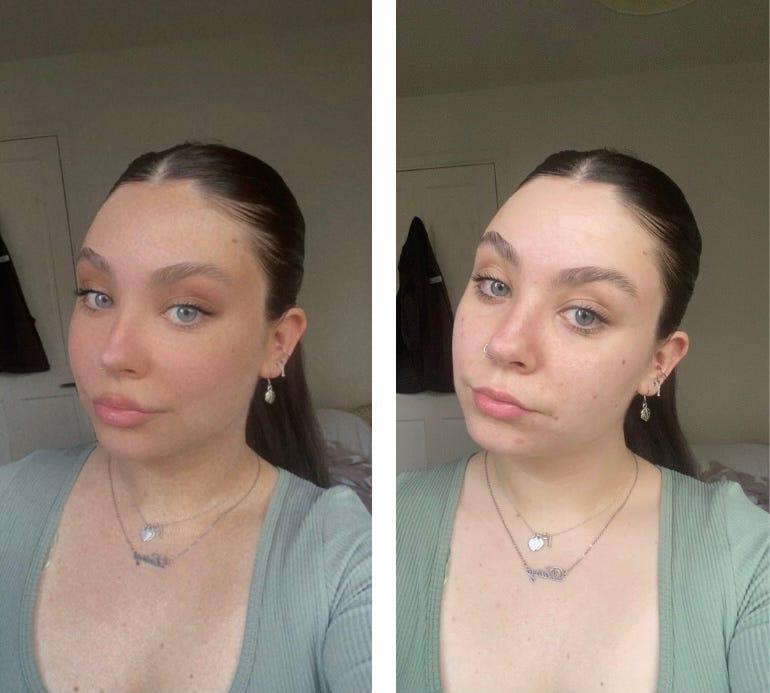
Some users even chose to leave the platform entirely, stating they felt “free” after deleting TikTok following the policy update.
Are our faces being redefined as a kind of digital asset that can be owned and exploited by platforms?
This is a highly precise process of collecting biometric data. To ensure that the filter remains in place with every head movement, the software must analyze the skeletal structure and facial dynamics in the photo in real time. In academic circles, this process is called “datafication”, which means converting our biological features into binary code that can be stored, calculated and traded.
This can’t help but make people think deeply and fearfully. The AI beautification functions that are readily available to people on the Internet are quietly leaking your most private and genuine information.
At the same time, the platforms are rationalizing and normalizing their attempts to obtain our private data through this privacy paradox. As ordinary users, we have already been deeply involved in this incident.
Respecting contextual integrity: Why? How?
Thinking about the updated terms of TikTok, one can’t help but feel puzzled: Why can TikTok introduce such unequal terms? Who allows it to do like that? Doesn’t it worry that users might abandon its platform out of concern?
The unease and anger of ordinary users towards digital and information technology are on the rise. When consumers provide personal information (such as photos with biometric features), they naturally expect the operators to use and store this information and data in a reasonable manner that is in line with the relevant context (Nissenbaum, 2018).
When we upload a photo with our facial features, we expect the platform to use and store this data in a way that is consistent with the initial purpose of photo editing.
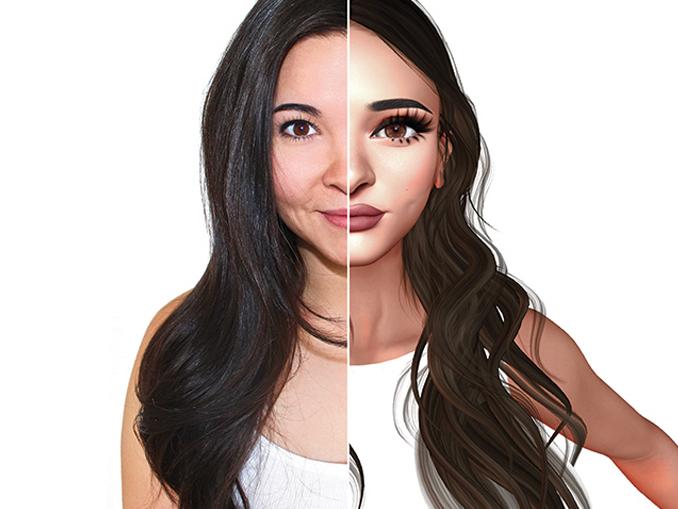
This data flow exceeds users’ psychological expectations. The leap in the situation is precisely the beginning of the erosion of digital rights.
The emergence of such privacy policies on TikTok and other internet platforms that rely on emerging digital technologies is largely due to the rapid transformation of consumer expectations and preferences driven by the advent of new services such as AI filters (Chavez, 2011).
The development of digital technology should have been matched by a more flexible and real-time privacy protection mechanism.
However, the reality is that the pace of legal and regulatory updates can never keep up with the iterations of platform codes. Many rules are still stuck in the “logic of the past Internet” and are no longer capable of dealing with highly data-driven new technologies such as AI filters and facial recognition.
Privacy protection mechanisms also vary across different platforms. For instance, Instagram places more emphasis on “visual presentation” and personal branding, with filters primarily serving to beautify content and enhance aesthetics; in contrast, TikTok has made its AI functions more “immersive” and “automated”, seamlessly integrating features from special effect recommendations to face recognition into the user experience.
The problem lies here: while the platforms are constantly optimizing the user experience, the photos and facial information we upload are quietly turning into the “raw materials” for training algorithms.
Thus, an unequal relationship gradually forms – we enjoy the convenience, while the platforms accumulate assets.
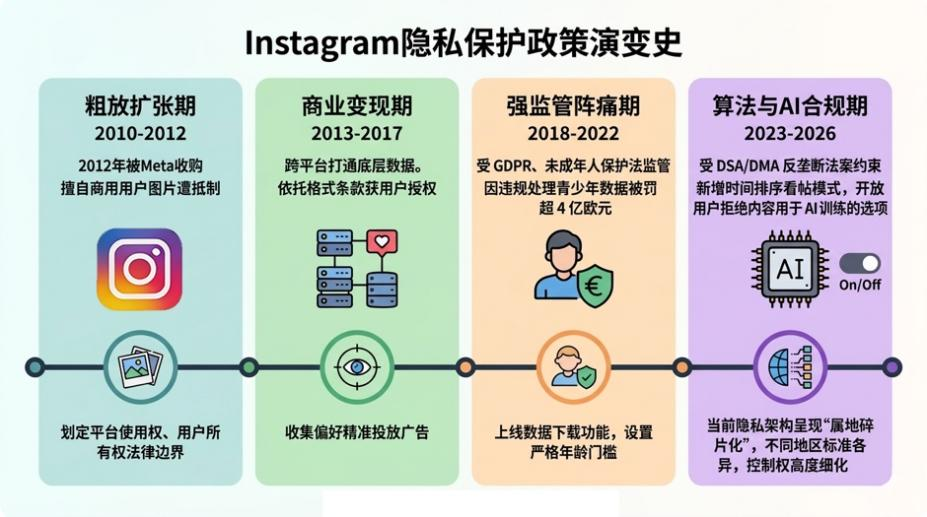
The new leader of the Social Democratic Party of Germany, Andrea, has called for the establishment of rules to regulate “digital capitalism” and stated that “we cannot accept that more and more Internet platforms become monopolies that are not accountable to society” (Flew, Terry, 2018). This is also what users most want to appeal for when they realize that their facial data may be violated.
Conclusion: Seeking security beyond AI filters
AI filters and beauty enhancement functions are the “magic” to the public by the development of digital technology. They allow us to easily reshape our self-image, enabling ordinary people to possess refined, and even nearly perfect “online faces”.
In the context of social media platforms, this kind of beautification is not only about appearance but also about identity construction – we use faces modified by algorithms to manage our self-image, gain recognition, and even exchange for rewards in the real world.
But it is precisely in this process of “looking better” that we gradually overlook a deeper issue: when we constantly upload, optimize, and correct our faces, we are actually ceding our data assets.
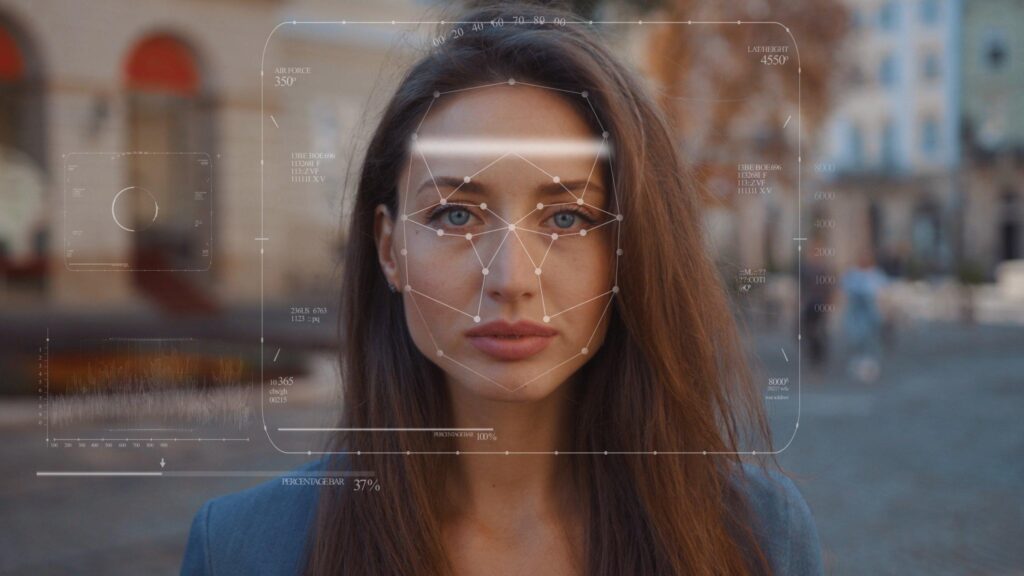
The issue is never merely “whether privacy has been violated”, but rather:
Are our faces being redefined as a kind of digital asset that can be owned and exploited by platforms?
The reality is that it has become very difficult for us to truly “opt out”. AI filters and Beautification Features have been deeply integrated into our daily lives: some people rely on them to maintain a polished image, some find emotional satisfaction in them, and others simply use them to blend in more naturally in social interactions.
When filters bring confidence and joy, concerns about data and risks are often deliberately ignored – while we enjoy the convenience, we also enter a typical “cognitive blind spot”.
Meanwhile, the response at the institutional level remains slow and complex. Scholars are discussing, governments are weighing, and platforms are expanding – multiple forces are constantly in a state of competition, but the formation of rules always lags behind the development of technology.
Therefore, a more realistic but also more sober conclusion is that in the long and asymmetrical process of institutional coordination, as ordinary users, we may not be able to truly control the flow of data or completely reject the terms of the platform. The only thing we can do is to meet our own usage needs while maintaining necessary vigilance and understanding – knowing what we are exchanging, what we are giving up, and what lies behind these “click-to-agree” actions.
Perhaps we will still continue using AI filters, uploading photos and participating in digital platform operations. That’s fine. However, the next time we encounter someone’s perfect face on the Internet, we can draw a question mark in our hearts: Is this real?
Sources and References:
Imagines: https://au.pinterest.com/pin
Barnes, S. B. (2006). A privacy paradox: Social networking in the United States. First Monday, 11(9).
Internet Safety Labs. (2026). The 2026 Safety Label Report: Spotlight on TikTok and Biometric Induction.
Suzor NP. Lawless: The Secret Rules That Govern Our Digital Lives. Cambridge University Press; 2019.
Flew, Terry (2018) Platforms on trial. InterMedia, 46(2), pp. 24-29.
Nissenbaum, H. (2018). Respecting context to protect privacy: Why meaning matters. Science and Engineering Ethics, 24(3), 831-852. doi:https://doi.org/10.1007/s11948-015-9674-9
Chavez, P. L. (2011). Comments of Google Inc. to US Department of Commerce. Electronic filing, January28. http://www.ntia.doc.gov/files/ntia/comments/101214614-061401/attachments/FINALCommentsonDepartmentofCommercePrivacyGreenPaper%20%283%29.pdf. Accessed June 11, 2013.
Tumber, H., & Waisbord, S. (Eds.). (2017). The Routledge Companion to Media and Human Rights (1st ed.). Routledge. https://doi.org/10.4324/9781315619835
De Hert, P. and Kloza, D. (2012). ‘Internet (access) as a New Fundamental Right. Inflating the Current Rights Framework?’. European Journal of Law and Technology 3(3). Available at: http://ejlt.org/article/view/123/268 [21 Apr. 2016]
Consumer Reports. (2025). The State of Digital Privacy: Annual Survey Results. https://www.consumerreports.org/digital-privacy-2025
Be the first to comment