“In nature, the end of mutations often marks the beginning of extinction.”
Cultural Inbreeding
When we talk about algorithms, we tend to view them as tools that bring convenience, suggesting what you might like, providing precise recommendations, saving time and effort.
But if we measure them by the yardstick of evolution, you will be astonished to discover that they are more like the quiet beginning of cultural inbreeding.
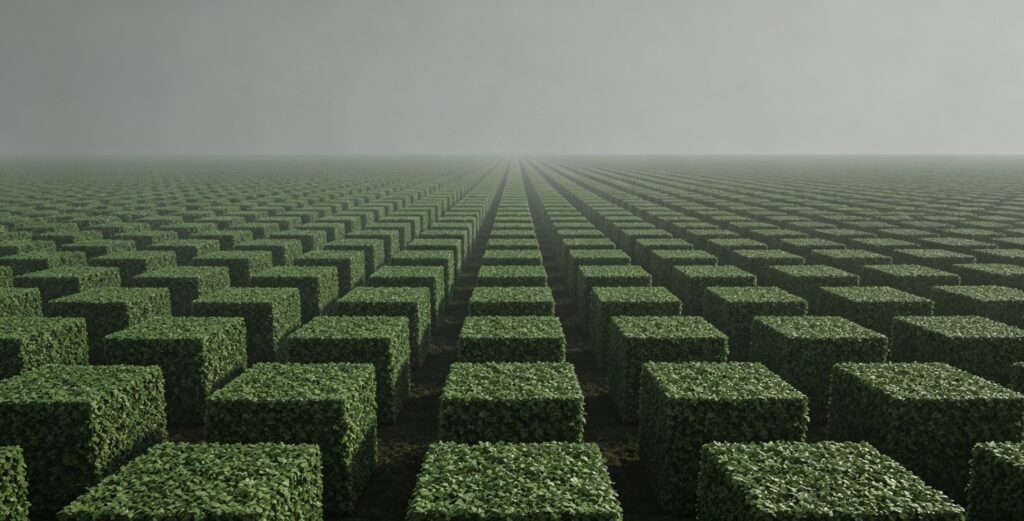
Imagine you are stepping into a farm composed of 0s and 1s. Here, there are no weeds, no chirping of insects, and everything looks exactly the same as far as you can see—same height, the same color, even the number of grains is almost the same, making it chilling to look at.
This is the aesthetic monoculture garden we have built with algorithms.
In this farm, algorithms are the judges who determine the life and death of the crops. They don’t care about whether something is unique or profound, or whether beauty has higher value. They only do one thing, eliminating the individuals that do not conform to the model, in pursuit of the maximum click rate for consumers.
Here, surprise is risk.
Here,difference is inefficiency.
If this continues, the diversity on which culture depends will be continuously eroded. New forms of expression become increasingly difficult to emerge, while the old ones grow more alike. Our culture has become unprecedentedly fragile. The immune system is weakened, and creativity is losing its original vitality.
Once the algorithm collapses, what follows may not be freedom, but something closer to a cultural famine.
This is not the cyberpunk world imagined in science fiction novels. It has already crawled onto your face, taken over your aesthetic sense, and invaded your mind.
The Horse Named Hans
Why do I say that? Let’s start with a horse.
In The Atlas of AI, Hankwitz(2022) tells a story about a “genius” horse named Hans. Hans caused a sensation in his time because he could do arithmetic and spell, and was once regarded as a miracle of high intelligence.
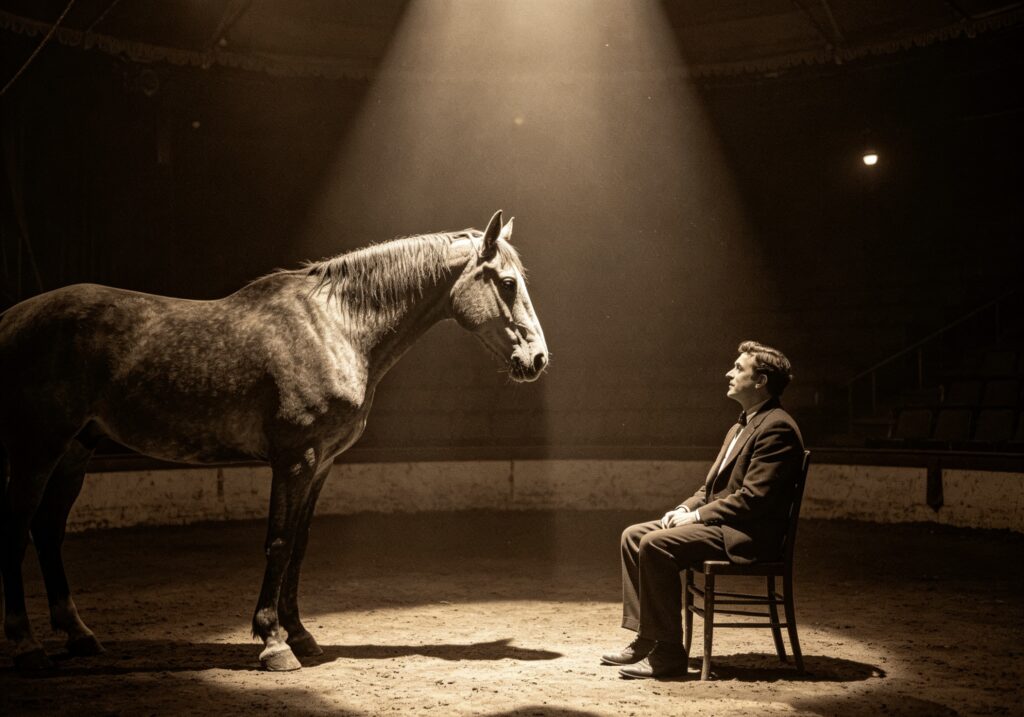
But later investigations revealed the truth. In fact, Hans couldn’t calculate, and he didn’t understand the questions at all. He merely judged when to stop its hoof based on the facial expressions and breathing changes of the questioner.He seemed to understand, but he didn’t.
He read the signals, but never grasped the meaning.
This horse is the algorithm we encounter every day.
It seems to understand our preferences as if it has intelligence, but it is merely reading the signals unconsciously transmitted by us and does not possess autonomy or rationality. It neither understands whether a piece of music has a touching melody nor can it discern whether an opinion is unique.
What it does is merely cold recording.
What Is 0.3 Seconds of Your Attention Worth?
The exact moment when your finger hesitates for 0.3 seconds, and those 0.3 seconds are enough to show your attention has been captured.
In the Internet era, your attention is the most valuable commodity.
“How Wall Street manipulates money, the giants in Silicon Valley do the same with attention.”
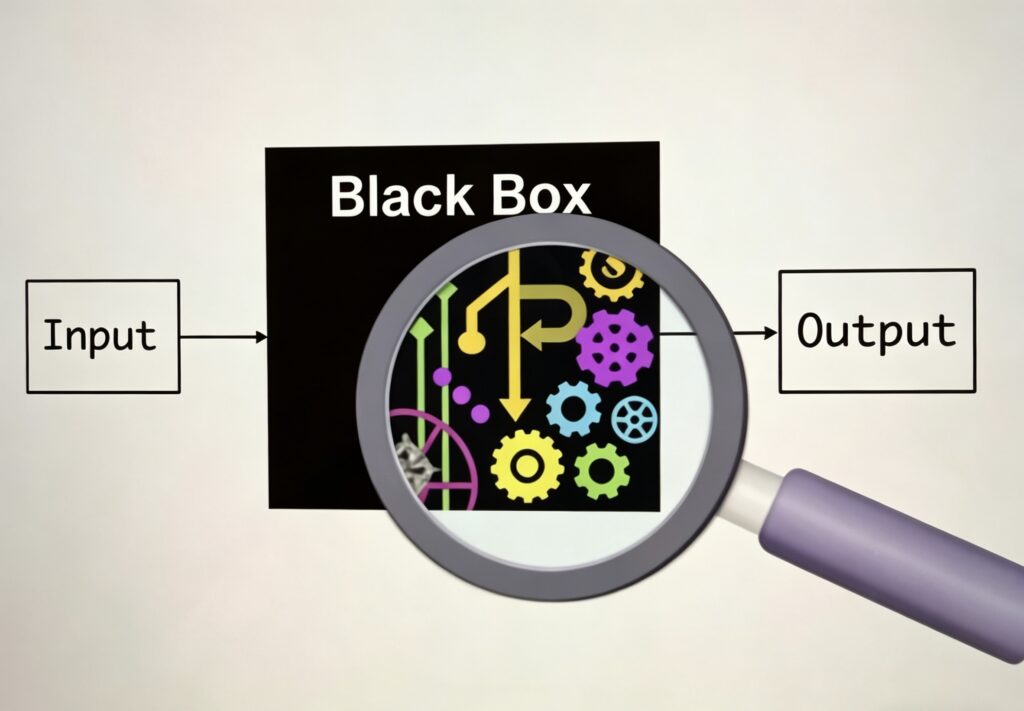
Once those 0.3 seconds are captured, this signal is immediately tagged, extracted and placed in the “black box”, then amplified, duplicated and spread. So when you’ve scrolled for half an hour and the fourth creator with an almost identical style appears on your screen, you might think it’s just a coincidence of popularity.
But in fact, an unseen breeding process is taking place.
Reverse Engineering the Flesh
For a very obvious phenomenon of this aesthetic purification, it is the frequent appearance of various appearance optimization content on our social media in recent years.
More and more young people define “beauty” as a form of self-value pursuit. But when you open social media, you will find that these beauty templates are astonishingly consistent:
a sharp jawline, flawless skin, S-shaped body curves…
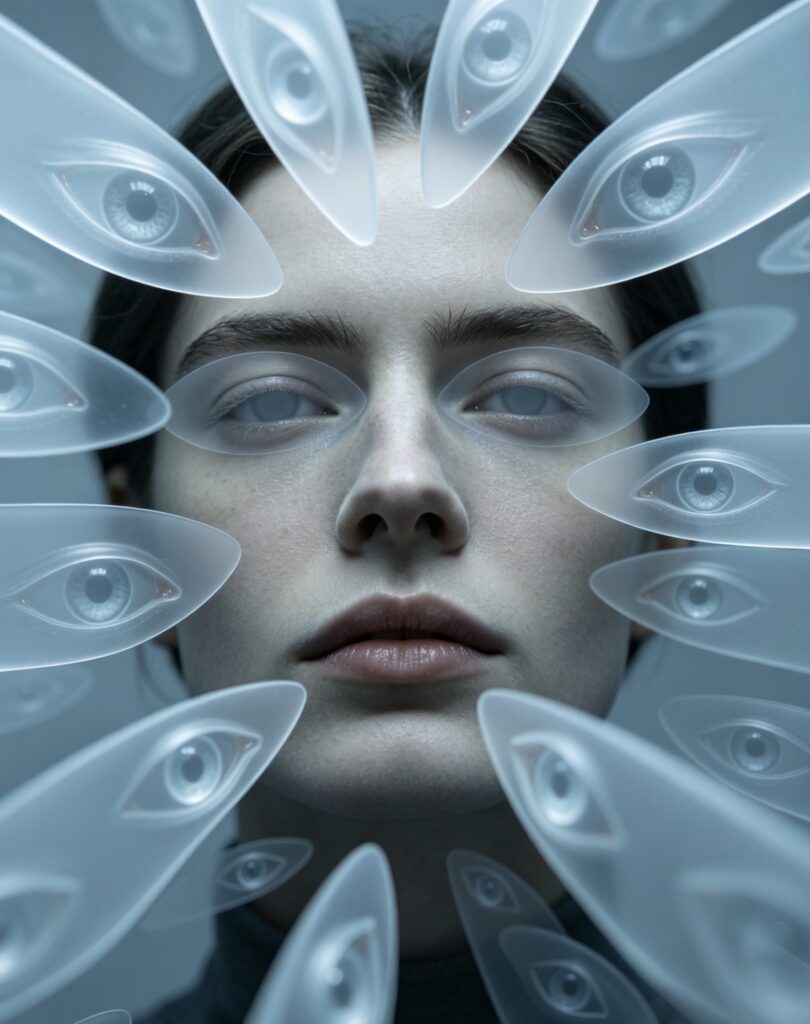
On the surface, it seems we are more interested in beauty. But the truly remarkable aspect lies in the fact that the algorithm breaks down the body into a set of optimizable indicators.
And these elements can frequently appear in our field of vision because of their intense visual stimulation, the obvious contrast between before and after, and often set standards that most people can’t realistically reach.
The algorithm is not judging which kind of beauty is more advanced, but rather what form can make users stop, maximize envy, anxiety, and imitation, and believe that that is the standard of being liked.
We are undergoing a “reverse engineering” of the flesh: we no longer define beauty based on real feelings, but instead use the template of the algorithm’s preferences to remodel our bodies to match it.
Prepared Dishes and the Bloated Fat Man
If appearance optimization is the algorithm’s formatting of our appearance, then the more concealed crisis lies in the fact that this logic does not stop at the physical level. It keeps moving inward, reshaping how we form preferences, consume content, and ultimately encounter the world.
Once the platforms learn to extract signals from our behaviors, they will not stop at identifying preferences but will further organize for us what to watch, what to like, and what to understand.
“A large amount of social work that shapes our cultural world has been outsourced to automated systems”.
In this culture, human experience is no longer a fruit that ripens slowly but become industrial products that can be mass-produced, dehydrated, and repackaged by code.
Open your phone,
you don’t have to read 200 pages of classic works. You can finish reading a book in just 10 minutes. You don’t need to endure real workplace setbacks to get 5 pieces of advice distilled from 3 years of workplace experience.
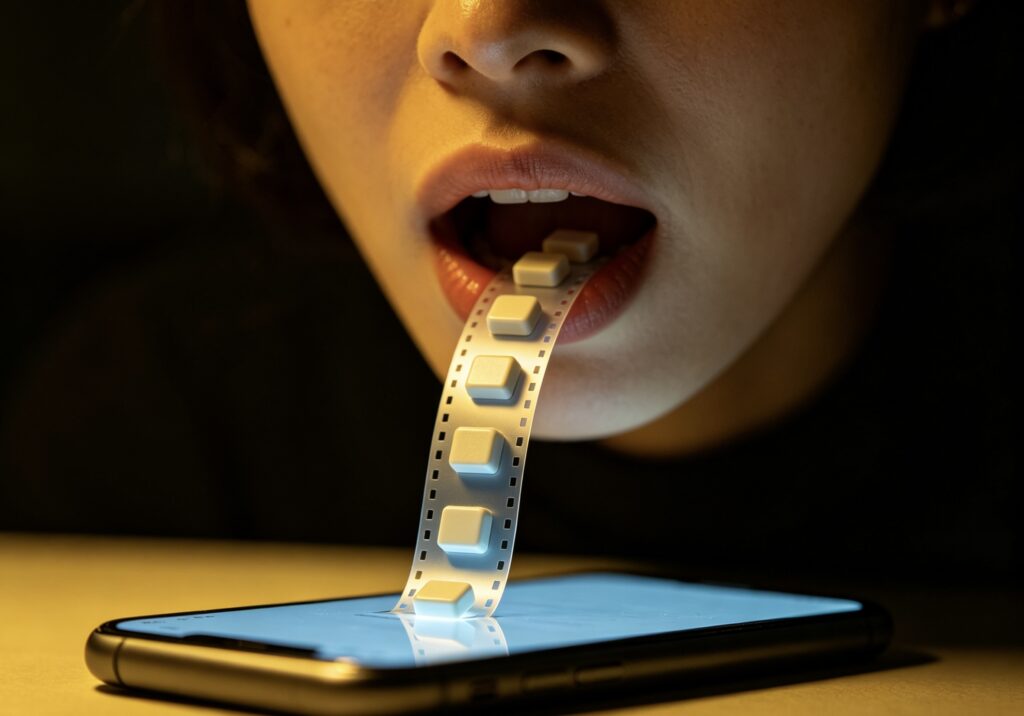
This quick and concise way of receiving information is like a plate of exquisite pre-prepared dishes. The steps of preparing, chopping, slow simmering, and stir-frying have all been omitted and the final product is simply pushed into your mouth.
It seems efficient, but the nutrition value is drastically reduced.
You may feel as if you have seen a lot, understood a lot, and even have a sense of satisfaction that I seem to have grasped a lot. But you have overlooked that what truly enables us to demonstrate our judgment and experience is often not the conclusion itself, but the inefficient moments that require us to experience, wait, and take detours.
The algorithm gives us more and more answers, but leaves fewer and fewer paths for forming the answers.
Just like someone who eats too many pre-prepared dishes at once, the feeling of fullness comes quickly, but the nutrition doesn’t keep up, and digestion is insufficient.
The more you eat, the less you truly absorb.
The Disappearance of Accident
All the great forms of life may stem from a mutation.
The reason why our culture can maintain charming diversity is precisely because of the collisions of ideas and unexpected encounters. And as the world increasingly presents itself in a “processed version”, those truly transformative accidents are beginning to occur less and less frequently.
In the past, you would walk into an old bookstore and browse a book you never intended to buy;participate in a boring conversation and accidentally hear a sentence that changes you for a long time; would get on the wrong bus and enter a neighborhood you wouldn’t have gone to originally, where there is a huge sycamore tree and an elderly man playing the violin. Standing there, doing nothing, but feeling that the world seems to have expanded a little bit compared to a few minutes ago.
These moments cannot be calculated in advance by algorithms, but they are the turning points that allow us to change ourselves. Often, these turning points, these unexpected moments, are the sources of our creativity.
However, for the platform, an accident means risk. It resists labeling and prediction and offers no guaranteed pattern of retention or feedback. Therefore, these contents are naturally at a disadvantage inside the system.
The system will not directly and harshly prohibit them; instead, they are quietly pushed further and further back in each distribution weight.
Just and Latzer(2016) summarized this process as the reality construction selected by algorithms. When the system decides what enters the field of vision and what is excluded, it not only organizes information but also jointly shapes the reality we perceive.
So we appear to be consumers, freely choosing what we like, scrolling through what interests us.
But who gave us this option?
Before we realize our certain needs and expectations, the algorithm has already predicted and anticipated the state change we are not aware of in advance, and then calculates our actions. (Andrejevic, M, 2019) If our emotions are also predicted, is this really our free will?
Are we really choosing, or living inside a hallucination of choice, manufactured by code?
Perhaps we cannot truly escape from algorithms. They have already been embedded in every aspect of our lives. This is also the core problem of current digital governance, the driving logic behind algorithms is commercial, not public wills. They aim for the duration of user engagement and click-through rates, rather than our autonomy, diversity, or the right to unexpectedness.
Even though the EU’s Digital Services Act (DSA) has required platforms to be responsible for the transparency and risk assessment of their recommendation algorithms, the problem lies in that transparency is not not the same as accountability.
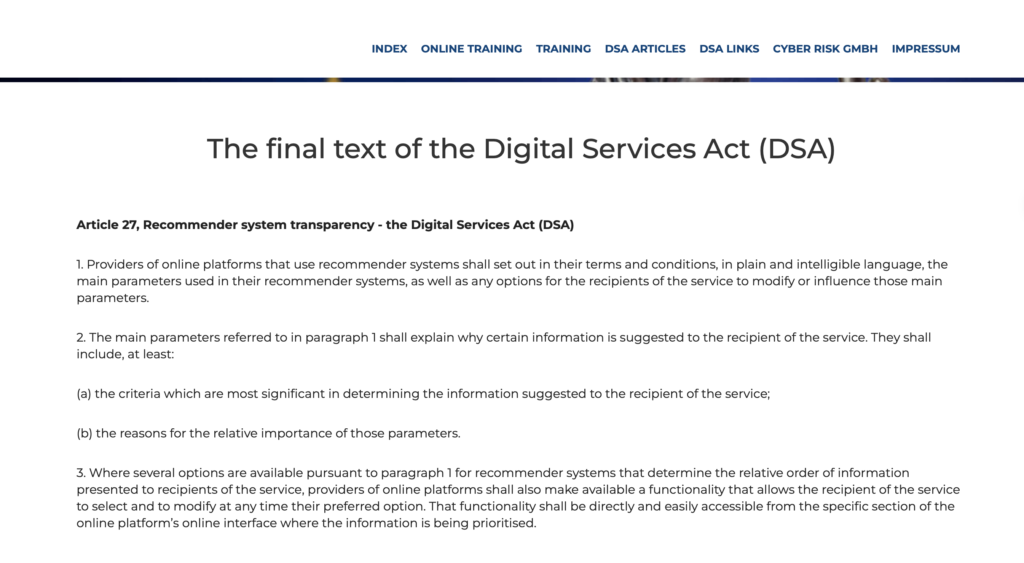
We can see “why this is recommended”, but that doesn’t mean we can change it. Because no one can explain why I am the one seeing this particular post?
And who, exactly, is responsible for the way these systems shape my preferences and even my emotions?If rule-making is always slow and clumsy, Are we simply expected to wait right now?
That Half Minute the Algorithm Couldn’t Predict
When I began to ask myself these questions, I was half lying on the sofa.
I vaguely remember that half an hour ago, I had just opened the social media app and the system smoothly recommended several new contents. One was the latest outfit trend, one was a funny clip, and the other two were cute pet videos.
None of them was something I had actively searched for, but each of them had exactly something that made me want to click and watch.
Not because any of it was truly compelling, but because I couldn’t quite find a reason not to.
A moment later, I turned off the phone. I tried to recall what i’d just watched, but what rosed up in mind wasn’t complete and coherent words, not clear pictures. It more like some blurry emotional remnants: A stimulated desire to purchase, a little bit of cheap fun, and then…
Then I it hit me. It wasn’t that I couldn’t remember them; I simply didn’t want to remember them. During the moments when my fingers were scrolling, a kind of pact was formed between me and the algorithm. It was responsible for filling in my empty time precisely, while I was supposed to not raise any questions. As for where those contents went, it actually doesn’t matter.
They might not have been created for remembering in the first place.
They were created to be consumed.
Just like potato chips. After finishing a bag, you won’t remember the taste of individual chip, but you only remember that it seemed good and it just happened to satisfy your craving.
After turning off my phone, I stared blankly at the kitchen trash can. A small fly was circling above it,attracted by some smell i couldn’t identify. I just watched there for a full minute. During that minute, nothing was consumed and no new data was produced. The algorithm couldn’t predict what I would do next because I myself didn’t know either.
I was just watching a bug.
That minute was short, but this scene made me feel that it was the only moment in this hour that wasn’t occupied by anyone, any system, or any “likes” prediction.
Perhaps we can’t truly escape from algorithms. They have been embedded in every aspect of our lives. But we can practice identifying those moments that are not calculated in the gaps of it.
For example, an afternoon when the phone is out of power, opening that dusty book that’s been waiting on your shelf; a purposeless walk through the city, turning into an alley you’ve never entered before; a weekend visit to a café you’ve never tried, even if it’s only rated 3.5 stars, ordering a drink you’ve never heard of, and then staring blankly for several hours……
Reference
Amin, S. (2026, March 20). An algorithmic mirror: The psychological costs of “Looksmaxxing.” BPS; The British Psychological Society. https://www.bps.org.uk/psychologist/algorithmic-mirror-psychological-costs-looksmaxxing
Andrejevic, M. (2019). Automated media. New York London Routledge.
Hankwitz, M. (2022). Atlas of AI: Power, Politics, and the Planetary Costs of Artificial Intelligence. In Leonardo (pp. 1–21). Yale University Press. https://doi.org/10.1162/leon_r_02206
Just, N., & Latzer, M. (2016). Governance by algorithms: reality construction by algorithmic selection on the Internet. Media, Culture & Society, 39(2), 238–258.
Pasquale, F. (2015). The Black Box Society. Harvard University Press. https://doi.org/10.4159/harvard.9780674736061
Be the first to comment