
Have you ever had such an experience: your mobile phone seems to be able to quickly “read” your thoughts? You may just casually mention something in a chat or call, and soon it will appear in the advertising recommendation of mobile shopping apps. At first, it looked like a strange coincidence – but is it really just a coincidence?
As this phenomenon becomes more and more frequent, it gradually points to a broader social reality: we are living in what many scholars call a “data-oriented society”. In such an environment, our daily behavior – watching, clicking, sliding, and even staying time – will be continuously captured and converted into data (Flew, 2021) . These data do not exist in isolation. They will be summarized, analyzed, and used to build detailed portraits of us.
This means that this issue is no longer just a technical issue, but involves a deeper **control and power issue**. When all our actions can be recorded and processed, do we still really control personal information? Or is it gradually becoming the object of systematic observation and prediction?
This article believes that although digital platforms try to create a feeling that users “control everything”, this control is largely only an appearance. In fact, power is constantly concentrated in the hands of platforms that collect, analyze and govern our data. They not only affect what we see, but also shape our online behavior (Suzor, 2019)
A world built by data

Imagine your ordinary day. You open your mobile phone, browse social media, search for information, or watch videos and listen to music. These behaviors seem insignificant, but in the background, every action will leave data traces. This is the so-called **datafication**: the process of transforming daily behavior into data that can be stored and analyzed. As pointed out by Flew (2021), this process constitutes the core basis for the operation of digital platforms and is closely related to its business model.
What makes this process particularly important is its scale and continuity. Data is not collected at once, but is generated over time, thus forming detailed and ever-changing records of user activities. These data traces can be integrated between different platforms and services, enabling enterprises to build more and more comprehensive personal portraits. In this sense, users are not only interacting with digital systems, but also continuously producing valuable data to power the platform economy.
However, this process is not just about recording what we have already done. Data is often also used to predict what we might do next. Recommendation systems like TikTok or YouTube will constantly adjust what you see according to your behavior. As time goes by, your online world will become more and more “in line with you”, but at the same time, it will become more and more screened and structured. More importantly, this process is not neutral. As emphasized by Flew (2021), the design goal of the platform system is to maximize user participation and economic value, which means that the content you see not only reflects your interests, but also is influenced by the business logic behind it.
Privacy is no longer only about “confidentiality”
In our understanding, privacy means that if you don’t share certain information, then the information will be private. But in today’s digital environment, this understanding is difficult to establish.
Even if you have not actively posted or shared content, the platform will still collect data about your behavior. Their fragmented information is integrated, such as what you click, how long you stay, and what you ignore, so as to build your user portrait. This process is called “profiling”, which enables the platform to infer highly detailed user information (Office of the Australian Information Commissioner, 2020)
We can understand this change by using the “contextual integrity” proposed by (Nissenbaum, 2010)
. Nissenbaum believes that privacy is not only about whether the information is hidden, but also about whether the information flows in the appropriate social situation. And when the data collected in one situation is used in another situation, such as browsing data for advertising targeting, this integrity will be broken.
Research also shows that there is a clear gap between cognition and control. Many users have expressed concern about privacy and taken certain protective measures, but there are far fewer people who really think that they can control their personal data (Office of the Australian Information Commissi Oner, 2020). This shows that the privacy issue has changed from a personal choice to a structural issue.
Is it true that “data is convenient”?
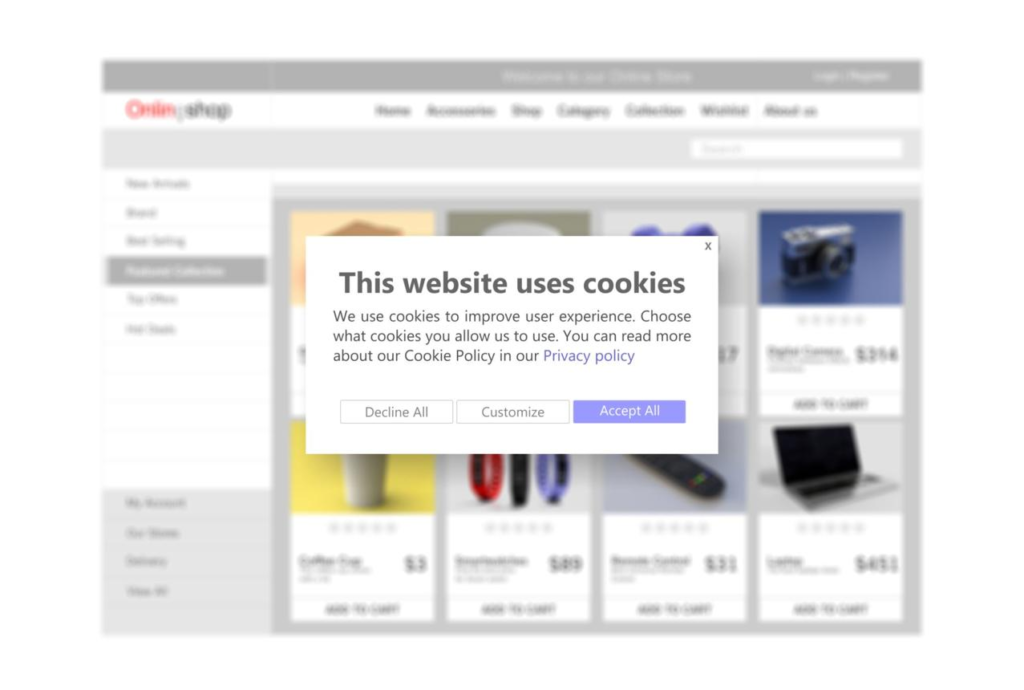
People often think that the use of digital services is a fair exchange: users provide personal data in exchange for convenience, such as free use, personalized recommendations and a smoother online experience.
However, this “exchange” is much more complicated than it seems on the surface.
Most platforms will require users to agree to the lengthy and complicated terms of service. These documents are rarely read completely and are usually difficult to understand. In reality, rejecting these terms often means that the relevant services cannot be used, so users are actually “promoted” to agree. As Suzor (2019) pointed out, platform governance operates through these contractual agreements, which give enterprises great discretion in data collection, interpretation and use. In this case, the user seems to be “agreeing”, but in fact his choice space is severely limited.
In addition, this so-called “exchange” is also affected by information asymmetry. Platforms have much more knowledge than users about how data is processed, which makes it difficult for individuals to really understand the risks involved. At the same time, the lack of alternative platforms has further deepened users’ dependence on these dominant platforms.
Therefore, rather than a voluntary and balanced exchange, it should be understood as a manifestation of structural power inequality – the platform makes rules, and users have little room for negotiation.
As a platform for rule-makers

We usually imagine the Internet as an open and neutral space. However, the reality is that most of our online activities take place on a few dominant platforms, such as Google, Meta, TikTok and Amazon. Facebook-Cambridge Analytica scandal involves the political consulting company Cambridge Analytica, which obtained the personal number of tens of millions of Facebook users without explicit permission. According to. This process is achieved through a third-party application, which is ostensibly a personality test, but in fact not only collects data from participants, but also obtains data from their Facebook friends in many cases.
These collected data were then used to build detailed psychological portraits of users to achieve highly targeted political advertising, especially during important elections, including the 2016 U.S. presidential election. These advertisements will be customized according to the personality characteristics and emotional trigger points of the individual, making them more convincing and more difficult to identify as a manipulatory behavior.
This case reveals how personal data can be easily reused and go beyond its original use. Users who think they are just involved in a harmless test are actually inadvertently part of a large-scale political influence system. This also highlights the fundamental power inequality between users and the platform – data is extracted, analyzed and commercially utilized, all of which are largely invisible to users.
These platforms not only provide the infrastructure of the Internet, but also take the initiative to shape the online environment for our interaction. As pointed out by Suzor (2019), the platform actually plays the role of a “private supervisor”, setting rules through user agreements and implementing them through technical systems. This is closely related to the concept of “code is law”, that is, algorithms and platform design themselves determine what users can do, see and express (Suzor, 2019).
These algorithm systems play a powerful role in shaping the visibility of content. They will give priority to displaying certain types of content – usually those that can maximize user participation – while suppressing other information, and users are often unaware of this process. In addition, content review decision-making is often automated, and there may be inconsistencies, and users have almost no channels to complain. At the same time, the lack of transparency in the operation of these systems further weakens the accountability mechanism because it is difficult for users to understand or question decisions related to their own content.
Therefore, users often do not enjoy the same rights in cyberspace as in the real world. They are no longer fully protected by public law, but by the mediation and restrictions of corporate policies and opaque algorithm systems. This also raises important questions about fairness, accountability and digital justice.
The digital world shaped by the Internet and algorithms from open to centralized
In the early stage of the development of the Internet, it was often described as a decentralized and democratized space. It is generally believed that the government should minimize intervention, and market competition will bring freedom and innovation.
However, this vision is gradually being challenged. Flew (2021) believes that the Internet has gone through the process of “platformization”, that is, a few large companies have begun to dominate the flow of information and digital communication. The network effect has further strengthened this concentration, making it more and more difficult for users to leave these platforms. This process reflects a broader trend: the Internet is no longer a decentralized network, but a system dominated by powerful intermediaries. The logic of the market, which was once thought to promote an open market, actually led to the concentration of power.
In the recommendation algorithm of TikTok, the page “recommended for you” will constantly analyze user behavior – watching, skipping or repeating content – and optimize the push results accordingly. As time goes by, this kind of recommendation will become extremely accurate. However, this also raises important problems. If the content we watch continues to be guided by algorithms, to what extent is our choice autonomous?
An important example can be seen in the recommendation system of TikTok. The platform will continuously collect user behavioral data, such as viewing time, interaction and sliding browsing mode, so as to generate highly personalized content recommendations.
Although this increases the participation of users, it will also limit their opportunities to contact multiple views by constantly strengthening their existing preferences. This phenomenon is often called “filter bubble”.

In addition, these systems not only recommend entertainment content, but also may amplify false information or harmful content. This shows that the algorithm system not only reflects user preferences, but also actively shapes these preferences, and may have a broader social impact (Flew, 2021).
Challenges at the regulatory level
As the public’s concern about privacy, false information and platform power continues to rise, the government is also increasingly trying to intervene. For example, data protection laws aim to give users more rights so that they can better control the way personal information is collected, processed and used.
However, the effective supervision of the platform still faces great challenges. Many technology and media companies operate across multiple countries, and the legal system is usually limited to a single country. This mismatch brings significant difficulties to regulation and law enforcement. Platforms can circumvent stricter rules by adjusting their business structure or taking advantage of regulatory differences between different countries. At the same time, the development of technological innovation is often faster than the formulation and renewal of the legal framework. Emerging technologies such as artificial intelligence have also introduced more complex and opaque data processing methods, making supervision more difficult.
In addition, there is often a lack of coordination among governments, which leads to fragmented regulatory methods and inconsistent standards. Platforms can take advantage of this fragmentation to operate in different regulatory environments, so as to reduce its own accountability pressure.
Together, these factors have created an obvious governance gap: the speed of platform power expansion continues to exceed the speed of accountability mechanism development, which puts users in a relatively weak position in protection and supervision, and triggers continuous concern about fairness and digital justice.
Rethink what “control” is
We are often told that protecting privacy is a personal responsibility, such as adjusting settings, setting strong passwords, and sharing information carefully. Although these practices are indeed important, this view ignores the structural nature of the problem. As pointed out by Flew (2021) and Suzor (2019), the digital environment is not a neutral space. They are consciously designed to guide user behavior and limit the real choice space. Interface design, default options and algorithms will invisibly affect our decision-making, making some behaviors easier while others more difficult to achieve. From this perspective, the so-called “control” depends not only on what choices users make, but also on how these choices are framed and restricted by the system.
In addition, users usually do not know how their data is collected, processed and reused. This lack of transparency further weakens users’ ability to truly control data. Even if the platform provides privacy settings, these settings are often complex and deeply hidden, thus reducing users’ willingness to take the initiative to manage.
Therefore, instead of asking users, “Do you have anything to hide?”, it’s better to think about a more critical question: do we really have the power to decide how data is used?
In a data-based society, data is not only a form of information, but also a form of power that can affect opportunities, acquisition paths and visibility. Understanding how this power works is an important step for us to rethink digital rights, platform accountability and the future of the Internet.
In the end, the question is not whether we choose to share data, but whether we still really have the ability to refuse.
Flew, T. (2021). Regulating platforms. Polity.
Nissenbaum, H. (2010). Privacy in context: Technology, policy, and the integrity of social life. Stanford University Press.Office of the Australian Information Commissioner. (2020). Australian community attitudes to privacy survey 2020.
Suzor, N. (2019). Lawless: The secret rules that govern our digital lives. Cambridge University Press.
Carole Cadwalladr and Emma Graham-Harrison, “Revealed: 50 million Facebook profiles harvested for Cambridge Analytica,” The Guardian, March 17, 2018.
Shoshana Zuboff, The Age of Surveillance Capitalism (New York: PublicAffairs, 2019), 95–100.
Robert Hassan, “Digitality, Virtuality, and the Data Revolution,” in The Information Society (Cambridge: Polity, 2020).
Eli Pariser, The Filter Bubble (New York: Penguin, 2011).
Be the first to comment