
Just think about it: you wake up in the morning, pick up your phone, and reply to messages on WeChat; scan a QR code to buy breakfast on your way to work; use it to send files and join meetings during the day; share your daily life with friends and family after work; and even before going to bed at night, you’re browsing your Moments feed, chatting with friends, and liking posts. WeChat is no longer just a tool—it has become woven into every moment of our lives, turning into our ever-present “digital organ.” But if this “digital organ” doesn’t just record your life, but also predicts your next move—knowing which restaurant you’ll order from, which friend you’ve been drifting apart from, and even labeling that handbag you haven’t decided to buy yet as a potential purchase—do you still think of it as just a tool?
As an app that covers all aspects of daily life for the Chinese people, WeChat has long been an indispensable part of our lives.
Many people are aware of privacy leaks and feel uneasy about them, but almost no one dares to actually uninstall WeChat and stop using it. This is the very real paradox we face today—the privacy paradox. In the digital lives we’ve built on WeChat, we’ve long since, without even knowing it, handed over our personal information and agreed to unfair terms in the name of lifestyle convenience. Under the rules set by the platform, the line between public and private has become hazy, and in the end, we have no real say about our own data.
What does privacy really mean?
Some people think, “I haven’t done anything wrong.” There’s really nothing to be worried about, even if the platform maintains records of my data. However, this is a popular assumption. I agree with the Nissenbaum that privacy isn’t about keeping secrets; it’s about whether information is being shared in the right way in different situations (Nissenbaum, 2015, p.839). For example, it is very normal in everyday life to complain about your job or work stress to your friends on WeChat. But that doesn’t mean the boss of your company should be able to see them. The content hasn’t changed, but individuals’ private information is now available to everyone. Another example: using smart apps like WeChat to talk about your health problems and see an online doctor is a perfectly normal thing to do. But if the platform sells this information to medical companies, we’ll start getting sales calls and ads for medicines. The line has been crossed in this case, which is known as a “contextual collapse.” Discussing private matters is allowed; however, it must occur in the appropriate environment. People feel uncomfortable and think their privacy has been invaded when the situation is incorrect.

The main issue is that WeChat keeps stretching the limits of privacy in our digital life. It changes the original context in which personal information was created to let it be collected for advertising reasons. Users are growing less trusting of the platform because they are concerned that their information will wind up somewhere inappropriate rather than that it will be shared at all. That is the real reason for privacy leak concerns.
The Control That Are Hidden in WeChat
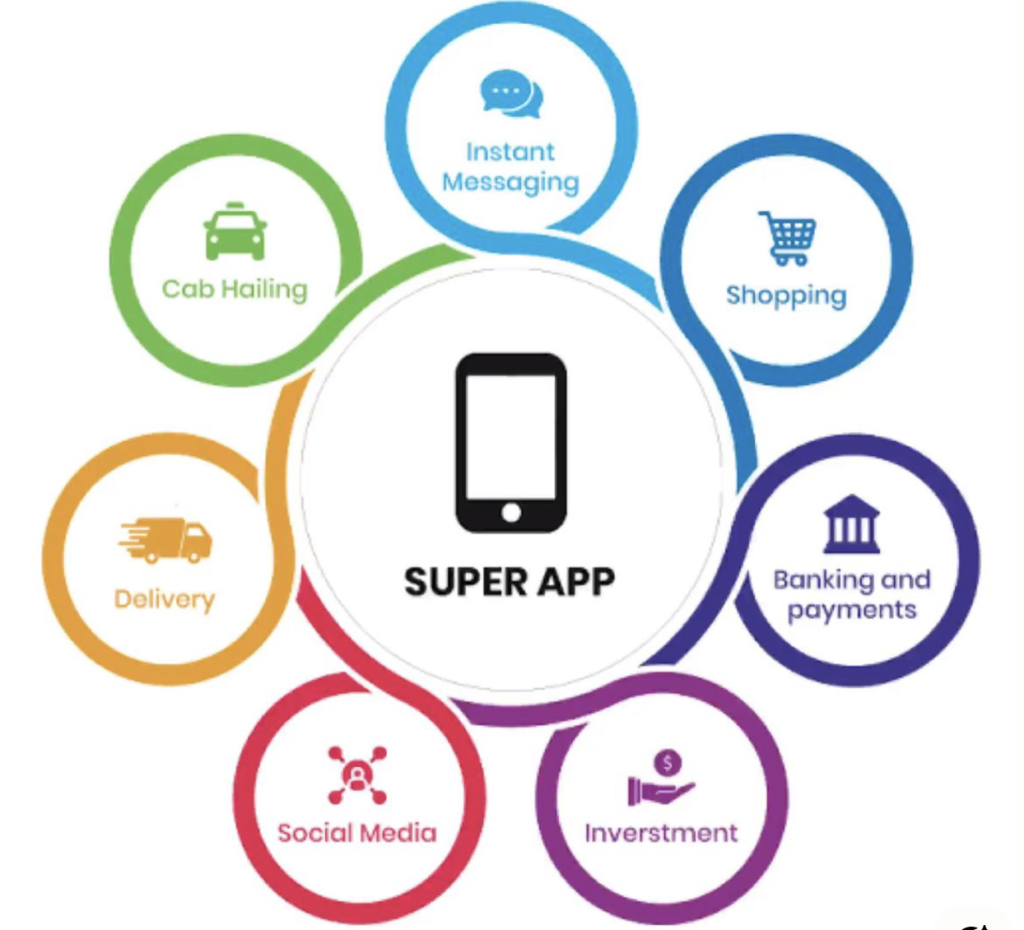
WeChat’s biggest problem is that it blurs the barrier between work and personal life. People use WeChat for practically all of their socializing, work, and payments during the day (Chen & Cheung, 2018). A lot of things that should be done in different places are all in the WeChat super-app. The lines go away as soon as this information and data become mixed together. This is because WeChat is always recording all types of information about you, which blurs the lines between private and public information. At the same time, this personal data isn’t protected, which makes it hard for us to really keep control. Privacy has become something that is hard to find a safe place to hide.
In the digital age, the freedom to remain anonymous can protect marginalized users and provide a safer space where people can freely express their views without fear of harassment, advertising, or commercial tracking (Nissenbaum, 1999). When using the WeChat platform, we find that login requires linking a mobile phone number—and in some instances, real-name verification. This means that even if we don’t use our real names online, our true identities can still be linked through scattered pieces of information and personal habits, making true anonymity impossible. Our online expressions on WeChat can also be tied to our real-life selves. WeChat’s enforced binding makes the right to anonymity impossible, locking people into the cage of identity.
What’s even more powerless is that, as scholar Suzor mentioned, the platform has absolute control over rule-making; simply by using the platform, you are agreeing to all its rules, and the platform holds the final decision on rule interpretation(Suzor, 2019). WeChat keeps all the rules of the game under the platform’s control. It makes you think you’re managing your own privacy data, but that’s not actually the situation. They set the rules, and they decide how to interpret them—all under the guise of the so-called “User Agreement.” In fact, it’s just an unfair contract laid out before you, and you have no choice but to either agree to it or log out.
In fact, user agreements are written in such long and complex language that the average reader doesn’t have the patience to fully understand them. As a result, when users click “Agree,” it’s not based on real understanding—it’s just a choice they’re pressured into making because they have no other option if they want to use WeChat (Monteleone, 2015). In real life, WeChat is like a mall that you go to every day. The mall’s owner, the platform, has set long and complicated rules for entry, and the mall alone can decide what they mean. You have to agree to these terms in order to get in. You need to read them carefully, but you don’t have time because you have to meet friends or go shopping soon. You just agree quickly to get in. But then, one day, the mall—the platform—suddenly says you’ve broken a regulation and puts limits and fines on you. Then you suddenly understand that what you agreed to wasn’t just a list of rules, but an agreement that can’t be read or changed. Your disagreements and views don’t matter when it comes to these rules, because you weren’t really a part of making them in the first place; you were just assumed to have agreed. You don’t really have a voice in this. For a long time now, it has made it impossible for you to control your personal data, even if you think you do.
Even though everyone understands that WeChat is a hidden cage, we are still blocked. There is a chance that WeChat collects private information about us, like our habits and personal information, without our understanding. This information could also get out in an unfair way, but we haven’t done anything to protect ourselves or quit WeChat by stopping the app (Chen & Cheung, 2018). It’s happening right now: the most real privacy conflict. Despite these concerns, people take no action to safeguard their personal information. On the other hand, they can’t live without the ease of use that platforms offer, which leaves them in this very difficult situation.

It hard to stop using WeChat
The network effect is what causes this conflicting behavior. As a platform’s network and user group grow, each individual user becomes more valuable. When everyone uses WeChat, it costs a lot to exit the app (DiMaggio & Garip, 2012, p.96). It’s like everyone has relocated into a big mall where this platform is the focus of life, business, and relationships. When you leave, it’s like cutting yourself off from everyone else. You have no choice but to stay in the shop, even though you know you have to follow the rules and accept the platform’s limits (Suzor, 2019). In general, this is because of the power that comes with having uneven power structures. The privacy paradox does not imply that individuals are neglecting to safeguard their private. Actually, it shows that they are unable to do so (Chen & Cheung, 2018). This is a challenge that the platform made. In this case, the platform’s benefits seem more important than the risk of data breaches. So, you have to keep using WeChat even though you know that your information will still be taken. You’re not weak; this is how a network locks you in. The cost of leaving is really expensive. People don’t not care about these risks when they choose not to do anything to protect their privacy. They have to weigh the advantages and disadvantages and make a decision.
WeChat is like a cage. Is there a way to get out?
Understanding the problems we’re facing helps us find better solutions.

There are two aspects to the answer to the privacy paradox. We need to make sure that the standards for platforms set by the government are stronger right away. The law should keep getting better as technology does, according to Flew. Platforms should be regulated. A lot of people can work together to fix the issue. In this case, the government is in charge of making the rules clear, in addition to groups are in charge of reviewing them. The government has understood for a long time that letting platforms regulate themselves creates gaps and unfair factors. We can only find a balance between protecting users’ rights and WeChat’s growth through outside rules and supervision (Terry, 2019).
We can also do something about it ourselves. As individual users, we can informally safeguard our privacy. Firstly, we should stay informed, for example by using the minimal exposure method to keep our information from being seen by too many people. You can lower the risk of information leaks by turning off personalized ads that aren’t needed and limiting the information that people can see. Although, we need to improve our privacy standards at the same time. To decide how much information to share, we should put people into groups based on our contact with them: family, friends, colleagues, and strangers. Share less content, be careful about what you post, and limit your online activity if you’re really afraid about privacy leaks. This is the safest way to keep your privacy safe (Chen & Cheung, 2018).
In today’s world, WeChat is an important part of our daily lives, but it has also locked us in an unseen cage. We want to use WeChat, but we also want to regulate it, so this is more like a push-and-pull conflict. A lot of our privacy has been taken away at a high cost. It is clear that it is useful, but it is also clear that it could put privacy at danger. The right thing to do is not to delete WeChat and never use it again. Instead, we should take efforts to preserve our privacy after we realize how much it costs. Actually, it means that we can still decide instead of to let the platform control our lives.
References:
Chen, Z. T., & Cheung, M. (2018). Privacy perception and protection on Chinese social media: a case study of WeChat. Ethics and Information Technology, 20(4), 279–289. https://doi.org/10.1007/s10676-018-9480-6
DiMaggio, P., & Garip, F. (2012). Network effects and social inequality. Annual Review of Sociology, 38(1), 93–118. https://doi.org/10.1146/annurev.soc.012809.102545
Monteleone, S. (2015). Addressing the “Failure” of Informed Consent in Online Data Protection: Learning the Lessons from Behaviour-Aware Regulation. Syracuse Journal of International Law and Commerce, 43(1), 4. https://surface.syr.edu/jilc/vol43/iss1/4
Nissenbaum, H. (1999). The meaning of anonymity in an information age. The Information Society, 15(2), 141–144. https://doi.org/10.1080/019722499128592
Nissenbaum, H. (2015). Respecting context to protect Privacy: Why meaning matters. Science and Engineering Ethics, 24(3), 831–852. https://doi.org/10.1007/s11948-015-9674-9
Suzor, N. P. (2019). Who Makes the Rules? In Lawless: The Secret Rules That Govern our Digital Lives (pp. 10–24). chapter, Cambridge: Cambridge University Press.
Terry Flew. (2019). Platforms on Trial. Intermedia, 46(2), 18–23. https://eprints.qut.edu.au/120461/
Be the first to comment