Why every click, like, and scroll is part of a larger system of data collection and surveillance
Have you ever searched for something on the Internet and found that there were advertisements related to it after a few minutes? This may make you feel as if the mobile phone is listening to you – but in fact, there is a more systematic way of operation behind it. Every click, like and scrolling you make on the social media platform is being tracked, analyzed, and converted into data.
Beyond what most users consciously interact with, social media platforms also collect a wide range of “invisible data” that users rarely think about. This includes device information such as your phone model, battery level, and operating system, as well as behavioural signals like how long your finger hovers over a post, how quickly you scroll past certain content, and even the patterns of your typing speed. These micro-interactions are not noticeable in everyday use, yet they are continuously recorded and aggregated into detailed behavioural profiles. As Suzor (2019, pp. 10–24) argues, these forms of platform data collection are embedded within opaque governance systems, where users rarely understand how rules and algorithmic decisions are made.
This means that even when users believe they are not actively engaging, they are still producing valuable data. Over time, these fragments will form a highly accurate digital identity. It not only reflects the content clearly expressed by users, but also reflects what they may subconsciously prefer or avoid. As a result, social media platforms are able to construct predictive models of human behaviour that go far beyond traditional marketing techniques.
We usually think that platforms like Instagram or TikTok are “free”, but there is a price hidden behind this convenience. In today’s digital economy, users are not real customers – they are the products. In this post, I’ll explore how social media platforms profit from the large collection and use of personal data, and users often do not fully understand the scale of this process and its impact on privacy and digital rights.

Source: Unsplash(n.d.).
How Social Media Really Makes Money
To understand why this is important, we need to understand how social media platforms make profits. Unlike traditional enterprises that charge directly to users, platforms such as Instagram, TikTok and Facebook mainly rely on advertising revenue. Their business model relies on collecting a large amount of user data – from the content you like and share, to the time you watch the video, and even the content that is paused while browsing.
In fact, the advertising systems used by major platforms operate through real-time bidding markets.When a user opens an application, its data information will be immediately transmitted to the advertising trading platform. Here, companies will compete in milliseconds to show precisely targeted advertisements for the user. This process happens so quickly that users are completely unaware of the auction taking place behind each page load or video recommendation.
What makes this system particularly powerful is its efficiency in monetising attention. Advertisers are not simply paying for exposure; they are paying for precision. A very accurate user portrait, such as a user who has recently searched for a travel destination, watched fitness videos or browsed skin care content; can be sold at a higher price, because such a portrait will increase the possibility of conversion. Therefore, the more data a platform collects, the more valuable each individual user becomes within this digital advertising ecosystem. Flew (2021, pp. 41–72) further explains that platforms act as private regulators, where economic incentives and platform governance are deeply intertwined, allowing companies to shape visibility and user behaviour through data-driven advertising systems.
From Behaviour to Data: The Process of Datafication
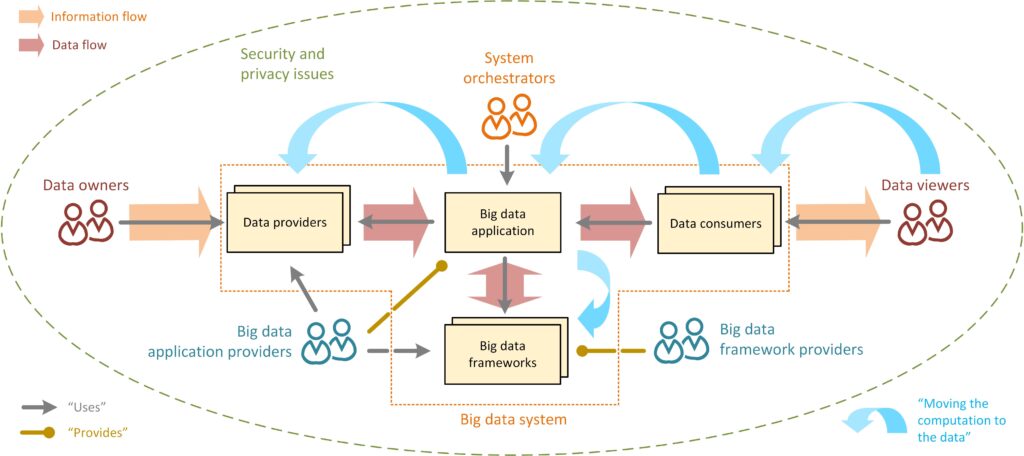
This process is often called “datafication”, that is, daily online behavior is transformed into measurable and valuable data. Crawford (2021, pp. 1–21) highlights that this process is not purely digital, but relies on extensive material infrastructures and extractive systems that turn human activity into computational resources. As scholars have pointed out, these data are not only collected passively, but are actively used to predict and influence user behavior. In other words, platforms are not only observing what we do – they are also shaping our next actions.
Inside TikTok’s Algorithm: Why It Knows You So Well
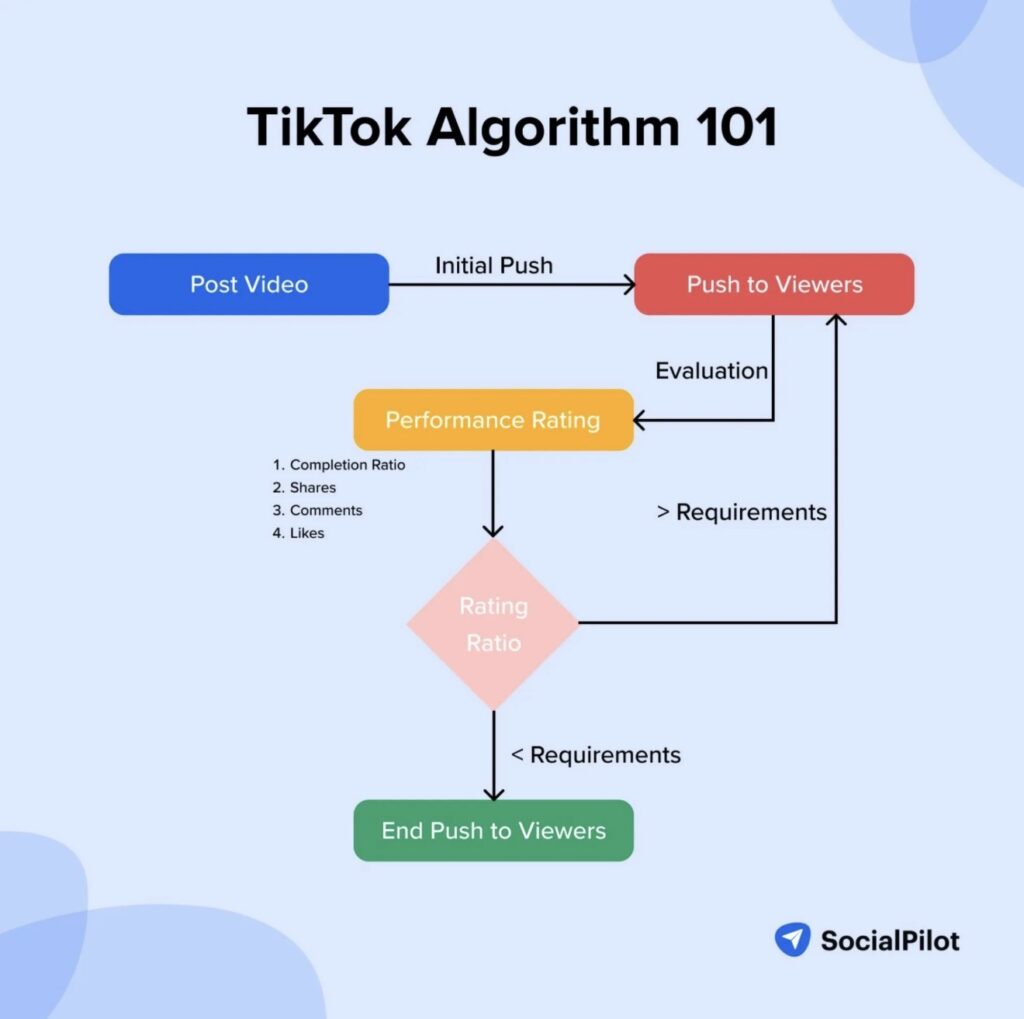
Source: SocialPilot(n.d.).
As shown in Figure 3, TikTok’s algorithm continuously evaluates user engagement to determine content distribution. A clear example of how user data is turned into profit can be seen from TikTok’s recommendation system. Unlike traditional social media platforms that mainly rely on users’ attention, TikTok’s “recommended for you” page is almost entirely predicted by algorithms. From the moment the user opens the application, every interaction – including likes, shares, comments, viewing time, and even the speed at which a video is skipped – will be tracked and analyzed in real time.
Another important aspect of TikTok’s algorithm is its feedback loop system, which continuously refines recommendations based on user reactions. The platform does not simply categorise content once. Instead, it will constantly re-evaluate users’ preferences based on different types of videos tested and emotional responses measured by user participation patterns. For example, if the user stays on emotional content for a little longer, the algorithm may regard it as a manifestation of interest and push similar videos more frequently.
This creates a dynamic environment where users are gradually guided into increasingly specific content “bubbles”. Over time, this may lead to the “algorithm reinforcement” phenomenon described by the researchers, that is, the user’s preferences are not only reflected, but also strengthened. In some cases, users may even unknowingly find that their interests have changed, and this change is not actively noticed by them, because algorithms will cleverly shape content that is considered interesting, relevant or important.
In addition, the system will give priority to displaying content that can attract the most attention, which usually means those materials that can stimulate emotional reactions: such as videos that arouse humor, anger or curiosity. Therefore, the platform is not neutral in terms of the content it promotes; on the contrary, it focuses more on improving user participation, even if it means sacrificing the diversity of information.
The strength of TikTok lies not only in the amount of data it collects, but also in how it effectively uses this data to personalize content. The platform can quickly build a detailed file of each user’s preferences in just a few minutes of user browsing content. That’s why many users feel that TikTok “knows them very well”. However, this personalized experience is not only to improve the user experience – it is also closely related to the economic model of the platform. The more accurately TikTok can predict the content that users will be interested in, the longer users will stay on the application, and the more advertisements they will be exposed to.
This raises important questions about privacy and user awareness. Although users may understand to some extent that their activities are being tracked, few people can fully understand the scale and depth of this data collection process. More importantly, the algorithm not only reflects the user’s preferences, but also actively shapes these preferences. By constantly pushing content to users that is consistent with their past behavior, TikTok can strengthen certain interests, trends and even beliefs. In this sense, the platform is not just a passive tool, but a participant who actively participates in influencing user behavior.
The TikTok incident highlights a broader problem in the digital economy: personal data is not only collected, but also strategically used for the purpose of improving user participation and obtaining profits. Therefore, users are actually converted into data sources, and their attention can be monetized. This further shows that in today’s social media environment, users are not consumers – they are the goods sold. Sinpeng et al. (2021) demonstrate that content moderation and algorithmic governance are not uniform across regions, with platforms like Facebook showing significant inconsistencies in how harmful or sensitive content is regulated in different cultural and political contexts.
The Role of Data Brokers: The Hidden Middle Layer
An often overlooked part of the digital advertising ecosystem is the role of data brokers. These are third-party companies that collect, aggregate, and trade user data across multiple platforms. Even if a user only interacts with one app, their behavioural data may be combined with information from other sources such as online shopping histories, location data, and public records.
This means that a person’s digital identity is not limited to a single platform like TikTok or Instagram, but is instead constructed across an entire network of data exchanges. Data brokers then sell these profiles to advertisers, political campaigns, and analytics companies, often without users having any direct awareness of the process.
The existence of data brokers further complicates the idea of “consent”, because users cannot realistically track or control how their data flows once it leaves the original platform. As a result, privacy becomes not just a platform issue, but a broader structural issue within the digital economy.
Why This Matters for Your Privacy and Rights
The example of TikTok is not unique, but represents the broader logic that supports today’s digital economy. On various platforms, personal data is constantly being extracted, analyzed and commercialized, and these processes are largely unnoticed by users. As scholars have argued, contemporary digital platforms increasingly transform user activity into predictive behavioural data that is used for commercial and strategic purposes. Similarly, Talton Gillespie (2014) emphasized that platforms and their algorithms are not neutral tools, but powerful participants who can shape the organization, distribution and consumption of information.
What makes this particularly concerning is not just the scale of data collection, but the imbalance of power it creates. Users are often asked to “consent” to data practices through lengthy and complex terms of service, yet this consent is rarely fully informed or meaningful. As a result, individuals participate in a system that profits from their data without fully understanding or controlling how it is used.
The potential impact of this system extends not only to the issue of personal privacy, but also to the broader issue of digital inequality and autonomy. In many cases, users from different socio-economic backgrounds have different ways of using data, and more vulnerable groups are often more likely to become the key targets of personalized advertising systems. This raises ethical questions about fairness, maneuverability and the long-term impact of algorithmic decision-making on society.
At the same time, regulatory frameworks have struggled to keep pace with the rapid evolution of data driven technologies. Although policies such as consent pop-ups and privacy disclosures exist, they often fail to provide meaningful protection. They prioritise legal compliance over user understanding. As a result, there is a growing gap between what companies are allowed to do and what users actually understand about their digital exposure.
Possible solutions include formulating stricter data protection regulations, improving user selection mechanisms, and improving the transparency of algorithm design. Some scholars advocate the adoption of the “data minimization” strategy, that is, the platform only collects the necessary information necessary to achieve functions, rather than collecting data on a large scale for commercial purposes.
Digital Literacy and User Awareness
One potential way to address these challenges is through improved digital literacy. Many users continue to engage with social media platforms without fully understanding how data collection systems operate. Educational initiatives that explain how algorithms, advertising systems, and tracking technologies work can help individuals make more informed choices online.
However, digital literacy alone is not sufficient. Even when users are aware of surveillance practices, they often have limited ability to opt out due to the essential role of social media in communication, education, and entertainment. This creates what scholars describe as a “participation paradox”, where users must participate in data-driven systems despite being critical of them.
Therefore, meaningful change requires both user awareness and structural reform at the platform and policy level. Without this dual approach, individuals remain embedded in systems that prioritise data extraction over user autonomy.
Recognizing this dynamic is a crucial first step. Although it may not be realistic to completely avoid data collection in a platform-driven environment, users can have a clearer understanding of how their data is used and require technology companies to provide higher transparency and responsibility. In the end, if we continue to regard digital services as “free”, we may ignore its real price – our privacy, our autonomy and our digital rights.
Reference List
Crawford, K. (2021). The atlas of AI: Power, politics, and the planetary costs of artificial intelligence (pp. 1–21). Yale University Press.
Flew, T. (2021). Regulating platforms (pp. 41–72). Polity Press.
Gillespie, T. (2014). The relevance of algorithms. In T. Gillespie, P. J. Boczkowski, & K. A. Foot (Eds.), Media technologies: Essays on communication, materiality, and society (pp. 167–194). MIT Press.
Sinpeng, A., Martin, F., Gelber, K., & Shields, K. (2021). Facebook: Regulating hate speech in the Asia Pacific. University of Sydney & University of Queensland. https://r2pasiapacific.org/files/7099/2021_Facebook_hate_speech_Asia_report.pdf
Suzor, N. P. (2019). Who makes the rules? In Lawless: The secret rules that govern our lives (pp. 10–24). Cambridge University Press.
Wikimedia Commons. (n.d.). Main page. https://commons.wikimedia.org/wiki/Main_Page
SocialPilot. (n.d.). TikTok algorithm overview. https://www.socialpilot.co/blog/tiktok-algorithm
Unsplash. (n.d.). Photographs. https://unsplash.com
Be the first to comment