In March 2026, Reuters revealed that Meta was brewing a new round of layoffs, with the proportion of layoffs potentially reaching up to 20% of the company’s total workforce. Based on Meta’s current workforce of 79,000, this would mean that approximately 16,000 employees would be laid off. If the final confirmed proportion of layoffs reaches 20%, it will be the largest round of layoffs since Meta’s “Year of Efficiency” restructuring plan from the end of 2022 to the beginning of 2023.
Facing the news of layoffs this time, the spokesperson for Meta did not respond positively. There are two prevailing speculations in the outside world. One is that Meta’s aggressive investment in the AI field has brought huge cost pressure, forcing it to reduce the number of employees; the other is that Mark Zuckerberg is betting big on the AI arms race, laying off non-core technical personnel to free up resources for the AI business.
From a financial perspective, Meta, as one of the most profitable internet companies in the world, generates tens of billions of dollars in profits annually from its traditional advertising business, including the family of apps consisting of Facebook, Instagram, and WhatsApp. However, against the backdrop of continuous progress and upgrading in AI, Meta is caught in a transformation of multi-line investment expansion.
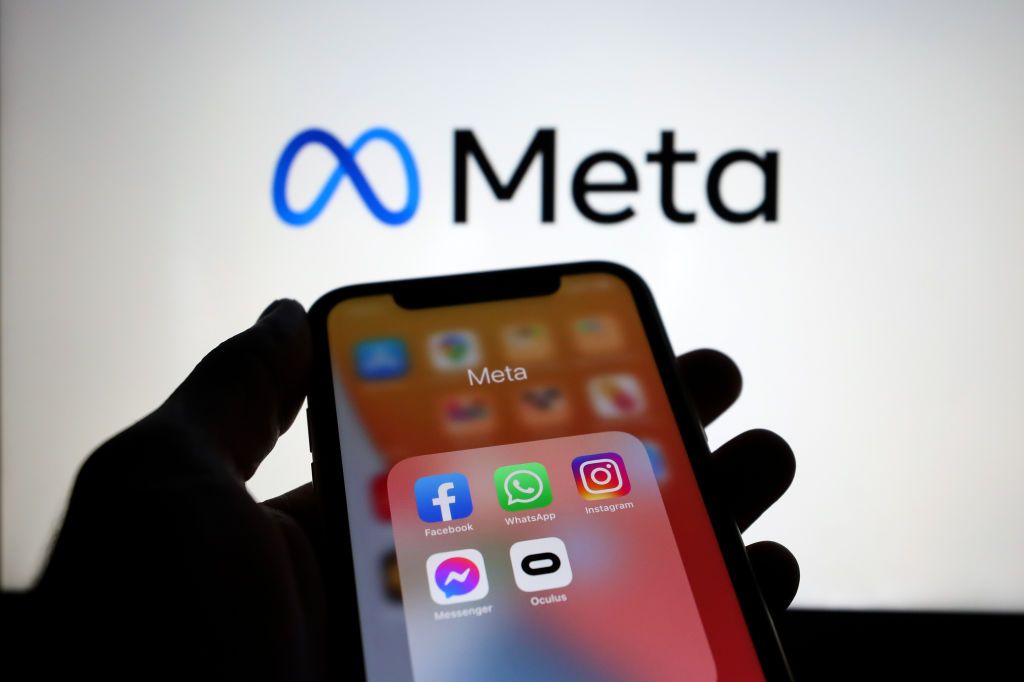
Fig 1. Source: https://www.tatlerasia.com/power-purpose/technology/meta-facebook-vr-ar-nextstage
Meta’s story is not unlike a famous tale from a century ago in Germany. Once upon a time, there was a horse named Hans who captivated the world. It was said that Hans was proficient in mathematics, reading, and even spelling. If you asked him what 2 plus 3 was, he would precisely stamp his foot five times on the spot. The media of that time were all amazed by his intelligence beyond his species. Later, scientists discovered the secret behind Hans’ arithmetic: he was not capable of doing math at all but was extremely good at observation—meaning that Hans could observe the subtle changes in the questioner’s body language and breathing rate just before the answer was about to be revealed.
This is exactly the case with Meta. Zuckerberg is asking its employees to record daily work videos to be used in training AI algorithms. As witnesses to technological progress, when we are told that AI is evolving at an unprecedented speed, capable of thinking like humans, writing code, and creating graphics, can we perceive what is behind it that controls the AI algorithms? AI is like this horse, and Meta, as the owner of the contemporary Hans, behind the implementation of the algorithm, requires employees to record their daily work videos in order to continuously improve the logic of the algorithm. Meta attempts to observe and record the weak signals of human daily intuition, feed it to the machine, and let the algorithm calculate how to better simulate humans and replace them. Meta is exploiting its technological monopoly to redefine what constitutes ‘valuable labour’—namely, that only labour which can be digitised, cloned and extracted is meaningful.
This is not merely a business optimization, but an “algorithmic cannibalism” of modern technology.
Artificial intelligence, neither “artificial” nor “intelligent,” is essentially an extractive industry that heavily relies on human-input algorithms. Just as Mark Zuckerberg asked programmers and reviewers to record workflow videos, this is actually transforming human professional intuition into data metrics that can be learned by machines.
Legal expert Jeremias Adams-Prassl has warned that “this algorithmic management is fragmenting human ‘complex judgment’ into data packets. “(Atkinson & Collins, 2024). Under this logic of judgment, employees are no longer respected professionals, but rather mines that are constantly being excavated and consolidated.
Meta’s approach represents a new form of exploitation: before being laid off, employees must personally upload work videos that can be used for AI learning. The professional competitiveness that employees could have taken away with them when leaving has already been backed up by the company through servers and video storage. The essence of this behavior is that the company not only purchases employees’ labor time, but also, through technological means, permanently reclaims employees’ intellectual and research achievements before the end of their contract. This shift from tangible labor to algorithmic assets is essentially a harvesting of human intellectual capital by enterprises.(Zuboff, 2019).
This logic not only exploits employees within the workplace but also extends this ‘extraction of efficiency’ to the public sphere across society through AI glasses.
Then, when Meta Ray-Ban glasses faced a class action lawsuit across the United States, how were customers, as consumers of Meta rather than its employees, incorporated into the intelligent algorithm by Meta? The lawsuit alleges that Meta’s AI smart glasses use slogans such as “designed for privacy, controlled by you” in advertisements, insisting that the captured video will automatically blur faces and will not leak users’ private data. In fact, this blurring technology frequently fails, and Meta is using the video capture function of users’ glasses in the background to collect data to train the upgrade of AI intelligent algorithms.
It is evident that the focal point of the controversy lies in whether, when the wearer enters a bathroom, private gathering, or any non-consensual data collection scenario, it will transform into a human-shaped surveillance monitor, recording the wearer’s every move at all times. The intelligence of AI glasses is essentially a data sampler. This is not an accidental privacy breach, but a deliberate move by tech giants. Through this smart glasses device, Meta has successfully transformed every wearer into the company’s “mobile sensor,” representing a form of “colonial datafication.” Meta is expanding from linking office employees to every corner of the real world, transforming them into predictable behavioral models to cultivate its AI computing power. From this god’s perspective, people’s data collection is no longer limited to clicks on mobile phone screens and captures by mobile phone cameras. Privacy is no longer a fundamental right, but rather noise that hinders algorithm optimization. When public spaces and even private locations enter the public eye without permission, it signifies the disappearance of public boundaries. The defense line of digital rights has quietly collapsed, and Meta, without paying any costs, has achieved the most granular datafication monopoly of the real world through the most basic camera capture method.

Fig 2. Related report (Source: The Verge)
From the perspective of data governance, Meta’s “god’s-eye view” violates the basic principles of informed consent. Meta does not regard these data as privacy, but rather as raw materials for algorithm training. When it transforms the public sphere into a private data laboratory, this digital colonization turns physical space into a research platform for AI data.
This is an embodiment of the currently criticized “surveillance capitalism”.
Although Mark Zuckerberg has defined the years beyond 2023 as the “Year of Efficiency,” this does not simply mean that the company will merely reduce expenses. From the perspective of news investigation, this positive term still reveals severe inequality. Upon careful examination of Meta’s financial reports and layoffs, the benefits brought by this improvement in profits are extremely asymmetric.
Meta’s so-called efficiency improvement relies heavily on “invisible labor”. Behind the cultivation of more powerful and precise AI tools are countless employees and consumers who have had their privacy deprived. If the rumors of a 20% layoff at Meta are true, and the company adopts cheaper and more digitally driven processes, the social contract is accelerating its fracture. So where does this high-efficiency achievement go? It goes to Meta’s stock price, profits, executive bonuses, and the company’s AI landscape. The social security pressure brought by layoffs and the cost of workers’ job transfers are borne by society; while the algorithmic benefits generated are enjoyed exclusively by Meta. The privacy security risks brought by data collection from Ray-Ban glasses are borne by ordinary consumers, while the profits from the glasses and the data-driven convenience and market barriers brought in the later stage are controlled by Meta.(Crawford, 2021).
AI technology is not a neutral tool for social progress; it widens the gap between companies, platforms, and individual users. In this way, Meta has socialized costs, making employees bear the pressure of survival and socializing the risk of unemployment; it also makes customers bear the risk and anxiety of privacy loss. Isn’t this another form of exploitation?
Meta is not the only one leading the way. It merely reflects the industry trend among today’s tech giants.
In January this year, Amazon confirmed the layoff of 16,000 jobs, accounting for 10% of its total workforce; in February, the fintech company Block also laid off nearly half of its employees. Its CEO, Jack Dorsey, publicly stated that “the improvement in AI tools means that companies can accomplish more with smaller teams.”
Is the utilization of data from employees’ brains to promote AI advancement, and the refinement and reduction of human labor behind algorithms, truly a manifestation of technological progress? These layoffs reveal a new strategy in Silicon Valley: as AI capabilities continue to grow, tech giants are betting that they can advance their businesses faster and more cheaply with fewer personnel.
When we revisit and reexamine this “algorithmic rationality”: looking at Meta’s path of action, through datafication, giant corporations have completed the extraction of data from human life and employee labor; when machines learn every human action and capture every subtle expression, they can imitate rational thinking that is close to human. However, what humans possess is emotional connections that can never be replicated.
Meta’s class action lawsuit and large-scale layoffs are merely the beginning. In our era of comprehensive surveillance, protecting digital rights is not merely a legal battle, but also a defense war for safeguarding human emotions. When technological progress comes at the cost of human ability replacement and degradation, as well as infringement of privacy rights, it is definitely not progress, but another form of more concealed regression.
Let’s return to the story of Hans, the horse. Hans was eventually exposed because humans realized that he had no intelligence, but merely catered to the cues of human limbs. The same goes for these tech giants. They have not truly learned human behavior and thought patterns, but merely continue to devour people’s data, privacy, and legitimate labor, thereby cultivating AI that infinitely approximates humans.
Today’s world is a vast data computing field. There is no doubt that artificial intelligence has greatly facilitated and improved human daily life. However, humans should not be the primary source of power for technological progress. Both employees of technology companies and customers of new technologies should recognize that AI cannot become a black hole that exploits human values. Artificial intelligence and big data algorithms are essentially tools that benefit humanity. If humans do not resist this mechanized, cold-blooded thinking, then the future digital world will only have cold models and data, and there will be no more emotional human language expression.
References
Atkinson, J., & Collins, P. (2024). Algorithmic management and a new generation of rights at work. Institute of Employment Rights.
Crawford, K. (2021). The atlas of AI: Power, politics, and the planetary costs of artificial intelligence. Yale University Press.
Zuboff, S. (2019). The age of surveillance capitalism: The fight for a human future at the new frontier of power. PublicAffairs.
Be the first to comment