Just recently, an Instagram reel posted on 22 of Jan 2024 became viral again after two years of silence. In this video, a student from the University of Vermont made a verbal blunder at a Burlington City Council meeting. There, she said she was “shocked” that people were using “other genocides to describe this one,” referring to Israel’s bombing of Gaza.
Her phrasing came across ambiguously—as if she herself labeled the conflict a genocide, despite intending the opposite—which stunned the audience and turned her statement into a social media meme. Algorithms turned her “oops” into a hate tool, showing it to people deep in the conflict and sparking emotional rants over facts. Afterward amedia named her quote as a Freudian slip or parapraxis , which means a sutiation that occurs when someone unintentionally reveals true thoughts or feelings. Here, her wording exposed a subconscious stance on the conflict, despite her effort to reject the “genocide” label.
This reel got me thinking about “online genocide”—how platforms grab some random slip-up and turn it into a massive hate machine. They shove it straight to people already caught up in the fight, sparking nonstop drama and stories that just keep the anger burning with a little help of the algorithms that suggest this video to people who are involved in the conflict and create additional narratives where emotions fight over the facts.
Why has this video became viral now? So, we might assume it had happened due to the escalation of a new war—this time with Iran. The Israel-Iran conflict brought Gaza themes back to the headlines. Instagram and TikTok algorithms picked up this reel as a “prophetic” meme—the phrase about “this genocide” perfectly fit the new wave of debates. This case exemplifies online genocide as a pervasive global phenomenon, amplified by algorithms across conflicts like Israel-Palestine, Russia-Ukraine, and Israel-Iran, that I will use as examples to unfold how online hate evolves during war.
What is “online genocide”?
“Online genocide” has not documented author—it’s a neologism from social media and news outlets, emerging organically in 2023–2025 without a single “inventor,” unlike the classic term “genocide” coined by Raphael Lemkin in 1944.
“Online-genocide is—an informal definition for describing a phenomenon how social platforms accelerate and amplify genocidal rhetoric—hate speech, dehumanization, and war narratives—letting it spread unchecked across networks.”
Basically, it captures platforms supercharging this toxic content without restraint. Legally, the precise term is “direct and public incitement to genocide”—an inchoate crime prosecutable before any violence occurs. ICC Prosecutor Karim Khan has framed social media as a novel weapon of warfare. Platforms aren’t neutral pipes; their algorithms actively worsen the hate (Kassongo Tambu, 2026).
We live in post-truth social world and truth-seeking becomes a collective goal. Facts are never objective but are alighned to partisan interests. The role played by liking, commenting on, and sharing content through social media among networks of friends: these habits promote the rapid circulation of popular content. Networks magnify prevalent ideas, not verified ones: partisan likes create self-reinforcing loops, where “collective guilt” feels true because it’s shared fastest. Breaking this demands cross-partisan feeds, not more content flags—slow truth against viral lies.
Take a look at recent example March 8, 2026. Ukrainian official Andrii Sybiha and Tetyana Berezhna make a statement—Russia is not allowed at the Venice Biennale.
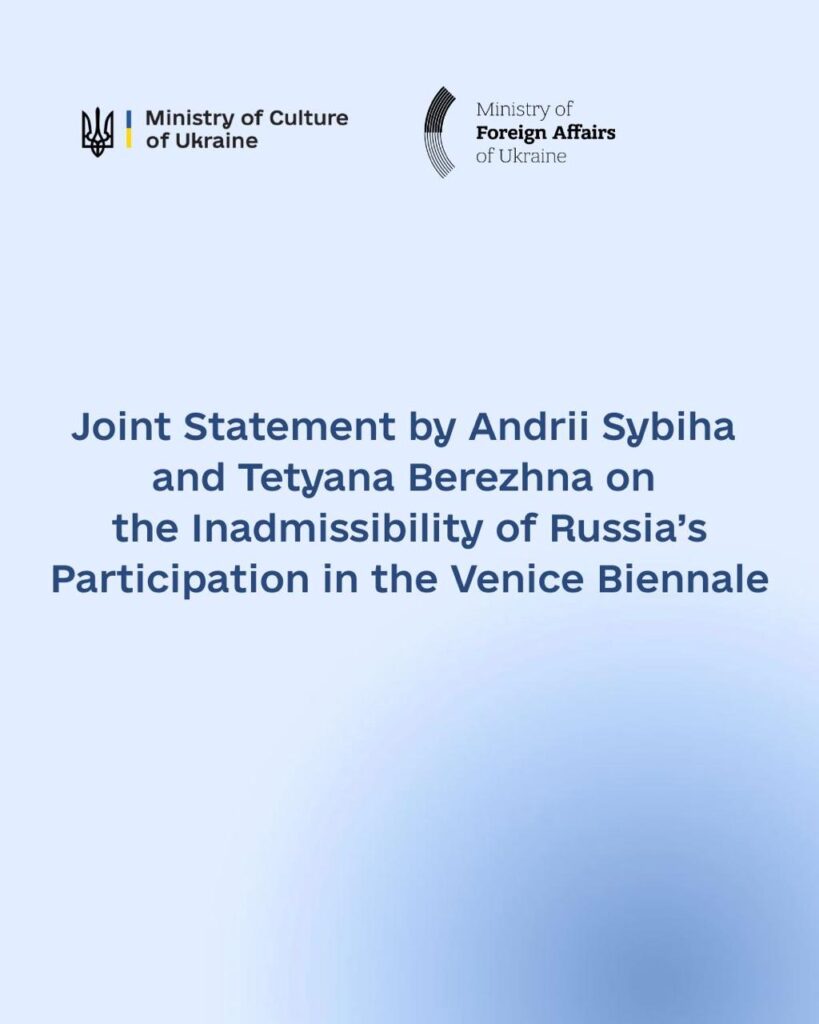
Ukraine argues: For centuries, the Russian Empire and subsequently the USSR carried out a deliberate policy of destroying Ukrainian identity: banning the Ukrainian language, appropriating Ukrainian artists and cultural achievements, and promoting the myth of the greatness and superiority of Russian culture. Excluding Russia from international cultural platforms is critical to maintaining their neutrality, avoiding politicization, and protecting the cultural sphere from state war propaganda.”
Victims’ Rhetoric: Ukraine and Palestine-Iran
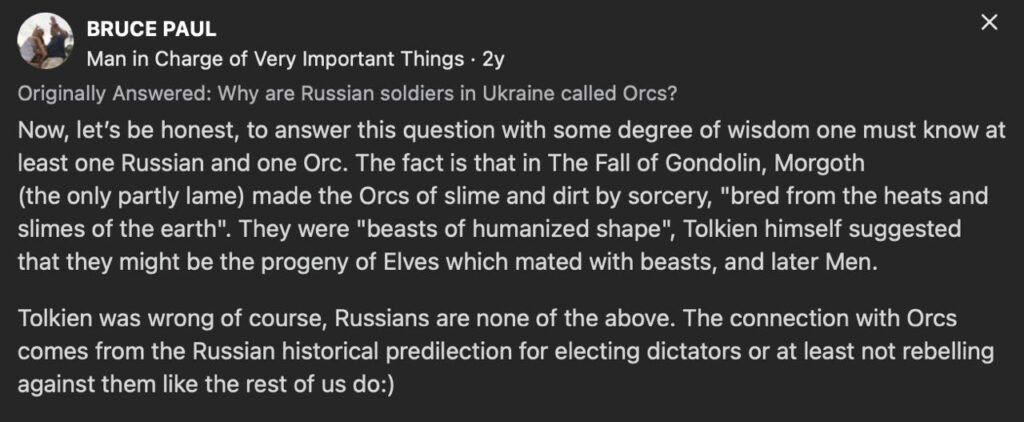
Terry Flew, in his book Regulating Platforms, talks about political polarization, as measured by where people live, their worldview, their feelings, and how mutual hatred only increases (2021, p.87). Wars inflict collective trauma on the victims. It works like “butterfly effects”: powerless, fearful, and angry people transfer these emotions onto the enemy as a group. Sadness morphs into online genocide and is amplified by algorithms. Ukrainians call Russians “orcs” because the psychological distancing of dehumanization allows them to rationalize their actions: “They’re not real people; they’re monsters, so hatred is the right thing.” Palestinians and Iranians use the same logic when calling Israelis “Zionist Nazis”—projection, excuse, and spreading the logic of dehumanization rapidly online. From a phenomenological perspective, these words do not settle as mere labels.
They create what Ngo defines as a “sedimented mode of racialized seeing.” If we have looked at the”other side” over our phone and computer screens for months, our gaze toward them hardens like cement. We no longer see ordinary humans; we see the ready-made image of the enemy. War “butterfly effect” converts the feeling of powerlessness into group blame. Very hurt by the invasion, Ukrainians channel their anger onto all Russians. They call them “orcs” (popularized by Zelenskyy in an official video, Al Jazeera reports it on May 2022; or “vatniks,” a term for a human wrapped in propaganda. This is how brutal memes: “The only good orc is a dead orc” are justified. Why orcs? Here comes the legend.
Palestinian people see Israeli as “occupiers” all together guilty for Gaza attack (Amnesty International report 2022 say Israel “apartheid” treat Palestinian like less people; ICJ opinion July 2024 say occupation break Geneva rule with collective punishment). Iranian group make louder with “Zionist settlers deserve no mercy“. As Khamenei posted on X, “We must give a strong response to the terrorist Zionist regime. We will show the Zionists no mercy”
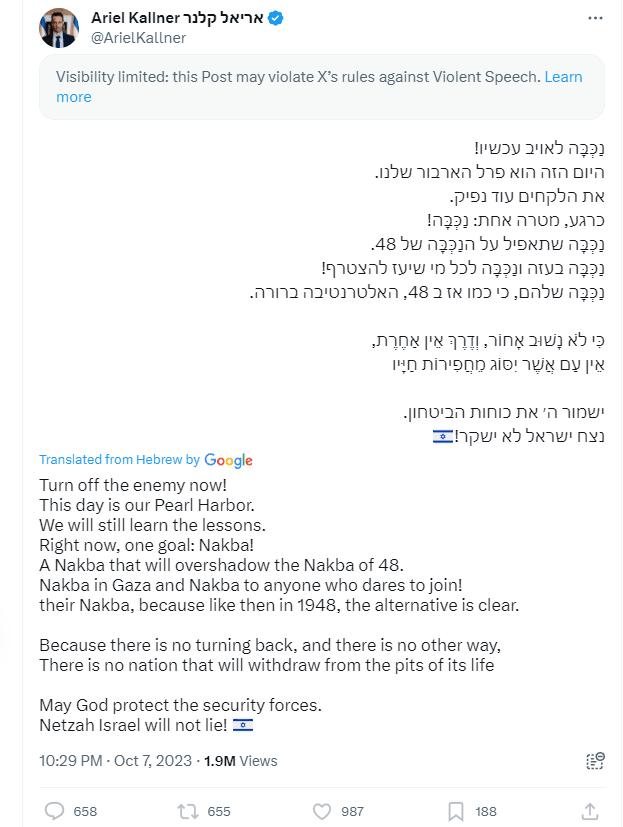
Silence equal complicit connect both side: Ukrainian say “if Russians no protest, they support Putin”, Palestinian say “Israeli civilians cheer bombing, so no innocents” (Palestine Chronicle October 2023 quote Knesset member Kallner call for “Nakba 2.0” on all people in Gaza).
During reading, it might seems that I justify an agressor but I do not want show that only victims spread hate, because it is clear that aggressor also use social media like digital weapon to make all civilian part of modern warfare and take right position. As Leslie Kassongo Tambu (2026) noted, the aggressor aims to make all civilians an active part of modern warfare. This shift is confirmed by the ICC’s recognition of “cyber-enabled crimes” as a new method of warfare, acknowledging that the digital environment is a modality through which international crimes are now perpetrated.
Why is it going to be online hate speech?
Hate speech has been defined as speech that expresses, encourages, stirs up or incits hatred against a group of individuals distinguished by a particular feature or set of features such as race, ethnically, gender, religion, nationality, and sexual orientation. Hate speech goes agains human rights principles, and the scope for its curculation has increased exponentially in the online world. As hate speech fosters intimidations, discriminations, contempt, amd prejustice, its victims find it difficult not only to participate in this collective life but also to lead autonomous and fulfilling personal lives…the target group is unable to relax and lead a life without fear and harrasement. (Terry Flew, 2021).
However, the language used in these online posts is not just a reflection of events but an active agent in constructing public understanding and sentiment. Social media posts use linguistic strategies, historical analogies, and quantified suffering to challenge traditional narratives and increase global awareness (Leslie Kassongo Tambu, 2026). Collective guilt serves as a psychological shield: victims blame “all Russians” or “all Israelis” to simplify chaos into “us vs. evil them.” This restores agency— “orcs support Putin silently” or “Zionists cheer Gaza strikes”—avoiding nuance that reopens wounds. Direct revenge against states is impossible for civilians, so rage displaces onto accessible targets: emigre Russians or anti-war Israelis face boycotts and harassment. “If they fled/silently approve, they’re complicit”—this moral clarity justifies online rituals.
Joseph B. Walter (2022) suggests that a theory of online hate based on social approval suggests that individuals and collaborators generate hate messages to garner reward, for their antagonism toward mutually hated targets, by providing friendship and social support that enhances perpetrators’ well-being as it simultaneously deepens their prejudices. Recent research on a variety of related processes supports this view, including notions of moral grandstanding, political derision as fun, and peer support for interpersonal violence.
What the platforms do with it?
For years, platform executives like Mark Zuckerberg have claimed to be “neutral intermediaries” or “technology companies,” not media outlets. However, sources argue that platforms act more like editors or gatekeepers. Shelby Dioum (2026) claims that this shift creates a more hostile environment where hate speech—a “fuzzy concept” with evolving definitions—can flourish under the guise of platform-specific community standards.
The core of the problem lies in a business model that prioritizes engagement over safety. Algorithms prioritize anger and fear not by coincidence, but because it increases engagement and, consequently, advertising revenue. This effectively transforms the business model into an “engine” for the spread of hate. As a result, these platforms are incentivized to prioritize and disseminate polarizing and sensational content. (Leslie Kassongo Tambu, 2026).
Platforms exploit a psychological phenomenon called homophily—the human tendency to bond with similar individuals. Features like muting, blocking, or unfollowing allow users to easily isolate themselves from opposing views, creating “echo chambers” where radical perspectives go unchallenged. These mechanisms create self-reinforcing ‘feedback loops’ in which users are exposed primarily to content that mirrors their existing preferences and biases.
As we discussed, social media provides the architectural foundation for dehumanization, a critical stage in the process of online genocide. The rise of AI-generated content further complicates this landscape, making it increasingly difficult to distinguish between real evidence and fabricated content used to incite violence.
What they must to do deal with Online Hate Speech during War?
Addressing online incitement demands more than flagging; it requires redesigning platform algorithms. Without redesign, platforms remain incubators for inchoate crimes. The tragedy of this digital shift lies in the “Outrage Engine”—a business model that deliberately prioritizes engagement over safety. By amplifying anger and fear to maximize advertising revenue, platforms cease to be neutral intermediaries and instead act as editors or gatekeepers who incentivize polarization. This algorithmic environment exploits homophily, creating echo chambers where the psychological distancing of dehumanization—such as labeling groups as “orcs” or “monsters”—creates a “sedimented mode of racialized seeing”. Over time, our digital gaze hardens like cement, making real-world violence feel like a logical necessity as we trade nuanced reality for the moral clarity of “collective guilt”.
Reference list
Dioum, S. (2026, March 4). What explains the increase in online hate speech. UC Davis Magazine. https://www.ucdavis.edu/magazine/what-explains-increase-online-hate-speech
Flew, T. (2021). Regulation platforms. Chapter Issues of Concern, 76-96.
Kassongo Tambu, L. (2026). Social media as a digital weapon in modern warfare: Rethinking incitement to genocide and complicity in the digital age. Journal of Conflict & Security Law. Advance online publication. https://doi.org/10.1093/jcsl/krag004
Ngo, H. (2016). Racist habits: A phenomenological analysis of racism and the habitual body. Philosophy & Social Criticism, 42(9), 847–872. https://doi.org/10.1177/0191453715623320
Walter, J. B. (2022). Social approval theory of online hate. Current Opinion in Psychology, 45, Article 101308. https://doi.org/10.1016/j.copsyc.2021.12.010
Be the first to comment