“Open Box“ & Baidu
Is it terrifying for you to have your real identity known to the public on the Internet? I think for most people – especially those who are not public figures and just want to have a normal daily life – it must be an extremely disturbing matter.
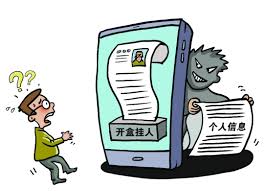
This notorious method, which involves exposing the real identities of internet users and a series of personal information, is commonly referred to as “doxing”. As a product specific to the internet era, Chinese users have given this behavior an imaginative name, “开盒”(Open Box): Each person’s identity information can be regarded as being placed in a sealed file box, while the doxing opens this box and exposes the contents within the public’s view. This term not only avoids the direct names like doxing being blocked by China’s internet censorship mechanism, but also vividly describes the essence of this behavior. At first, doxing activities were only circulated in a limited scope within Internet communities such as Tie Ba (Chinese Reddit), and were used with restraint. However, with the industrialization of businesses like selling personal information in China in recent years, the cost of doxing has decreased and the number of Internet users has increased, now this method is gradually being used routinely and weaponized for personal attacks among user groups on Chinese internet social media. Even the vice president of Tie Ba’s parent company was exposed in a doxing scandal.
In March 2025, an internet user disclosed on the Chinese social platform “Weibo” that their personal information had been publicly posted online by members of a certain fan group. Subsequently, other users entered the personal space of the user who had posted the doxing information and found that her attitude was extremely arrogant. She not only stated that she was abroad and thus beyond the jurisdiction of Chinese law, but also hinted that the source of her doxing information directly came from the information database of the internet company where her family members worked. Later, from a screenshot of an employment certificate she posted, internet users identified her father’s identity as the vice president of Baidu Company.
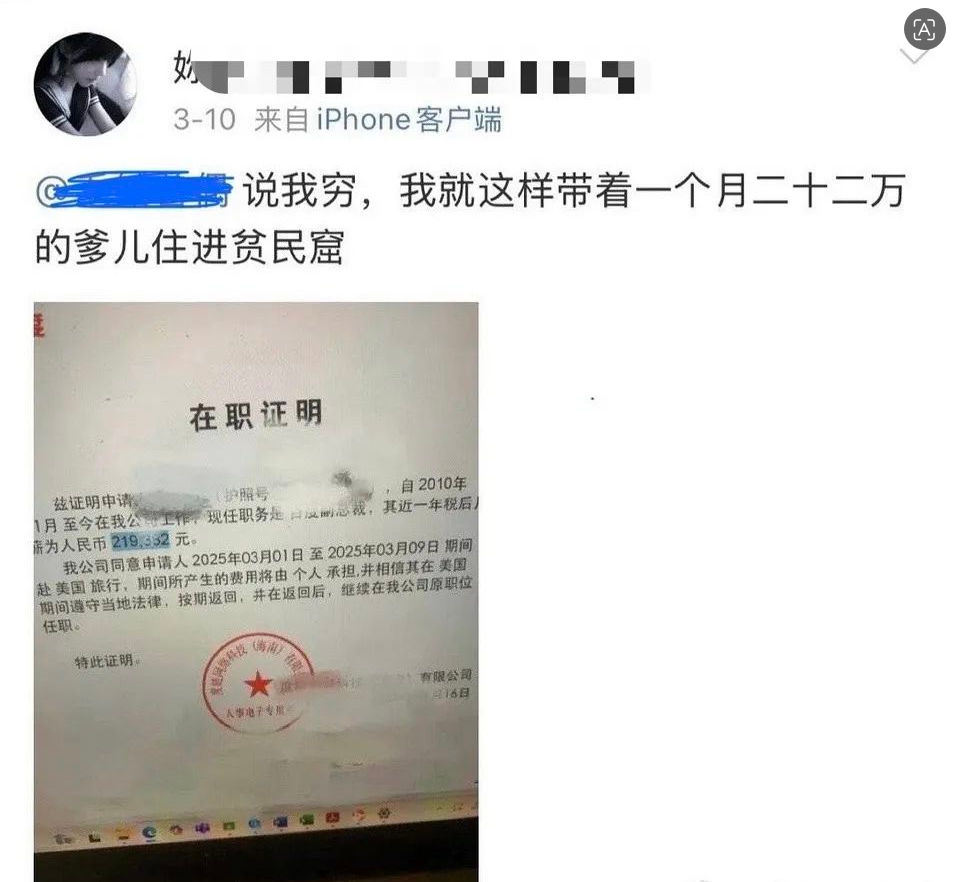
The exposure of this incident aroused great anger among internet users and raised serious doubts about Baidu’s ability to protect user privacy. Subsequently, Baidu immediately issued a statement, claiming that after internal review, no information about internal resources had been leaked. The doxing information involved in the incident originated from foreign websites and had nothing to do with Baidu. The vice president of Baidu also posted an apology letter in his WeChat user space, expressing that it was he who failed to discipline his daughter properly and apologizing to the victims and the public. Although the victims later protested on online platforms, demanding that the vice president apologize to her personally rather than in his private space, this incident did not have any further developments.
Vtubers and Their “Crazy” Fans
As mentioned earlier, the victims’ public personal information was disclosed because of their status as fans of a certain celebrity. Disputes and conflicts among fan groups are often one of the main reasons for the frequent occurrence of doxing phenomena on China’s internet. And this is not limited to the offline entertainment industry such as the music or idol drama, it also involves many online entertainment industries, even more serious in these online industries. In 2025, China Central Television (CCTV) publicly reported a case where a well-known virtual host was subjected to doxing.
Jia Ran is one of the most well-known Virtual Streamers (Vtuber) on the Chinese Internet. She has over 1.8 million subscribers on the video website Bilibili. The idol group Asoul to which she belongs holds the operation rights of many well-known Vtubers. In 2025, Jia Ran received a large number of text messages and phone calls “bombarding” her. Some of these messages contained personal attacks against her, but the majority were meaningless information used to occupy the space of her normal phone number.

The personnel from the procuratorial authority handling this case stated that the offline harassment and attacks that Jia Ran suffered originated from the fan groups of other Vtubers affiliated with her company. These fans, due to their dissatisfaction with the company’s excessive allocation of operational resources to Jia Ran, felt that their favorite Vtuber had less resources. As a result, they launched a doxing campaign against her. Subsequently, Jia Ran’s fan group, out of a retaliatory motive, also disclosed the personal information of these groups that carried out the doxing activities on the internet for public humiliation, leading to increasingly frequent and complex doxing incidents. Jia Ran herself also revealed in a live broadcast that some fans did do doxing to her with the intention of learning more about her private life. These factors made the entire case extremely chaotic, just like a ball of yarn. And Jia Ran herself, during the process of suffering from personal information leakage and online violence, developed depressive symptoms and had to undergo medication treatment.
The frequent doxing incidents on the Internet have drawn the attention of the relevant Chinese authorities. The procuratorial organs have carried out several campaigns to combat doxing in the past few years, arresting numerous domestic organizations that illegally collect personal information. However, the effects of these measures have been rather limited. This is largely due to the rapid development of the Internet in China, which has led to citizens’ private information being disclosed to Internet companies from various perspectives. Additionally, a large number of doxing organizations choose to set up services abroad, making it difficult for the Chinese government to handle the situation.
Nowadays, when you search for related topics of “Open Box” on major social media or video websites in China, you can still find a large number of public figures or ordinary people sharing their experiences of having their personal information leaked and being harassed. The fields they represent are extremely broad, ranging from film and television idols to music stars, from gamers to fan groups of star worship. We can say that on today’s Chinese social media, once your speech offends the interests or dignity of a certain group and your words are disseminated to a certain extent, then you have the risk of being “Opened Box”.
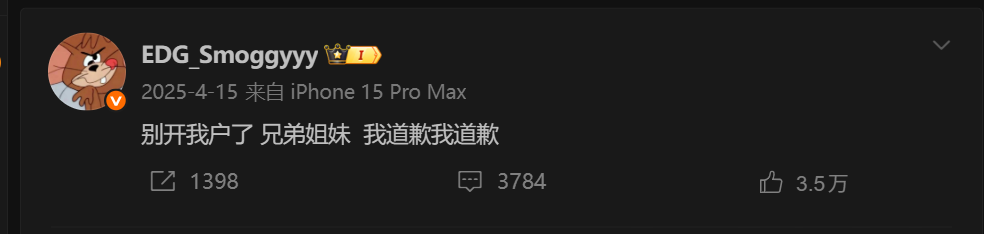
One of the more serious realities that needs to be faced regarding doxing-related issues is the gradual indifference and even entertainmentization of doxing behavior by the public. In today’s Chinese social media, once certain users disclose others’ private information, the proportion of comments containing critical content towards them is gradually decreasing. On the contrary, people have begun to gradually get used to this crime. Some even comment in a joking tone: “Holy crap, it’s the box weapon” (the pronunciation of “box” and “nuclear” is the same in Chinese). It is difficult to judge whether this is because people have acknowledged that their privacy security has long ceased to exist.
People’s moral judgment on these leaked private information has also become more utilitarian. If such leaks are in line with the interests of the group one belongs to, then many people may tacitly consent to this behavior, at least they will not openly oppose it. This has led to “box weapon” having a larger “market base” on the Chinese Internet.
Why Does “Open Box” Happen? What Can People Get When They Are “Opening Box”?
When the Internet was in its early stages of development, it was often regarded as an unregulated area, and the dark web, along with illegal resources, were almost everywhere. As a relatively early computer user, I also agreed with this description of the early Internet as if it were a black market. Whether it was film and television resources or those “entertainment” resources that are difficult to disseminate nowadays, they could be obtained almost for free on the early Internet. Of course, compared to the various systems that countries have established to restrict speech and behavior on social media so far, the language attacks on the early Internet could be described as “freestyle fighting”. This was entirely due to the ease of access to the Internet and the anonymity of users. And doxing is the ultimate weapon targeting this anonymity.
Douglas (2016) defined the act of doxing as a process consisting of three elements: de-anonymization, targeting, and de-legitimization. We may have experienced such a situation on social media networks: someone’s words deeply offended your values, you got a bit annoyed, and then you wanted to counter their words. However, no matter whether your counterattack was polite/rational or rude, in fact, you couldn’t have any actual impact on the other party, especially when the other party was particularly stubborn and didn’t care about others’ opinions. Just as Douglas (2016) said, anonymity provides everyone with a form of protection. It prevents persecution and encourages people to focus on the content of the information rather than the messenger. This is abnormal for humans because whether in a debate or a dispute, the feedback from the other party is often an important feedback in these processes. And doxing satisfies this desire. When a network user feels provoked by an anonymous individual, doxing becomes the ultimate act of reclaiming power. It tears down the veil of ambiguity, transforming an intangible piece of speech into a tangible and vulnerable target. For the perpetrator and their audience, this is a highly impactful form of victory.
But why do netizens initially feel that they have the right to disclose this information? Individuals perceive different types of threats – real threats, symbolic threats, and threats to group self-esteem – which in turn provide a justification for the dehumanization of “the other” (Guan & Chen, 2026). In the context of doxing, the targets are rarely regarded as complex individuals; instead, they are the embodiments of some kind of threat. A typical case is the disputes among fan groups that we frequently mentioned above. The problem that people often commit is to think that they like the better things and use this as a reason to harm the dissidents. And the competition for resources – whether these resources are real or mental – makes people feel more threatened. The reason why doxing is popular among these fan groups is that it is not just a debate about threats, but a direct elimination of threats, the best weapon to make the threat concrete. Intellectual debates are meaningless and may even affect one’s own “beliefs”. But through attacks on personal safety, the group can obtain the greatest sense of eliminating threats. Through the concrete perception of the enemy, the self-awareness of the group was also determined. In other words, once I identified the people I needed to hate, I knew what kind of person I should not become.

Finally, the structure of social media platforms and the ineffective policy regulations on cyber violence have also actively contributed to the flourishing of doxing. Sinpeng et al. (2021) pointed out in their report that online verbal attacks on social platforms are often not adequately regulated, as these remarks rely heavily on language and contextual properties and require local knowledge to identify them. The situation in China is also very similar. Just like the somewhat abstract term “Open Box”, doxing organizers have fabricated a large amount of industry jargon to replace the terms used in the doxing process. This makes the process of reporting and retrieval difficult. When the victims feel helpless in the face of the opaque review system, the perpetrators of doxing can almost get away with it. Doxing has thus become a high-impact, low-risk activity. The sensory pleasure of witnessing the real-time disintegration of the target person’s life makes the outcome of having one’s own account banned afterwards seem worthwhile.

Therefore, in the Chinese context, the government and mainstream platforms should establish stricter automatic blocking mechanisms for sensitive information such as ID information, mobile phone numbers, and home addresses. They should also impose bans on abnormal accounts that conduct concentrated searches or releases of others’ privacy within a short period of time. The judicial authorities should further refine the judicial interpretations regarding “Open Box” behavior, including publicizing rewards for doxing and organizing relay exposure of privacy, and incorporating such behaviors into public security penalties or even criminal regulations. More importantly, the government should strengthen the supervision of enterprises that can collect citizens’ personal privacy information, cutting off the leakage of information at the source.
Reference:
CCTV. (2025, November 5). Virtual host Jia Ran was subjected to online abuse and false accusations after opening box. Bilibili.com. https://www.bilibili.com/video/BV1bc14BiEoC/?spm_id_from=333.788.videopod.episodes&vd_source=a1c837ce9fdb6d0908b844123f293c69&p=2
CCTV. (2026, March 11). Comprehensive accountability for the entire network “Open Box.” Bilibili.com. https://www.bilibili.com/video/BV1VEcfzuEnJ/?spm_id_from=333.337.search-card.all.click&vd_source=a1c837ce9fdb6d0908b844123f293c69
Douglas, D. M. (2016). Doxing: a conceptual analysis. Ethics and Information Technology, 18(3), 199–210. https://doi.org/10.1007/s10676-016-9406-0
Guan, T., & Chen, X. (2026). Threat Perception, Otherness and Hate Speech in China’s Cyberspace. The Journal of Contemporary China, 35(158), 1337–1352. https://doi.org/10.1080/10670564.2025.2475051
People’s Daily. (2025). “Vice President Xie Guangjun’s daughter opened the box”, Baidu reports the case! The victim speaks out. Peopleapp.com. https://www.peopleapp.com/column/30048565626-500006154907
Sinpeng, A., Martin, F. R., Gelber, K., & Shields, K. (2021). Facebook: Regulating Hate Speech in the Asia Pacific. Department of Media and Communications, The University of Sydney.