
Figure 1: The Selfie of Jifei Xin (the creator of the video series of Hex Technology), from Douyin
A spoonful of white powder. A few drops of bright liquid. A quick stir. In seconds, clear water turns into thick, white “mutton soup.” There is no actual meat. The creator looks at the camera and drops his famous line: “That’s pure magic, bro.”
In late 2022, videos like this blew up across the Chinese internet. People called it “Hex Technology”. It started as a gaming joke about magic items. Soon, video creators were using the term to call out the use of food additives in restaurants. It worked. The trend sparked massive public fear. Millions of people panicked about what they were eating, and that fear quickly turned into angry online attacks against major food companies.
But this isn’t just about food safety. The “Hex Technology” drama shows a much deeper problem with how our digital world operates. It is a clear example of what happens when algorithms take control. Human beings naturally have a “better safe than sorry” instinct. Recommendation algorithms on platforms like Douyin or TikTok feed on this. They push whatever keeps eyes on the screen, which often means amplifying fear. This takes normal, everyday worries and turns them into extreme group outrage. In this post, I want to explore how these systems actually work, and why they are pushing our online discussions to the absolute extremes.
The “Better Safe Than Sorry” Trap
Why can a short 15-second video so quickly shake millions of people’s confidence in food safety standards? The answer is less a lack of education than a deep-seated human instinct for survival.
Our brains are inherently like a scanner to identify danger — a phenomenon psychologists call “negative bias”. As researchers demonstrated in a foundational review of psychological phenomena, bad events and critical feedback carry a much heavier psychological weight than positive ones (Baumeister et al., 2001). Rather than focusing on reassuring facts, we naturally fixate on potential threats because, psychologically speaking, bad is simply stronger than good. This impulse of self-protection is particularly prominent in Chinese society.

Figure 2: The product image of Sanlu, from Douyin
To understand this fear, we must recall the melamine scandal, Sanlu Case, that rocked the nation in 2008. Prominent dairy companies have been accused of deliberately incorporating industrial chemicals into milk powder to fake the tragedy of protein content. As a result of the indelible trauma left by nearly 300,000 sick babies and tens of thousands hospitalized with severe kidney injuries (Branigan, 2008), deep fear is immediately awakened when people on the other side of the screen mix mysterious liquids and declare street-trending foods poisonous.
In the face of the visual impact of complex and difficult ingredient lists and “high-tech processing” videos, ordinary people are easily led by simple and horrible narratives and overwhelmed by potential risks. It is not unfounded that logical thinking gives way to the most primitive “just be guilty” attitude. According to a joint report by the Chinese Academy of Social Sciences, when faced with important but difficult-to-verify information, a staggering 70% of respondents choose to adopt a “better safe than sorry” attitude (Beijing Evening News, 2016). Tellingly, the same survey identified food safety and health as the exact areas where these unverified rumors are perceived as most highly deceptive.
No one wants to risk their health to refute, even though we are not entirely confident in the blogger’s spontaneous chemical experiments. As a precaution, we retweeted posts like this, warning family groups, and wrote angry comments demanding transparency. This protection mechanism, originally the wisdom of our ancestors, was supposed to guarantee their survival, but its function has changed in the digital age. Nowadays, this sense of superiority not only protects us, but also fuels recommendation algorithms, fueling collective fear in the data flood.
The Blind Amplifier
Tech companies are often accused of deliberately creating panic, but the facts are much more sober, algorithms don’t hate us, they’re not trying to destroy the food industry, they don’t even know what food additives are.
The recommendation systems behind platforms like TikTok are completely insensitive, they’re not human editors with ethical codes or fact-checking teams; They are simply high-precision mathematical formulas designed to draw attention to the screen for as long as possible. Your success is measured by the most sober interaction data: playtime, likes, shares, and comments.
This is clear when you look at how it is driving the rise of so-called “hex technology”. The user scrolls through his feed and suddenly comes across a video of someone making artificial lamb soup with water and chemicals. The visual impact is overwhelming, with users watching 30-second videos in stop-motion format, driven by the instinct of “caution over indulgence”. For the algorithm, it is not a fearful citizen, but a successful data point. The machine can’t tell the difference between educated food science documentation and videos of potential influencers touching cheap syrups to get clicks. It only knows that this specific video holds attention.
And unfortunately, nothing grabs human attention faster than fear and moral outrage. Researchers have consistently found that adding moral and emotional words to a message massively increases its viral spread across social networks (Brady et al., 2017). Negative emotions are simply sticky. Media scholar Terry Flew (2021) highlights exactly this dynamic, noting that our modern “market for attention” is no longer organic. Instead, it is ruthlessly produced and allocated by algorithmic selection.
That’s the real danger: the algorithms are blind, but surprisingly fast. Once they notice the increase in playtime, the system immediately starts inserting videos about “hex technology” into millions of other users’ recommendation feeds, whether the information is genuine or seriously damaging to local business, an unconscious and completely malicious machine that fuels the tiny spark of local food shortages, turning the most basic psychological weaknesses of humanity into a highly profitable pool across the country.
The Point of No Return
Algorithm did pay off, as the video was viewed by millions. The “bad” side of human nature took over again, pooling anxiety of individuals to forge a massive, destructive weapon.
As “Hex Technology” videos reach top notch in the trend list, an information cocoon is born. Inside there was one a single, absolute narrative: food companies are poisoning us. Logic and reason fall silent. This “chilling effect” is not something new, but a well-documented feature already observed by the academia: analyses of social media controversies reveal a concerning herd mentality at play. Users, to obtain social approval and steer clear of the crosshairs of angry netizens, voluntarily give up their own judgment, choosing instead to root for the loudest, most dominant opinion (Mao, 2020). Standing against the tide simply costs too much.
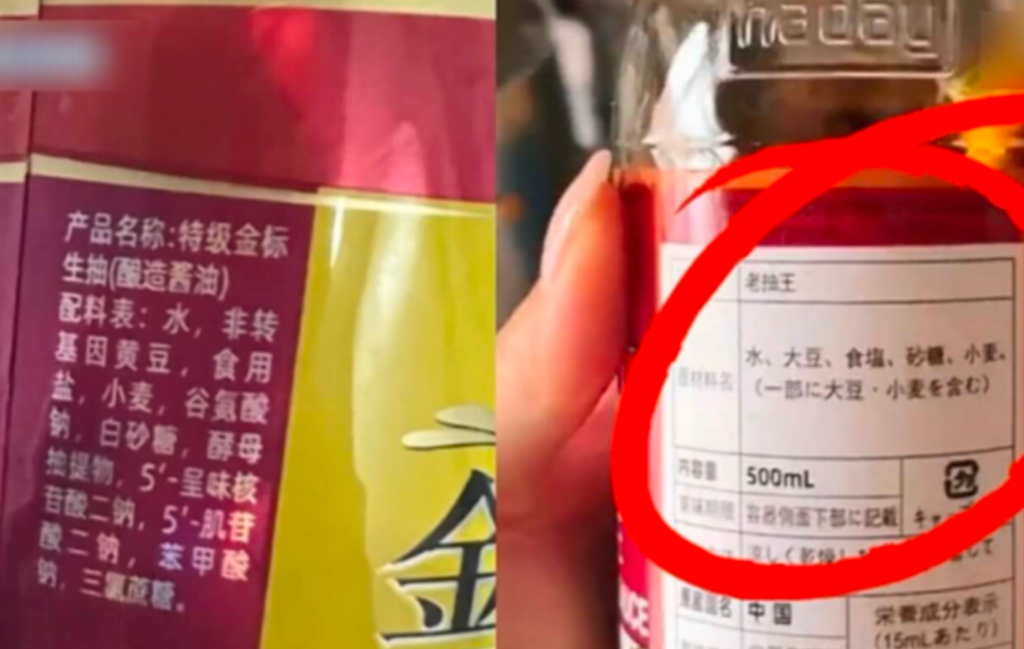
Figure 3: The difference of ingredients of Haitian, from Douyin
This specific herd mentality is especially terrifying because it can snowball at a staggeringly rapid tempo, and hit really hard. In late 2022, the cyber mobs found a bogeyman: Haitian Flavoring and Food Co., one of China’s largest condiment manufacturers. Haitian was accused of implementing a “double standards”: people noticed that Haitian soy sauce in Japan was made from only natural ingredients, while the Chinese version had “non-natural” additives, such as preservatives and flavor enhancers (Wu, 2022). The storm quickly brewed to an extent Haitian could not bear to ignore. The company released multiple statements proving the compliance of their products – to no avail. The rampant angry mob did not care. Then, food engineering experts who tried to explain the science behind using additives were ruthlessly drowned in an ocean of blame. The mob branded these scientists as corrupt defenders of evil capital, while discussion plunged into a dangerous, extreme binary standoff.
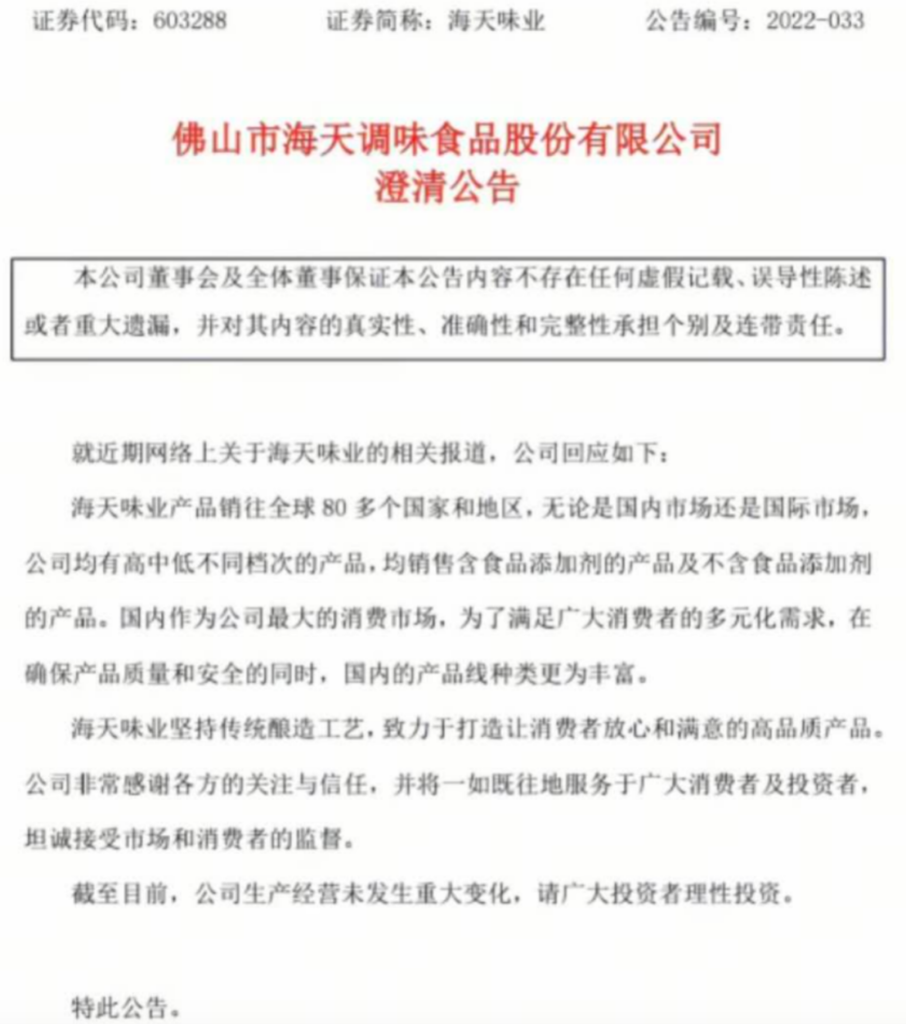
Figure 4: The post of Haitian on the case, from Douyin
People may wonder why facts fail to put out the fire. Shouldn’t panic subside when an official explanation that makes solid sense finally arrives?
Unfortunately, polarized debate is deaf to reasoning. When an “Internet tough guy” takes back what they said, it means admitting they were wrong, and their judgment, once seemed so righteous, turned out to be nothing but a baseless witch-hunt. Human ego forbids such an admission of defeat, for it means losing face. A sociological survey published in the Journal of Zhejiang University also proves this grim fact. The study found that a staggering 45.84% of Internet users explicitly refuse to publicly correct their views — even if in private, they realize they were wrong in the first place (Jiang et al., 2020).
Instead of apologizing, people double down: food anxiety morphs into defensive rage. At this point, the truth no longer matters. The algorithm lit the match, but our own stubborn need for tribal belonging burns down the house and home.
The Content Moderation Trap
At the peak of the “Hex Technology” crisis, social media companies took over. Extreme videos and aggressive accounts were deleted and banned. It worked? No. It backfired completely.
To a highly polarized crowd, content moderation looks exactly like a cover-up, and deleting something means proving it right, not wrong. The mob would believe that corrupt capital bought off the platform to silence the truth. Rage does not disappear: it moves underground and becomes more extreme. Traditional content moderation is ineffective because it chases the tail of a disaster. It tries to mop up the floor long after the dam has burst.
Researchers studying digital misinformation suggest a completely different approach: making it difficult. Instead of relying on passive deletion, platforms need to build behavioral friction into user experience (Fazio, 2020). Imagine a simple pause. Before a user can forward a highly viral, emotionally charged video about food additives, a prompt appears. It forces them to scroll through a related scientific fact-check before the “share” button unlocks. This delays the immediate “better safe than sorry” reflex. It buys the rational brain valuable time to catch up with emotional impulse.
A Broken Business Model
Friction is good, but it only treats the symptoms. The real disease infecting the digital world is the underlying business model.
Social media companies are essentially human attention brokers. As long as moral outrage spells the highest screen time, algorithm will always favor the extreme over the mundane. You cannot ask a program designed for profit to voluntarily turn down the volume on a highly lucrative panic. As researcher Kate Crawford (2021) argues, artificial intelligence is ultimately “neither artificial nor intelligent”. Instead, it functions as a miner meant to serve existing dominant corporate interests, stripping information of its context to harvest data in a large scale.
Algorithmic governance must discard this engagement-at-all-costs model. This is where theories like contextual integrity become vital for the future of digital policy (Nissenbaum, 2004). Right now, algorithms blindly extract information without regard to its proper context. Serious, complex discussion gives way to quick dopamine hits, and context becomes inconsequential.
Applying contextual integrity means redesigning push mechanism to respect facts and context. Algorithm should automatically de-prioritize raw engagement metrics (likes and shares). Instead, it should prioritize verified, authoritative sources—even if those sources are boring. A platform’s advertising goals must take a back seat to the public’s right to accurate, contextualized information.
Speak At Last
The “Hex Technology” panic was never really about a spoonful of white powder in a bowl of soup. It was a stress test of our modern digital ecosystem. We failed it.
Human beings will always harbor deep-seated anxieties. We will always lean toward the negative to protect ourselves and our families. We cannot patch human nature.
We can, however, fix the machines we build. Until we force social media platforms to rethink their crude moderation strategies and abandon their toxic, attention-based business models, we remain trapped in the cycle. The next massive panic is always just one swipe away, waiting for the algorithm to strike the match.
Word Count: 1995
Bibliography
Baumeister, R. F. et al. (2001). Bad is stronger than good. Review of General Psychology, 5(4), 323–370. https://doi.org/10.1037/1089-2680.5.4.323
Brady, W. J. et al. (2017). Emotion shapes the diffusion of moralized content in social networks. Proceedings of the National Academy of Sciences, 114(28), 7313–7318. https://doi.org/10.1073/pnas.1618923114
Branigan, T. (2008, December 2). Chinese figures show fivefold rise in babies sick from contaminated milk. The Guardian. https://www.theguardian.com/world/2008/dec/02/china
Crawford, K. (2021). The Atlas of AI: Power, Politics, and the Planetary Costs of Artificial Intelligence. Yale University Press.
Fazio, L. K. (2020). Pausing to consider why a headline is true or false can help reduce the sharing of false news. Harvard Kennedy School Misinformation Review, 1(2). https://doi.org/10.37016/mr-2020-009
Mao, G. (2020, February 2). Communication Theory 09: “The Spiral of Silence”, “The Anti-Spiral of Silence”, “The Double Spiral of Silence”. Zhihu. https://zhuanlan.zhihu.com/p/109552804#:~:text=%
Nissenbaum, H. (2018). Respecting Context to Protect Privacy: Why Meaning Matters. Science and Engineering Ethics, 24(3), 831–852. https://doi.org/10.1007/s11948-015-9674-9
Fan, Y. Y. (2022, October 6). Soy sauce ‘double standards’ stir massive controversy in China. Sixth Tone. https://www.sixthtone.com/news/1011352
Flew, T. (2021). Issues of Concern. In T. Flew, Regulating Platforms (pp. 79–86). Polity.
Beijing Evening News. (2016, June 22). CASS blue book: 70% of people adopt “better safe than sorry” attitude toward difficult-to-distinguish rumors. Xinhua Net. http://www.xinhuanet.com/politics/2016-06/22/c_129082561.htm
Jiang, L. et al.(2020). Empirical Analysis of Generating Factors and Internal Mechanisms of Post-Truth Events. Journal of Zhejiang University (Humanities and Social Sciences), 50(3), 101-115.https://zjujournals.com/soc/article/2020/1008-942X-50-3-101.html
Author: Mianhua Wei
This is the blog written by Mianhua Wei. My laptop was stolen and my password is missing, I cannot log into my account. Therefore I have to post my blog with my friend Lily’s account.
Be the first to comment