When your phone knows you better than you know yourself

Have you ever experienced this? You casually told a friend that you want to buy a new clothes without doing any research on your phone, but when you open RedNote, Instagram, or Amazon. The App’s homepage starts recommending all kinds of relevant things right away? Or maybe you browsed an outdoor gear website once, then for the next few days, every app you open including your email ads will recommends comparable products.
On the surface, This sense of being “understood” is a handy advantage that algorithms provide. We don’t have to look far to find what we want. It comes to us naturally. But it also causes a slight discomfort: How are these platforms aware of all of this? Did we truly give our consent? Is my phone listening me? Or is someone sharing my browsing history? Did I truly provide my express agreement for this “comprehensive tracking”?
Data collecting is becoming essential for all platforms to survive in today’s digital world, rather than a covert activity. Every user activity is tracked, evaluated and converted into profitable business value. whether it’s the time you spend watching every video on TikTok, your likes, your stored products and delivery addresses on e-commerce applications like Amazon and eBay. However, the majority of consumers are ignorant of how this information is gathered and utilised. Where this information ends up is unclear to us. We are often asked to “agree to the privacy policy to use the service” If we want use an app. So, what does this consent actually entail? Is it really a decision?
What’s more concerning is that platforms consistently emphasise privacy protection. Instgarm and X include privacy settings, while Meta and Chatgpt provide data management capabilities. So, why are we still being targeted by inexplicably accurate ads? The sense of choice and safety is the most common “privacy illusion” in the digital era. We believe we have control over our privacy, ignorant that it has already been redefined by platforms using the pretext of personalised services. As a result, this article will argue that in digital platforms, user consent is often a formality rather than a source of meaningful control. Our privacy has not disappeared; it has been redefined by the platform, resulting in a “privacy illusion.”
The platform is not only collecting data, but also setting rules.
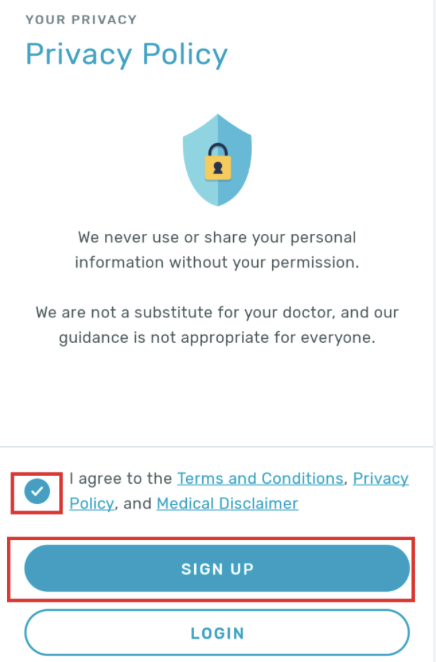
When we register for an app, we usually select “Agree to the User Agreement.” However, in practice, these terms are usually very long and complex, and the normal user lack the patience or time to read them all. Additionally, even if we read them, it is difficult to properly decline, because we cannot use the service unless we agree the terms.
So who exactly made these rules?
According to Suzor (2019) digital platforms have become new rule makers. Determining including what users can do but also how data is collected and used. However, these regulations are frequently ambiguous. Providing consumers with little opportunity for engagement or negotiation.
Flew (2021) emphasises that platforms are more than just technology infrastructure, They are autonomous governing mechanisms.
Platforms use algorithms, interface design and data structures to organise and keep users’ behaviour. In simple terms, we are not making decisions in a completely free environment, but rather within a structure predefined by the platform.
Does “agree” truly mean “agree”?
In most cases, clicking “agree” is simply a way to continue using an app service. This click based consent has become the norm in the digital environment. It is not a decision-making process based on comprehension and choice, but rather an institutionalised operational procedure. Therefore, consent here is not an expression of free will. It is a low-cost choice made under structural constraints. Nissenbaum’s (2018) theory of Contextual Intergrity provides a crucial perspective for understanding this issue.
Nissenbaum points out that privacy is not just about whether information is shared, it is also include if information used within a social context.
In other words, when users share information with platform, they often implicitly expect its usage. For example, when browsing products in a shopping app, you might assume that this data will be used to optimise recommendations or improve the shopping experience. This is a relatively reasonable usage context.
However, when this data is further integrated for cross-platform advertising, or even analysed and resold by platforms or third-party data businesses. It has already departed from its intended context. During this process, The data is not renegotiated, but the applications are constantly expanded. In particular, this cross-contextual data flow is typically undetectable to the user. Users are unable to see how their data is collected, combined and used for various purposes. This lack of visibility makes it difficult for consumers to make accurate judgements. In other words, people are not providing informed consent, instead participating in a system that they do not fully understand.
From another perspective, the consent mechanism can also be understood as a responsibility allocation strategy. By requiring users to click “I agree” The platform got credibility in form while simultaneously transferring potential risks to the user. If privacy concerns arise, the platform can claim that the user gave consent, thereby assuming greater accountability.
According to this argument, consent is no longer a tool for protecting users, instead being a way for platforms to avoid responsibility. In contrast to being completely random, user behaviour is formed by constant guidance and manipulation. For example, using dark patterns to make the consent button stand out really encourages consumers to make decisions that benefit the organisation. In the most part, identifiable privacy control is really a “illusion” enabled by regulation and technology.
The essence of privacy: not a choice, but a right.
There are many discussions concerning privacy in real life, but we usually focus on individual behaviour. For example: Have you read the privacy policy carefully? Should you be more cautious about sharing information? This view seems reasonable, but it actually obscures a deeper relationship of rights. Karppinen (2017) argues that privacy should be regarded as a fundamental human right. It not only involves the confidentiality of information, but also the individual’s ability to control their own information and their autonomy in society.
Goggin et al (2017) further highlights this point. Digital rights include not only the right to be protected, but also the ability to be empowered.
These rights are often difficult to fully implement in current platform environments. There is a complex power imbalance between platforms and users. Who controls the environment, who establishes the rules, and who owns the data are all examples of this inequality. Platforms regulate entities as well as service providers which Flew (2021) explains. They actively influence user behaviour through algorithms, interface design, and data architecture, which means that users are carrying out certain tasks within a pre-designed environment rather than making decisions in a free area.
In the modern era, social connection, information access, and buying all depend heavily on platforms, making users highly dependent on them. As a result, users can only decide if to accept or reject the service and are usually unable to negotiate privacy conditions. The bargaining power of users is weakened. Therefore, the fundamental question of privacy is not when users are cautious enough, but instead how well they actually have the capacity to comprehend, reject, and modify data practices. This power is frequently restricted or absent under the present platform governance structure.
Apple App Tracking Transparency
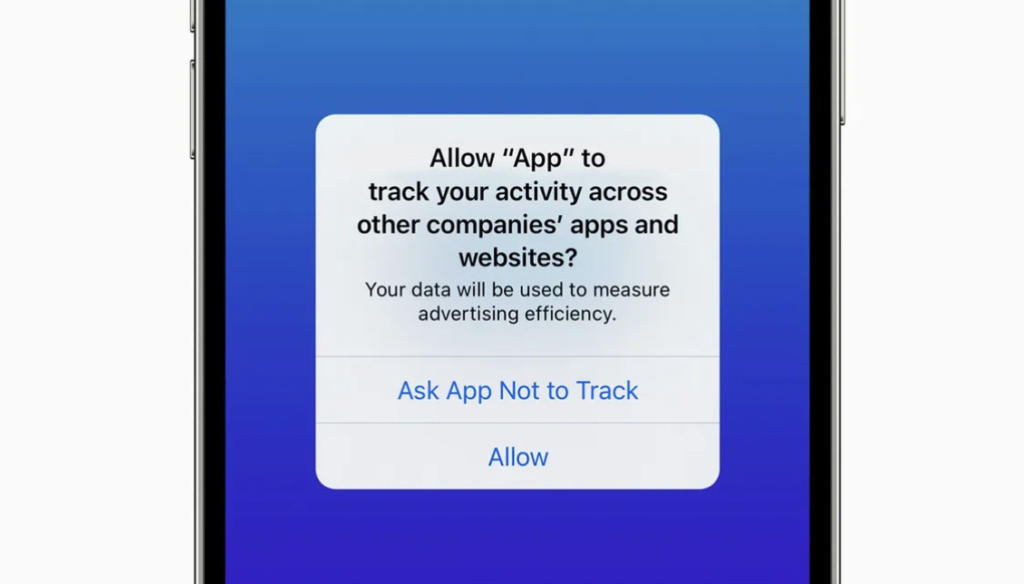
App Tracking Transparency (ATT) is Apple’s user privacy framework. It requires apps on iOS to request user permission-via a pop-up prompt-to access the Identifier for Advertisers (IDFA) to track the user/the device.
In 2021, Apple introduced App Tracking Transparency (ATT) in iOS 14.5. This requires all apps to explicitly request user consent before conducting cross-site tracking. Users will see a pop-up window asking, “Do you allow this app to track your activity?” and can choose to allow or request the app not to track. On the surface, App Tracking Transparency (ATT) is widely interpreted as a user privacy-focused reform because it makes long hidden data tracking visible and gives users a clear option to refuse.
Visibility ≠ True Control
App Tracking Transparency (ATT) is one of the most significant changes. It make previously invisible data tracking visible. However, this visibility also reveals that users’ previous consent was not based on genuine understanding. Numerous studies and industry reports show that after the launch of App Tracking Transparency (ATT), most users chose to refuse to be tracked.
Cross-application tracking was already standard procedure for Meta, Facebook, and other third-party advertising platforms prior to App Tracking Transparency (ATT)’s introduction. Data was exchanged across several platforms without the user’s knowledge thanks to IDFA advertising IDs, which linked user browsing, clicks, and consuming behaviour. The previously indicated formal consent can be established on the basis of this invisibility. The introduction of App Tracking Transparency (ATT) fundamentally altered users’ perceptions of data tracking. Only 15–25% of users worldwide choose to consent, according to data analysis, which means that 75–85% of iOS users are no longer tracked at the platform level.
Restricting third parties while indulging oneself?

App Tracking Transparency (ATT)’s restrictions do not apply to Apple itself. As the controller of iOS, Apple can still legally collect and integrate user data, including device information and location data, for its own Apple Search Ads advertising business and ecosystem optimisation without needing App Tracking Transparency (ATT)’s permission.(Apple,2021)
The basic concept of App Tracking Transparency (ATT) is to prevent competitor platforms from accessing user data while maintaining its own data monopoly. It combines dispersed data features into Apple’s ecosystem rather than eroding the data rights of different platforms. This confirms Flew’s (2021) platform hierarchy argument in “Regulating Platforms”. Apple suppresses application-level platforms by establishing rules as a system-level underlying platform. This reinforces the power structure in which consumers have no voice, application platforms silently comply, and the underlying platform controls everything. Within the Apple ecosystem, data becomes a “Data Enclosure” and never goes away.
Are we really safer and freer?
When App Tracking Transparency (ATT) is combined with the previously discussed core privacy “illusion theory“, users’ sense of control and security following App Tracking Transparency (ATT) is exactly an improved form of the privacy illusion.
According to Nissenbaum’s (2018) contextual integrity theory, using data appropriately—rather than just avoiding tracking—is the essence of privacy. App Tracking Transparency (ATT) does not limit Apple’s own cross- context data use, despite the fact that it appears to stop third parties from misusing data across contexts. Although users have formal choices. They never truly possess digital rights.
What can we do?
Change can begin at three different levels: users, platforms, and policies.
Users: Be a conscious user, not a blind follower
1. Keep basic privacy awareness and disable unnecessary permissions (photo album, microphone, background access, etc.).
2.Don’t be misled by “one-click consent” and don’t click “authorise” mindlessly.
3.Understand this clearly: “Refusing tracking ≠ absolute security,” and avoid an illusion of privacy.
Platform : Returning to Transparency and Responsibility
1.Strip away Dark Patterns (manipulative design) and abandon vague, lengthy mandatory terms.
2.Respect Nissenbaum’s (2018) principle of “contextual integrity,” ensuring data is used only in reasonable contexts.
3.Assume public responsibility for digital governance, allowing “consent” to reflect users’ genuine intentions, rather than being used as a commercial tool.
Policy : Use the legal system to constrain power
1.Legislation clarifies the boundaries of data collection and severely punishes platforms’ covert data theft and monopolistic practices.
2.To avoid an excessive concentration of data power, platform-level power oversight should be strengthened.
3.To prevent any one platform from having a monopoly, a governance framework of checks and balances between users, platforms, and regulators should be established.
Conclusion
Going to the original question, do we really consent to being tracked when our phones know us better than we do? We never really have a choice, so the answer is “No“. The essence of digital rights is to give users control, not just to become more cautious. Our right to privacy can only be realised by dismantling bogus consent, encouraging platform transparency, and enacting sensible legislation. In the digital age, maintaining this privacy also preserves our freedom and integrity.
Reference List
- Apple. (2021). User privacy and data use – app store. Apple Developer. https://developer.apple.com/app-store/user-privacy-and-data-use/
- Austin, P. (2021, April 13). Your iPhone’s Next Software Update Aims to Foil App Trackers and Digital Advertisers. Here’s How. TIME. https://time.com/5954259/apple-iphone-software-update-data-privacy-control/
- Flew, T. (2021). Regulating Platforms. Cambridge: Polity, pp. 72-79.
- Ha, A. (2021, April 26). What you need to know about Apple App Tracking Transparency. TechCrunch. https://techcrunch.com/2021/04/26/apples-app-tracking-transparency-feature-has-arrived-heres-what-you-need-to-know/
- Karppinen, K. (2017). Human rights and the digital. In H. Tumber & S. Waisbord (Eds.), Routledge Companion to Media and Human Rights (pp. 95-103). Abingdon, Oxon: Routledge.
- Marwick, A., & boyd, d. (2019). Understanding Privacy at the Margins: Introduction. International Journal of Communication, 1157-1165.
- Nissenbaum, H. (2018). Respecting context to protect privacy: Why meaning matters. Science and Engineering Ethics, 24(3), 831-852.
- Rahi, H. (2025, December 19). Why Your Tracking Fell Apart After iOS – and How to Fix it. EasyInsights. https://easyinsights.ai/blog/why-tracking-fell-apart-after-ios-and-how-to-rebuild-clean-data-flows/
- SmarterEveryDay. (2021, October 22). Is Your Privacy An Illusion? (Taking on Big Tech) – Smarter Every Day 263. YouTube. https://www.youtube.com/watch?v=KMtrY6lbjcY
- Suzor, N. P. (2019). Who Makes the Rules? In Lawless: the secret rules that govern our lives (pp. 10-24). Cambridge, UK: Cambridge University Press.
- What is App Tracking Transparency (ATT)? | Adjust. (2026). Adjust.com. https://www.adjust.com/glossary/app-tracking-transparency
Be the first to comment