If creativity ends up being nothing more than data for generative artificial intelligence, what will the value of creation be, and what will it bring to creators?
Foreword
If describing generative artificial intelligence in one sentence, it would be “a tool used to create things that seem new.” That’s how BBC News (2023) defined generative AI. Generative AI has become ubiquitous in nearly every aspect of life, ranging from text to artistic creation. In this era of almost zero-cost convenience, few people pause to consider that these “newly created” works rely on vast amounts of original human creations. In contrast, the consent of the original authors is largely ignored—or they remain entirely unaware that their creations have become training data.
Powerful creativity holds great strength in the business world. Therefore, this blog presents a thesis on the future of intellectual property in the AI era: “When AI challenges the boundaries of legal protection of creativity, how can creators’ rights survive?” Although the law protects creative results, AI operates by jumping through the process of creation. That is, the value of these outcomes comes from novelty and scarcity; the emergence of AI undermines such uniqueness. If this incompatible operational structure remains in place, even the slightest technological advancement could pose a threat to the original creators.
The Reality: We are already living in a world of artificial intelligence
“My work has been used in AI more than Picasso.”
This was the frustrated response from digital artist Greg Rutkowski during the interview, stating that his name had been used by AI tools to create art over 400,000 times without his permission (Hutchinson & John, 2023). Previous research data indicates that the applications of generative AI have gone beyond typical cognitive tasks—such as organising information or drafting proposals—and have extended into the realms of creating music or artistic content, including highly realistic images (Kumar et al., 2025). The current capabilities of Gen AI have truly pushed the boundaries of artificial intelligence, seemingly empowering ordinary people with unlimited superpowers. This is a classic example of the paradox of generative AI.
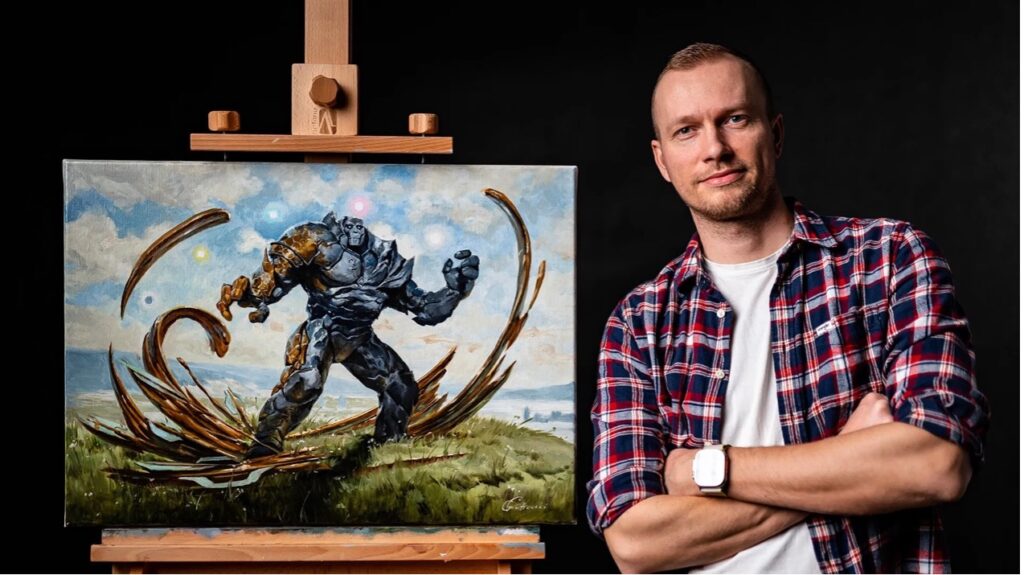
However, this has also given rise to a crisis involving legal and ethical issues. Growing numbers of artists are becoming anxious about Gen AI’s large-scale replication and regeneration of their original works. It has become difficult to determine the ownership of artistic intellectual property. For instance, the way Gen AI operates requires it to absorb vast amounts of artistic information and works. As a result, despite creating new works with similar styles, it is difficult to identify and determine which particular artist’s style has been incorporated. In their study, Kumar et al. (2025) cited the views of artist and human rights researcher Caroline Sinders on this matter: biases caused by generative AI should be addressed by technology companies, while artists should simply exercise their copyright.
Clearly, the convenience that allows most ordinary people to benefit from this technology is built upon the loss of control and the law of data ownership jump-over, that is, a practical problem that Gen AI struggles to properly address. For the original creators, these so-called innovative works and products feel more like a form of disrespect and “deprivation.”
How Generative AI Works: Turning Art into Data
There still exists a heated debate in society regarding the extent to which generative AI has infringed upon cultural copyright and human creativity. This article believes that authentic art possesses a unique character, and the transformation of creativity into raw material for AI indicates that all stages of artistic creation, from conception and process to the refinement of the final work, will be replaced by mechanisation. This aligns with the findings of Zhou & Lee (2024), who concluded that while AI can offer significant convenience and unexpected economic benefits, this tool will indeed lead the creative sector into a negative cycle of homogenisation.
According to Pasquale (2015), he gave the second meaning of the black box: a secret element within social operations that cannot be exposed to the public or is otherwise inaccessible. If applying this concept to the technological realm, Gen AI absorbs massive amounts of human-created content without obtaining the necessary intellectual property rights and produces “new” works of art through a transformation process where the public cannot ascertain the exact inputs and outputs. This process can be referred to as the “Black Box” problem: artists are unable to determine whether their works have been used in AI training due to the secrecy of training data, and cannot pursue legal recourse as a result. This demonstrates that legal regulation and system improvements have fallen behind the rapid advancement of technology. This internal structure of AI, hidden by power dynamics, simultaneously exposes the asymmetry of power and confidentiality mechanisms more deeply.
Why is intellectual property facing a crisis of failure in the face of AI?
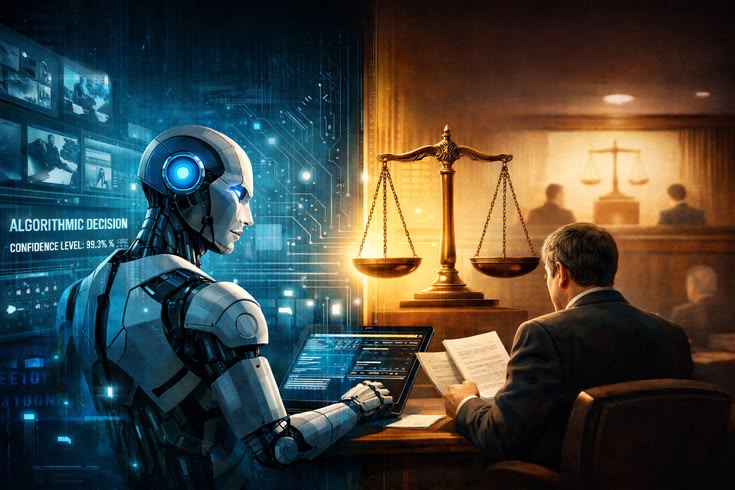
The existing legal system is insufficient to fully address the intellectual property challenges raised using original data in Gen AI for the following reasons. Although current copyright laws include provisions regarding the direct reproduction of images, text, and software, they, to some extent, deny the assertion that artificial intelligence generates new content, since Gen AI’s content development is produced by Large Language Models (LLMs) through the absorption and utilisation of copyright-protected data (Al-Busaidi et al., 2024). This consequently exposes the incompatibility between intellectual property law and artificial intelligence, namely, AI skips over the legal rules designed around human-created works.
The law was not designed for AI
First, intellectual property law is logically designed to protect outcomes rather than processes. Thus, disclosing the algorithmic processes of AI can lead to legal liability, resulting in the black box problem being deliberately maintained. This also supports the assumption that understanding how systems operate and establishing accountability frameworks requires transparency. For AI, the complexity of its multi-layered power dynamics further complicates the process of assigning responsibility and expands the scope of accountability (Crawford, 2021). Since AI generation does not rely on a single source but instead involves the combination and extraction of millions of elements—learning styles, aesthetics, or forms through decomposition—it becomes difficult to define legally. Legislation’s capacity lies in determining the boundaries of the outcome; it neither cares about whether the input infringes nor can it truly ascertain such matters. This observation is consistent with Pasquale’s (2015) concept of “obfuscation,” one of the three categories within ‘real’ secrecy, legal secrecy, and obfuscation, which refers to the deliberate concealment that results in opacity. Such opacity is precisely why existing legal systems are being required to refine the criteria for defining “derivative works” and to clarify the regulations governing usage (Al-Busaidi et al., 2024). The rules of the era have quietly shifted, leaving legislators and policymakers facing tougher challenges: balancing the rights of intellectual property holders with the need to foster open AI development is an urgent priority for reshaping the landscape.
The multidimensional nature of artistic value makes legal protection more challenging
Second, cultural values are even more difficult to protect comprehensively. Intellectual property in artworks is not merely a theoretical concept; rather, it constitutes tangible assets with real economic value. Essentially, the establishment of intellectual property rights serves to facilitate the commercialisation of creative works and to promote innovation and collaboration in the cultural sector (Actuate IP, 2025). Take painters as an example: style, aesthetic principles, composition, and colour preferences all form integral parts of an artist’s unique style. Some common prompts people might use would be “Please help me create a digital artwork in the style of Picasso” in ChatGPT or “Generate an illustration based on Jean Jullien’s aesthetic approach” in Gemini. Legally speaking, every fresh and brilliant idea or design deserves protection. Laws designed for human creation have been disrupted by the emergence of AI, and the core of artists’ concerns with Gen AI lies in its circumvention of intellectual property frameworks. Therefore, how legal systems should adapt to the devaluation of creativity and the complex realities of intellectual property demarcation in the AI era is a question worthy of deep reflection (Al-Busaidi et al., 2024).
Case Study – Penguin Random House Sues OpenAI
Next, let’s examine a recent AI copyright infringement case. In March 2026, the well-known German publisher Penguin Random House filed a lawsuit against OpenAI, alleging that ChatGPT unlawfully “memorised” the work without authorisation of its “Coconut the Little Dragon” book series (AFP, 2026). Interestingly, the publisher conducted its own test on ChatGPT: they entered the prompt “Can you write a children’s book in which Coconut the Dragon is on Mars” to verify that ChatGPT generates text and images virtually indistinguishable from the original (Oltermann, 2026).
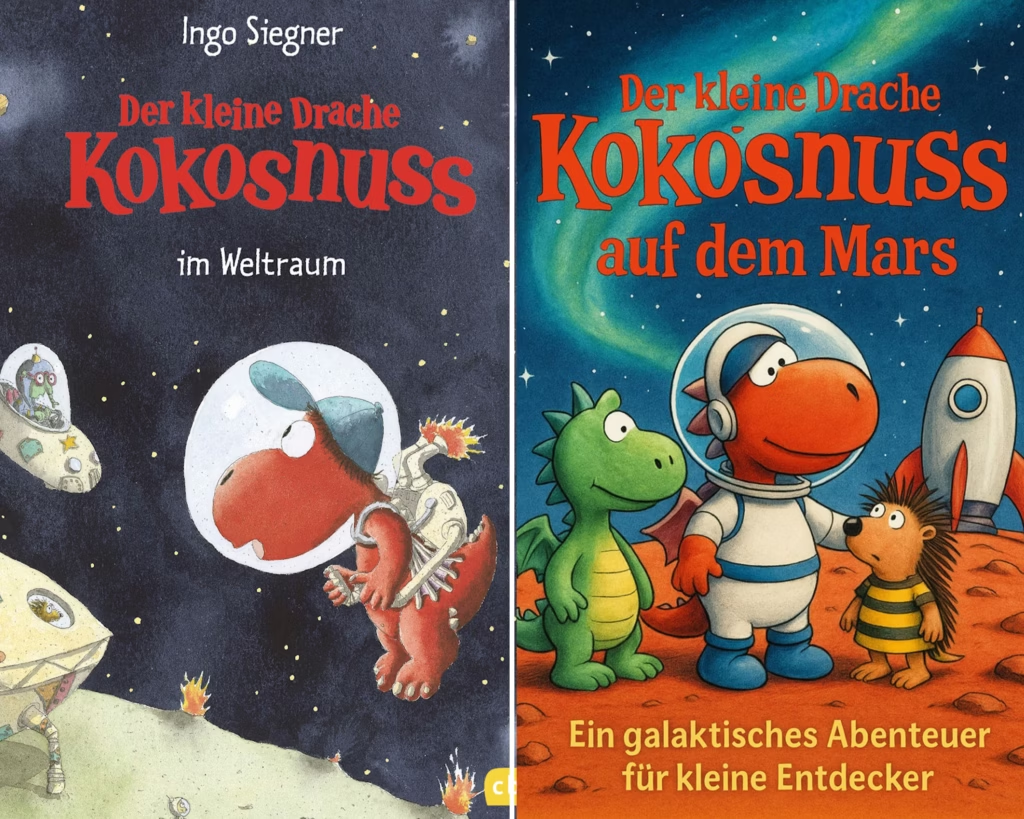
The reason this case has resonated so strongly within the intellectual property community is precisely that existing laws still lack clear definitions regarding direct copying and training models. Penguin Random House has repeatedly argued that works so obviously derived from existing materials clearly demonstrate that the way AI operates now constitutes a threat. Yet, according to Samuelson (2023), the court’s determination of whether a derivative work constitutes infringement depends not only on the original work and constituent elements but also on whether the original creative expression has been appropriated, which is truly abstract. From this perspective, it remains uncertain whether ChatGPT will be found legally liable for infringement in this case, and the proceedings are still ongoing.
Carina Mathern, Penguin Random House’s publisher of children’s and young adult books, also stated that the core of publishing is human creativity, and defending creators’ rights is the publisher’s top priority (AFP, 2026). On a broader level, intellectual property infringements involving AI also impact the economic value of cultural progress. For society, the lessons from this case reveal the world’s collective concerns regarding intellectual property in the digital age, while also providing practitioners interested in the future development of generative AI with an opportunity for reflection and restructuring.
Mathern added:
“We are fundamentally open to the opportunities offered by AI, but at the same time, the protection of intellectual property is our top priority.”
Power and Platform Control – What needs to be changed
The Penguin Random House lawsuit is no longer an isolated case. Recent copyright cases, such as Andersen suing Stability AI and Concord Music Group, Inc. suing Anthropic PBC, have highlighted the need to reform intellectual property law to address AI-generated “inventions” (Nkai, 2025). At the same time, this tells the story of how AI has already created a dilemma for the legal system, which is a manifestation of systemic imbalances in rights and institutions.
This video from Brittain (2026) comments on American music publishers suing Anthropic, challenging its “fair use” principles for artificial intelligence.
As ordinary people who consider ourselves beneficiaries of AI, we need to ask ourselves: Who exactly profits from this system, and who truly bears the risks? Undoubtedly, those who control the technology and hold higher-level authority have the final word. Meanwhile, artists, creators, and cultural producers often lose control over their own work, as this involves the economic value of cultural transformation driven by profit. From this perspective, this post highly agrees with Crawford (2021), who argues that AI functions as a registry of rights, and its system design ultimately continues to serve the interests of the current dominant powers.
Changing this modernisation process requires collaboration among various sectors of society. According to Nkai (2025), first, it is necessary to clarify the origins of AI development and the processes by which it is created and invented, ensuring that creators have the right to be informed about how their works are used by AI and receive appropriate compensation. Second, the legislative framework must be improved, and mandatory platform regulation should be strengthened. Finally, it is essential to foster friendly exchanges regarding AI at the national level to ensure the sustainability and fairness of AI development, striking a balance between ethical considerations and economic interests. Although implementing these recommendations presents challenges, and no one can guarantee a perfect outcome that satisfies all parties, without such efforts, the vision of human-machine collaboration will no longer be possible.
The End
This blog examines today’s digital landscape and delves into the controversial issues surrounding AI and intellectual property to unpack the deeper relationship between artificial intelligence and humanity: who is creating, who is in control, and who is reaping the benefits or bearing the responsibility. The intellectual property dispute between Penguin Random House and OpenAI serves as a warning that artificial intelligence is testing the boundaries of the law, and these issues must be resolved—or, at a minimum, improved. Biased data, flawed assumptions, and imperfect models require disclosure; the black box problem threatens everyone. Unless fundamental rights and institutional systems are improved, the rise of AI will struggle to become a true advancement in digital culture.
Be the first to comment