
How the “For You“ Page quietly governs attention, visibility and behaviour online
In your free time, you might reach for your phone to kill some time on TikTok. Just tell yourself you’ll watch a handful of videos. Next thing you know, time has flown by, and you have spent over thirty minutes scrolling random videos. Most TikTokers can almost certainly tell a similar story. Some people even find themselves in this scenario multiple times a day.
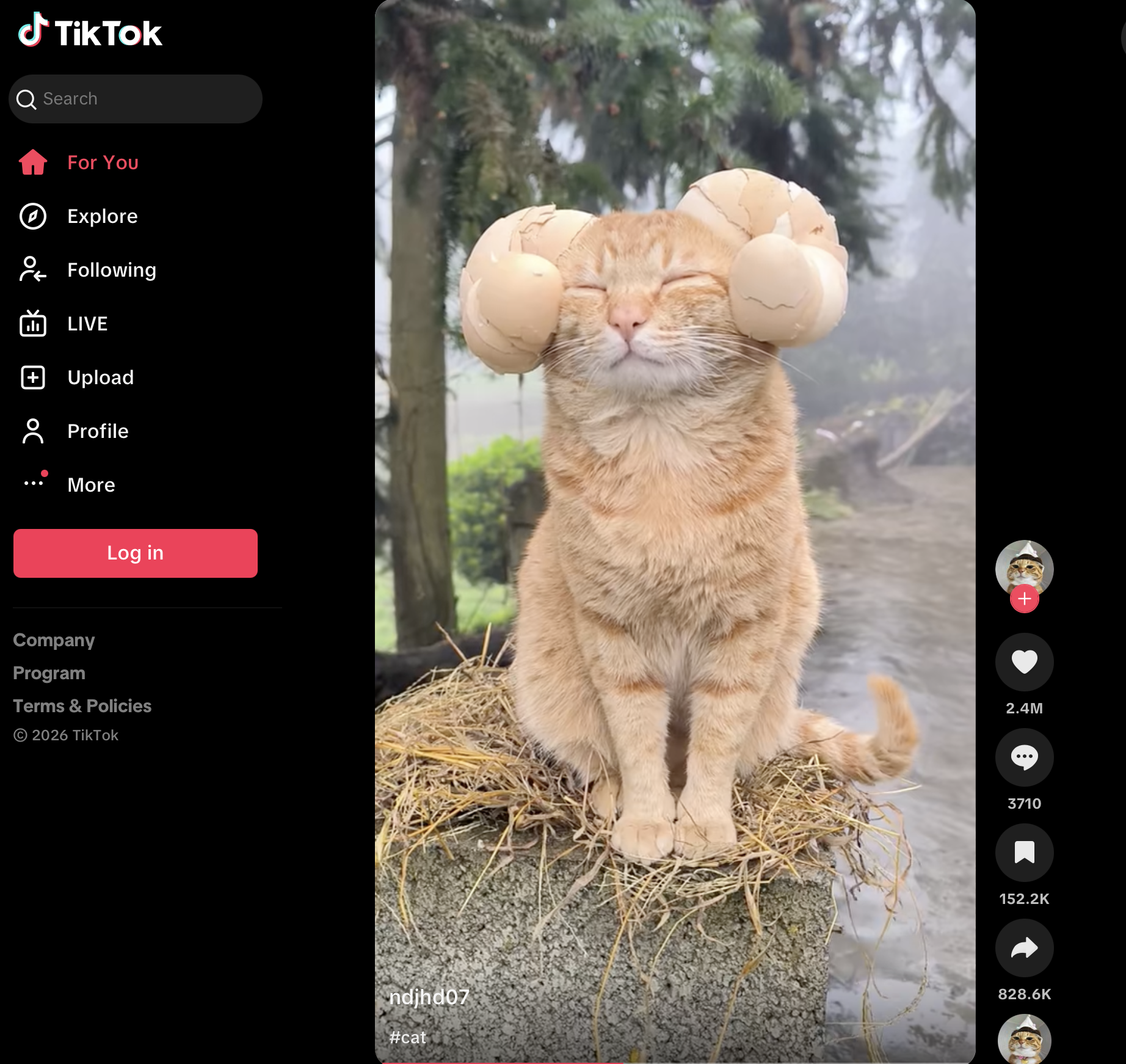
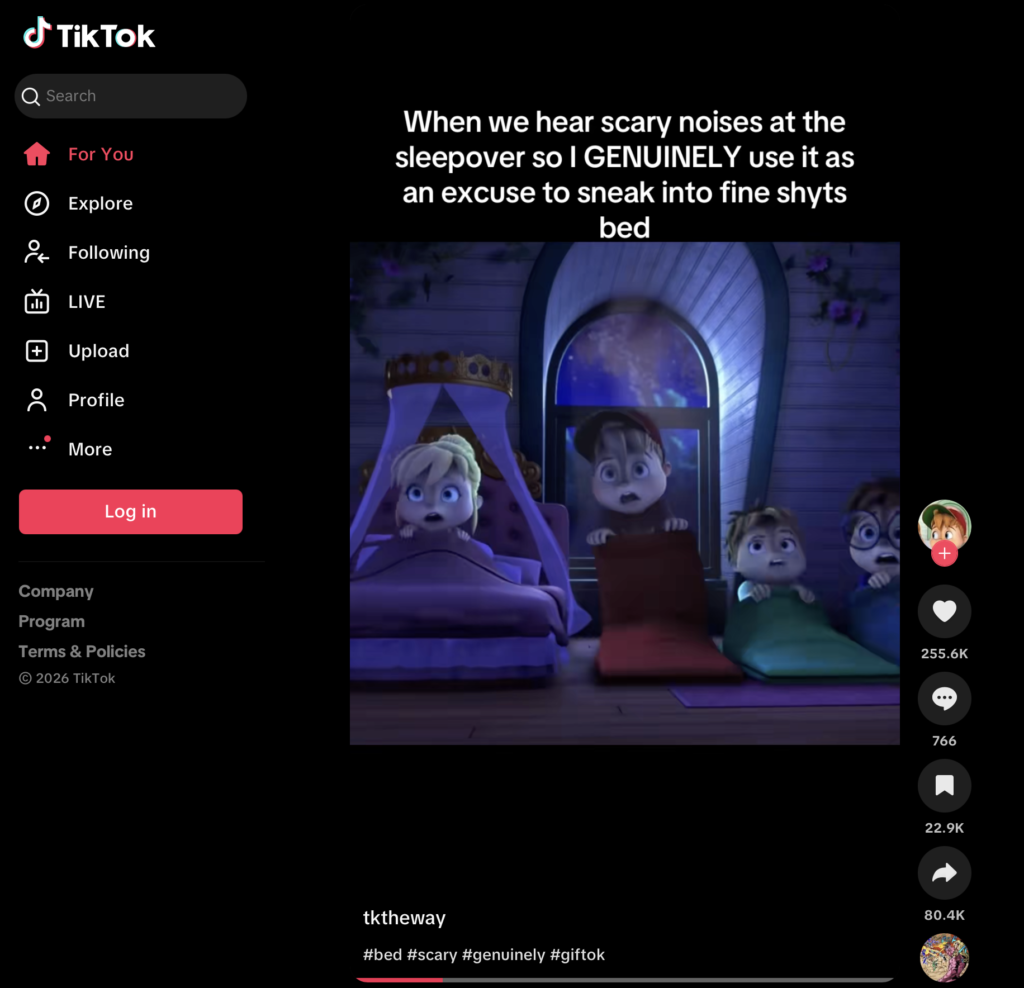
TikTok’s “For You” page presents a personalised feed, but what users see is shaped by ranking and behavioural signals. Source: screenshot by author.
However, this story is much more than just entertainment apps. This is a story about influence and the power of the algorithm to shape the information, ideologies, and interests of the masses, largely without their knowledge. TikTok likes to market this as a feature of their application—they are simply taking your likes and dislikes and curating a personalized feed to your tastes.
TikTok has even listed these three inputs for their recommendation system within their own documentation: user interaction, content information, and device information.
At first glance, this appears to be a fair enough thing: users tell the app what they like, and the app customizes their experience. But static user interests and preferences are not the main factors that dictate their recommendation system. In fact, the recommendation system goes a step further. It not only responds to user interest, it enhances user interest, and ultimately fosters dependency on its endlessly scrolling feed for content.
The platform has apparently established a new form of control through data-driven manipulation of user engagement. The platform ultimately has reach and scale that amount to a form of governance. To call the algorithm merely a technical feature, then, is a disservice.
The word governance might sound like a stretch. Traditionally, governance meant laws, institutions, state actors. My point is that automated systems govern attention, relevance, and participation — a form of control that is structural in nature, even in the absence of a state.
What Exactly Is “Algorithmic Governance”?
Whenever one talks of governance, the thought that crosses the mind is parliament, policy documents, and government officials. Mobile apps do not cross the mind. However, in a digital society power is not limited to formal law. Platforms define what can be viewed, acted upon and interacted with not by law, but by rules, interface design, content moderation, and algorithms. These systems do not tell people what to think, but silently limit their options until only certain choices feel natural or possible.
TikTok is no exception. The For You Page does not have any legal force on anyone. It cannot impose a fine on you or limit your movement but it does influence what you notice, what you dwell upon, what begins to seem natural, necessary, and worthy of concern. The latter is the most striking part to me: the platform is not only sharing the content, it is silently sorting what is even a social issue to begin with.
Digital policy is precisely why this is important. There is no such thing as neutral online exposure and what gets promoted will always have its own repercussions be it on the level of the public discourse, personal attitudes or the group values.
Sponsored content has the potential to change the discourse of people, initiate new trends in creativity, increase or decrease political consciousness, and silently transform what identities or perspectives are considered socially acceptable. When a platform has that much influence, it can no longer be referred to as a passive intermediary. However, to fully comprehend the significance of this, I believe we should take a closer look at how the recommendation system actually works at TikTok and what the system actually does in reality in regards to determining what to push.
How the Algorithm Actually Works: Organising Visibility
TikTok’s algorithm essentially uses a set of signals to determine what content you see, with watch time being the most critical and obvious one. The platform also offers a “Why this video?” feature that attempts to explain the reasoning behind recommendations, but to be honest, this transparency is quite limited. Users still cannot see the underlying ranking logic, nor can they know how these different signals are actually weighted (TikTok, n.d.).
On the surface, this mechanism seems simple: you watch content, and the platform adjusts based on your behavior. But in reality, it is far from a personalized recommendation system that merely “passively responds to your preferences.” To build its feed, TikTok constantly categorizes users, predicts what you might be interested in, and ranks a massive volume of videos in real time behind the scenes.
Upon closer inspection, a striking phenomenon becomes apparent: content exposure is actually highly uneven. Some videos easily rack up millions of views, while others are barely seen by anyone. This disparity is not random; it is a result of how the platform operates—it prioritizes content that is more likely to make people stop and watch, more attention-grabbing, and more shareable (Just & Latzer, 2017). Taking this a step further, it means that the algorithm is not only filtering information; it is also gradually influencing what you perceive as important and worthy of attention.
Algorithms, that is, do not sort out reality. They are involved in its building.
The same reasoning restructures behavior for content creators. Judging by how the system operates, content creators have conveniently begun tailoring their videos to fit the system. Most videos ‘perform’ by using the same ‘styles’ (sound, themes, video editing).
In plain terms, that means quite a lot of filming videos with dramatic reactions, using a trendy soundtrack, and copying a style that the system favors. Content creators are engineering their videos to include the same style, format, video, and mood that the system favors.
The extent of this influence goes beyond the TikTok app. According to a 2024 Rolling Stone report, “BookTok” wasn’t just the latest internet sensation. It helped create a surge of printed book sales to the tune of 59 million, driving the romance fantasy genre, especially, due to the app (Jones, 2025).
The influence is felt so much that publishers aligned their ad campaigns with the same patterns of behavior creator “BookTok” videos used to sway the audience.
This goes beyond content creators simply responding to or “listening” to their audience. The influence runs deeper. Entire industries now shape their video output around these trends, adjusting formats and styles to match what the system rewards.
Audiences shift too. Over time, repeated exposure to fast, high-intensity content starts to change what feels normal to watch. The feed doesn’t just reflect existing preferences; it gradually pushes them in certain directions. Researchers have begun to track this shift.
One study on TikTok users found a clear negative link between time spent on the platform and attention span (Alghamdi & Aljabr, 2024). Constant exposure to rapid, fragmented content makes slower activities like reading or extended study harder to sustain. This goes beyond individual habits.
What this suggests is something larger: the algorithmic environment is actively reshaping how users engage with information.
This is how algorithmic governance really works, in practice. It does not command; it builds an environment in which certain behaviours are easier, more rewarding, and hence much more likely to repeat.
A system that can influence how information transits around the world and whether people see it or not, I believe, is doing more than recommending what content to serve. At that stage, it is exercising a kind of governance, even if nobody formally says so.
The Real Problem Is Not Only Personalisation, But Power
And that leads to a more difficult question, who is even supposed to know and to manipulate this process? It is not merely that TikTok is addictive. It reflects a power imbalance between platform and user. Personalised recommendations operate on a never-ending gathering and examination of behavioural data. The more time a person uses the platform, the more the system knows, and the more accurately it can guess what will keep this person watching.
It is not merely an issue of app design. Kate Crawford poses the thesis in Atlas of AI that AI is best viewed as part of a larger system of resource extraction, labour, and power (Crawford, 2021). In that perspective, the issue of the recommendation system in TikTok is a political issue, rather than a technical issue.
Below the entertainment, TikTok records the user behaviour, and then transforms it into data, and then utilises the data to make the environment optimum to have more engagement.
Nearly none of this is visible to the users. Pasquale refers to it as the black box society: systems that make consequential choices about individuals and which are not visible to the individuals being influenced (Pasquale, 2015).
It is possible to observe that the system suggests some videos, yet we are unable to understand why this or that video is ranked the first, how various signals are prioritized, and how such logic of ranking changes over time. TikTok’s “Why this video?” feature provides a shallow description of individual recommendations; it does not open the system per se.
Users must abide by a system they cannot see or contest. When platforms own data, models, and ranking criteria, it builds a wall of opacity.
Users are left largely in the dark regarding platform functioning due to the granularity of data and user insights available to the platform.
That asymmetry is why the TikTok debate cannot be reduced to the app being good or bad. The more important question is about the asymmetry itself.
Commercial platforms exercise unprecedented attention control and influence shaping at scale. The public cannot adequately review how this power is used. This is not a design issue, rather a governance issue.
Why TikTok Now Matters to Policymakers
This power shift is exactly why regulators are finally stepping in. TikTok isn’t just a trendy app for kids anymore—it’s a systemic infrastructure with real-world risks. Take the European Commission’s move in December 2024: they didn’t just complain; they opened formal proceedings under the Digital Services Act because of how the platform handles election-related risks (European Commission, 2024).

The Digital Services Act has become a key regulatory framework in the European Union’s scrutiny of TikTok’s platform design and recommender systems. Source: European Commission.
Then came the bigger blow in February 2026. The Commission reached a conclusion that many users already felt: TikTok’s addictive design is, in fact, illegal (European Commission, 2026). They aren’t just looking at the content now. They are looking at the “hooks”—infinite scroll, autoplay, those constant push notifications, and that hyper-personalized feed that seems to know us too well. This is a turning point. We’re moving past the era of just “policing bad videos.” Now, the target is the architecture itself. It’s about how design choices and algorithms are built to dictate what we see, over and over again. This isn’t just tech updates; it’s a total rewrite of digital governance.
Over the years, platforms had been able to defend themselves by saying they were just custodians of user-created content.
A system that anticipates, prioritises, and boosts content according to behavioural cues is performing much more than publishing it. It is actively dictating what is viewed, the extent to which it propagates and the amount of power that it holds.
Large sections of the daily digital life are now structured into recommendation systems. The citizens have a legitimate interest to know how they are run, what dangers they involve, and what checks and balances are to regulate them.
The Future of Our Digital Reality
TikTok is not only important, as it is a popular platform, but it shows how power really works on the digital platform today. Individualised suggestions are actually beneficial. The vast majority of people do not desire a random feed and I do not believe we should be posing as such. What is useful is not the same as accountable.
The actual issue is to what extent a platform should be allowed to exert a hidden power over every day digital life when they are not substantially supervised by the population. This is not an issue that was invented by TikTok but it has rendered it unavoidable.
It is what I would like to emphasize, this issue is something which is close to all of us. Each time we open the app, we are engaging in a system that is learning about us, adapting to us, and changing us, in turn.
It does not imply that we should eliminate TikTok or, in general, the personalised services. It implies that we ought to desire more than convenience. Pressuring on better platform transparency legislation, being more mindful of the uses of our data, and understanding that our feeds are filtered, not unfiltered: all these are good points to begin. Our digital lives infrastructure should not be completely beyond the reach of the eyes of others, and we should not be subject to commercial systems that we are not allowed to peep into.
After all, governing is not solely the issue of the government. It is ours too.
References
Alghamdi, R., & Aljabr, N. (2024). The impact of TikTok on employees’ attention span. International Journal of Professional Business Review, 9(11), e05144. https://doi.org/10.26668/businessreview/2024.v9i11.5144
Crawford, K. (2021). Atlas of AI: Power, politics, and the planetary costs of artificial intelligence. Yale University Press.
European Commission. (2024, December 17). Commission opens formal proceedings against TikTok on election risks under the Digital Services Act. https://ec.europa.eu/commission/presscorner/detail/en/ip_24_6487
European Commission. (2026, February 5). Commission preliminarily finds TikTok’s addictive design in breach of the Digital Services Act. https://ec.europa.eu/commission/presscorner/detail/en/ip_26_312
Just, N., & Latzer, M. (2017). Governance by algorithms: Reality construction by algorithmic selection on the internet. Media, Culture & Society, 39(2), 238–258.
Pasquale, F. (2015). The black box society: The secret algorithms that control money and information. Harvard University Press.
Jones, C. T. (2025, December 21). BookTok’s biggest creators on what’s next in 2026. Rolling Stone. https://www.rollingstone.com/culture/culture-features/booktok-trends-predictions-tiktok-1235487896/
TikTok. (n.d.). How TikTok recommends content. TikTok Support. https://support.tiktok.com/en/using-tiktok/exploring-videos/how-tiktok-recommends-videos

Be the first to comment