Hate Speech, Online Harms, and the Messy Politics of Moderation
If you had asked internet idealists in the 1990s what online life would become, many would have given you an optimistic answer. The internet, they believed, would open up speech, weaken gatekeepers, and allow ordinary people to speak across borders more freely than ever before. That dream still has a strong emotional pull. It helps explain why debates about content moderation become heated so quickly. Most of us are uneasy with the idea that a small number of private companies can decide what billions of people are allowed to say. But there is another side to the story. The same platforms once celebrated as open and democratic spaces now also host racist abuse, misogyny, anti-Muslim hate, anti-LGBTQ+ attacks, extremist propaganda, and coordinated harassment. So the real question is no longer whether platforms govern speech. They already do. The harder question is whether they can do so fairly, transparently, and in ways that genuinely serve the public interest (Barlow, 1996; Flew, 2021; Hutchinson, 2026).
Picture:Early internet culture imagined cyberspace as a space of radical freedom from traditional authority.
My argument is simple: hate speech and online harms are difficult to govern not because platforms face a purely technical problem, but because they are caught between three competing pressures. First, there is the powerful ideal of free expression, which still shapes how platforms justify their reluctance to intervene. Second, there is the reality that harmful speech can cause real and lasting damage, especially to already marginalized groups. Third, there is the uncomfortable fact that platforms are private businesses, and their commercial incentives do not always align with the public good. Once those three pressures are put together, moderation stops looking like a neutral housekeeping task and starts looking like a struggle over power, responsibility, and accountability (Flew, 2021; Hutchinson, 2026).
To understand that struggle, it helps to begin with the term “hate speech” itself, because it is often used too broadly. Hate speech is not just any rude, offensive, or controversial statement. In Regulating Platforms, Terry Flew draws on Bhikhu Parekh’s definition of hate speech as speech that expresses, encourages, stirs up, or incites hatred against a group identified by characteristics such as race, ethnicity, gender, religion, nationality, or sexual orientation. Flew emphasizes three important features: hate speech targets an identifiable group, stigmatizes that group by attaching deeply negative qualities to it, and frames the group as a legitimate object of hostility. Crucially, it does not always appear in openly violent form. It may be presented as irony, “common sense,” humor, or even a supposedly rational opinion. That is precisely what makes it difficult to regulate. Harmful speech often exists on a continuum, from discriminatory insinuation to direct incitement (Flew, 2021).
This matters because one of the most misleading assumptions in public debate is that the issue is simply “offence.” It is not. Flew argues that even when freedom of expression is treated as a core democratic value, hate speech remains a serious problem because it produces mistrust and hostility and undermines the dignity of the groups it targets. It can make participation in public life more difficult and everyday life less safe. The Week 6 lecture makes a similar point by drawing on Sinpeng and colleagues: hate speech is not simply speech that hurts feelings, but speech that can produce both immediate and long-term harm, especially when directed at marginalized groups in a specific social context (Flew, 2021; Hutchinson, 2026; Sinpeng et al., 2021). In other words, the issue is not whether someone feels offended. The issue is whether repeated hostile speech helps normalize exclusion, intimidation, and unequal participation in public life.
This is where the old internet ideal starts to feel incomplete. The early free speech vision still matters, and it should matter. The lecture slides quote John Perry Barlow’s famous declaration that the internet would become a world where anyone could express their beliefs without fear of being forced into silence or conformity. That ideal is worth remembering because censorship can be abused, and neither governments nor corporations should be given broad speech powers lightly. But that vision becomes harder to sustain when platforms are no longer small, messy discussion spaces. Today they function as global infrastructures of public communication. As Flew suggests, the scale of online abuse and harmful content now forces us to ask a different question: can platforms really be trusted to govern speech in the public interest, or has communicative power become too concentrated to leave largely in private hands? (Barlow, 1996; Flew, 2021; Hutchinson, 2026).
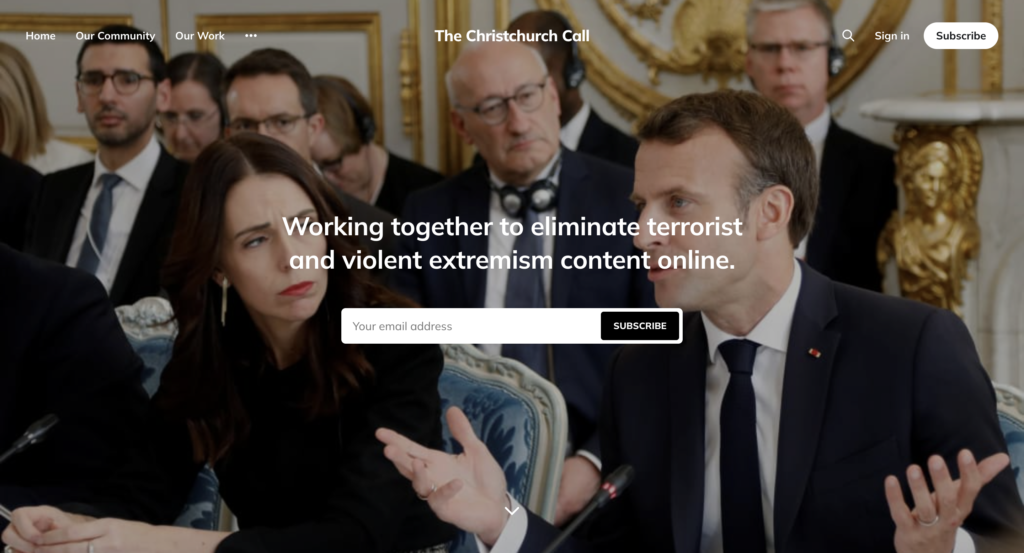
If that still sounds abstract, recent events make it concrete. The Christchurch mosque attacks, livestreamed on Facebook in 2019, are one of the clearest examples. So is the January 6 attack on the U.S. Capitol. These are different cases, but they reveal the same lesson: harmful online speech does not simply stay online. Harassment can silence people. Extremist narratives can normalize hatred. Platform design can intensify those effects. Recommendation systems, sharing tools, live-streaming functions, and near-frictionless reposting do not create hatred from nowhere, but they can spread it farther and faster. That means online harms are not only about what users say. They are also about the communication systems that amplify certain kinds of speech (Hutchinson, 2026).
Yet saying that platforms should “moderate better” is much easier than explaining what better moderation would actually mean. This is where Sinpeng, Martin, Gelber, and Shields’ report on Facebook in the Asia Pacific becomes especially useful. Their central finding is that hate speech is highly dependent on language and context, but Facebook’s global classifiers and Community Standards do not reliably capture that complexity. In the Asia Pacific region, where political tensions, linguistic diversity, and cultural differences are especially pronounced, identifying harmful speech often requires local knowledge and sustained consultation with target communities. A universal set of platform rules may look clear on paper, but in practice it can fail to capture the meaning of local slang, coded insults, religious tensions, or evolving social conflicts. In some places, even the phrase “hate speech” itself does not translate directly into local languages, which already suggests the limits of one-size-fits-all moderation (Sinpeng et al., 2021).
That point is easy to miss if we imagine moderation as a giant sorting machine that simply labels content as acceptable or unacceptable. In reality, moderation is a social and political process. The Asia Pacific report found that administrators of LGBTQ+ Facebook pages routinely encountered hateful content, yet many of them were volunteers rather than trained professionals. In countries such as Myanmar, the Philippines, and Indonesia, some page administrators had not read or did not fully understand Facebook’s Community Standards. Many were self-taught or relied on third-party organizations for training. Just as importantly, many said that Facebook had failed to remove content they reported. The authors describe the resulting frustration as “reporting fatigue”: people stop reporting abuse when they come to believe the reporting process changes nothing. That is an important insight, because it shows that moderation failure does not happen only when algorithms miss harmful content. It also happens when the people most exposed to abuse lose trust in the platform’s procedures altogether (Sinpeng et al., 2021).
Seen in that light, moderation problems are not just technical problems. They are also problems of labor, institutional design, trust, and local expertise. This is one reason the Week 6 lecture frames moderation as a major contemporary issue in digital policy and governance. The question is no longer simply whether platforms remove enough bad content. It is also how they define what is acceptable, how boundaries are enforced, who gets to influence those decisions, and what forms of appeal or accountability are available. Flew makes a similar point: the idea of the “neutral platform” has never really held up, because governance is built into platforms from the start. Their interfaces, ranking systems, rules, and enforcement practices are all forms of governance. The issue is not whether governance exists, but what kind of governance it is and whose interests it serves (Flew, 2021; Hutchinson, 2026).
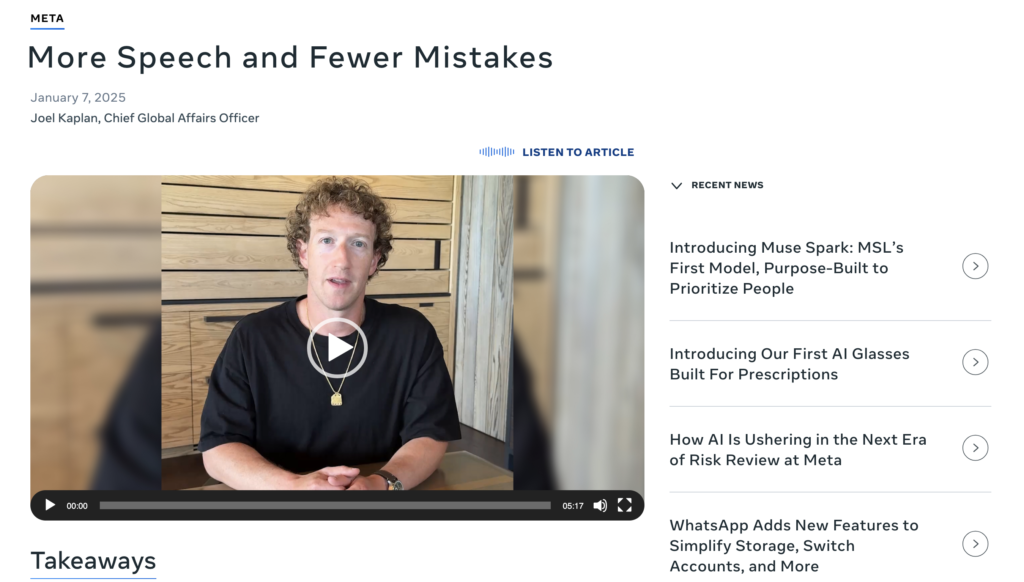
This becomes especially clear in Meta’s January 2025 policy shift, announced under the slogan “More Speech and Fewer Mistakes.” Meta said it would end third-party fact-checking in the United States, move toward Community Notes, reduce restrictions on some controversial topics, and focus automated enforcement more narrowly on illegal and high-severity violations while relying more on user reporting for lower-severity issues. The company presented this as a correction to over-enforcement and a defense of free expression. But whether one agrees with the policy or not, the shift reveals something important: moderation is never just a neutral attempt to improve technical accuracy. It is also a decision about values and priorities. Meta was not simply adopting a smarter model. It was redrawing the line around which harms deserve intervention and which ones users are expected to manage themselves (Kaplan, 2025).
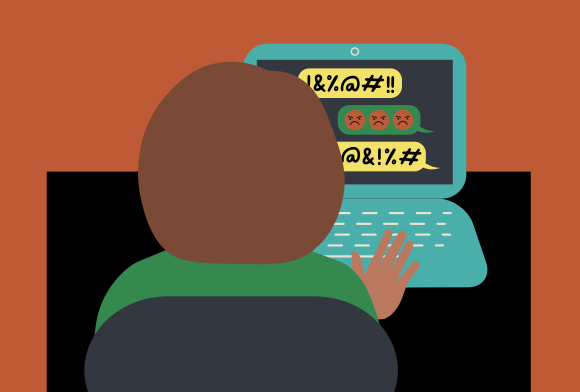
Picture:Online hate
That matters because policies framed as expanding free speech can also shift more of the burden of safety back onto vulnerable users. If lower-level harms are increasingly left to user reports, then those most likely to be targeted may once again have to do the work of documenting, reporting, and enduring abuse. In that sense, “more speech” can come to mean more labor for those already exposed to harm. This does not mean every moderation policy should become stricter. It means debates about moderation are always also debates about who carries the costs of openness and who absorbs the risks when platforms decide to intervene less. The language of freedom can sometimes conceal that unequal distribution of burden (Kaplan, 2025; Sinpeng et al., 2021).
A second recent development points in a different direction. In January 2025, the European Commission integrated the revised Code of Conduct on Countering Illegal Hate Speech Online+ into the framework of the Digital Services Act. That may sound bureaucratic, but it reflects a major shift in how regulators think about online harms. The aim is not only to pressure platforms into removing individual posts more quickly. It is to ask whether the systems, procedures, and design choices of platforms are creating foreseeable risks, and whether platforms can be held accountable for reducing them. This is much closer to the “duty of care” approach discussed in class: a model of governance focused on risk assessment, complaint handling, service design, and prevention, rather than pretending that every problem can be solved one post at a time (European Commission, 2025; Hutchinson, 2026).
The same broader logic appears in the UK’s Online Safety Act. What matters here is the shift from a narrow focus on individual content to a wider focus on systems and responsibilities. Search functions, recommender systems, reporting tools, appeals processes, and platform design incentives all shape whether harmful content spreads and whether victims can effectively seek redress. In other words, online harm is no longer being treated only as a speech problem. It is increasingly being treated as a governance and design problem. That shift is significant because it recognizes that a platform can contribute to harm not only by failing to delete a post, but also by structuring attention, visibility, and response mechanisms in ways that make abuse easier to spread and harder to challenge (Hutchinson, 2026; UK Government, 2025).
So where does this leave us? Not with an easy slogan. “Protect free speech” is too simple. “Ban hate speech” is too simple too. A more convincing conclusion is that moderation is now an unavoidable part of platform governance, but private moderation by itself is not enough. Flew is right that the old question of whether online content can be regulated has largely been replaced by a different one: who should regulate it, and with what forms of transparency and accountability? The answer is not to replace private platform power with unlimited state power. Rather, it is to demand more public oversight of platform systems: clearer rules, stronger appeals, better transparency, meaningful local expertise, and regulatory models that focus on risk and institutional responsibility instead of broad promises of self-regulation (Flew, 2021).
Put more simply, we should stop asking whether platforms should “interfere” with speech, and start asking a more honest question: if these companies already shape what people see, what gets amplified, what gets monetized, and what gets removed, then what kind of governing power are we willing to let them exercise without scrutiny? Once the issue is framed that way, the central problem is no longer whether moderation threatens freedom in the abstract. The real problem is whether freedom means much at all when some groups are pushed out of public conversation through constant abuse, and when the rules of that conversation are written behind closed doors by companies whose first duty is to shareholders, not citizens. The future of online speech will not be decided by choosing “free speech” over “safety,” or vice versa. It will be decided by whether we can build forms of platform governance that are more transparent, more locally informed, and more democratically accountable than the ones we have now (Flew, 2021; Hutchinson, 2026; Sinpeng et al., 2021).
References
Barlow, J. P. (1996, February 8). A declaration of the independence of cyberspace. Electronic Frontier Foundation.
European Commission. (2025, January 20). The Code of conduct on countering illegal hate speech online +. Shaping Europe’s Digital Future.
Flew, T. (2021). Regulating platforms. Polity Press.
Hutchinson, J. (2026). ARIN6902 digital policy and governance week 6: Issues of concern: Hate speech, online harms & moderation [PowerPoint slides]. The University of Sydney.
Kaplan, J. (2025, January 7). More speech and fewer mistakes. Meta.
Sinpeng, A., Martin, F., Gelber, K., & Shields, K. (2021, July 5). Facebook: Regulating hate speech in the Asia Pacific. University of Sydney & The University of Queensland.
UK Government. (2025). Online Safety Act: Explainer. GOV.UK.
Be the first to comment