Figure 1. Illustration by Maria-Juliana Rojas. Images in Illustration by Vadym Kalitnyk/Getty Images; Adobe Stock,1(Jones 2024)
Have you ever opened your Instagram and TikTok after a star or Internet celebrity was exposed to a negative incident?
Several of them were swiped by major marketing accounts that picked out some of her actions that had never been noticed before, exaggerating the judgment, and everyone in the comments seemed to empathize, saying that they felt that way a long time ago, thus overwhelming public opinion. Even you began to feel angry and have a negative opinion of this star. This kind of experience is familiar to each of us. In the context of the Internet, these accounts are figuratively called “Rage-baiting Accounts”. They seem to have mastered the ultimate password of traffic: as long as they can make you angry, they will win. But have you ever thought that this emotion that makes you “explode” late at night is actually accurately transformed into click rate, retention data, and real money advertising share in the background of the digital economy?
In daily use, this kind of content is not always “deliberate”. In many cases, they seem to be just ordinary complaints, breaking news, or social news, but if you look closely, you will find that these contents are often treated with “emotional amplification” at key points: a certain sentence is cut off separately, a certain conflict is infinitely amplified, and other messages that may ease emotions are deliberately ignored. What is finally presented is not the event itself, but a version that has been processed and specially used to stimulate emotional reactions. From an academic point of view, this touches on the core wound of digital governance – Online Harm. This definition covers various behaviors committed through cybermeans, including cyberbullying, cyber tracking and harassment, cyber sexual abuse, and the dissemination of violence or extremism(See 2022). These Rage-baiting Accounts do not exist in isolation. They are the products carefully fed by social platform algorithms. When we discuss the “neutrality” of algorithms, these inflammatory content is like a virus, exploiting loopholes in the platform system, tearing at our social consensus and challenging the boundaries of digital citizens’ rights.
If marketing accounts are “creating anger”, then the platform itself is actually “rewarding anger”. On most social media platforms, whether more people can see content largely depends on its interactive performance – such as likes, comments, shares, and the time users stay. These indicators together constitute the core criteria by which the platform measures the “value of content”, which is also known as the engagement metrics.
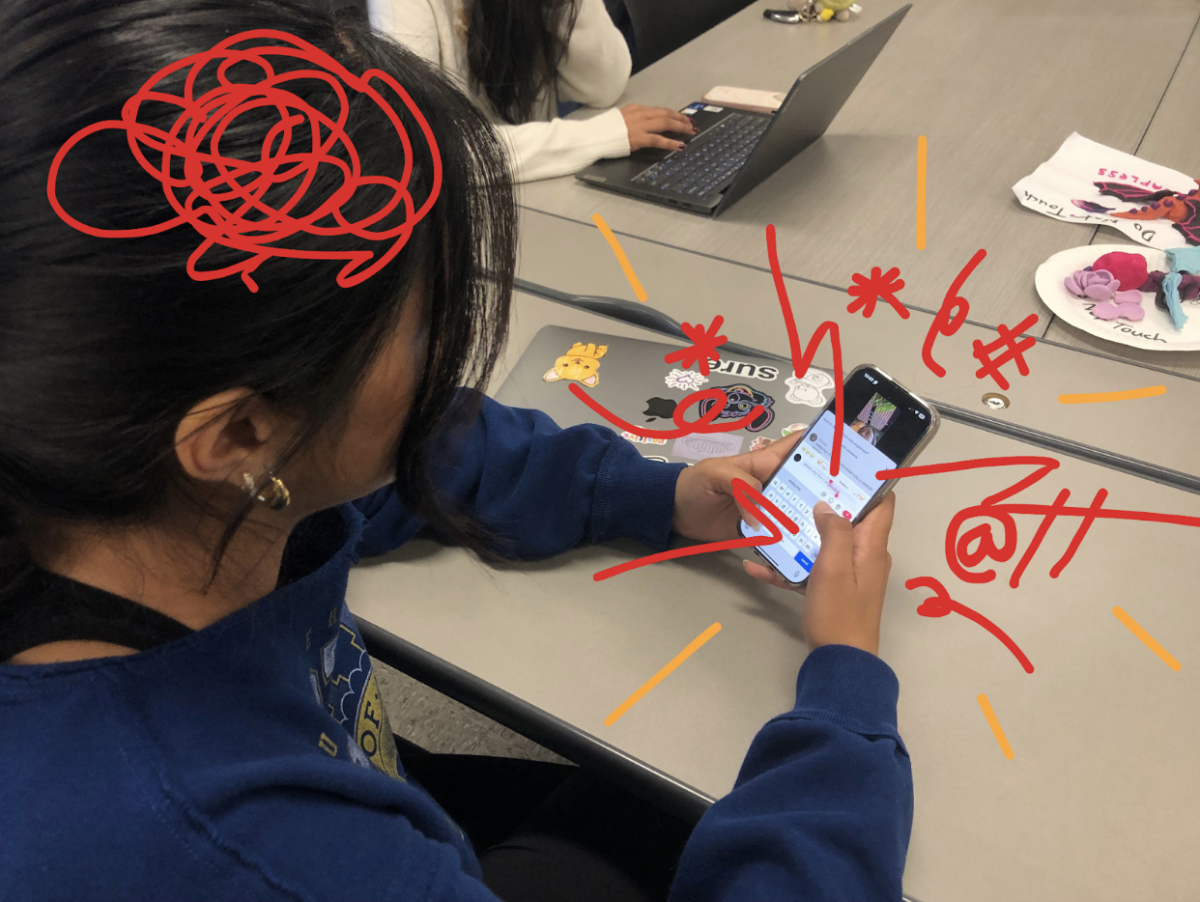
Figure 2. Rage bait induces interaction with the posted content. Photo(Asha Wojciechowski 2025)
Anger is precisely an emotion that is very easy to turn into interaction. Compared with calm or rational content, angry information is more likely to prompt users to immediately comment, participate in arguments, and even forward to others for “comment”. Under such a mechanism, the algorithm does not need to “understand” the value of the content itself. It only needs to identify which content can bring higher interactive data and further recommend it to more users. This process can be understood as a kind of “algorithmic amplification”. The stronger the emotion, the wider the spread, which in turn attracts more similar content production. According to Kalliris (2024), when users attempt to seek decision-making basis through the digital space to maintain independent thinking, they often fall into a multi-dimensional risk trap: This not only encompasses radical content that directly causes psychological trauma, but also includes information that, although not crossing the line, is sufficient to trigger anxiety, and even cognitive fog woven by false or incorrect information, ultimately misleading users’ judgments and decisions.
This mechanism creates a dangerous positive feedback cycle: marketing accounts get traffic shares by inciting emotions, platforms get advertising revenue through high participation, and the only damage is the ordinary users who are misled and angry, the topic centers who are forced by cyber violence, and the increasingly polarized public discussion environment.
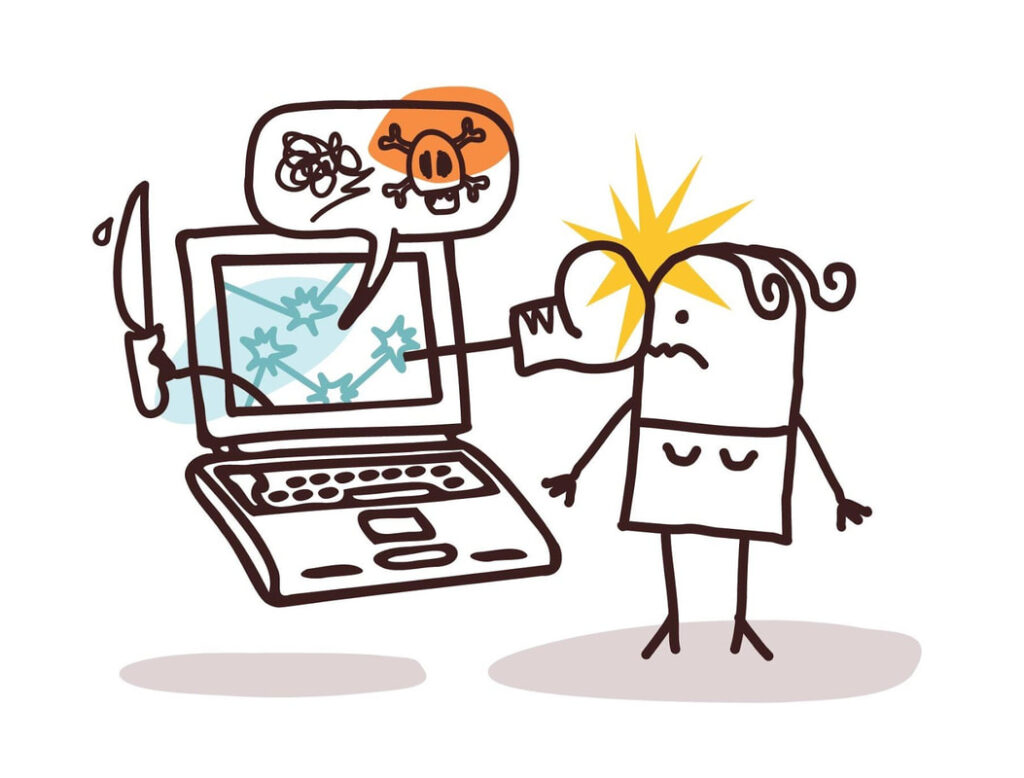
In this mechanism, the most directly affected are often the individuals involved in the center of public opinion. When an event is emotionally spread by the marketing account, it is easy for the person concerned to become the object of collective anger in a short time. A large number of unverified information, out-of- context content, and offensive comments will quickly accumulate, forming a situation similar to “digital siege”.
For individuals, this sudden exposure not only brings psychological pressure but also may have a long-term impact on their real lives. More importantly, in this communication structure, the harm is often “dispersed” among the participation of countless users, which makes the responsibility vague. This further exacerbates the difficulties of content governance and makes network damage appear in a more hidden but continuous form.
In order to see how the marketing account turns “online harm” into “real violence”, we must examine the pusher behind the British riots in 2024. The trigger of this violent conflict across the United Kingdom did not come from the mainstream media, but from an anonymous account called “Channel3 Now“.
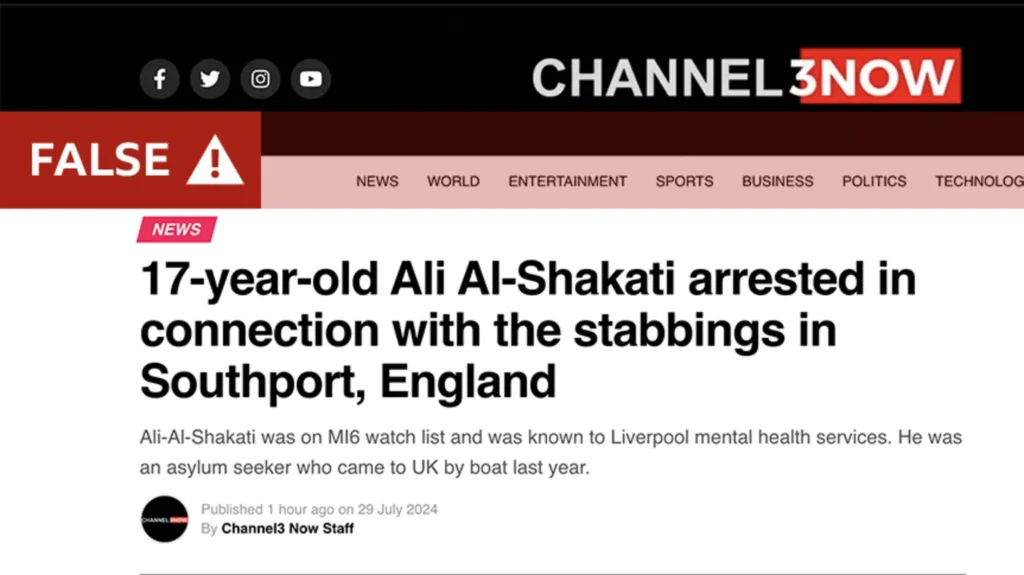
In the incident, a news website accused of “inciting riots” quickly attracted a lot of attention by publishing strongly emotional content. The account is accused of quickly accumulating attention on social media by publishing strongly emotional-oriented and misleading content, and to a certain extent exacerbating public panic and antronism.
Unlike the “title party” in the general sense, the operation of this kind of account is more strategic. They do not simply exaggerate the facts, but spread the content in a “like fake” state by selecting specific topics, strengthening group labels, and deliberately blurring the boundaries of information. This expression is not only enough to arouse anger, but also does not trigger the strict review of the platform at the first time, so as to obtain continuous exposure in the algorithm recommendation mechanism. In other words, this kind of content does not accidentally go popular, but is carefully designed to meet the platform’s preference for “highly interactive content”.
It is worth pondering that the reason why Channel3 Now accounts can wander on the edge of the law for a long time is that they take advantage of the “fuzzy zone” in digital governance.
Many hate speech against specific groups often have a kind of “political insensitivity”- in the view of the platform algorithm, as long as there is no direct contact with the extremely high-pressure political forbidden area, these strongly biased content will be due to the high clicks they bring. Quantity to obtain survival space. –Guan and Chen (2026)
This characteristic of “harvesting traffic without paying a political price” makes the marketing account more inclined to choose to incite group antas its most stable business model.
In the face of the social riots caused by Channel3 Now, many people’s first reaction is often: why didn’t the platform remove it from the shelves earlier?
However, this intuitive question actually ignores a core dilemma in digital governance – the question is not only “regulated”, but also how to define when intervention is needed.
The first is the ambiguity of the legal definition. As Zarmsky (2024) pointed out, the current legal framework faces serious “Gravity Threshold” challenges in dealing with online injuries. Unlike traditional physical violence, online injury often has Intangibility. When a marketing account makes inflammatory remarks, it may not be a direct physical injury at the moment it occurs, which makes it difficult for the law to define it as a “crime”.
For example, traditional physical crime is like ‘high-altitude parachute’: a person throws a vase from upstairs, smashing a roadside car or injuring people. This kind of injury is tangible and immediate, and the police can be convicted at a glance, because the ‘gravity’ and destructive power of the vase are obvious.
But online harm is more like a ‘colorless and tasteless gas diffusion’: the inflammatory video released by a marketing account is like releasing a trace of gas in the air. At that moment, no one fell to the ground and was injured, and even everyone felt ‘breathing smoothly’. But when thousands of accounts release this kind of ‘poison gas’ (false information and hate speech) at the same time, the mental health and social trust of the whole community will slowly be poisoned. It was not until one day that people completely lost their minds because of these poisonous gases and rushed to the streets to violent riots, the law realized that the “gravity threshold” had been broken. But the trouble is that because each video looks ‘invisibly’ and ‘small’ at the moment it is sent out, it is difficult for the law to catch the ‘lett’ person in the first second and say that he is guilty. This kind of ‘warm water boiling frog’ injury is the most troublesome death point of law in the digital age.
In addition to the law, the platform’s own content moderation should be the first line of defense to deal with such problems. However, in practice, this mechanism also faces many limitations. At present, most platforms adopt the hybrid mode of “automated audit + manual review“, that is, to identify potential violations through machine learning models, and then make further judgments by the manual team. This is exactly the bottleneck of Automated Governance.
According to Stilgoe (2025), the current institutional arrangement around artificial intelligence is very weak. If this technology is to be truly useful and trustworthy, it must be governed. AI is good at identifying clear sensitive words, such as violent pictures or extremist slogans, but it is difficult to identify the mild incitement with “political insensitivity” mentioned above.
Channel 3 Now cleverly imitates the typesetting, intonation, and even diversion of regular news. This “tactical camouflage” fully conforms to the characteristics of “high-quality content” in the eyes of the algorithm.
In this process, ordinary users are not completely passive victims. Every click, comment and forwarding will become an important signal for the algorithm to judge the value of the content. When users participate in the discussion in anger, they actually inadvertently strengthen the dissemination path of such content. In other words, anger is not only used, but also constantly reproduced.
This doesn’t mean that the responsibility should be transferred to the individual, but it reminds us that in an environment where emotions are highly manipulated, users’ media literacy becomes especially important. Being aware of the emotional design of the content and maintaining a certain amount of reflection before participating in the interaction may be one of the few possible ways to slow down this cycle.
Back to the original question, when we feel angry because of a video in the middle of the night, does this emotion really belong to us?
Or has it long been embedded in a traffic-oriented system, guided, amplified, and finally transformed into calculable value?
The case of Channel 3 Now reminds us that, under the operating logic of the digital platform, emotions are no longer just an individual experience but a part of the platform economy. When anger becomes the most easily ignited and cashed emotion, the risk in cyberspace is no longer just individual bad content, but a structural problem.
Digital life shouldn’t be an endless “emotional garbage dump”. We need fairer policies, more transparent technology, and most importantly, a more conscious civil society that no longer easily pays for the “bait”. After all, in the giant network woven by algorithms, only rationality and prudence are our strongest armor.
Reference
See J. Woodhouse, Regulating Online Harms (House of Commons Library, 2022); R.F. Jørgensen (ed.), Human Rights in the Age of Platforms (MIT Press, 2019); T. Keipi et al., Online Hate and Harmful Content (Routledge, 2017).
Guan, T., & Chen, X. (2025). Threat Perception, Otherness and Hate Speech in China’s Cyberspace. The Journal of Contemporary China, 1–16. https://doi.org/10.1080/10670564.2025.2475051
Zarmsky, S. (2024). Is international criminal law ready to accommodate online harm?: Challenges and opportunities. Journal of International Criminal Justice, 22(1), 169–184. https://doi.org/10.1093/jicj/mqae013
Stilgoe, J. (2025). Governance can’t be automated. Science (American Association for the Advancement of Science), 388(6745), eadx3843. https://doi.org/10.1126/science.adx3843
Kalliris, K. (2024). Online harm, free speech, and the “legal but harmful” debate: an interest-based approach. The Journal of Media Law, 16(2), 390–416. https://doi.org/10.1080/17577632.2024.2425547
CT Jones. (2024). What is rage bait? Inside the trend of influencers making people angry. Rolling Stone. https://www.rollingstone.com/culture/culture-features/what-is-rage-bait-influencers-making-people-angry-1234976621/
Hari, N.,& Wojciechowski, A. (2025). Rage-bait: How purposefully rage-inducing content is harming users’ mental health. El Estoque. https://elestoque.org/2025/03/10/opinion/rage-bait-how-purposefully-rage-inducing-content-is-harming-users-mental-health/
Spring, M.(2024).The real story of the news website accused of fuelling riots.BBC.https://www.bbc.com/news/articles/c5y38gjp4ygo



Be the first to comment