

On January 23, 2023—the second day of the Lunar New Year—a 23-year-old girl who had just been accepted into a prestigious master’s program shared the good news with her sick grandfather in hospital. Yet it was her pink hair that triggered severe online harassment, eventually driving her into fatal depression. Pink hair was supposed to mark the start of her future. Instead, it became the end of her story.
However, this is not just a personal tragedy, but a microcosm of violence in today’s digital space. This essay argues that Zheng Linghua’s tragedy is not simply the result of individual hate, but a consequence of how hate speech is systematically amplified by platform algorithms and inadequately governed by moderation systems, turning personal attacks into large-scale gendered violence.

Case details
She never expected that within just a few hours, this small moment of joy would escalate into a devastating online attack. Her photos were widely stolen, reposted, and doctored to spread malicious rumors. Because of her pink hair, she was labeled with extremely humiliating tags such as ” escort girl,” and “unfit to be a teacher,” with related content garnering over 3 million views.
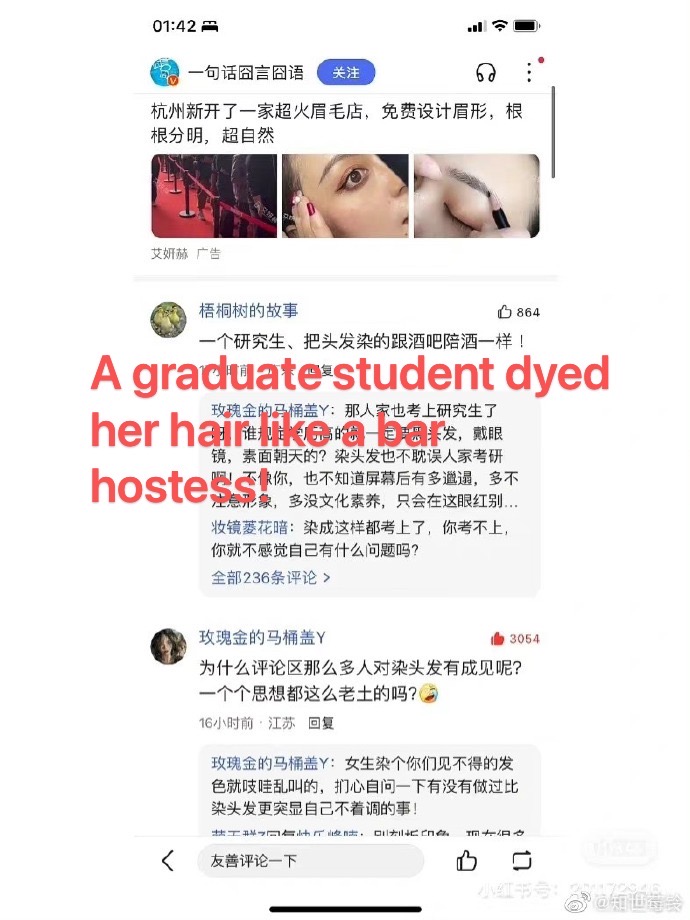
She immediately collected evidence and sought help from lawyers and the media to try and to defend her rights. But the systematic dehumanization was far faster than imagined. Stigmatization, the spread of sexually explicit rumors, and mass humiliation surged wave after wave, while platform moderation was sluggish and ineffective, making it difficult to contain the rumors and insults. Her efforts to stop the abuse were largely futile
Ultimately, this relentless gender-based violence completely overwhelmed her. Zheng Linghua died by suicide at 23 after suffering severe depression. Even in death, rumors and exploitative traffic still did not spare her.
Beyond the Surface: Zheng Linghua and the Spectrum of Gendered Cyberviolence
Is the vicious criticism directed at Zheng Linghua all because of her pink hair? No, it is rooted in systemic violence against women. Simply for being a young, optimistic woman, she faced relentless slut-shaming. While public attention is often staring at her unconventional pink hair, the underlying issue is deep-seated gender-based violence. Researchers call this “cyberviolence”—a spectrum of gendered harm enabled by social media that disproportionately targets women, girls, and gender minorities, with online harassment and misogynistic abuse as its core forms. (Backe et al., 2018) The tragic case of Zheng Linghua is a stark example of this phenomenon: the mass online harassment and gendered cyberviolence that she endured are clear manifestations of gender-based violence.
Think about it this way, as Sinpeng et al. (2021) states, hate speech targets systemically marginalized groups, and sexism is a typical form of such institutionalized exclusion. Gender-based violence, rooted in sexism, fits precisely into the definition of hate speech that inflicts substantial harm on individuals.
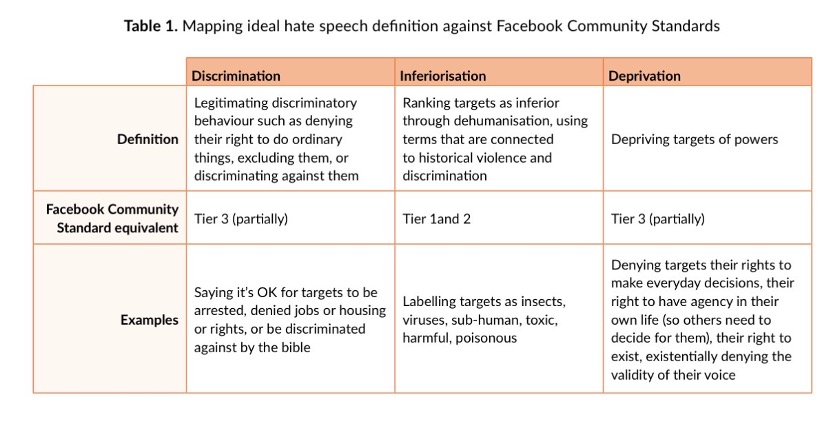
In the context of Gelber’s (2019) Table 1, the attacks on Zheng represent a textbook case of “Inferiorisation.” They didn’t just attack her hair; they attacked her identity. They slandered her as “unfit to be a teacher” solely because of her appearance, weaponizing her background as an aspiring educator to escalate their abuse.
By denying her moral purity, the attackers engaged in “Discrimination” as defined in Table 1—legitimating discriminatory behavior and excluding her from the right to do ordinary things, like simply sharing a photo of her success. This attack was directly aimed at her dignity.
A deluge of rumors stripped her of her right to speak and defend herself, rendering her self-defense completely ineffective. She privately messaged each abusive netizen to demand the removal of malicious comments and apologies, only to face further harassment and harm. This reflects what Gelber defines as “Deprivation”—the systematic denial of voice and agency, where targets are effectively excluded from participating in digital public discourse. As Table 1 illustrates, this is about depriving targets of power and existentially denying the validity of their voice. Zheng Linghua wasn’t just bullied; she was systemically stripped of her agency as a digital citizen, leaving her silenced and powerless against the viral tide of hate. Even though she was alive, in the context of the internet, her identity as an “excellent student” has been completely erased. This gendered hate speech was not an isolated act of individual hate, but a reflection of systemic misogyny in cyberspace. Its uncontrolled spread and the lack of effective redress directly highlight the limitations of privately governed digital spaces (Suzor, 2019).
The Invisible Architects: How Platforms Enable Hate
What were social media platforms doing while Zheng Linghua fought for her rights amid relentless abuse? Social media platforms are not neutral bystanders; they are the silent architects of this tragedy. Profit-driven design, weak moderation, and biased algorithms across platforms like Xiaohongshu, Weibo, and Facebook are not neutral tools—they actively enable and amplify gendered hate speech, turning isolated harassment into systemic violence.
How did privacy policies become an accomplice to harm?
Platforms completely dropped the ball when she needed help the most. These platforms talk a big game about “user safety” and “privacy protection,” but in fact, their rules and moderation only made things worse for her—allowing perpetrators of harassment to act with impunity. Zheng was brave and refused to stay silent in the face of abuse. She took immediate action to defend her rights. However, when Zheng Linghua spent a great deal of time and energy fighting for her rights, the platforms refused to reveal abusers’ real names, citing privacy—trapping victims in a vicious cycle for victims seeking legal redress. Admittedly, privacy rules operate as a double-edged sword. On paper, that makes sense, right? You don’t want random people digging up someone’s personal info. But for Zheng, this rule turned into a nightmare. As researchers of cyberviolence highlight (Backe et al., 2018, p. 138), such loopholes significantly increase the difficulty for victims of gendered online abuse to seek justice. In this way, platforms became accomplices to her harm.
1 second VS 24 hours—The speed of platform content governance
To be fair, platform reporting systems are not inherently slow; standard cases are often handled within 24 hours, and urgent ones can take just 30 minutes. However, how can AI machine review and manual review counteract the rapid spread of viruses within one second? Automated moderation has keyword blind spots: it cannot link pink hair to sexualized slurs like “hostess”. Such slurs are not blocked automatically unless reported. Zheng begged for the abuse and rumors to be removed, but the moderation teams dragged their feet. She could only wait and watch the abuse multiply online. At the same time, I understand that the cost of platform governance is huge. Why? The fundamental failure isn’t just a lack of manpower; it’s the “context-blindness” of automated systems. Machines cannot decode the misogynistic weight of terms like “hostess” when paired with pink hair. The speed of misinformation versus the slowness of removal speaks for itself: moderation fails to control hate speech. It’s like they care more about keeping engagement high than stopping real harm. Experts who study digital governance (Suzor, 2019) have long said platforms prioritize profit over user safety, and Zheng’s case is the perfect example of that.
Algorithmic Catalysts
How did an ordinary personal post gain tens of thousands of views? Her usual posts received just dozens of likes. Why did it go viral? This is the ugly truth about social media: platforms don’t fail to moderate hate speech by accident—their systems are structurally designed in ways that allow it to thrive. They fail because their business model depends on it. The algorithm didn’t just let hate speech spread—it actively amplified it. As AI expert Kate Crawford (2021) explains, social media algorithms aren’t neutral tools. They’re built to maximize engagement, and nothing drives clicks faster than outrage, anger, and hate. For the algorithm, Zheng’s injury is merely high-value data – a series of ‘datafication’ signals that can be used to obtain screen time. So when Zheng’s post started getting negative comments, the algorithm didn’t hide it—it showed it to more people. It fed the trolls, amplified the rumors, and turned a private moment of joy into a public spectacle of misogyny. The same algorithm that can recommend you a product you looked at once, or a friend’s post you missed, couldn’t be bothered to stop a flood of abuse targeting a young woman. It chose engagement over her safety, every single time. At this point, the platform has become the mastermind behind the entire tragedy. The platform’s celebration of the explosive traffic was like the countdown fireworks marking the end of Zheng Linghua’s life.
Digital governance: If this happened in Australia, would Zheng Linghua die?
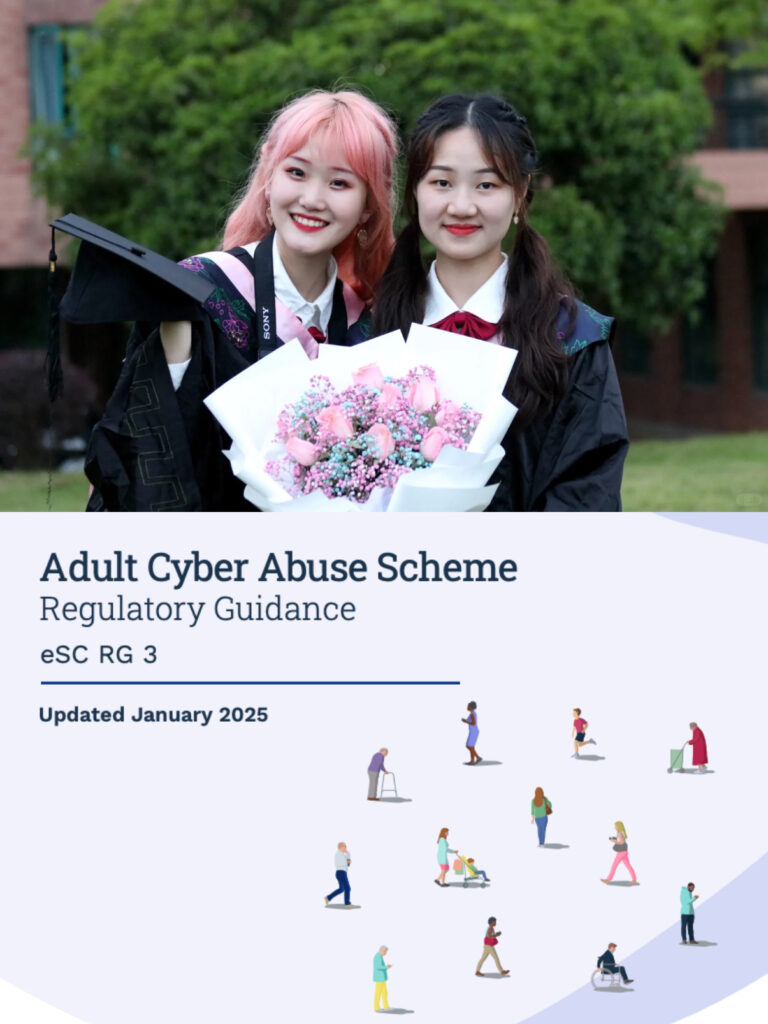
Zheng Linghua’s tragedy forces us to consider: would the outcome have been different if this had happened in Australia? The answer lies in fundamental differences in how each system governs online hate speech.
In China, regulation prioritizes public order and rapid rumor control, with different prioritization regarding individual-level hate speech. While efficient at stabilizing unrest, it is often slow to shield individuals from gendered hate speech and online harm. In Zheng’s case, the system framed events as a minor online incident, failing to recognize the severe, systemic harm caused by widespread online abuse. When governance prioritizes “social harmony” over “personal safety,” the most vulnerable groups are often overlooked in the policy’s reach.
In contrast, Australia’s digital governance model is victim-centered, focusing on compelling platforms to protect individuals through clear legal constraints and strong enforcement. Under Australia’s Online Safety Act 2021, the independent eSafety Commissioner can legally order platforms to remove hate speech and abusive content (eSafety Commissioner, 2025). For text-based hate speech, rumors, and other forms of adult cyber abuse such as Zheng Linghua endured, platforms are required to remove content within 7 days. For image-based abuse, including edited non-consensual images, the deadline shortens to 24 hours.
Importantly, platforms that fail to comply face substantial fines (up to A$782,500 for individuals and significantly more for corporations), a penalty strong enough to create powerful deterrence. In addition, the eSafety Commissioner can also order platforms to reveal abusers’ identities, helping victims pursue accountability and curbing anonymous hate speech at its source. This model does not prioritize “quickly calming public opinion” but focuses on “stopping harm and protecting individual rights”. While these legal timeframes may seem longer than viral propagation, strict enforcement creates a necessary “brake” on escalating harm. Could a system like this have prevented the tragedy of Zheng Linghua? Maybe.
Neither model is perfect. Australia focuses on victim remedies and platform accountability; China excels at stability and rumor control, but both face the same dilemma: as Suzor (2019) reminds us, no matter how strong the laws, we are still struggling with the global “unaccountability” of tech giants. Whether in China or Australia, digital policies still fail to keep up with the rapid spread of hate speech.
Takeaway
I have also dyed my hair pink, and I love sharing my daily life online. My mother always reminds me repeatedly not to post revealing photos. To be honest, I have personally experienced online sexual harassment. My Weibo account was hacked, and someone was stealing my photos and posting pornographic information, turning my digital identity into a weapon against me. The platform, instead of protecting me, blocked my 10-year-old account with many wonderful memories. It took me a full year to appeal and recover my account. Behind my mother’s reminders lies a very real fear of online harms that many women share. This deep distrust stands as evidence of the failure of online governance. “On the Internet, Nobody Knows You’re a Dog… Unless You’re Another Dog” (Hirskyj-Douglas & Lucero, 2021). Considering this, I offer the following suggestions:

1. Protect your privacy by avoiding location tags and disclosing personal information such as license plates, home addresses, or ID numbers in posts, to reduce online harassment, fraud, and offline safety risks.
2. At a societal level, we must end victim-blaming and misogyny: pink hair does not invite abuse, and clothing never justifies harassment.
3. Platforms must revise their algorithmic logic: they should no longer prioritize anger and conflict to drive engagement, nor actively amplify divisive topics and comments.
4. Legal systems should better support victims: while protecting privacy, authorities should mandate platforms to cooperate with legal investigations.
5. Global digital governance must be strengthened. Currently, regulatory frameworks are far behind the speed of technological development, and cultural barriers make the task an even more severe challenge.
Zheng Linghua’s tragedy should not just be exploited again to become a carnival of online popularity. The true commemoration is to allow the next girl with pink hair to live safely on the internet.
References
Backe, E. L., Lilleston, P., & McCleary-Sills, J. (2018). Networked individuals, gendered violence: A literature review of cyberviolence. Violence and Gender, 5(3).https://doi.org/10.1089/vio.2017.0056
Crawford, K. (2021). The Atlas of AI: Power, Politics, and the Planetary Costs of Artificial Intelligence. Yale University Press.
eSafety Commissioner. (2025). Adult cyber abuse scheme regulatory guidance (eSC RG 3). Australian Government. https://www.esafety.gov.au/sites/default/files/2025-01/Adult-Cyber-Abuse-Scheme-Regulatory-Guidance-January2025.pdf
Hirskyj-Douglas, I., & Lucero, A. (2021). On the internet, nobody knows you’re a dog… unless you’re another dog. arXiv. https://doi.org/10.48550/arXiv.2105.03181
Sinpeng, A., Martin, F. R., Gelber, K., & Shields, K. (2021). Facebook: Regulating Hate Speech in the Asia Pacific. Department of Media and Communications, The University of Sydney. https://hdl.handle.net/2123/25116.3
Steiner, P. (1993). On the internet, nobody knows you’re a dog [Cartoon]. The New Yorker.
Suzor, N. P. (2019). Lawless: The Secret Rules That Govern Our Digital Lives. Cambridge University Press. https://doi.org/10.1017/9781108666428
Zheng, L. [鸡蛋姬]. (2022, July). [Post of graduate admission news and grandfather] [Image]. Xiaohongshu.


Be the first to comment