— And why that doesn’t have to be the end of the story.

A note on sources
This blog post is an opinion piece. It cites real reports from TIME, IEA, Equidem, and academic books. Where a figure comes from an unverified leak (e.g., OpenAI’s 2026 valuation), that is noted. I have chosen to highlight the human and environmental costs of AI, not because AI has no benefits, but because these costs are rarely discussed.

OpenAI and Google join forces to form a self‑regulatory group for AI.
Source: Wonderful Engineering
It’s 1 a.m. You can’t sleep. You open ChatGPT and type: “What should I do with my life?”
Two seconds later, a kind, thoughtful answer appears. You feel less alone.
That feeling isn’t magic. And it isn’t free.
Someone in Kenya just read something horrific so you didn’t have to.
A data centre just burned enough electricity to power a home for a day.
We use AI every day: ChatGPT, Gemini, Copilot, Midjourney, Claude. We call it smart, efficient, almost magical.
But we almost never ask: Where does this “intelligence” really come from? Who pays the price for our one-click convenience?
We weren’t told any of this.
Today’s AI is a clever mimic.
We celebrate what AI can do yet miss the extraction, exploitation, and destruction that powers it all.
This article will take us from a cramped, sweltering room in Kenya, past a data centre burning through electricity, and finally back to our phone screen.
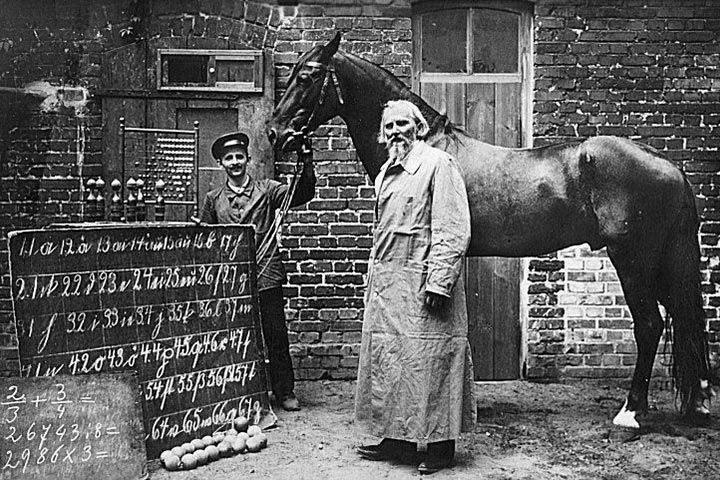
Part 1: Clever Hans: AI is not intelligent. It is mimicking.
Source: animalfunfacts.net
Over a century ago, Europe was fooled by a horse named Clever Hans. He appeared to do math, spell words, and answer questions.
The truth was simple: the horse understood nothing. He only watched human body language. When his hoof tapped the right answer, the questioner unconsciously relaxed. A slight change in breathing and a tiny shift in posture told Hans when to stop.
Today’s AI is the modern Clever Hans.
It writes essays but feels no meaning. It chats like a human but has no consciousness. It solves problems but does not understand logic. It only identifies patterns, imitates, and performs.
We fixate on the performance yet overlook the extraction, exploitation, and destruction that sustain it.
As Kate Crawford warns in The Atlas of AI (2021):
“AI is not virtual. It is a technology of extraction.”
And once you learn what’s really behind the screen, you can’t unsee it. Neither should you.
Clever Hans is long dead. Let’s not be the people still applauding the horse in the 21st century.
Part 2: Inside ChatGPT’s hidden workforce in Kenya
To make ChatGPT “safe” for the world, OpenAI needed to filter out murder, torture, suicide, child sexual abuse, graphic violence, and hate speech from its training data.
So they hired workers in Kenya.
These workers were employed by Sama, a subcontractor based in Nairobi. Their job began in November 2021: they had to read thousands of the most horrific texts imaginable every single day and label them so an algorithm could learn to block harmful content automatically.
They were paid less than $2 per hour.
Workers told TIME that reading the shocking material sometimes felt like “torture,” adding that they felt “disturbed” by the end of the week. All four Sama employees interviewed by TIME described being mentally scarred by their work.
Meanwhile, OpenAI was valued at over $80 billion.
A later project involving violent imagery led Sama to terminate its contracts with OpenAI, costing some workers their jobs.
Why Kenya? Because that’s where the math works best for Silicon Valley. English is widely spoken, wages are low, and unemployment is high. The system doesn’t exploit by mistake. It exploits by design.
As researchers Mary Gray and Siddharth Suri document in their book Ghost Work (2019), this kind of hidden, precarious labour is not an exception but the foundation of the entire AI industry.
Let us be clear: AI does incredible things.
It helps radiologists spot cancer earlier. It enables people with limited mobility to communicate. It accelerates drug discovery and translates languages in real time. I use AI. You use AI. The technology itself is not evil.
But the way we build and run it is deeply broken; we never see who pays the price.
We’re focusing on this brokenness, not because AI is all bad, but because the harm is being hidden.
Part 3: The human cost: PTSD, nightmares, invisible lives
Psychologists call it secondary traumatic stress. It is what happens when you are forced to absorb trauma that is not your own but becomes yours anyway.
In May 2025, human rights organization Equidem launched its report “Scroll. Click. Suffer.” which revealed the psychological, physical, and sexual harms experienced by content moderators and data labellers in Colombia, Ghana, Kenya, and the Philippines. The research documented over 60 cases of severe psychological harm (Equidem, 2025), including depression, PTSD, insomnia, and suicidal thoughts.
But the damage does not end with the trauma itself. Workers are silenced by strict NDAs (non-disclosure agreements).
As Ephantus Kanyugi, Vice-President of the Data Labelers Association of Kenya, has described: “So many workers come to us shaking, terrified by what they’ve signed.”
NDAs aren’t just corporate paperwork. They are a governance tool that prevents whistleblowing, blocks academic research, and keeps labour violations out of court. In the digital economy, silence is a feature, not a flaw.
These workers are ghosts. No credit, no recognition, no job security, no adequate mental health support. They are hidden so you can believe AI is “automatic,” “clean,” and “intelligent.”
As Kate Crawford writes in The Atlas of AI (2021), AI relies on “the labour pulled from low-wage information workers” and “the exploited workers behind ‘automated’ services.”
Part 4: But they are fighting back
The workers are not silent forever.
In May 2023, more than 150 content moderators working for Facebook, TikTok, and OpenAI’s ChatGPT gathered in Nairobi and resolved to establish the African Content Moderators Union (ACMU), the first union of its kind on the continent. The union was formed with the help of Daniel Motaung, a former Facebook moderator and whistleblower who experienced firsthand the mental toll of the gruelling work.
This organizing effort built on years of struggle. After a 2022 TIME exposé lifted the lid on the exploitation of African moderators, a wave of legal action took off. Kenyan courts have since issued rulings against Meta, and workers are now demanding better pay, mental health care, and safety protections from all tech companies, including OpenAI.
Part 5: The planet pays too
Source: She Tu Wang
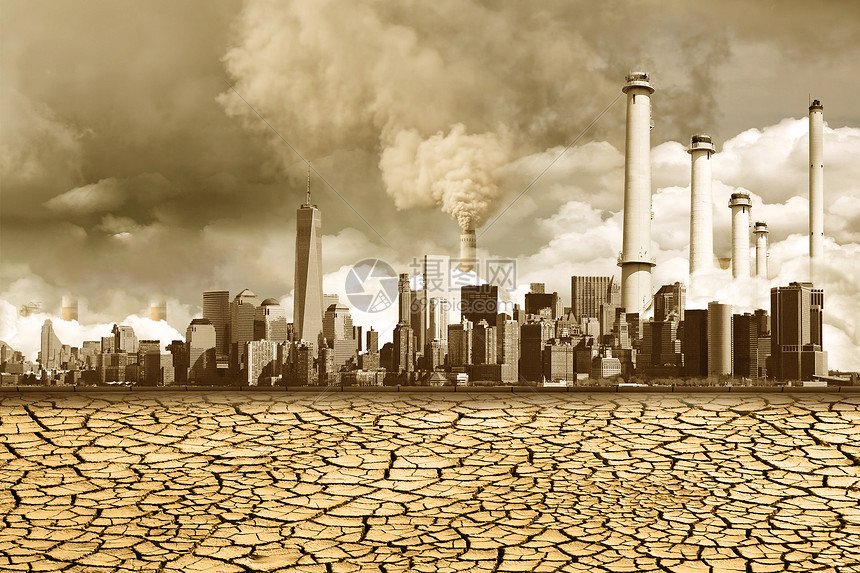
The same industry that exploits Kenyan workers is also burning the planet.
According to the International Energy Agency (IEA), electricity consumption from data centres reached approximately 415 terawatt-hours (TWh) in 2024, or about 1.5% of global electricity consumption (IEA, 2025). And it has been growing at 12% per year over the last five years.
AI is accelerating this growth. The rise of generative AI is driving the deployment of high-performance servers with greater power density. The IEA projects that by 2030, AI could push data centre electricity demand to over double current levels, driven largely by AI training and inference infrastructure.
AI is not green technology. It is a heavy industry: mining, burning, consuming, polluting. And the cost is never paid by tech companies alone. It is paid by the planet, the poor, the vulnerable, the marginalized.
Part 6: AI’s victory: whose victory?
AI is changing the world at a breathtaking pace. But the benefits have almost never been fairly distributed.
Today, the AI industry is dominated by a handful of companies: OpenAI, Microsoft, Google, Meta, Amazon. In early 2026, the CEO of Mistral AI warned: “We are facing a problem of excessive concentration of power in AI. We don’t want to live in a world where AI deployment and development are actually controlled by three or four giant companies.”
These “great houses” of AI control the ecosystems, computing power, data, and labour required to build and run global AI systems. And their wealth is expanding at an unimaginable speed.
According to unverified leaked equity documents circulated online in early 2026 (not confirmed by OpenAI), the company’s post‑funding valuation would reach $852 billion if the leak is accurate. If that figure were correct, it would put it among the most valuable private tech companies in history. Microsoft’s $13 billion stake is now worth $228 billion, a 17x return (TechCrunch, 2026).
In the first quarter of 2026 alone, global funding for generative AI reached $163.5 billion (Crunchbase, 2026).
Meanwhile, Kenyan content moderators earn less than $2 per hour (TIME, 2023).
This is not a story of a market “working efficiently.” This is a story of deep wealth extraction, where the most vulnerable workers are paid poverty wages, overworked, traumatized, and turned into fodder for the AI machine.
Crawford is right: AI is a technology of extraction. But her work also invites us to ask: what comes after exposure? The Kenyan case shows that exposure alone is not enough. Gray & Suri’s Ghost Work points toward portable benefits and supply‑chain transparency. Five years later, OpenAI still uses subcontractors in Kenya to bypass labour laws. This is not a failure of Crawford’s analysis, but a failure of policy to catch up. Building on her foundation, we can argue for enforceable cross‑border AI labour standards, not just voluntary ethics pledges. Crawford gave us the diagnosis. Now we need the treatment.
Part 7: You think you are using AI. But AI is using you.
Who is driving the AI frenzy? The answer is unsettling.
Corporate PR departments brand AI as “magical.” Media outlets chase hype with sci-fi headlines like “AI wakes up” and “Superintelligence will rule humanity,” because fear sells. Academics and experts ride the wave, landing consulting deals and research funding.
The effect? Capital floods in. In 2025, venture capital deals in AI reached a record $225.8 billion (Crunchbase, 2026).
Who is excluded? Countries in the Global South are fixed as “resource suppliers,” providing raw data, while bearing the physical, psychological, and environmental costs. They are largely absent from AI governance conversations.
As Kate Crawford writes in The Atlas of AI (2021), AI is not just technical but political. It distributes resources, concentrates power, and costs the planet. AI systems are not neutral; they embed existing inequalities.
Shoshana Zuboff’s surveillance capitalism offers a deeper lens: tech companies “claim the experience of everyday life as a free raw material.” AI becomes not a passive tool, but a machine that shapes your choices.
Every click, every prompt, every time you ask AI to write something, you are providing data, training the model, and reinforcing the system. You are both using it and being used by it.
Consider this: You ask ChatGPT “How do I handle a conflict with my partner?” That conversation is logged. If it triggers safety filters, a content moderator in Kenya might read it, for less than $2 an hour. You never consented to that person seeing your vulnerable moment. Zuboff would say your emotional life has become free raw material for surveillance capitalism. But here is the twist: not only is your data extracted, it is cleaned by the most precarious workers on earth. This is not a flaw in the system but a business model.
As Crawford warns: “AI has a significant risk of exacerbating power imbalances on a global scale.”
Part 8: Why doesn’t the law fix this?
In most countries, content moderators are classified as “independent contractors” or hired through subcontractors in different legal jurisdictions. That is not an oversight but a deliberate legal strategy.
Gap one: No global AI labour standard. OpenAI is incorporated in Ireland, its data labelled in Kenya, its servers in the US. Who actually regulates? The ILO’s conventions do not cover “digital platform labour.”
Gap two: NDAs as evidence blockers. Kenyan workers sign confidentiality agreements that forbid them from sharing what they read. Even researchers struggle to verify trauma claims. This has little to do with privacy. It is a question of asymmetric power.
Gap three: AI energy use has no environmental accountability. Data centres already consume 1.5% of global electricity, yet no AI company has faced a fine for carbon emissions from training models.
So next time you hear “ethical AI,” just ask yourself: does that include the person in Kenya who read something terrible so you wouldn’t have to?
What would help? A binding UN treaty on AI labour transparency, not another voluntary pledge.
Part 9: What you can actually do (in under 5 minutes):

Source: Xinmin Evening News
- Ask one question next time you open ChatGPT: “Do I really need this?“ Not out of shame, but simply to notice.
- Share one fact from this post with one person. Example: “Did you know AI content moderators in Kenya make less than $2/hour?”
- If you manage a team that buys AI tools: ask your vendor “Where is your training data labelled? At what wage?“ Make them answer in writing.
References
- Citizen Digital. (2023). Facebook, TikTok and ChatGPT content moderators in Kenya finally unionise.
- Crawford, K. (2021). The atlas of AI: Power, politics, and the planetary costs of artificial intelligence. Yale University Press.
- Crunchbase. (2026). Generative AI funding hits $163.5B in Q1 2026, up 599% YoY.
- Equidem. (2025). Scroll. Click. Suffer.: The hidden human cost of content moderation and data labelling.
- Gray, M. L., & Suri, S. (2019). Ghost work: How to stop Silicon Valley from building a new global underclass. Houghton Mifflin Harcourt.
- International Energy Agency (IEA). (2025). Energy and AI – Energy demand from AI.
- Reuters. (2026). Mistral AI CEO warns of excessive concentration of AI power.
- Tech Policy Press. (2025). How NDAs became the AI industry’s tool for surveillance and silence.
- TechCrunch. (2026). OpenAI’s leaked equity structure reveals $852B valuation. (leaked document, unconfirmed by OpenAI)
- TIME. (2023). OpenAI used Kenyan workers on less than $2 per hour to filter traumatic content.
- Zuboff, S. (2019). The age of surveillance capitalism: The fight for a human future at the new frontier of power. PublicAffairs.
Be the first to comment