You think you’re just watching. But something is watching you back.
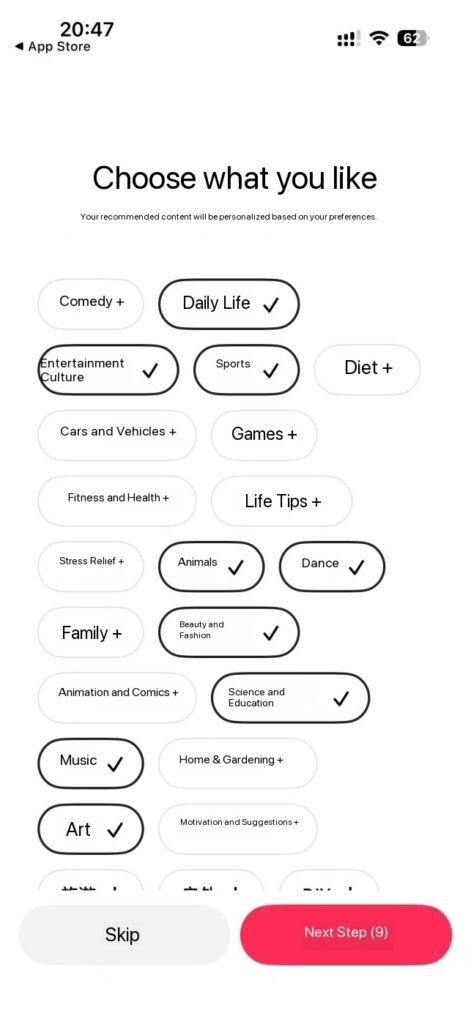
Consider the last time you used TikTok, Youtube, or even Google. You spent a few seconds on the app, then the videos ensnared your attention. You completely forgot your intended use for the app. You couldn’t help yourself. You scrolled endlessly. Each video felt personally curated. That seems to be a nice touch, but it may be more personal than meaningful.
Now, let me ask you something more difficult. What if there is more to this phenomenon? What if this is not for you? What if it is, but it’s molding you in a way that you do not want changed?
This is the cold, hard truth. There is an algorithm that operates every time you scroll. Colluded with this algorithm is a system. This system, not you, determines what you will see, what you cannot see, and what you will most likely click on. Many people describe these ”tools” as neutral, and that these tools only want to enhance your experience.
Algorithms are tools that help present information, but they do so much more than that. They construct the worlds we believe we inhabit. Let’s introduce some researchers. Crawford (2021) examined this. Noble (2018) researched this as well. Pasquale (2015) also addressed this. They all explain how algorithmic systems are a form of rulership. These rules govern the things we learn and make harmful inequities worse, all while doing so with a lack of transparency. This means we must face the uncomfortable questions. Who is responsible? Who should we be answerable to?Who governs our digital lives?
Algorithms build the world you live in. You just don’t see it happening.
Algorithms are a set of instructions that are used to process data and make decisions. At the most fundamental level, TikTok and YouTube use algorithms to determine which videos users are shown and in which order. The true story, however, begins with datafication, which is the process of turning everyday activities (especially digital ones) into data. Every interaction with the videos is registered, even how long you stay on a video. This information is used to create user profiles that are continuously updated. This is how TikTok can recommend a video that you will watch until the very end (or even watch multiple times) almost perfectly. This is why Flew (2021) argues that mediums of social communication do more than just host content; they also create and order content. In an “automated culture” (Andrejevic, 2019), this means computers are the ones replacing the human gatekeepers. Your experience online has not just been personalised; it has been designed.

Who really makes your choices? You, or the machine?
Traditionally, governance has been a government-centric concept, encompassing laws and policies.However, in our digital society, governance extends to algorithms. Just and Latzer (2019) refer to such phenomena as “governance by algorithms” .Rather than prescribing the thoughts ofindividuals, algorithms determine the “field of thought ” by controlling access to information,and personalizing what users see. For example, research shows that the recommendationalgorithm determines 70% of videos watched by users on YouTube (Roose, 2021). Thus, the socalled user choice is actually an Artificial Intelligence (AI) choice.Shaping user choice and filtering information determines the “field of thought ” as conceivedby the algorithm, and ultimately, “field of thought ” of the individuals. Consequently, the pertinent is how much of your worldview is really your, as opposed to being algorithmically constructed.
Algorithms are designed to appear neutral, but in fact, their design is a product of human choice,insufficient data, and biases in the institution that produced the algorithm. This results in three primary concerns; bias, power, and opacity. In the case of bias, using the example of search engines, Safiya Noble (2018) illustrates how search engines can perpetuate and manifest stereotypes and system inequalities. This example illustrates a bias that is real, but has of course been the case and assumed to be.
Inequality and Discrimination
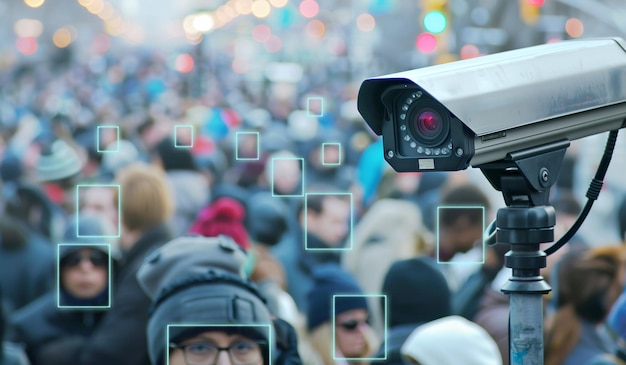
We are taught that within a system of democracy, “one person, one vote ” is the primaryprinciple. In reality, however, algorithms learn from the past; this is the primary reason for discrimination, which is widespread and systematic. Thus, discrimination is reproduced and often scaled by algorithmic systems, rather than alleviating the discrimination.Crawford (2021) suggests that artificial intelligence encompasses elements beyond technology,such as political and economic considerations. AI integrates large-scale data collection, widespread computational power, and corporate ownership.
Major players dominate this field, with companies, such as TikTok, YouTube, and Meta, determining how billions acquire knowledge. The Guardian (2022) notes that TikTok’s algorithm has been key to its worldwide success as a social media platform, along with its ability to deliver individualized content to users. The consolidation of power in the hands of a few companies has been a source of concern, particularly in terms of determining who is in charge of these algorithms, who receives returns from their use, and who is liable when harm is caused by the algorithms. AI is a reflection of the political and economic environment in which it exists.
A lack of transparency is a major concern. According to Pasquale (2015), algorithmic channels exemplify the definition of computational systems as “black boxes.” He proposes that, even when users can see the input and output of a process, they remain in the dark about what occurs in between. Organizations often consider their algorithms to be trade secrets, which further complicates the issue of transparency, as this precaution limits the public’s understanding of the algorithms. The limited transparency makes it difficult to: Recognize bias ,Challenge decisions ,Verify equity.

Users systems that they have insufficient information about, and systems that they do not fully comprehend. The algorithms’ impact on user experience is particularly evident on TikTok and YouTube, which utilize engagement-maximizing recommendation systems. The profitability of these platforms grows with the time users spend watching. Engagement is driven by the algorithms, which monitor:Watch time,Likes and shares,Scrolling patternsThis information is used to forecast the user engagement with the recommended content.Reports by the Guardian (2024) and others have noted how the algorithm used by TikTok can bring users to heightened and more outlandish forms of content with next to no input from the user. Investigations on the Mozilla Foundation (2021) noted similar behaviors on user regret after watching and listening to videos suggested by the algorithm. Both scenarios are not just brought to users by the algorithm, but are a clear sign of the misconduct of said algorithms in relation to how they prioritize user engagement over providing content that is accurate, beneficial or safe.
Algorithms, as described by Just and Latzer (2019), are not simply “reality construction.” Whereas they simply organize how data is structured, they construct how individuals perceive reality around them. Especially in a situation where most digital content can be accessed through a limited number of distribution channels, the content that is presented in an algorithmically organized manner, not only digitally represented, ultimately and successfully captures the attention of the consumer.
Welcome to automated culture. It’s made just for you. And just for you alone.
Narrowcasted content can be found at the level of recommendations made by the algorithm, not only at the level of recommendations made by the algorithm but also at the level of watching videos and listening to audio suggested by the algorithm. Narrowcasted and highly tailored content is a result of a specific set of data that has been managed and stored, represented as entertainment, culture and visibility. This is what Andrejevic (2019) has deemed “automated culture”.This is the culture where visibility is not representative of the content, but is representative of the data that has been captured, stored, managed, presented and optimized via algorithmic systems that are not simply used or managed by human editors, but are managed by editors, journalists or public institutions, but are levelled to a specific set of standards or an individualized system. This has shifted the entire culture from a generalized set of cultural practices to a culture that has been individualized and segregated.
The shaping of perception fueled by misinformation presents an even greater danger: the systematic shaping of a person’s perception. Self-correcting the consumption of the information and the how and why it of the information being presented is out of an individual’s control. It is pervasive, and people won’t even realize it is happening to them or how it is happening. The concern for the effects of the reliance on algorithms for basic functions of society is warranted and justified. Self-correcting democracy should be a concern for society and a basic concern be the essence of democracy, equality, and calculation.
These companies should be viewed as active, willing participants. The power these companies posses is not based on them simply designing algorithms, but the power is in the control of designing the narratives. They control the natural structures of these algorithms and determine the natural structures of society and control how the people use these controlled structures. This shapes and structures the people, the narratives they control, and the society itself. The control of information and the control of people and the control over the narratives is not simply architecture, but it is a form of power, and it empowers control.
These algorithms determine a person’s knowledge and subsequently determine a person’s understanding of the subject. The control of the variables is the essence of control.A democracy requires control of the variables and a steady balance of the information presented to individuals and democracy requires balance for control. The control of information is the control of a person’s knowledge and the control of knowledge is the control of their understanding. Control is directly linked to the balance of the information presented to the subject. The control of information is the control of a person’s knowledge and the control of knowledge is the control of their understanding. For most democracy requires balance and control.

Recommendation systems and actual implemented systems in society. Engaging systems recommend out and limited to a small number of individuals.such as emotionally charged, controversial, or sensational material. While this keeps users on platforms longer, it can also distort public discourse. Considering the repetition of the similar information,creating “echo chambers”,individuals lose their grip on most of the competing opinions.
They are videos and things created that simply make people hate each other. Other news reporters were viewing TikTok and YouTube and the like. Another problem was discovered by them. They are also able to publish fake news (The Guardian, 2020). It is not due to the fact that the app is trying to deceive you. Rather, the most clicked on are emotionally charged and extreme videos.
Such content poses actual issues, in the long run. News is less appealing and people are less capable of trusting it. It complicates the process of rational and honest communication on crucial matters. Algorithms not only transform the contents of what people think, but also the manner in which the society can talk about those contents publicly, and other matters that people must be worried about.
The invisibility of algorithms also poses problems. It is apparent in job hiring, policing and loan distribution and people are not even conscious that it exists. These systems are conditioned with very old, and problematic data. They employed white women who were mostly white. This made the algorithm prefer white women. Noble (2018) explains how this is a minor manner through which technology is perpetuating inequities. A prejudiced person can convert a very small number of people. And, although the effects of biased algorithms can be similar to those of one individual being rejected by a restaurant, it can also have an effect on millions of people.

Old laws won’t cut it. We need a new playbook.
Think of your own freedom. You Tube and those you follow. However, an algorithm dictates what you focus on. It gives you more of what you like and gradually you are offered fewer and fewer choices. The algorithm does not simply hear what you desire. It predetermines what you want.
What’s the solution? Old laws, perhaps, will not suffice. Due to the speed of an algorithm, they should be considered on a variety of fronts: design, regulation, corporate responsibility and new laws. It does not necessarily need to be done with the main purpose of minimizing damage. This is to ensure that algorithms are not offensive, and individuals can get the good information and honest systems.
People are demanding more transparency. That is, companies that explained their algorithms. It is not just so easy. Few people will be helped by a sham display of the code. Even experts are lost in technical esotericism. So put it out there that transparency should not be about sharing files only. but the masses have a right to an explanation that is within its daily grasp. In the absence of that, transparency is transparency as an end in itself.
Responsibility is also imperative. At present most systems are not regulated. When a misrepresentation by an algorithm threatens the lives of a community of people, or even takes their lives, the blame can be difficult to pinpoint. The monitoring of algorithms can correct this.
Governance by Design
We can come up with laws where it is explicitly stated that companies should be liable to systemic harm. Responsibility is a powerful mover to correct systems. The other positive suggestion is regarding governance by design. It recommends that an algorithm should be written using rock solid principles in such a way that the end product is the social good. Preemptive action needs to be taken. This can be done by improving the training data. One such case would be an algorithm model that presents alternatives to status quo. The well being should not only come before extending the usage of the app. There is no neutrality in tech. The entire systemic behavior is only determined by the responsible decisions of designers. Nevertheless, with a bit of consideration, designers can create a fair technology.
Reference List
Andrejevic, M. (2019). Automated culture. In Automated media (pp. 44–72). Routledge.
Crawford, K. (2021). The atlas of AI: Power, politics, and the planetary costs of artificial intelligence (pp. 1–21). Yale University Press.
Flew, T. (2021). Regulating platforms (pp. 79–86). Polity.
Just, N., & Latzer, M. (2019). Governance by algorithms: Reality construction by algorithmic selection on the internet. Media, Culture & Society, 39(2), 238–258.
Mozilla Foundation. (2021). YouTube’s algorithm is amplifying harmful content.
Noble, S. U. (2018). Algorithms of oppression. New York University Press.
Pasquale, F. (2015). The black box society. Harvard University Press.
The Guardian. (2020). YouTube viewers to help uncover how users are sent to harmful videos https://www.theguardian.com/technology/2020/sep/17/youtube-viewers-to-help-uncover-how-users-are-sent-to-harmful-videos
The Guardian. (2022). How TikTok’s algorithm made it a success: ‘It pushes the boundaries’ https://www.theguardian.com/technology/2022/oct/23/tiktok-rise-algorithm-popularity
Roose, K. (2021). YouTube’s recommendations and user behaviour. Vanity Fair.
Be the first to comment