Privacy as a Personal Responsibility
Have you ever felt that you cannot really leave a platform, even when you are worried about your privacy? In today’s digital society, people often think that privacy protection is a personal responsibility. They believe that as long as they are careful enough, they can reduce the risk of information leakage, such as sharing less personal information, not clicking on unfamiliar links, adjusting privacy settings in time, and carefully reading the platform’s terms. This statement sounds reasonable, but it is actually too simplistic.
Although users have certain choices on the surface, such as whether they are willing to enable a certain function, they can also decide whether to continue to use a certain platform. However, with the gradual integration of digital platforms into people’s daily lives, privacy is no longer entirely a matter of free personal choice. Nowadays, many platforms are not only social tools, but also serve a variety of functions such as work communication, online payment, information acquisition and daily sharing.
When more and more daily activities are concentrated on the same platform, users are no longer faced with a simple choice between “convenience” and “privacy”, but are forced to accept certain privacy risks when using the platform. In other words, users seem to be taking the initiative to choose, but this choice is often affected by factors such as platform design, blurred boundaries of social relationships, high exit costs and lack of alternatives.
Therefore, privacy should not only be understood as a personal responsibility, but also as a matter of platform governance and digital rights. This blog will take WeChat as an example to discuss why privacy is becoming more and more difficult to be truly controlled when the platform is integrated into daily life.
In daily life, privacy issues are often understood by platforms and the public as a matter of whether individuals are cautious enough. Platforms usually remind users to read the terms, manage visibility, etc., and package these measures as the main way to protect privacy, thus weakening the platform’s own responsibility to a certain extent.
At the same time, there are often statements like “as long as you do not overshare online, it’s fine”, which further simplifies the privacy issue to whether users are careful enough. However, although this understanding is common, it is not complete.
In the digital platform environment, many people are actually very concerned about online privacy and are willing to take action to protect themselves, such as setting the visible range of content, not easily authorizing platform permissions, or actively modifying privacy settings (Goggin et al., 2017). Yet, this does not mean that they truly have control over their personal data.
Goggin et al. (2017) point out that while many users actively safeguard their online privacy, only a minority genuinely feel that they can control it. This shows that concern for privacy does not equate to actual control over it. For this reason, fully understanding privacy as a personal responsibility actually ignores the complexity of the platform environment itself and underestimates the role of platforms and systems in the process of data collection, use and dissemination.
When Convenience Turns into Dependence
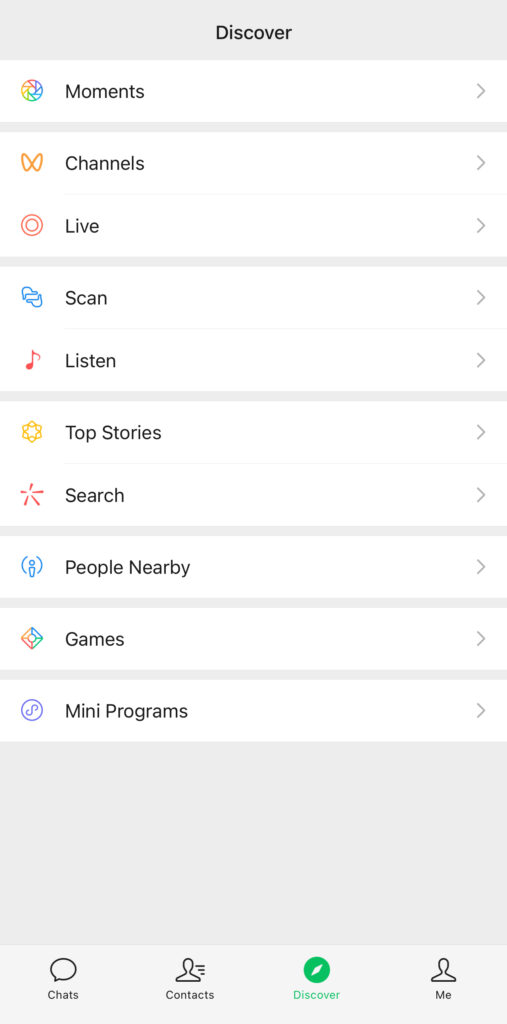
When digital platforms are gradually integrated into people’s daily lives, users’ use of platforms is no longer just a matter of simple personal preference. Nowadays, many platforms are no longer just single-function tools, but are increasingly integrated into many aspects of people’s daily lives.
WeChat is a typical example. As of 2021, WeChat has become one of the world’s largest social media platforms, with over 1.24 billion monthly active users (Zhang & Quan-Haase, 2022).
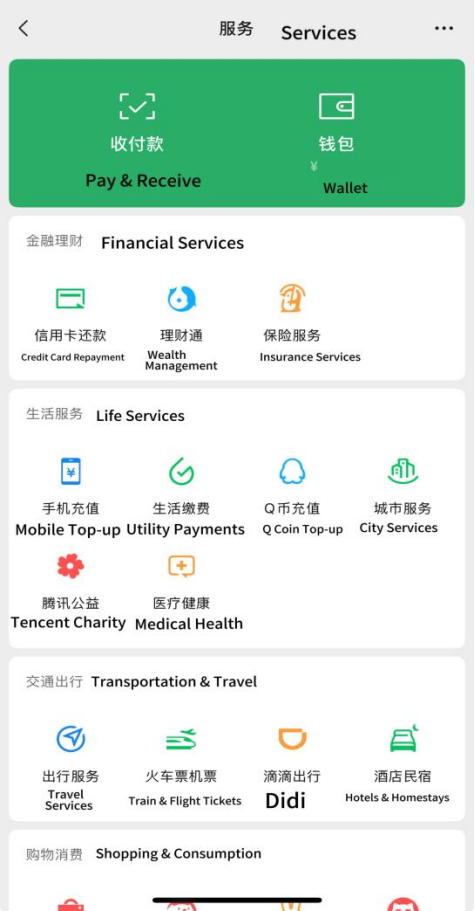
WeChat is not only a messaging app, but also has a variety of functions such as moment sharing, group communication, online payment, short video browsing, video calls, etc., covering the work and social needs of many people, and suitable for a variety of life scenarios such as learning and work.
When more and more functions are concentrated on one platform, leaving the platform is no longer as simple as “switching to another app”. Once users exit the platform, they will not only lose convenience, but also may affect their existing social contacts, work communication, etc.
As Chen and Cheung (2018) point out, once users embed some social interactions into the WeChat system, the motivation to stay on the platform often exceeds the need to protect privacy.
In fact, at the beginning, people gradually gave up the use of QQ (another social platform in China) because of the more comprehensive functions of WeChat (Zhang & Quan-Haase, 2022). Therefore, users do not always continue to use the platform out of completely free choice, but accept the corresponding privacy risks under conditions of platform dependence and limited alternatives.
Too Many Social Worlds in One Platform
When different social scenarios are integrated into the same platform, privacy becomes more difficult to manage. Privacy is not just as simple as “whether to share information or not,” but more importantly, “in what kind of relationship, and who can see it.”
Take WeChat as an example. The relationships on WeChat are highly mixed, such as relatives, friends, colleagues, and even online acquaintances and unfamiliar people. These people with different relationships coexist on the same platform.
The core of this dilemma, as Nissenbaum (2018) reveals in the theory of contextual integrity, is that the essence of privacy is not simple information confidentiality, but the reasonable flow of information in accordance with the corresponding norms in specific social situations.
In traditional offline social networking, family, friendship, workplace, and other social worlds have natural physical boundaries and relatively independent information-flow rules. Individuals can present differentiated selves in different scenarios, and can also control the audience and scope of information sharing more accurately. Simply put, in offline socializing, we are often in different spaces, occasions, and circles with family, friends, and colleagues. Information will not flow easily between different relationships, and privacy will be naturally distinguished.
However, as an integrated social platform, WeChat compresses the multiple relationships that originally belonged to different social domains into the same digital space, weakening the original boundaries between different situations. Chen and Cheung’s (2018) research on WeChat further confirms this problem: this “full-relationship aggregation” platform design always exposes users to the dilemma of “audience ambiguity.”
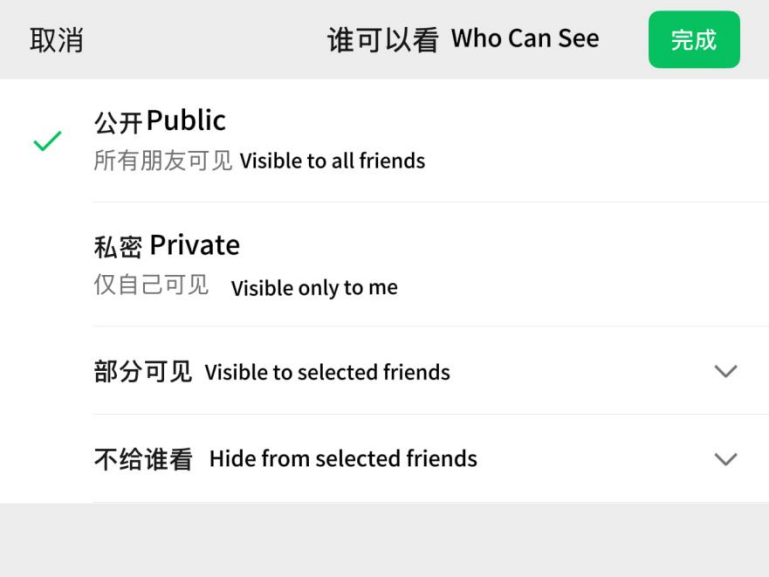
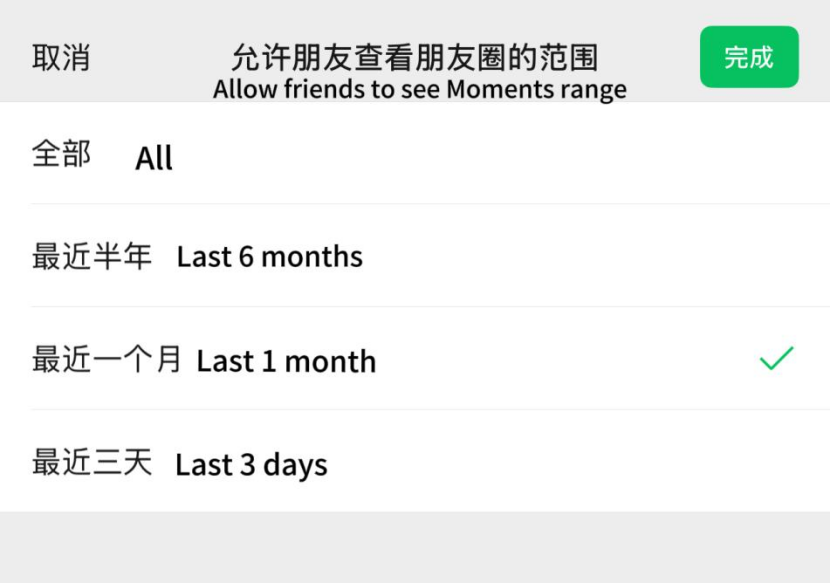
When sharing content, users cannot distinguish the audience as clearly as they can offline. They can only face completely different social groups on the same platform at the same time. Information that was originally only applicable to a specific scenario may also cross contexts and flow into other relationship networks. For example, we may be willing to share emotions and everyday experiences with close friends, but we do not want these contents to be seen by supervisors or elders, because they may interpret them differently. WeChat allows multiple relationships to be mixed together, so users cannot naturally isolate different audiences. They can only protect their privacy and make up for the lack of boundaries through additional operations, such as grouping contacts in Moments and setting content to be visible for only three days.
Why Consent Is Not the Same as Control
The platform often simplifies privacy issues as the result of the user’s “consent”, such as the user accepting the platform’s terms at the time of registration, authorising relevant permissions, or continuing to use the service knowingly. According to this logic, as long as the user clicks “agree”, the subsequent collection, use and dissemination of data by the platform will be considered reasonable.
However, this understanding is obviously too simple. First of all, users rarely truly read and fully understand the long and obscure platform terms, and often lack a clear understanding of how personal information is collected, analysed and disseminated.
Secondly, when the platform has been deeply integrated into daily life and has become an important entry point to social, work, public service and other scenarios, users actually do not have a truly free and pressure-free space to refuse. Therefore, superficial “consent” is not equivalent to the user’s real control over personal information.
As Nissenbaum (2018) argues, privacy is not simply about whether users disclose information, but also about whether that information continues to flow appropriately within the social context in which it was originally shared. Simply put, users only agree to provide information for a specific purpose, and do not agree that this information can be used in any context.
Marwick and boyd (2018) also point out that most people are actually very concerned about their own privacy, but in the current data environment, the boundary between autonomous choice, passive circumstances and forced acceptance has become more and more blurred. It can be seen that the user’s “consent” is not a sufficient reason for the platform’s exemption from responsibility. The issue of privacy is not only about which button the user clicks, but is also closely related to how the platform designs the information-flow mechanism, how it organises user participation, and how it allocates control over information.
Privacy, Platform Power, and Digital Rights
Privacy issues can no longer be understood only as a matter of whether individuals are cautious enough. Although individual users can indeed protect themselves by limiting the visible range or reducing information disclosure, these practices do not mean that individual users really have control over privacy.
As Goggin et al. (2017) point out, many users are actually very concerned about online privacy and will take the initiative to take protective measures, but only a few people really feel that they can control their privacy. This phenomenon further shows that the privacy issue is not only related to users’ personal choices, but also closely related to the platform’s own rules and design.
The platform can not only collect and use user data, but also determine how information is disseminated, the visible range of content, and the conditions that users need to meet to use specific functions.
For example, on QQ, Weibo and other platforms, functions that directly involve privacy, such as stealth browsing and viewing visitor records, are often only open to paid members such as Golden Diamond and SVIP.
This means that users’ control over privacy and visibility is not equal for everyone, and the platform will even turn users’ privacy protection needs into commercial profit sources.
Therefore, privacy should be regarded as a platform governance issue, not a mere personal responsibility issue.
In addition, Karppinen (2017) also argues that digital rights are not only related to state regulation, but also depend on the power held by the platform itself.
Large-scale platforms can determine the flow of data, who can see content, and functional permissions for paid use. These rules directly affect the actual choice space of users. In other words, with the continuous expansion of platform power, privacy issues can no longer be solved by personal prudence alone, but need to be re-examined from the perspective of platform responsibility and digital rights.
Conclusion
In a word, when various platforms are deeply involved in people’s daily lives, privacy protection is no longer something that individuals can choose completely freely.
Take WeChat as an example. This application has long gone beyond the scope of a single communication tool. Functions such as social networking, payment, daily communication and content sharing are highly integrated, making it increasingly difficult for users to leave it.
In the process, a variety of social relationships such as family, friends and colleagues are concentrated on the same platform, and the originally clear boundaries between life and social life are gradually blurred. Although users can manage personal privacy through grouping, permission settings, etc., most of these operations are more a form of passive adaptation than a way of actively controlling personal information.
In addition, the fact that users click “agree” to the platform’s terms does not mean that they really have control over their information. Many people just browse the terms and conditions in a hurry when using the service, and even complete the authorization without fully understanding the rules.
When users actually do not have enough space to refuse the relevant requirements of the platform, such a choice is not truly free. Therefore, the privacy problem cannot be simply attributed to the lack of prudence of individuals. Privacy should therefore be understood not only as an individual concern, but also as an issue of platform governance and digital rights. So, is privacy still really a choice on the platforms we use every day?
References
Chen, Z. T., & Cheung, M. (2018). Privacy perception and protection on Chinese social media: A case study of WeChat. Ethics and Information Technology, 20(4), 279–289. https://doi.org/10.1007/s10676-018-9480-6
Goggin, G., Vromen, A., Weatherall, K., Martin, F., Webb, A., Sunman, L., & Bailo, F. (2017). Digital rights in Australia. University of Sydney. http://hdl.handle.net/2123/17587
Karppinen, K. (2017). Human rights and the digital. In H. Tumber & S. Waisbord (Eds.), The Routledge companion to media and human rights (pp. 95–103). Routledge.
Marwick, A. E., & boyd, d. (2018). Understanding privacy at the margins: Introduction. International Journal of Communication, 12, 1157–1165.
Nissenbaum, H. (2018). Respecting context to protect privacy: Why meaning matters. Science and Engineering Ethics, 24(3), 831–852. https://doi.org/10.1007/s11948-015-9674-9
Zhang, J., & Quan-Haase, A. (2022). WeChat. In A. Quan-Haase & L. Sloan (Eds.), The SAGE handbook of social media research methods (2nd ed., pp. 598–613). Sage.

Be the first to comment