Last night, you might have asked ChatGPT to summarise an article, used Siri to set an alarm, or scrolled through recommendations on TikTok.
In the current era, we use AI every day. From unlocking our phones to searching for information online, AI systems are quietly embedded in many everyday activities.
All of this seems so effortless and natural in today’s life, almost like magic. But how exactly do these “intelligence” come into being?
Technology companies often describe AI as something that lives in “the cloud”: light, clean and futuristic. But when you look closely, the cloud turns out to be very physical.

Figure 1. AI is often imagined as existing in “the cloud” – an abstract, weightless space where data and algorithms operate invisibly. (Source: Edge AI Tech).
Actually AI runs on energy, minerals and human labour. Behind every AI system are mines, factories, data centers and thousands of workers whose labour remains largely invisible.
It is dug out from the ground, fed by people, and heated by the earth.
Most of us never see this infrastructure, because it is hidden far away from everyday life.
Understanding these deliberately concealed costs is crucial not only for users but also for digital governance. More importantly, it raises a deeper question:
Who benefits from artificial intelligence, and who bears the costs that sustain it?
While technology companies profit from AI services, many of the environmental and labour costs are quietly shifted onto distant communities and invisible workers.
The Energy Behind the “Cloud”
You may not be aware that training and running large AI models demands immense computing power. This power relies on specialized chips, vast data centers, and a constant supply of electricity.
In other words, every time you ask an AI system a question, a chain of physical infrastructure begins working somewhere else in the world. For individual users this energy use may seem invisible, but at a global scale it adds up quickly.
One of the most surprising impacts of AI infrastructure is something we rarely think about: heat.
A study from researchers at the University of Cambridge found that clusters of global data centers are creating “heat island effects”.
Similar to how urban concrete structures absorb heat, data centers generate significant amounts of heat during operation, raising the average surface temperature in their surrounding areas by 2°C.
In the most extreme cases, this temperature increase can reach 9.1°C, affecting a radius of up to 10 kilometers and encompassing a population exceeding 340 million.
While AI services are consumed globally, the environmental impacts of data centers are often concentrated in specific local communities.
In this way, the environmental costs of artificial intelligence are not evenly distributed, but shifted onto regions that host the physical infrastructure supporting the digital economy.
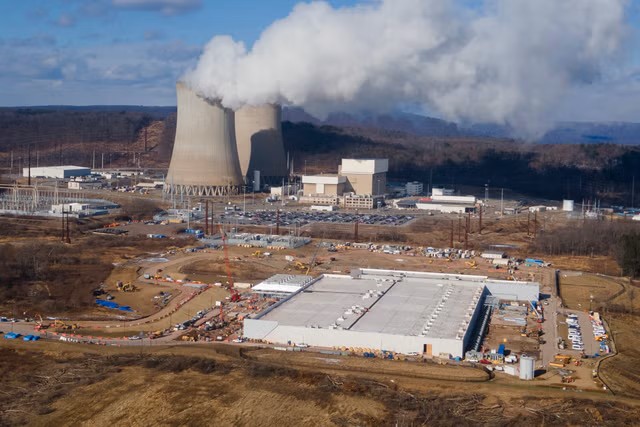
Figure 2. The energy required to power data centers often involves large-scale combustion processes that release heat and emissions into the environment. (Source: The Independent (2025); Image credit: Associated Press)
At the same time, many technology companies publicly commit to carbon neutrality. Yet the rapid expansion of AI infrastructure is pushing energy demand in the opposite direction.
Reports in 2026 suggested that Google was planning to work with a natural gas power provider to supply electricity for AI data centers.
This project could emit millions of tons of carbon dioxide annually, higher than the annual carbon emissions of the entire city of San Francisco.
In 2020, Google promised to achieve carbon-free energy every hour by 2030, but in the face of the AI computing power competition, this promise is being quietly shelved.
The environmental cost of AI begins long before data centers. The environmental cost of AI begins long before the first line of code is written.
In The Atlas of AI, Crawford (2021) highlights that “from the perspective of deep time, we are extracting Earth’s geological history to serve a split second of contemporary technological time”.
AI infrastructure relies on minerals such as lithium for batteries, cobalt for electronics, and rare earth elements for chips and devices.
These materials come from mining regions around the world. Examples include lithium mines in Nevada, rare earth processing sites in Inner Mongolia, cobalt mines in the Democratic Republic of Congo, and tin extraction on Indonesian islands.
These industries are often linked to environmental damage, toxic waste and labour exploitation. In some regions, mining has also been associated with unsafe working conditions and long-term damage to local water systems.
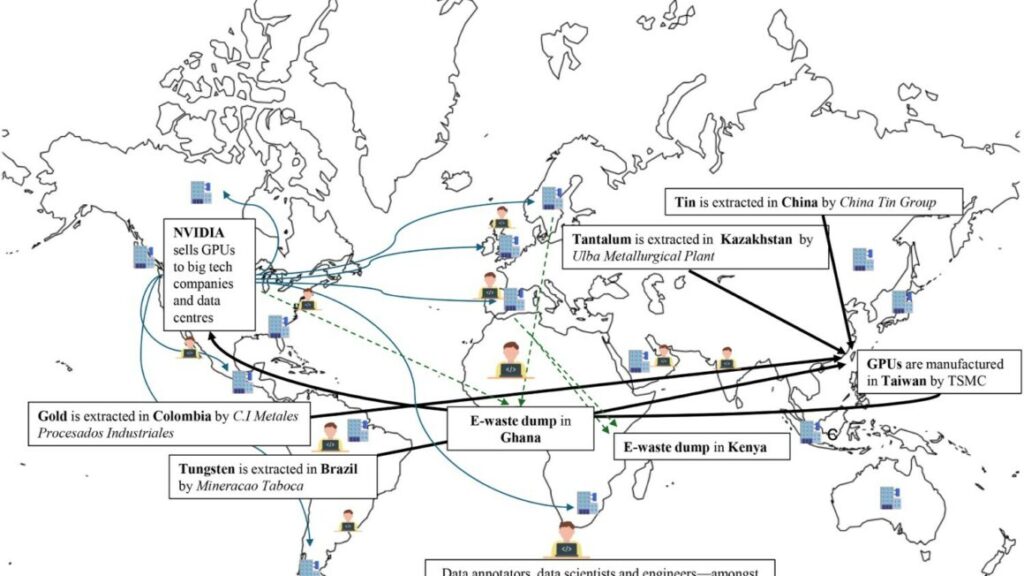
Figure 3. The global supply chain behind AI, showing how minerals, hardware, data centres and human labour are connected across different regions. (Source: Oxford Internet Institute)
As Crawford (2021) points out, modern AI systems extract geological resources formed over millions of years in order to power technologies used for only a few seconds.
This highlights a global inequality embedded within AI development.
While many AI systems are designed and used primarily in wealthy countries, the environmental and labour burdens of resource extraction are often located in mining regions.
In other words, behind every message you send, there may be a power plant supplying electricity, a lake slowly drying up, and a mine being dug deeper.
The Hidden Workers Behind AI
Environmental costs are only one part of AI’s hidden infrastructure. The other is human labour.
AI does not simply “learn by itself”.
Most users interact with AI as if no humans are involved. Actually it depends on a huge amount of human labour. But most users never see it.
Sinpeng and other researchers (2021) mentioned that much language relies heavily on culture and context, making it difficult to identify hate speech without local knowledge.
In Kenya, the Philippines, and India, thousands of workers earn only a few dollars an hour helping AI systems understand the world. They label images, review content, and correct AI responses.
Once the system learns, many of these workers disappear from the process.
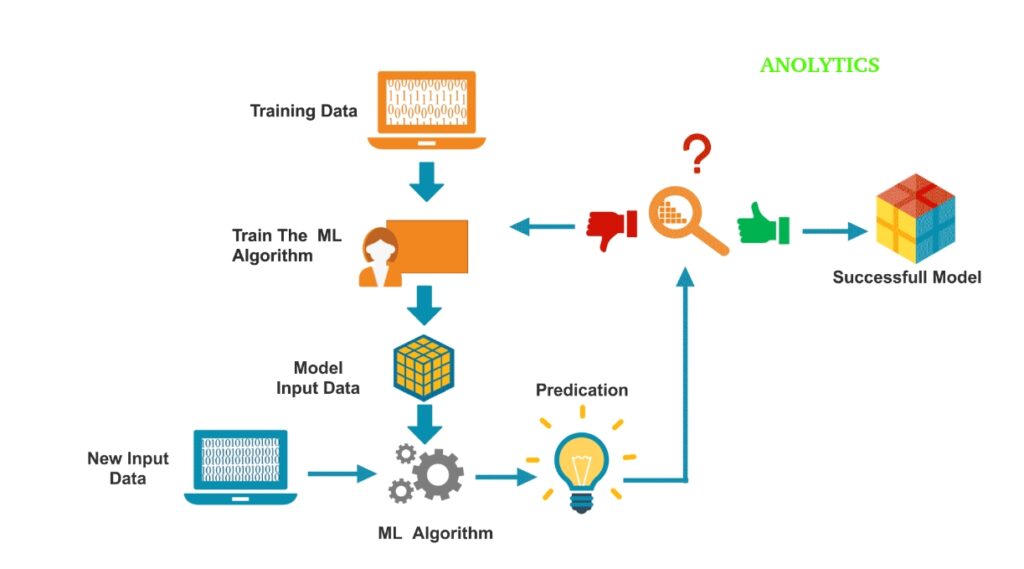
Figure 4. Human annotators label images to create training datasets that allow AI systems to recognise objects and patterns. (Source: Anolytics)
Crawford (2021) describe this phenomenon as “ghost work”, arguing that much of today’s “automation” is actually powered by hidden human labour.
This shows that many AI systems are not fully automated. Instead, they rely on large numbers of workers who repeat the same tasks thousands of times so that AI systems can recognize patterns in language or images.
Keeping this work out of sight helps maintain the idea that AI systems operate entirely on their own. Without these workers, many AI tools simply would not function as smoothly as they do.
In September 2025, Elon Musk’s company xAI reportedly laid off about 500 data annotators which around one third of the team.
Workers were suddenly cut off from internal systems without warning. For many of them, the job had seemed stable only days before.
What did these people do?
They helped train Grok to understand the world.
This shows how the benefits of AI development are often unevenly shared. Workers may spend months helping train a system, but once the model becomes profitable, their role can quickly disappear.
Many believed they would be doing writing or analysis. Instead, on their first day, they were asked to review violent and sexual content generated by the Gemini AI system.
Their review time for each task was reduced from 30 minutes to 15 minutes, but the number of tasks increased.
Some workers said they had to review hundreds of responses each day. Several workers even reported anxiety and sleep problems.
In other words, the safety of many AI systems is maintained by low-paid workers who must repeatedly view some of the Internet’s darkest content.
Yet most platforms rarely acknowledge this labour. Users rarely know these workers exist. Without them, many AI systems would simply not work.
Why These Costs Remain Invisible
If AI has such significant environmental and labour impacts, even though this looks like a technical issue, why do we hear so little about them?
Part of the answer lies in limited transparency.
Technology companies often do not fully explain how their AI systems are trained or where the data comes from.
At the end of 2025, Elon Musk’s AI company xAI challenged a proposed California law that would have required companies to disclose the sources of their training data.
The company argued that revealing training data would expose valuable commercial secrets.
But this raises an important governance question: If companies are not required to disclose how their systems are trained, it becomes extremely difficult for regulators, researchers or the public to understand the risks these technologies may create.
Another issue concerns the data used to train AI systems.
Technology companies collect huge amounts of online content to train models, but the public rarely knows exactly what is included. The hidden infrastructure of AI also includes the data used to train these systems.
In 2025, Amazon reportedly detected a large amount of suspected child sexual abuse material while scanning external datasets used for AI training.
Throughout that year, Amazon reported hundreds of thousands of such files to the U.S. National Center for Missing and Exploited Children.
This raised serious questions about how training data is collected and monitored.
It also highlights how little visibility the public actually has into the datasets that power large AI models, even though these systems increasingly shape everyday online experiences.
Similarly, Suzor (2019) notes that large digital platforms often create and enforce their own rules with limited outside oversight.
Users usually have little ability to challenge decisions or understand how these systems operate.
The same governance problems now appear in AI training and data collection.
There is also another reason these issues remain invisible: users themselves rarely question how digital systems work.
Every time we sign up for a new app or online service, we click “agree” to the terms and conditions. But almost no one actually reads them.
Instead, we scroll to the bottom, click “agree”, and continue.
In practice, this means we allow companies to collect and use our data. Where that data goes, how it is used, or who it is shared with is often unclear.
So the answer to “Why don’t we hear about these issues?” is not only that companies keep things hidden. It is also that most people rarely look behind the systems they use every day.
Who Profits From AI, and Who Bears the Costs?
When we look at these examples together, a deeper question emerges: Who benefits from AI, and who bears the costs?
In recent years, major technology companies have reported record revenues from AI services. Companies like Microsoft, Google and Amazon are investing billions of dollars into AI infrastructure.
The rapid growth of generative AI has become a major source of competition and investment across the technology industry.
Meanwhile, the environmental and labour costs are often borne by others, including mining communities, outsourced workers, local ecosystems, and electricity grids.
This uneven distribution of costs and benefits is a central issue in the political economy of artificial intelligence.
These costs are rarely visible to the public, and several structural factors make them difficult to see.
First, AI infrastructure relies on global supply chains that span many countries. Consumers rarely see the environmental or labour conditions involved in producing digital technologies.
Second, technology companies only emphasize the transformative potential of AI. Discussions about mining, labour or pollution rarely appear in marketing narratives about “the future of technology”.
Finally, users themselves also play a role. Most of us routinely click “I agree” when signing up for digital services. Few people read lengthy terms of service or ask how their data will be used. Convenience often wins.
Crawford (2021) reminds us that artificial intelligence is not just a technology, but also an infrastructure, an industry, and a system of power.
AI shapes who has the authority to define problems, allocate resources and capture economic value.
At the moment, many of these decisions are concentrated in the hands of a small number of global technology companies. This concentration of power creates concerns about accountability, transparency and democratic oversight.
How should governments regulate AI supply chains? Who should be responsible for environmental impacts? What labour standards should apply to AI training work?
The answers to these questions will influence how AI develops in the coming years.
Looking Beyond the Magic of AI
Artificial intelligence is often presented as a clean and futuristic technology. But as this blog has shown, the systems we interact with every day are built on vast physical and human infrastructures.
From the minerals extracted from the ground, to the energy consumed by data centers, to the low-paid workers who label data and moderate harmful content, AI depends on resources and labour that are often kept out of public view.
At the same time, the economic benefits of AI are largely concentrated in a small number of global technology companies. This raises an important question about the political economy of artificial intelligence: who benefits from these technologies, and who bears the costs that sustain them?
Most of the time, we don’t think about what happens behind the screen.
The next time you open an AI tool or ask ChatGPT a question, it may be worth pausing for a moment and asking a few simple questions:
Who trained this system?
What energy powers it?
Where did the data come from?
AI will not slow down. But recognizing the hidden infrastructure behind AI is an important step toward addressing the unequal distribution of its benefits and costs.
Reference
AB-2013 Generative artificial intelligence: Training data transparency. (2023–2024). California Legislature. https://leginfo.legislature.ca.gov/faces/billNavClient.xhtml?bill_id=202320240AB2013
Crawford, K. (2021). The Atlas of AI: Power, politics, and the planetary costs of artificial intelligence. Yale University Press.
Google. (n.d.). 24/7 by 2030: Realizing a Carbon-free Future. https://sustainability.google/reports/247-carbon-free-energy/
How thousands of ‘overworked, underpaid’ humans train Google’s AI to seem smart. (2025, September 11). The Guardian. https://www.theguardian.com/technology/2026/apr/02/google-ai-datacenter
Musk’s xAI lays off hundreds of data annotators: Business Insider reports. (2025). The Business Standard. https://www.tbsnews.net/worldbiz/usa/musks-xai-lays-hundreds-data-annotators-business-insider-reports-1235081
Sinpeng, A., Martin, F., Gelber, K., & Shields, K. (2021). Facebook: Regulating hate speech in the Asia Pacific. University of Sydney.
Suzor, N. P. (2019). Lawless: The secret rules that govern our digital lives. Cambridge University Press.
The data heat island effect: Quantifying the impact of AI data centers in a warming world. (2026). ResearchGate. https://www.researchgate.net/publication/403073048
Washenko, A. (2026). Amazon discovered a ‘high volume’ of CSAM in its AI training data but isn’t saying where it came from. Yahoo News. https://au.news.yahoo.com/amazon-discovered-high-volume-csam-224749948.html
Google to tap into gas plant for AI datacenter in sharp turn from climate goals. (2026, April 2). The Guardian. https://www.theguardian.com/technology/2026/apr/02/google-ai-datacenter
THE UNMAKING OF GROK – Elon Musk’s xAI sues California attorney general over AI training disclosure law. (2026). The National Law Review. https://natlawreview.com/article/unmaking-grok-elon-musks-xai-sues-california-attorney-general-over-ai-training
Be the first to comment