Delhi’s Red Fort Blast and the Rhetoric of Blame
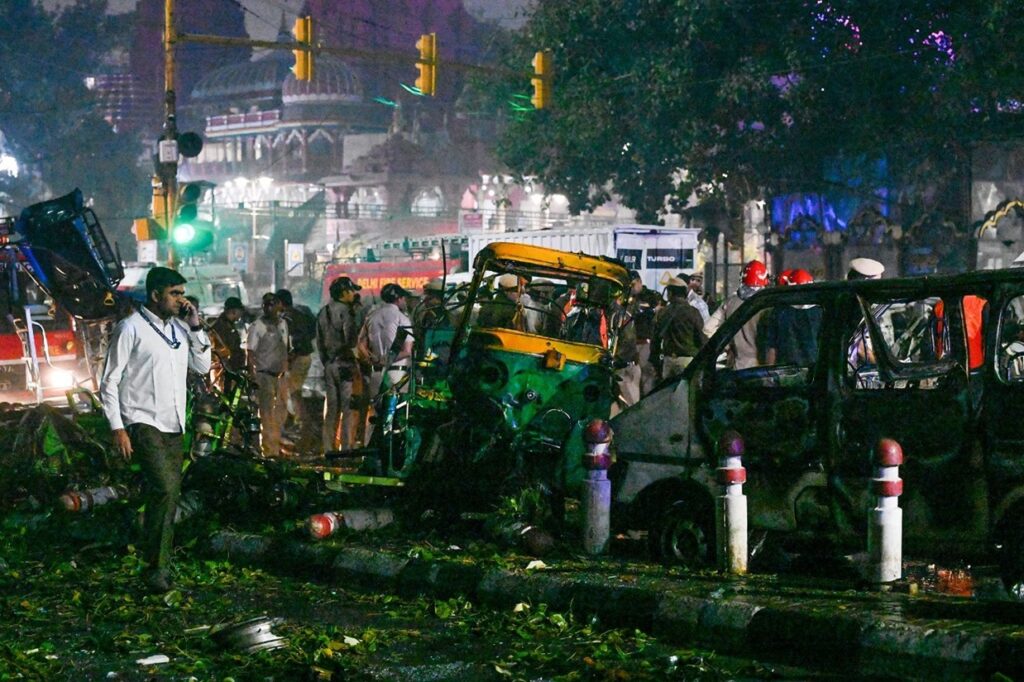
On November 10, 2025, an i20 car that exploded at the Red Fort area in New Delhi took the entire city by shock, killing 13 people and injuring 27. The government quickly began investigations, defining it as a terrorist attack that was the direct result of conflict between India and Pakistan in the possession of contested state Kashmir (Khan, 2025).
When this attack happened, I was living in Delhi. Though I was well aware of the ongoing political conflict in the country, an attack on the capital city was still unexpected, and therefore extremely scary. Naturally, my family and relatives who saw the news got anxious, and I got several calls the day after. “Are you okay?” they would ask.
However, once concern was conveyed and my well-being was assured, we would start to make general conversation about the event. And they (being Hindu) would all say the same thing – “The government is saying it was a terrorist attack. It was probably done by a Muslim. They cannot be trusted.”.
In the 21st century, most of us consume our news through social media. When the news of the blast broke out, I did the same – opening X (formerly Twitter) to see what people were saying. What I saw, unfortunately, was the same rhetoric my relatives conveyed being expressed publicly.
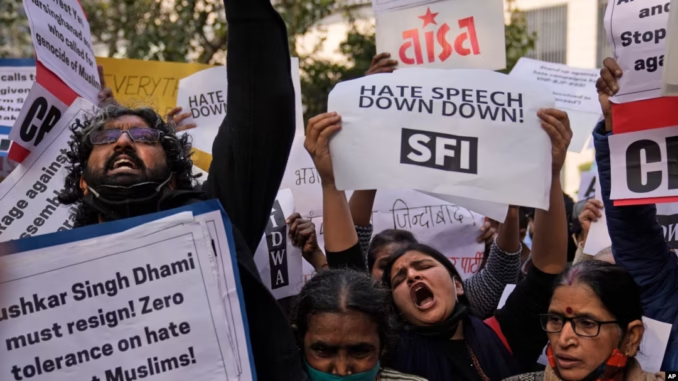
Whilst tensions between the majority Hindu and minority Muslim populations in India have always been high, the unexpected explosion brought out immense hateful rhetoric directed towards the Muslim community to the forefront of online discussions. When we think about hate speech online, it’s easy to imagine a small group of extreme individuals spreading harmful views. However, whether it was my relatives or ordinary citizens with a Twitter account, the hate speech taking place after this incident wasn’t purely from a place of extremism or malice. It was the result of a broader social and technological condition.
After digging deeper, I believe that there are two main reasons why this rhetoric spread so far. Firstly, the structures of the social media platforms we use have limitations when addressing the governance of hate speech. There is a contradiction between regulating free speech and freedom of expression. Moreover, platforms are not fully equipped to take cultural and local political contexts into account when regulating hate speech. Secondly, hate speech online is not just a product of malicious intent, but a social and psychological response to fear. In moments of crisis, people adopt “us vs them” identity and inflict blame on the other, allowing them to feel like they have control over the situation.
However, here is the important point: When we recognize that the root cause of hate speech is due to desire for control over a difficult situation combined with the flaws of platform systems, we can obtain control by holding our authorities accountable and push for change in regulation.
What is Hate Speech?
Before we discuss why this problem matters, it is important for us to understand what hate speech is. In “Regulating Platforms” by Terry Flew, Flew shares the following definition of hate speech:
“speech that ‘expresses, encourages, stirs up, or incites hatred against a group of individuals distinguished by a particular feature or set of features such as race, ethnicity, gender, religion, nationality and sexual orientation’”.
Specifically, Flew explains that the three main features of hate speech are as follows:
- It is directed against an individual or target group that is easily specified based on an arbitrary and irrelevant feature
- It stigmatizes the individual/community by prescribing them with qualities seen as undesirable
- It results in the target group being viewed as “a legitimate object of hostility”, which means they cannot be trusted as a member of society.
With this definition, we can better understand how hate speech spreads and the impact it has, along with how we can regulate it more effectively.
Platforms, Governance and the Amplification of Harm
A key characteristic of hate speech is that it is inherently public. In online hate speech, this becomes especially important to consider as the public platforms on which these discussions take place are not neutral. Instead, they are owned by corporate entities, who play an active role in structuring public discourse through systems of governance, including algorithms, content moderation policies, and user engagement metrics. This becomes especially important when considering that “concerns about hate speech coexist with the right to freedom of expression” (Flew, 2021).
Often, the content that performs best on social media is that which provides strong emotional reactions. Platform policies emphasise the importance of free speech, but allowing free speech directly benefits the platforms monetarily. This means that polarizing content such as hate speech is structurally advantaged within the systems and algorithms that dictate these platforms.
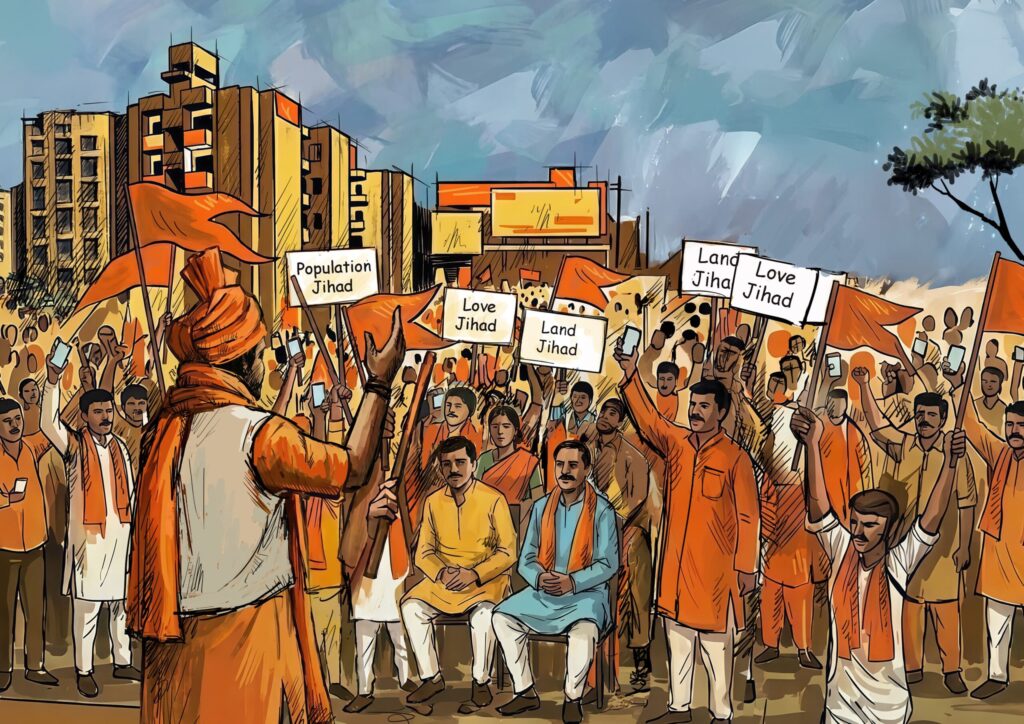
This perspective is crucial for understanding the surge in anti-Muslim rhetoric following the Red Fort blast. The rapid spread of such content is not incidental. Instead, it reflects the ways in which platform infrastructures amplify emotionally resonant narratives, particularly those grounded in fear and social division.
However, simply considering how platforms amplify harmful content is not enough. It is also important to consider how effectively platforms regulate such content in practice. A study conducted by Sinpeng et. al., 2021 on Facebook’s hate speech regulation in the Asia-Pacific region reveals that platform governance systems are not only structurally limited, but also contextually inadequate. Hate speech is highly dependent on language, culture and local political conditions – factors that global moderation systems do not usually capture.
In fact, when defining hate speech for their study, Sinpeng et. al. include the following characteristic as one of their key considerations for what constitutes as hate speech:
“The speech needs to be an act of subordination that interpolates structural inequality into the context in which the speech takes place. In doing so it ranks targets as inferior, legitimates discriminatory behaviour against them, and deprives them of powers. Hate speech achieves this by being an action that sets limits on what is speakable by the target group; this makes it much harder for the target group to speak back with their own counter speech, either because they are fearful to speak out, or because they do speak but their words do not count in the way they intend.”
In India specifically, this lack of content regulation in a cultural context is a key issue. The rate at which hate speech against Muslims is going up is directly related to the easing of hate speech restrictions by social media platforms. A study by the India Hate Lab found that in 2025, an average of four hate speech events targeting Muslims and Christians were happening online per day, a 97% increase from 2023 and a 14% increase from 2024. In a 2026 article for Tech Policy, David Sathuluri notes that this escalation came after Meta announced an overhaul of its content moderation system and relaxed hateful conduct policies. At the same time, X and Tiktok also cut down on their moderation staff and shifted more responsibility to automation.

In the case of the Red Fort blast, much of the anti-Muslim rhetoric was not explicitly violent, but still contributed to an environment of hostility and exclusion. Because social media moderation systems struggle to capture such nuance, harmful content remains online, reinforcing cycles of fear and division.
A mismatch between global policy and local reality can mean that harmful content frequently escapes detection, even when the policy is in place. As a result, the very systems designed to mitigate online harm often fail to do so, allowing hate speech to persist.
Fear, Identity, and the “Us Versus Them” Mentality
While platform structures are crucial, they do not fully explain why individuals actually engage in hate speech. Understanding the root cause of hate speech is important to understanding how it can be governed more effectively. Therefore, it is necessary to consider the psychological and social dynamics that cause this behaviour.
Psychologists Henri Tajfel and John Turner developed a Social Identity Theory in 1979, which explains why individuals exhibit intergroup bias. In simple terms, they explained that human beings use social identification, categorisation and comparison to favour their “in-group” and negatively evaluate their “out-group” (Abrams, 2001). This can also lead to outgroup homogeneity effect, which is when people see members of their outgroups as more homogenous (i.e. the same as each other) than members of their ingroups (Willscheid & Bublatzky, 2024). An article by McWhorter, 2025, analysed the causes for hate speech, finding that perpetrators of hate speech developed an “us-versus-them” mentality, in which they sincerely believed that “their own group is superior and correct in its view and that the other group is inferior.” They also exhibited signs of outgroup homogeneity effect. Additionally, McWhorter explained how this outlook manifests as hate speech, writing,
“[the outgroup] may be made the scapegoats for what is perceived to be wrong in society. In this way, the other group is made responsible for economic problems, crime, and the other ills of society.“
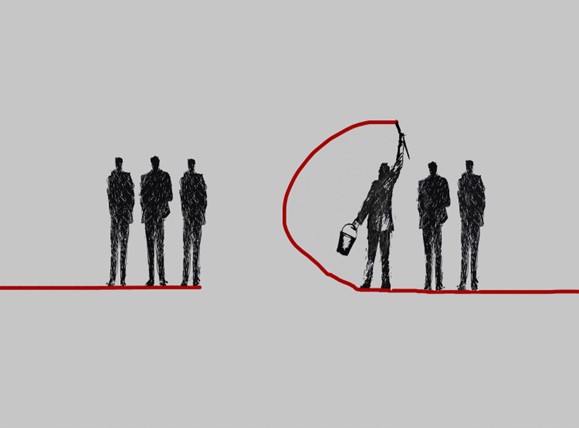
Through Social Identity Theory, we can better understand how fear and identity, especially in the face of uncertainty during a dangerous event, can manifest as hate speech. By attributing blame to an identifiable outgroup, individuals can make sense of chaotic events and regain a sense of control. Importantly, this suggests that hate speech is not merely the product of isolated individuals, but a collective social phenomenon. Online environments allow users to co-produce narratives that frame certain groups as threats, normalising hostility and legitimising discrimination. In this sense, hate speech becomes a shared response to fear, rather than a purely individual act of aggression.
Collective Change: Implications for Regulation
Understanding hate speech as a collective social phenomenon and understanding the flaws of platforms in regulating it makes one thing clear – that regulation of hate speech has to be done at a collective level. Currently, India’s regulations under their Information Technology Rules of 2021, focus on treating hate speech as individual content violations. This means that when they alert platforms regarding hate speech, posts are simply removed discreetly and at the individual level. The systemic issue of addressing the infrastructure that enables such speech to be uploaded and spread at a rapid pace itself is not addressed. “A speech can be taken down from one account and immediately reappear through many others; a page can be banned and then reconstituted under a slightly different name.” (Sathuluri, 2026).
Rather than treating hate speech as an aberration, it has to be treated like an embedded feature of contemporary digital life, shaped by the interaction of human behaviour and technological systems. Only by addressing these underlying dynamics can meaningful policies be formed that work towards reducing the prevalence and impact of hate speech
Hence, addressing harmful online discourse requires a more holistic and systemic approach that recognises the interplay between technology, psychology, and social context. This includes not only improving moderation systems, but also fostering greater critical awareness among users and holding both platforms and authorities accountable for their roles in shaping policy and public discourse.
References
Abrams, D. (2001). Social identity, psychology of. International Encyclopedia of the Social & Behavioral Sciences, 14306–14309. https://doi.org/10.1016/b0-08-043076-7/01728-9
Flew, T. (2021). Regulating Platforms (pp. 72–95). Polity Press.
India Hate Lab. (2026, January 13). Report 2025: Hate Speech Events in India. India Hate Lab. https://indiahatelab.com/2026/01/13/hate-speech-events-in-india-2025/
Khan, S. H. (2025, November 17). An Explosion Of Anti-Muslim Rhetoric On Social Media After Red Fort Blast. Outlook India. https://www.outlookindia.com/national/an-explosion-of-anti-muslim-rhetoric-on-social-media-after-red-fort-blast#
McWhorter, R. L. (2025). Psychological causes and effects of hate crimes . EBSCO Information Services, Inc. https://www.ebsco.com/research-starters/psychology/psychological-causes-and-effects-hate-crimes
Sathuluri, D. (2026, February 24). India’s Hate Speech Crisis and the Myth of Neutral Platforms. Tech Policy Press. https://www.techpolicy.press/indias-hate-speech-crisis-and-the-myth-of-neutral-platforms/
Sinpeng, A., Martin, F. R., Gelber, K., & Shields, K. (2021). Facebook: Regulating Hate Speech in the Asia Pacific. Department of Media and Communications, The University of Sydney. https://doi.org/10.25910/j09v-sq57
Willscheid, N., & Bublatzky, F. (2024). Outgroup homogeneity perception as a precursor to the generalization of threat across racial outgroup individuals. Cortex, 181, 258–271. https://doi.org/10.1016/j.cortex.2024.09.017

Be the first to comment