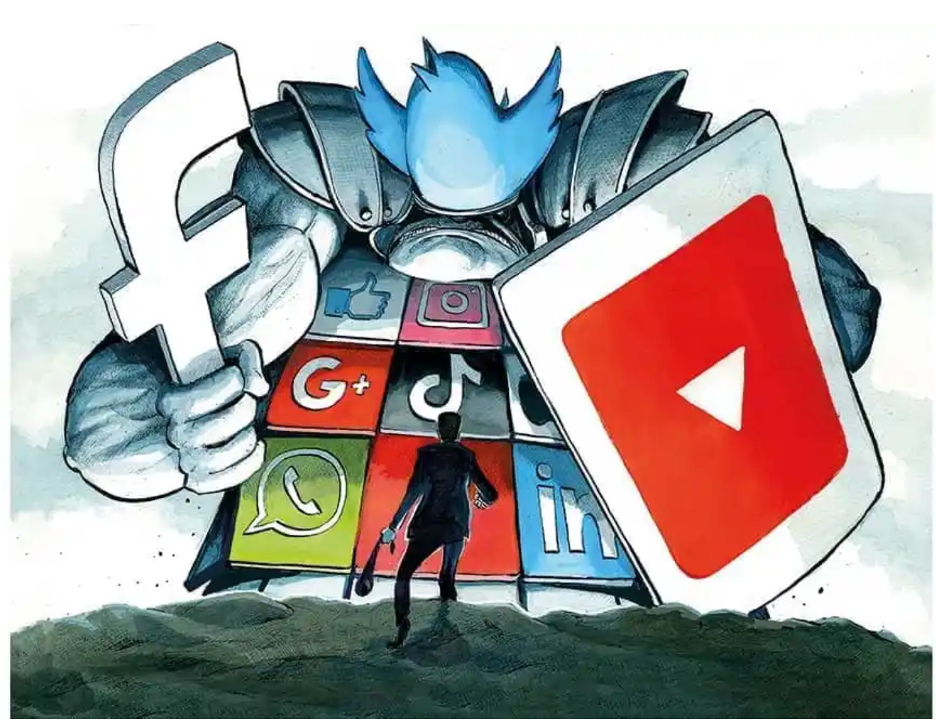
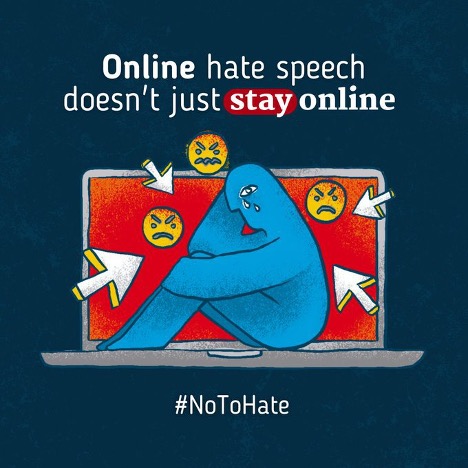
Picture this. A stranger walks into your living room. They start screaming slurs at your sister. You wouldn’t shrug. You’d throw them out.
Now picture that stranger lives in your phone. Picture millions of them. Picture a company that earns money every time one of them screams louder.
Welcome to the internet in 2026.
We spent twenty years pretending online harm was a glitch. A BUG. Something the smart engineers in Silicon Valley would patch next quarter. THEY NEVER DID. They were never going to. The harm is the product.
This post is about a small word. A word we forgot how to say. The word is NO.
The pretty lie we believed
In 1996, a man named John Perry Barlow wrote a love letter to the early internet. He called it the Declaration of the Independence of Cyberspace. He promised a place where anyone, anywhere, could speak their mind without fear. It was beautiful.
It was also a fairy tale.
The dream went like this. Give people a microphone. Truth wins. Beauty wins. Cat videos win. Hate would just sort of fizzle out, embarrassed of itself.
Reader, hate did not fizzle out.
According to Sinpeng et al. (2021), online hate speech has surged across the globe. It feeds on political turbulence. It feeds on racism. It feeds on war, migration, and fear. And it has found a permanent home in the very platforms that once promised us liberation.
The dream sold us a microphone. It forgot to mention the megaphone factory next door.
What we actually mean by HARM
Let’s get specific. Hate speech isn’t just rudeness. It isn’t somebody being mean about your taste in music.
Based on Sinpeng et al. (2021), hate speech is something far more dangerous. It targets people because of who they are, Race, Religion, Gender, Disability, and Sexuality. It tells the world that a whole group of humans is fair game.
From Flew (2021), the line is clear. Hate speech causes harm. Immediately. And over time. That is exactly why it warrants a regulatory response.
That word, harm, matters. Because once you say Harm, you can no longer pretend this is a polite philosophical debate. Harm has victims.
In Australia, those victims have names. Carlson and Frazer (2018) found that Indigenous Australians face a constant flood of racist abuse online. Being Indigenous
on social media often means being a target. Every day, Every post.
It is exhausting in a way that statistics struggle to capture. It is also, importantly, structural. Not random. Not a few bad actors. A pattern, baked into the platform itself.
The pattern repeats. According to Matamoros-Fernández (2017), platforms don’t just host racism, they amplify it. She calls this platformed racism. The algorithm doesn’t shrug at a slur. It promotes the slur. Engagement is engagement.
Meanwhile, Guan and Chen (2025) show how online hate gets weaponised in China against perceived outsiders, minorities, foreigners, anyone who threatens a tidy national story.
Different countries. Same machine, Sadly.
The Reddit problem (or: why design is destiny)
Here is where it gets uncomfortable. The harm isn’t just a few bad apples. It’s the orchard.
Massanari (2017) studied Reddit during two ugly chapters: Gamergate and The Fappening. Gamergate was an organised harassment campaign against women in gaming. The Fappening was a mass leak of stolen nude photos of celebrities. Both exploded on Reddit. Both got amplified by Reddit’s design.
Why? Because the upvote system rewards whatever gets a rise out of people. Outrage performs. Cruelty performs. The angrier the mob, the higher the post climbs.
Massanari (2017) calls this a toxic technoculture. A culture where cruelty isn’t a bug. It’s the road to the front page.
Sit with that for a second.
The harm isn’t sneaking past the algorithm. The algorithm is holding the door open.
Why Just Moderate It doesn’t work
You might be thinking: fine, hire more moderators. Problem solved.
I wish.
Roberts (2019) spent years researching the people who actually do this job. They are usually contractors. Often in the Philippines, India, or Kenya. They are paid badly. They watch the worst things humans produce, beheadings, child abuse, suicides, for eight hours a day. Then the next day. And the next.
Roberts (2019) calls them the people, behind the screen. They are the invisible scaffolding holding your timeline together. Most users have no idea they exist.
So when a tech CEO says, “Don’t worry, we have moderation,” what they often mean is: “We have outsourced the trauma.”
It gets worse. Based on Sinpeng et al. (2021), even the official policies are riddled with gaps. Facebook’s own definition of hate speech doesn’t always match what scholars, or victims, would call hate. Some slurs are caught. Others slip through. Enforcement is uneven across languages. Hate that would be deleted in California sits untouched in Manila.
When the livestream won’t stop: a Sydney case study
In April 2024, a 16-year-old boy stabbed a bishop during a service at an Assyrian church in western Sydney. The attack was livestreamed. Within minutes, the video was everywhere, copied, reposted, mirrored across platforms.
Australia’s eSafety Commissioner ordered X (formerly Twitter) to take the footage down globally. Elon Musk refused. He argued that one country shouldn’t dictate what the rest of the world sees. A legal showdown followed.
You can argue the law either way. But notice what the fight was really about. It wasn’t about whether the video was harmful. Everyone agreed it was. It was about who gets to say no, and whether NO can cross a border.
The case ended messily. The Federal Court eventually sided with X on the global takedown question. The video kept circulating. The boy’s parents went on national television to plead with the public to stop sharing it.
Think about that for a second. A grieving family on prime-time TV, asking strangers to please, please, stop watching their child’s worst moment. That is what free speech looks like when it has no edges.
That is the whole game in 2026. The harm is global. The rules are local. And the platforms are richer than most of the countries trying to police them.
The Meta pivot, or, how to say Yes to harm
In early 2025, Meta announced a policy change called, More Speech and Fewer Mistakes. On paper: a friendly tune-up. In practice: A RETREAT.
Meta scaled back fact-checking. It loosened rules on speech around gender and migration. It promised a lighter touch on moderation.
This happened, coincidentally, right after a US presidential election. Funny how these things line up.
Meta’s own Community Standards still list hate speech as forbidden (Meta, 2017). The rulebook says one thing. The enforcement says another. The gap between rule and reality is exactly where harm grows.
This is the moment. This is where we stop hoping the platforms will fix themselves. This is where we say no.
Saying NO, three ways
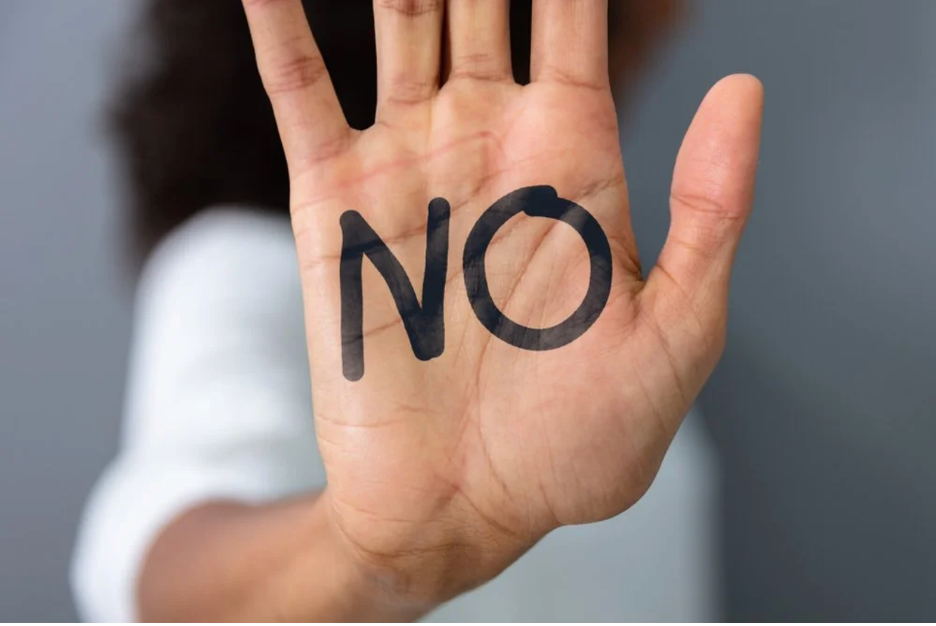
Here is my thesis. Brace yourself, it’s not subtle.
We, users, governments, and yes, platforms themselves, have to learn how to say no to harm by design.
Saying no doesn’t mean banning everyone. It doesn’t mean censoring unpopular opinions. It means refusing to accept a system whose engine runs on rage. Three places to start.
1. Governments saying no (with teeth)
Australia did something interesting in 2021. It passed the Online Safety Act (Sport, 2022). The Act gave the eSafety Commissioner real powers. Take down image-based abuse. Force platforms to act on serious cyber abuse. Demand transparency.
It isn’t perfect. Critics worry about overreach. But it broke a spell. It said: the platforms don’t get to mark their own homework anymore.
The UK followed. According to Milmo (2023), the UK’s Online Safety Bill spent years getting battered through Parliament. UK Parliament (2023) records the bill finally becoming law. It places a duty of care on platforms. They must design safer products, not just clean up the wreckage afterwards.
A duty of care is a legal way of saying something simple. No, you cannot build something this dangerous and walk away.
2. Platforms saying no to their own incentives
This is the hard one. Because saying no to harm means saying no to engagement. And engagement is money.
Flew (2021) argues that platforms have become regulators in their own right. Whether they like it or not. They write the rules. They enforce the rules. They decide who gets heard and who gets erased.
That power should come with responsibility. Not the squishy PR kind. The structural kind. Change the algorithm. Stop rewarding outrage. Stop pretending neutrality, when neutrality is just code for whoever shouts loudest wins.
Will they do it on their own? Probably not. Which brings us to you.
3. Us. Saying no, out loud.
I know. The individual responsibility speech is annoying. Hear me out anyway.
Every time we share a piece of cruelty because it’s funny, we vote. Every time we click on outrage bait, we vote. Every time we stay silent while somebody we follow gets piled on, we vote.
The platforms count those votes. Then they sell the results.
You don’t need to become an activist. You just need to notice. Notice when a post is designed to make you angry. Notice when a debate is really a pile-on. Notice the people getting hurt. Then choose, with a tiny bit of intention, what you feed.
And when you can, report. Block. Mute. These tiny actions look pointless. They aren’t. Every report adds a data point that the platform’s own systems use to decide what counts as harm. Silence does the opposite. Silence tells the algorithm everything is fine.
The internet is not the weather. It is not happening to you. It is built. It can be built differently. But only if enough of us refuse the current build.
A final, slightly hopeful word
Here is what I want you to take away.
Online harm is not a tragic accident. It is a chain of choices, made by designers, executives, lawmakers, and users. Choices can be unmade. They can be remade.
Sinpeng et al. (2021) remind us that hate speech harms real people in real places. Roberts (2019) reminds us that someone, somewhere, is paying the human cost of cleaning up after us. Massanari (2017) reminds us that the architecture matters more than the architects pretend. Flew (2021) reminds us that platforms can be governed.
And the Online Safety Act (Sport, 2022), for all its flaws, reminds us of one more thing. No is a complete sentence. Even when you’re saying it to a trillion-dollar company.
So next time someone tells you online harm is just the price of free speech, ask them this. Whose price? Whose sister? Whose kid? Whose community gets to be the cost of someone else’s freedom?
Then say the word.
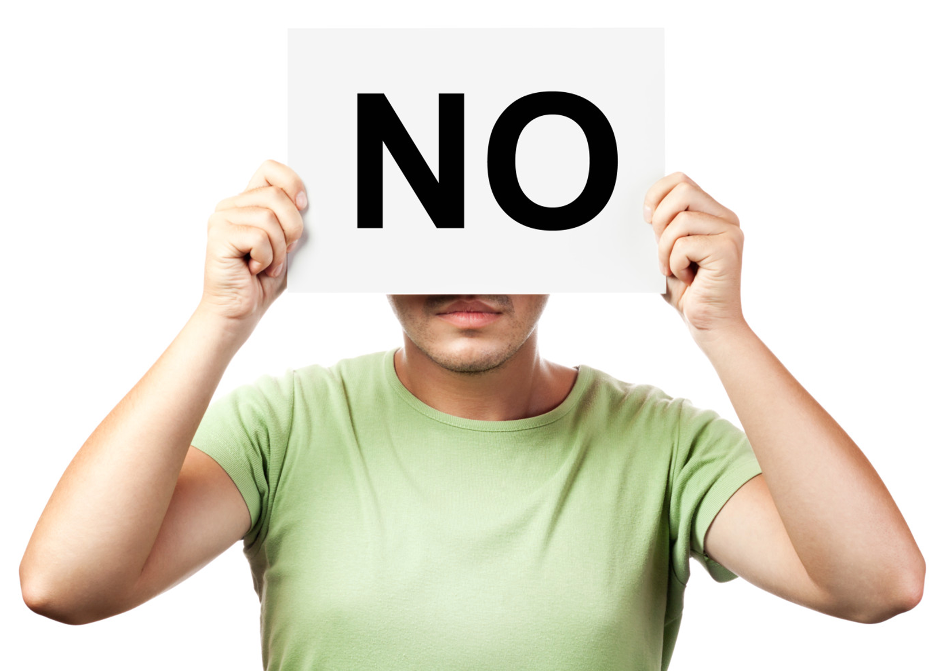
No.
Out loud. In law. In design. In the small daily choices that add up to a culture.
It turns out the most radical thing you can do online in 2026 isn’t posting more. It is refusing the harm. Together. Loudly. And on purpose.
Reference list:
Carlson, B., & Frazer, R. (2018). Social media mob: Being Indigenous online. Viewed 12 April 2026, Macquarie University. https://researchers.mq.edu.au/en/publications/social-media-mob-being-indigenous-online
Flew, T. (2021). Hate speech and online abuse. In Regulating platforms (pp. 91-96). Polity.
Guan, T., & Chen, X. (2025). Threat perception, otherness and hate speech in China’s cyberspace. Journal of Contemporary China, pp. 1-16.
Massanari, A. (2017). #Gamergate and The Fappening: How Reddit’s algorithm, governance, and culture support toxic technocultures. New Media & Society, 19(3), pp. 329-346.
Matamoros-Fernández, A. (2017). Platformed racism: The mediation and circulation of an Australian race-based controversy on Twitter, Facebook and YouTube. Information, Communication & Society, 20(6), pp. 930-946.
Meta 2017, Facebook Community Standards | Transparency Center, Meta.com, viewed 11 April 2026, https://transparency.meta.com/policies/community-standards/.
Milmo, D. (2023). TechScape: Finally, the UK’s online safety bill gets its day in parliament – here’s what you need to know. The Guardian. Viewed 11 April 2026https://www.theguardian.com/technology/2023/jan/17/online-safety-bill-meta-pinterest-snap-molly-russell
Roberts, S. T. (2019). Behind the screen: Content moderation in the shadows of social media (pp. 33-72). Yale University Press.
Sinpeng, A., Martin, F., Gelber, K., & Shields, K. (2021). Facebook: Regulating hate speech in the Asia Pacific. Department of Media and Communications, The University of Sydney. Viewed 11 April 2026, https://r2pasiapacific.org/files/7099/2021_Facebook_hate_speech_Asia_report.pdf
Sport, C. (2022). Online Safety Act 2021- Federal Register of Legislation. Legislation.gov.au. Viewed 12 April 2026, https://www.legislation.gov.au/C2021A00076/2022-01-23/text
UK Parliament. (2023). Online Safety Act 2023-Parliamentary Bills. Viewed 12 April 2026, https://bills.parliament.uk/bills/3137
Be the first to comment