
Racism’s Digital Accomplices
“Quit or I’ll murder you,”
“I’m going to come to your house and kill you.”
When actor Paapa Essiedu received death threats with racial language after being cast as Professor Severus in HBO’s Harry Potter reboot, people started to take disguised hateful speech seriously.
In March 2026, according to Variety’s report, Essiedu said the issue is more than a simple disagreement. As we can see, some messages directly threatened him with racial language.
Today, the Snape casting controversy reminded us again why we need to beware of hateful speech in disguise.
On platforms like Instagram and X, many posts and comments about the HBO’s Harry Potter reboot and “Snape” included stereotypes and harmful jokes about “Black Snape.”
This case is important because it is not just about a few extreme users posting racist and violent comments. It shows a deeper problem in how platforms are managed.
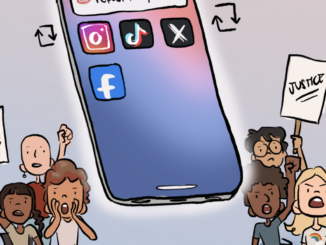
Nowadays, platforms have become channels for these offensive voices to be expressed and spread. They decide what to recommend, what to show first, and what to remove or ignore. Because of this, platforms have made hate speech easier to continuously spread.
Who Are Platforms Protecting?
When we look closer at these comments, we can see that much of the mockery and hate clearly shows racial bias. Terms like “Black Snape” reduce the actor to a racial label and make that label itself the target of attacks. Scholar Flew (2021, pp. 91–96) argues that hate speech happens when someone is demeaned or attacked because of their race or other identity.
Frankly, audiences do not just simply dislike the cast, they are expressing their anxiety about race and identity. For these commenters, the repeated emphasis on “Black Snape” arises precisely because they assume white actors should act certain classic characters. Once this expectation is disrupted, they begin to treat the change as an attack on the existing cultural order.
From above, we can see “Black Snape” is a classic online hate speech example.
For instance, a significant amount of mocking content with racialised imagery has appeared on X, such as portraying Essiedu as a Snape who throws away his wand and shoots with a gun.
Example of a racist meme video circulated on XOn Instagram, some users commented,
“Don’t worry, it’s just a tan. They’ll do a flashback of Snape spending a few years in the Caribbean.”
While these might not always take the form of direct insults, this does not alter the fact that their nature is hate speech. As scholar Flew (2021, pp. 91–96) points out, hate speech is not defined by how harsh the language sounds on the surface. Many racist perspectives are often framed as jokes or irony, but they still insult and attack specific groups.
So, what exactly is going through the minds of these people who hide behind the platform to make racist comments?
Casting controversies are used as a tool by some commenters to release deeper racial anxieties, which will help to defend their identities. By framing their words as jokes, commenters reduce their own ethical pressure. They can quickly brush it off as “you’re being too sensitive” when faced with criticism, thereby avoiding responsibility.
But here is the real kicker: platforms have become a safe haven for this behaviour. The platforms’ own designs, rules, and algorithms also help spread, tolerate, and amplify this form of racism. This is exactly what researchers call “platformed racism” (Matamoros-Fernández, 2017). It’s not a new problem that platforms have become effective channels for spreading racist comments. Some users post and circulate such content, and platform features and recommendation systems can further amplify it to go viral.
Take X for example. Its system rewards toxicity by pushing the most inflammatory comments to the top, creating an echo chamber of hate.
Platform rules are also inadequate. Most platforms seem to have policies and moderation guidelines, but enforcement is inconsistent. As a result, harmful content remains online. Consequently, platforms are no longer neutral. They do not simply provide a space for racist comments but participate in their production, expansion, and the failure of governance.
Deep Rooted Fear Behind the Backlash

posts on Instagram and XBehind the surface of this incident, there lies deeper, traceable social causes.
In 2023, when Disney announced Halle Bailey as Ariel in the live action The Little Mermaid, the casting quickly triggered global backlash. Many viewers reacted negatively to a Black actress cast to perform the character that they had long imagined as white. Then the #NotMyAriel soon started trending, and the teaser trailer received 1.5 million dislikes.
By 2024, when Francesca Amewudah-Rivers’ stage production of Romeo & Juliet launched, this backlash had already intensified into racial attacks directed at the Black actors themselves.
The fact is that audiences are not rejecting Black characters as such. The backlash comes from several deeper factors.
Visually, audiences struggle to accept classic white characters, who have been firmly established in collective visual memory, being reshaped into nonwhite characters. Scholar Young (2014) argues that white characters are often seen as the normal version, while characters of other races are treated as different from the original or as rewritten versions. Take Ariel. Although she is a fairy tale character, her red hair andfair skin have been deeply rooted in commercial culture. So, changing her look isn’t just a creative choice, it feels like someone ruined their childhood.
Narratively, minority actors are easier to accept when they stay in supporting roles. Once they become the lead, public discomfort becomes much louder. Scholar Ottemo et al. (2024) introduce the concept of “geek culture”, which is a fan community built around fantasy, comics, and other popular texts. But these spaces are not always welcoming. They work like closed worlds that resist change, especially when that change destroys the long standing dominance of White lead characters. In these spaces, some fans act as if they have the right to decide what is authentic and what should be rejected, which we already know isabsolutely crooked. They weaponise nostalgia to freeze these stories in time. Once nostalgia becomes a way to protect the old centre, a new diverse figure like Snape in HBO’s Harry Potter reboot is easily treated as a threat.
Actually, there are many black characters in Harry Potter, such as Shacklebolt, Angelina Johnson, and Blaise Zabini. But the idea of a Black Snape? That’s where people start to feel the “cultural center” is being threatened.
Why Do These Effects Alarm Us?
We all know that what many people dismiss as “just comments” is, in fact, racist hate speech. It is driven by deeper social tensions and continuously reproduced through society, politics, the economy and culture.
From a societal perspective, hate speech damages social cohesion. In this case, Essiedu was harmed. The wider Black community was also framed as outsiders and as people unworthy of equal treatment. As such racist comments intensify, more and more groups will be isolated, leading to increased opposition and conflict, which in turn causes social trust to erode and weakens tolerance and diversity.
From a political perspective, hate speech accelerates the politicisation of popular culture. This politicisation alters the way the public perceives creative works.
Audiences’ focus shifts from “Is this actor suitable for the role of Snape?” to “Is this HBO’s statement on its diversity agenda?”
Consequently, what was once a purely popular cultural product is forced to bear political significance that goes beyond the work itself. The art itself gets lost in the crossfire, and a TV show becomes a battlefield for identity politics.
How about commercial then? For a super IP like Harry Potter, fan loyalty is the ultimate currency. However, as the casting controversy continues to boil over into identity politics conflicts, some book and TV show fans may convert their dissatisfaction into a consumer boycott. This matters because a project like HBO’s Harry Potter reboot runs on fan attachment. It needs fans to keep watching, subscribing, buying and staying emotionally invested. If the adaption no longer matches what fans want, that loyalty can quickly turn into withdrawal.
The Snape casting backlash did not keep spreading online by accident. A big reason was that both platform rules and state regulations were still full of gaps. Some anti hate speech measures were already in place, but the overall system was weak. The rules were uneven, enforcement was unstable, and cross coordination was limited.
At the platform level, while both X and Instagram have anti hate policies, the harmful content in this case wasn’t limited to direct insults against the actor. It also included racial tropes, mocking memes, and coordinated mob attacks. Platforms can usually recognise the clearest forms of abuse, like slurs or death threats. But once racism turns subtle, coded, or joking in tone, its moderation starts to look clumsy. The result is absurd. Comments are clearly harmful and still circulate.
The problem with X is that it mixes up the concepts of freedom of speech and freedom of reach. In its section on “Our range of enforcement options”, rather than deleting the posts with hateful conduct, rulesshow that removing them from search and recommendations, restricting interactions, and adding controversy labels will be the first choice.
What’s more, X says they only delete the “severe” stuff. The catch? They won’t tell us what “severe” actually means. It’s a secret standard that changes whenever it’s convenient for them. Which means that X’s approach is too late. Once Snape casting controversy first emerged, various edited clips and memes were rapidly screenshotted and recreated. Before X’s moderation finally stepped in, the whole platform was already covered in the ashes of racial imagery.
Instagram follows Meta’s rules, but there’s a massive blind spot: it only looks for the obvious punches. The platform declares that if there is not enough evidence to determine clear threats, such as direct feedback from the targeted individual, then “police” cannot take action. As a result, only explicit racial slurs or hate speech are addressed.
However, in the Snape casting controversy, the majority of content expressed racial animosity by shamefully conflating Black physical features with character personalities. Also, pop culture references and fan edits were used to create racialised mockery. While this identification policy appears designed to avoid misjudgments, in practice, it results in the platform displaying low sensitivity to collective, bullying racial attacks. As the Oversight Board highlighted in February 2026, some posts in Meta have used monkey emojis to refer to Black people. These are forms of algospeak, where code words, homophones, or slang are used to avoid algorithmic detection. But Meta took a long time to acknowledge this. That delay is telling.
At the national level, regulations still struggle to deal with harmful content that moves across different platforms. Paapa Essiedu is a British actor, but his online safety is largely in the hands of tech giants across the Atlantic. That’s a huge problem for UK regulators. Although Ofcom, the UK’s online safety regulator, confirms that it has the authority to regulate platforms outside the country. It claims that platforms have already been required to assess what illegal content may appear, and how to take safety duties as well. However, in practice, UK law focuses more on broad moderation frameworks, rather than regulating specific posts.
In other words, at the national level, regulation can require each platform to establish fuzzy mechanisms to address hate speech. It exists on paper, but for ordinary people, it is hard to see and hard to trust. The only thing users can actually see is this, one platform deletes the hateful content, while another simply turns down its recommendations.
Always Stay Vigilant
The Snape controversy isn’t an outlier, it’s a symptom. It’s a perfect illustration of what’s gone wrong with the internet today. Why does racial hate still thrive on social media, hiding behind jokes, memes, and algospeak?
The real danger, then, is not overt racism, but racism that has learned to perform itself as humour and irony. The internet has simply taught hateful content how to dress better.
References
Flew, T. (2021). Regulating Platforms (pp. 91–96). John Wiley & Sons.
inside_fandom. (2017, March 26). Severus Snape: Movie vs. TV Show. Instagram. https://www.instagram.com/p/DWUs1p5k76V/?utm_source=ig_web_copy_link
Matamoros-Fernández, A. (2017). Platformed racism: the mediation and circulation of an Australian race-based controversy on Twitter, Facebook and YouTube. Information, Communication & Society, 20(6), 930–946. https://doi.org/10.1080/1369118x.2017.1293130
Meta. (n.d.). Hateful Conduct | Transparency Center. Meta. Retrieved April 12, 2026, from https://transparency.meta.com/policies/community-standards/hateful-conduct/
Ottemo, A., Berge, M., Mendick, H., & Silfver, E. (2024). Geek nostalgia: The reflective and restorative defence of white male geek culture. New Media & Society, 27(7). https://doi.org/10.1177/14614448241232067
Our range of enforcement options for violations | X Help. (n.d.). Help.x. https://help.x.com/en/rules-and-policies/enforcement-options
Severus. (2026, April 6). HBO Snape learns the killing curse – “Avada Wakanda.” X (Formerly Twitter). https://x.com/SeverusChud/status/2040902575529111595?s=20
Statement Protecting people from illegal harms online Volume 2: Service design and user choice (p. 5). (2024). https://www.ofcom.org.uk/siteassets/resources/documents/online-safety/information-for-industry/illegal-harms/volume-2-service-design-and-user-choice.pdf?v=390978
Stop “algospeak” including emojis used for hateful targeting of groups. (2026, February 10). The Oversight Board. https://www.oversightboard.com/news/stop-algospeak-including-emojis-used-for-hate-speech/?utm_source=chatgpt.com
Young, H. (2014). Race in online fantasy fandom: Whiteness onWesteros.org. Continuum, 28(5), 737–747. https://doi.org/10.1080/10304312.2014.941331


Be the first to comment