In 1996, Internet pioneer John Perry Barlow described the Internet as an ideal world in the Declaration of the Independence of Cyberspace – a “digital utopia”, where there is no central authority and everyone can freely express their ideas without worrying about being suppressed. Imagine walking into a public park where everyone can freely express their views and communicate – thus creating a more democratic and open environment.
But what if the park is gradually filled with vulgar language and fierce arguments? Will people still be willing to speak freely?
Can such a space still be called “freedom”?
In recent years, the importance of this issue has become more and more prominent. Under the leadership of Elon Musk, the public opinion environment of the X platform (formerly known as Twitter) has changed dramatically since 2025, raising concerns about the spread of harmful network information and hate speech.
This article aims to explore the policy adjustment of Company X from 2024 to 2025 to explore a fundamental issue: does “absolute freespeech” aggravate the damage to the network without government supervision?
The blog points out that complete independence often leads to misunderstandings and makes it difficult for people to express themselves effectively. When the algorithm process is combined with the lack of regulatory action, the security of the digital public domain will be seriously damaged.
From “Freedom” to a Governance Vacuum
The platform was originally intended to promote freespeech, as former Twitter CEO Dorsey previously pointed out. Despite problems such as harassment and false information at that time, Twitter’s governance strategy was still based on a sense of responsibility as a public platform manager. Although the platform recognizes the importance of free speech, it also recognizes the need to control inappropriate information.
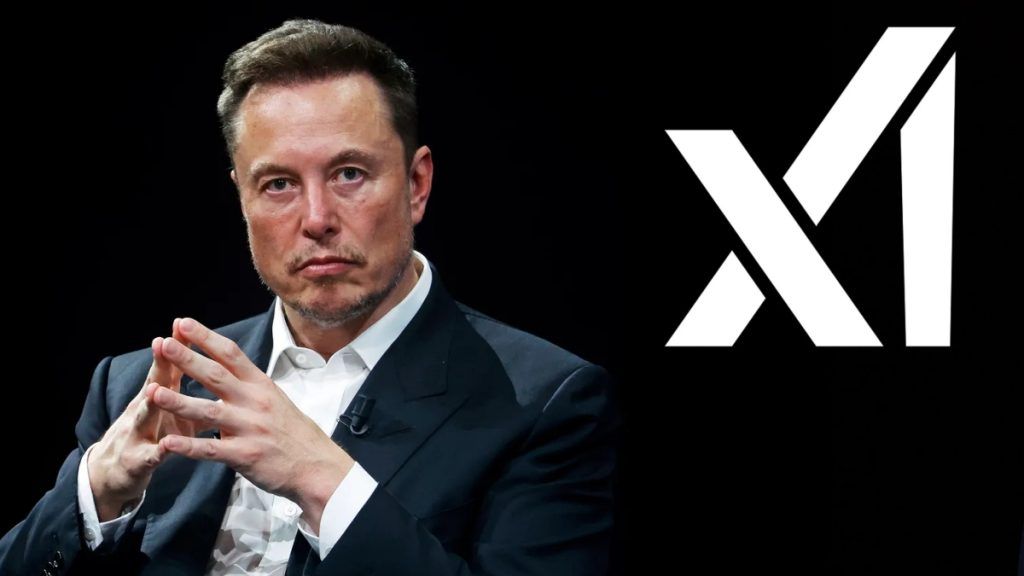
this balance has changed dramatically after Elon Musk took control. He implemented a series of major policy adjustments, including restoring tens of thousands of accounts that had been banned for violations, disbanding the Trust and Safety Council responsible for content moderation, and reducing the manual review team. He also put forward the principle of “Free speech, not free reach”, users can post content freely, but its visibility may be limited, the algorithm will not recommend it.
However, since Elon Musk took over, this equilibrium has changed dramatically. He reduced the number of manual reviewers, disbanded the Trust and Safety Council responsible for content moderation, and restored tens of thousands of accounts banned for violations. In addition, he also made some other major policy adjustments. He put forward the concept of “Free speech, not free reach”, although individuals can upload content freely, their visibility may be restricted, and algorithms will not recommend these contents.
From a certain point of view, this loose management method can be regarded as a waiver of governance. Musk tried to use algorithmic screening to replace human judgments on online speech such as cyber violence, hatred and harassment. But this practice ignores a basic fact: when the platform regards “engagement rates” as the most important indicator, hate speech often triggers a large amount of traffic on its own.
This situation is precisely an excellent example of the “toxic technocultures” that Adrienne Massanari (2017) is perfectly reflected in this context. When platforms adopt the “advertising revenue-sharing” strategy and encourage users to upload highly controversial content, these platforms no longer serve as places for netizens to share and document with each other; instead, they have become spaces for hatred and the expression of anger. This situation can be described as a “governance vacuum”, representing a change in the way power operates, shifting from clear platform regulations to less transparent algorithmic structures.
This deregulation seems to give complete freedom, but experts believe it actually weakens the authority of the government. When the supervision is weakened, it becomes more difficult to control dangerous content. For example, among global hot issues (such as the energy crisis), there are a lot of false information or extreme remarks about war on X. Many users post misleading content in order to attract attention or express emotions, but they do not realize that this information will have a negative impact on public judgment, and even exacerbate social panic and distrust. Due to the lack of sufficient supervision, harmful content is more likely to spread.
The incentive mechanism of the platform has also changed. Musk changed the “blue check” badge to a paid model, and X’s algorithm will give priority to the replies of paid users. These users often post controversial or potentially dangerous content in order to gain revenue share. Vogels (2021) believes that the design problem of the platform is directly related to the escalation of cyber harassment. This shows that the problem lies not only in user behavior, but also in the design of the platform.

The new paid verification system on X has shifted the platform’s incentive structure toward high-engagement content.
Currently, X has significantly reduced its review team. The originally free and healthy online environment has become hostile, and many users’ reasonable and moderate comments have been subjected to harassment and insults, causing these users to no longer be willing to express themselves but instead choose to remain silent. The X platform has transformed from a free forum into a platform that is more prone to causing disputes and conflicts.
In the past, platforms maintained the order of discussions through strict content censorship; but now, the emergence of algorithms has gradually replaced human supervision, making the internet environment chaotic.
Whose Freedom Is Being Lost?
In this situation, a more profound question must be raised: If freedom of speech means allowing the unrestricted dissemination of hate speech, then who’s freedom is being protected and who’s freedom is being sacrificed?
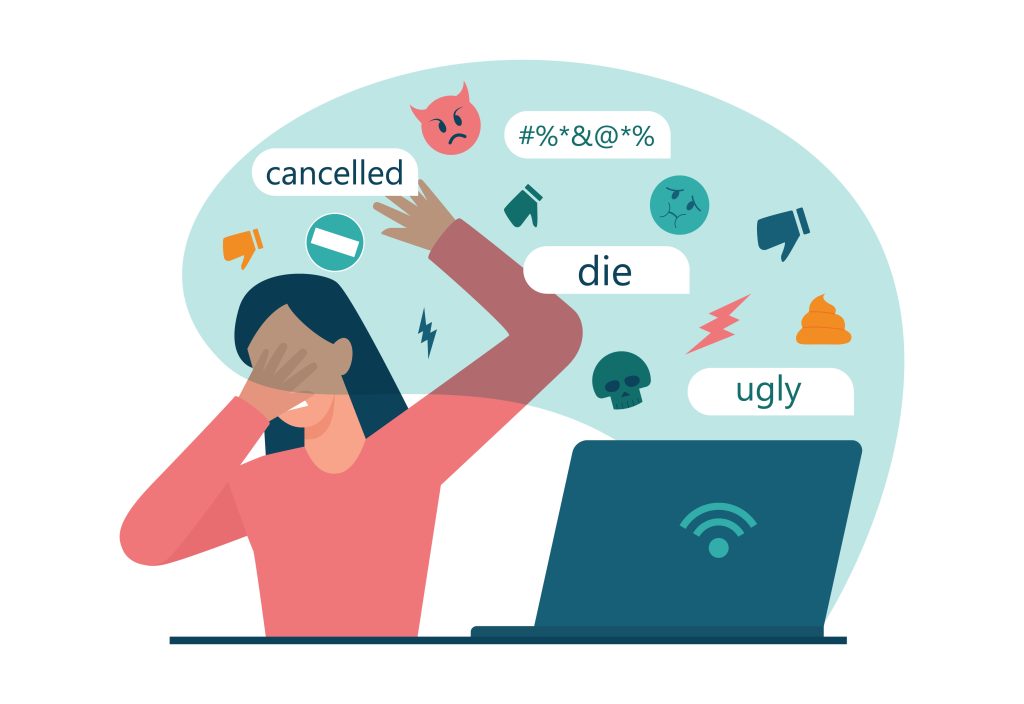
Parkeh (2012) believes that hate speech is an act of oppression, not merely an expression of different opinions. Because cyber violence and hate speech always belittle and exclude specific groups, especially women and minority groups. This will increase the concerns of ordinary people rather than add voices to public discussions.
When the platform governance becomes weak, this problem will become more serious. As the regulatory environment becomes more relaxed, some users take advantage of the deregulated environment on the X platform to attack women, minorities or vulnerable groups. Although this is referred to as free expression, this freedom is actually based on inequality. Some people have more space to speak out, while some people’s desire to express is suppressed.
With the laxity of platform governance, this problem has become increasingly serious. For instance, some users take advantage of the unregulated environment of platform X to target women, minorities or vulnerable groups. For example, the account of Andrew Tate was once banned due to hate speech and gender discrimination controversies. After its restoration, the content posted by the account once again sparked discussions about gender discrimination and online violence, and was boycotted by a large number of netizens. This freedom of speech is based on an unequal foundation. On the one hand, the desire to express oneself of some people is suppressed; on the other hand, others have a much larger space for expression.
With more and more insults and attacks, many victims often choose to remain silent out of fear. This phenomenon is known as the chilling effect, in which people take the initiative to reduce or avoid expression because they feel uneasy. Therefore, hate speech is not the absolute freedom advocated by Musk, rather, it restricts the space for expression among some groups.
Vogels (2021) further notes that the intensification of online harassment has directly led to the withdrawal of a large number of users from public discussions, especially women and members of minority groups.
In this environment, what appears to be a free platforms is, in fact, excluding some users and depriving them of a space for expression. Therefore, in such an environment, freedom is no longer a right that everyone can enjoy equally; on the contrary, it has gradually evolved into a discussion space dominated by a minority. This also shows that freedom of speech cannot be simply understood as without rules. If some people are forced to remain silent, then the platform is no longer truly free or democratic.
If these platforms themselves cannot solve these problems, then another more important problem arises: who should be responsible for digital security protection?
Policy Shift – Australia’s Co-Regulation Model
Over the past decade, Silicon Valley has always believed that platforms can achieve self-regulation through internal policies and algorithms. But Musk’s comprehensive reform of the X platform indicates that relying solely on the platform is often not enough. Profit-driven algorithmic systems can facilitate the spread of dangerous information. In addition to the self-restraint of the platform, government regulation and support are also necessary.
Flew (2021) pointed out that we are entering the “post-light-touch regulation” era. The government no longer completely entrust platform regulation to the private sector; instead, it has begun to establish clear legal frameworks, requiring platforms to take responsibility for online harassment and harmful content. For instance, the EU passed the Digital Services Act, requiring platforms to implement stricter management of harmful content. The UK established the Online Safety Act, requiring platforms to actively reduce the spread of hate speech and harmful content, or else they will face huge fines. The inaction of x platform has drawn public attention to hate speech, and enterprises must accept regulation to safeguard public interests.
The Australian eSafety Commissioner (Office of the eSafety Commissioner, 2021) is one of the excellent examples of internet governance. In 2021, Australia’s “Online Safety” adopts a co-regulation modell, where the government uses legal means to require platforms to maintain transparency, while the platforms need to strictly manage their own systems, including their algorithms.
Australia’s eSafety Commissioner is leading the global charge for platform accountability
The eSafety mechanism introduces an accountability system for platform management. The platform is required to respond to reports of serious online abuse within the specified time frame. Musk’s governance model dominated by personal will will no longer be applicable. Through legal intervention, we are attempting to resist the algorithmic mechanism and make the online space more transparent.
The “co-regulation” model is not only a governance tool, but also an effort by the state and the platform to strike a balance. Digital governance is not merely a technical issue; it is a complex challenge involving multiple aspects such as law, ethics, and politics. It requires the joint efforts of all parties to manage it.
Gillespie (2018) points out that the platform has become key gatekeepers of public discourse, so it must assume corresponding social responsibilities. If we continue to allow the “absolute freedom” of the X platform be unrestrained, the “equality and democracy” we hope to see on the Internet will eventually fall short.
Rethinking the Future of Digital Public Space
Musk’s comprehensive reform of the X platform highlights a universal problem with digital platforms: without institutionalized openness and supervision mechanisms, these platforms may quickly fall into a dangerous and chaotic environment.
Although “absolute freedom of speech” is an ideal state, it often leads to an increase in hate speech and cyberbullying without proper control measures. Therefore, we must find a balance between autonomy and supervision; in addition to implementing management strategies that can ensure greater openness and public supervision, the platform must also assume more responsibility for algorithm development and content evaluation.
Let’s return to the initial ideal: a space where everyone can freely express themselves. This goal has always been worthy of our pursuit, but the way to achieve it is not extreme; rather, it is accomplished through coordinated efforts from multiple parties.
The true freedom of the platform lies not in allowing everyone to speak, but in hoping that everyone dares to express themselves.
In the future, the platform needs to establish more comprehensive rules, achieve higher transparency, and possess the ability to promptly solve problems. Only in this way can “Digital Square” truly become a space where diverse voices coexist, rather than a place controlled by extreme voices.
References:
Barlow, J. P. (1996). A declaration of the independence of cyberspace. Electronic Frontier Foundation.
https://www.eff.org/cyberspace-independence
Flew, T. (2021) Hate Speech and Online Abuse. In Regulating Platforms. Cambridge: Polity, pp. 91-96 (pp. 115-118 in some digital versions)
Gillespie, T. (2018). Custodians of the internet: Platforms, content moderation, and the hidden decisions that shape social media. Yale University Press.
Massanari, A. (2017). #Gamergate and The Fappening: How Reddit’s algorithm, governance, and culture support toxic technocultures. New Media & Society, 19(3), 329–346.
https://doi.org/10.1177/1461444815608807
Office of the eSafety Commissioner. (2021). Online Safety Act 2021. https://www.esafety.gov.au/
Parekh, B. (2012). Is there a case for banning hate speech? In M. Herz & P. Molnar (Eds.), The content and context of hate speech (pp. 37–56). Cambridge University Press.
Vogels, E. A. (2021). The state of online harassment. Pew Research Center.
Be the first to comment