Have you ever felt a sudden, nervous hesitation when you need to speak into your microphone in competitive games like Valorant or League of Legends?
If you’re a woman, this brief hesitation isn’t pre-game anxiety, but a survival mechanism. For many of us, remaining silent is a trade-off. We’d rather be tactically disadvantaged than risk being told to “go back to the kitchen” or subjected to identity-based insults the moment we open our mouths.
The content creator in the video was humiliated by other players for an entire game simply by speaking into their microphone a situation that frequently occurs in male-dominated competitive games.
We must be clear that this isn’t just in-game trash talk. When we peel back the layers of this online hostility, we find a far more insidious reality. Gaming communities often dismiss seemingly harmless “trash talk” as innocuous, but in reality, this talk has evolved into a pervasive form of hate speech and has been weaponized to control the digital space. This systemic silencing is a prime example of cyberbullying, its impact extends far beyond simply hurting feelings. It concerns deficiencies in platform architecture and governance, resulting in an environment where marginalized players are subjected to verbal bullying. In this article, I want to explore why games have become minefields rife with misogyny, and why current platform governance fails to protect our right to live and express ourselves in the games we love.
The Real Cost: From “Virtual” to “Real” – The Ghost of the “Player Gate” Incident
For many people, insults suffered in voice chat are merely verbal altercations within a game, ultimately affecting emotions and causing feelings of anger or resentment, without causing serious harm. However, history tells a darker story. If we want to understand why a female gamer chose to mute her microphone in 2026, we must look back at one of the most devastating event in gaming history: “Gamergate”.
Source: https://www.bbc.com/news/world-34911605
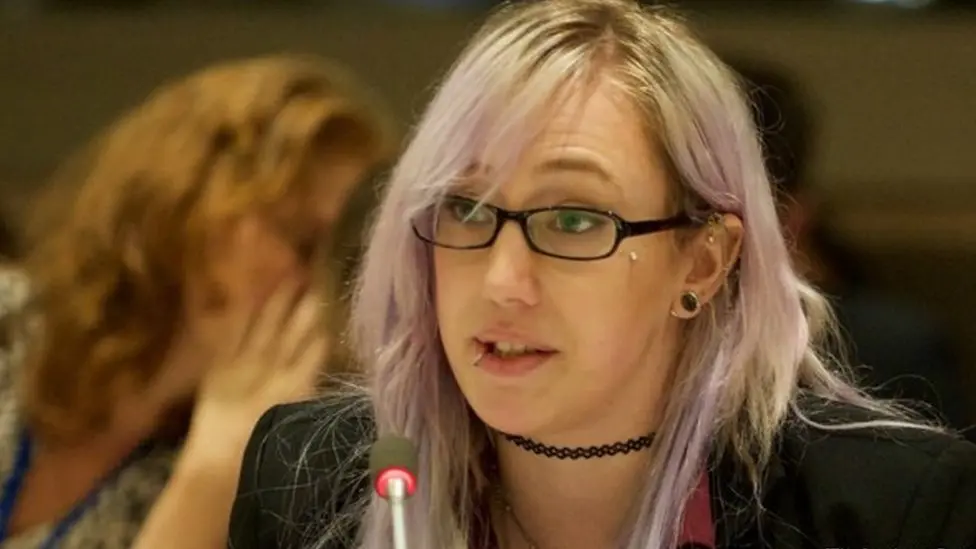
In 2014, independent developer Zoe Quinn became the center of a coordinated harassment movement that weaponized the digital space, aiming to destroy a person’s life. What began as hate speech on Reddit and 4chan quickly escalated into doxxing and swatting. Quinn’s private address and financial data were leaked, and the real-life death threats she faced forced her to flee her home, making her a refugee in this digital war.
As scholar Emma Jane (2016) articulated in her research on “e-bile,” this level of malice was not an accidental outburst, but a calculated tool of “gender gates.” Jane argues that online hate triggers a profound “chilling effect,” a state where fear of escalating violence forces marginalized individuals to withdraw from public participation. For Quinn, “online harm” was not a feeling of being wronged, but a loss of personal safety and the right to survive in her professional field.
The specter of “Gamergate” still haunts every Valorant or League of Legends lobby. When a woman hears sexist abuse after issuing tactical instructions, her brain processes more than just the word “swear”; it recalls a decade of systemic violence. This is why “turn off your microphone” is a survival mechanism. It directly reflects the reality that online harm has the potential to translate into real-world trauma. By allowing these “virtual” insults to exist, we are not only witnessing a toxic culture, but we are also condoning a systemic mechanism that silences half the population, effectively turning our digital playground into a place of social exclusion.
Why is this crucial at present?
The reason why we need to discuss the issue of “turning off the microphone” now is that this phenomenon is reflecting a much larger social crisis. For a long time, people have regarded the toxic behaviors in games as minor matters. However, through the case of the hatred spreading from the internet to real life as mentioned earlier, we have realized that even behind these contradictions lie unpredictable and difficult-to-avoid real crises.
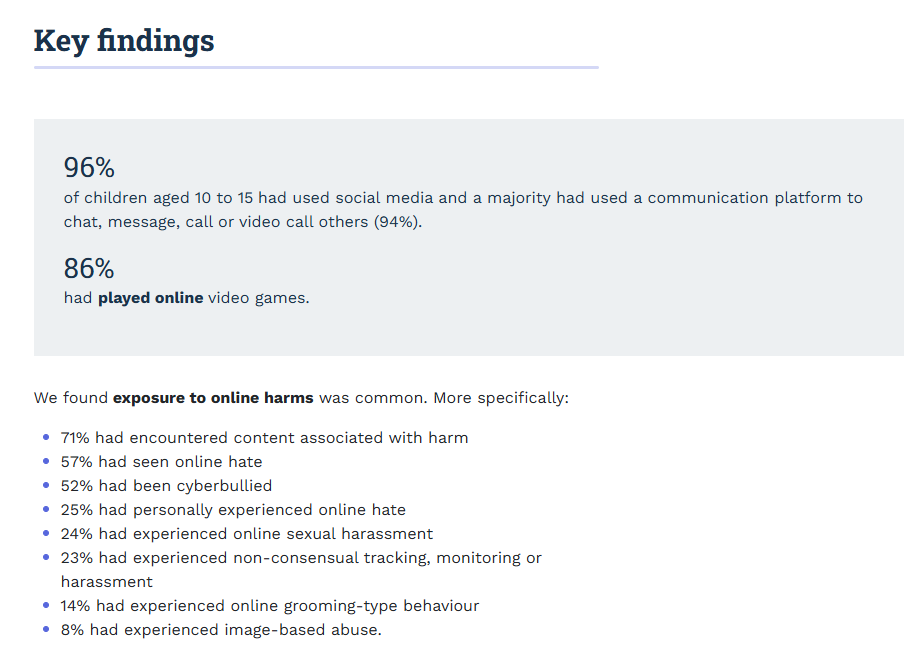
According to the 2025 report “Online Hate in the Digital Age” by the Australian eSafety Commissioner’s Office, online hate is no longer a marginal annoyance but a systematic harm that specifically targets the identity traits of the victims. Commissioner Julie Inman Grant has repeatedly issued warnings, pointing out that the social gaming space has become a “grey area of regulation”. When social media platforms like TikTok are under multiple layers of scrutiny, the voice channels of competitive games have become a refuge for online harm.
Source:https://www.esafety.gov.au/research/the-online-experiences-of-children-in-australia/report-digital-use-and-risk-among-children-aged-10-to-15
This regulatory vacuum has led to the emergence of a more dangerous phenomenon: the rise of toxic technocultures. As Adrienne Massanari (2017) pointed out, these environments are not solely caused by a few toxic players. Instead, the anonymity of the platform, the competitiveness of the game, the low penalty intensity, and the lack of immediate consequences all provide fertile ground for the flourishing of toxic masculinity. Even though many content creators create videos to criticize the behavior of expressing hate speech in the game, it is difficult to influence those who shout and attack other players because there are no community conventions or rules to regulate players’ behavior. The most severe punishment could be to temporarily ban the microphone or suspend the player for a short period. “Toxic players” have not received severe punishment.
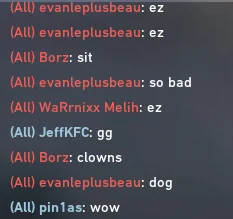
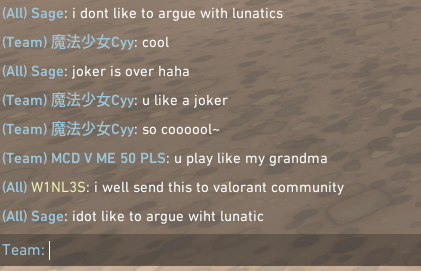
When insulting remarks targeting women, such as “go back to the kitchen”, or derogatory words targeting the LGBTQ+ community become the default “humor” in the community, they actually normalize an “exclusivist” worldview. Young players, under the guise of “game culture”, are subtly instilled with highly aggressive thinking patterns. A single insult in the Valorant game might evolve into a deeply ingrained social bias in the real world. When we are forced to turn off the microphone, we not only lose tactical advantages in the game, but a whole group becomes speechless in the gaming domain. This causes a safe and inclusive digital public space to gradually disintegrate.
AI Moderation: A Cure or a Digital Cover-Up?
As online harassment escalates, the latest response strategy in the gaming industry is automated content moderation. To purify the competitive environment, for instance, Riot Games has implemented an advanced voice assessment system. This technology uses AI to monitor and transcribe voice chats in real time, aiming to identify and penalize toxic behavior at a speed far exceeding manual review. For many, this seems like progress: we see players being banned within minutes after the game ends, with a significant increase in both the speed and severity of the punishment.
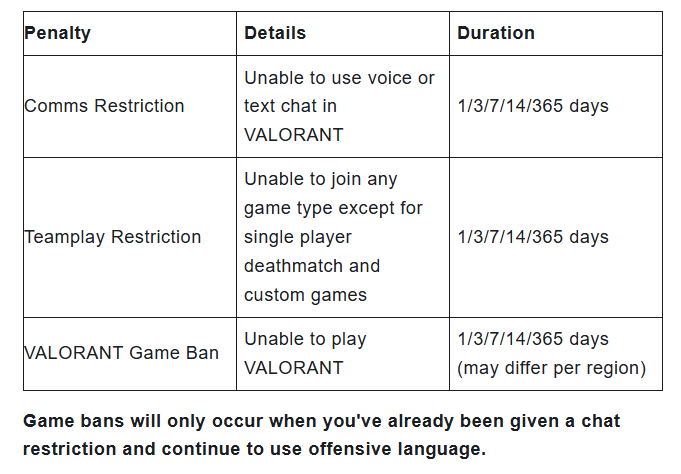
This sounds pretty cool, right? If you are scolded or humiliated by other player, their accounts will be banned within a few minutes. But the problem is: Does the AI really understand what “hatred” is? The algorithm is good at picking up dirty words, but it can’t catch “Dog-whistles”. If someone uses an extremely sarcastic tone to “praise” you, or uses metaphors to insult women, the AI often considers this normal. Bullies constantly seek alternative words to outpace AI, leaving women and sexual minorities in a technologically regulated but culturally hostile space.
This brings us to the “trustee paradox” mentioned by Tarleton Gillespie (2024).
“Platforms are not just ‘conduits’; they are the ‘gatekeepers’ of space.“
But these gatekeepers also need to earn money. Take Chinese server “Valorant” as an example. The Chinese region banned “ez”, but other regions did not. This indicates that whether to ban you or not does not depend on whether you have caused harm, but on the commercial game of the platform. The manufacturer is making a risky balance : if the AI is too ruthless, it will drive away those “difficult but spend a lot” old players. Therefore, the current AI is more used to “manage” toxicity,keeping it within a range that “won’t make most people quit the game”. This is more like a digital cover-up for KPI.
When developers like Riot or Blizzard calibrate their moderation AI, they are engaged in a delicate balancing act. If the AI is too aggressive, they might ban high-spending, highly active players due to “competitive enthusiasm,” thereby harming user retention. Therefore, content moderation often punishes the most outrageous violators to maintain a false sense of security, but rarely truly challenges those who allow hatred to lurk below the detection threshold. From this perspective, the rapid banning we see today may be less about achieving absolute security and more about “managing” toxicity levels within a range that doesn’t cause most players to leave.
The Algorithmic Engine of Structural Misogyny
If we acknowledge that online harm is a systemic issue, then what powers this system? The answer lies hidden in the invisible codes that govern our digital lives. To understand why I still choose to turn off my microphone, we must move beyond discussions of the behavior of individual “internet trolls” and instead examine the “algorithmic agency” of the platforms themselves.
As scholar Adrienne Massanari (2017) points out, game platforms are not neutral but are designed with a philosophy that takes men as the default users. This “toxic technoculture” rewards exclusivity at the fundamental level through the platform’s affordances, such as anonymity, the harsh incentives of ranking competition, and the default acceptance of aggressive behavior. Massanari reminds us that in this environment, gender-based insults are not glitches in the system but features of the technoculture, as the system was designed from the outset as an aggressive male arena without ever truly building a defense for non-default audiences (women and minorities).
The ultimate betrayal lies in the “Engagement Paradox”.
Since the platform algorithms are fundamentally programmed to maximize “online duration”, and psychology and data have shown that conflicts and hateful remarks can trigger the most intense fluctuations in user interaction. For an algorithm that prioritizes “engagement” rather than human dignity, a toxic piece of content targeting women is wrongly judged as “high-value, high-heat content” and is thus pushed through the recommendation engine to more people. This is the core of the problem: when the code itself rewards hostility and disregards gender harm, it actually deprives women of their digital citizenship. It turns speech into an extremely risky gamble and silence into the inevitable choice for women to survive in the digital public space.
Rewriting the Rules of the Game
Turning off the microphone won’t solve the problem, it merely avoids it.
Through the analysis of the entire text, we can see that the online harm that emerges in competitive games is not an accidental “error” in the system, but rather a structural product of toxic technological culture and inadequate platform governance.
Although AI-driven content moderation brings a glimmer of hope in terms of processing speed, it is ultimately only a temporary solution that fails to address the root issue, as it is unable to identify the subtle and interwoven hatred directed at female players. As regulatory agencies like the eSafety Commissioner’s Office start to address the “grey areas” in the law, the gaming industry must realize that true safety cannot be achieved merely through post-event suspensions and bans.
Games should be our “digital third space”, rather than a battlefield that players have to put on psychological armor to enter. It is now time for platforms to fulfill their role as “custodians”. We should have an open and secure online space where players can turn on their microphones without any fear.
For example, game companies can link the quality of players’ communication with the matching mechanism. Let friendly players get faster ranking speeds or unique visual rewards, rewarding collaboration rather than aggression from the underlying code logic.
We need a fundamental architectural reconfiguration. The governance model must shift from “post-event punishment” to a design-oriented preventive mechanism, placing human safety and social diversity at the top of the underlying logic. This requires game developers to integrate sociological insights into the code, challenging algorithmic logic that rewards aggression and silences marginalized groups.
References
Del Vigna12, F., Cimino23, A., Dell’Orletta, F., Petrocchi, M., & Tesconi, M. (2017, January). Hate me, hate me not: Hate speech detection on facebook. In Proceedings of the first Italian conference on cybersecurity (ITASEC17) (pp. 86-95).
Jane, E. A. (2016). Online misogyny and feminist digilantism. Continuum, 30(3), 284-297.
Massanari, A. (2017). # Gamergate and The Fappening: How Reddit’s algorithm, governance, and culture support toxic technocultures. New media & society, 19(3), 329-346.
Pornying, W., & Tantiniranat, S. (2024). Hate speech towards female game players in Valorant game. Journal of English Language and Linguistics, 5(3), 374-392.
Be the first to comment