
Figure 1: OpenAI. (2026). Illustration of a digital platform shaping user choices through algorithms [AI-generated image]. ChatGPT.
In our daily online life, everyone has experienced such a moment: when you open a website, a dialog box immediately appears asking you to “accept all cookies” or “agree to the privacy policy”. To use it quickly, most of us would click “Agree” without a second thought. No one will stop to see exactly what they have agreed to or understand the details.
We have to think: Do we really know what agreement we have reached? To put it more deeply, can we really control our personal data?
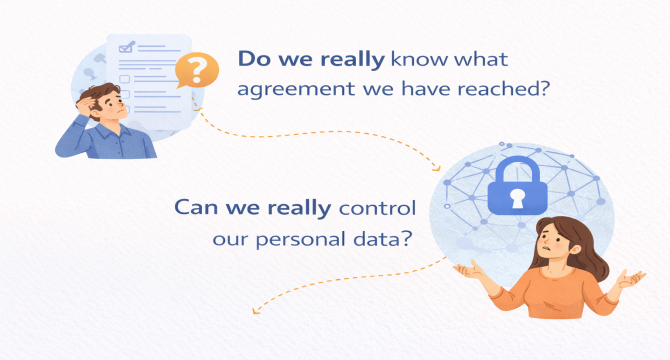
Figure 2: OpenAI. (2026). Do we really know what agreement we have reached? To put it more deeply, can we really control our personal data?[AI-generated image]. ChatGPT.
Digital platforms make privacy look like something users can choose and control. But this control is often not real. Users do not always fully understand what they agree to, and their choices are shaped by the system. So, privacy today may not really be a right users control, but an illusion created by platforms.
Behind this seemingly voluntary daily behavior, in essence, the operation of digital platforms relies on the data collection process of the system. When users browse websites, watch videos or use applications, their browsing history, click behavior, time spent and location data are continuously recorded and converted into analyzable data (Flew, 2021, p. 18). Meanwhile, the platform immediately collects data from various services such as search engines, maps and video platforms, and combines this information to establish more detailed user profiles (ACCC, 2021, p. 6). Then, these data were used to predict behavior and provide targeted advertising, enabling the platform not only to respond to users’ interests but also to present what users see (Flew, 2021, p. 17; ACCC, 2021, p. 8). This process is automatic and fast, making the collection and use of data continuous and hard for anyone to notice. Therefore, when users click “Agree”, their behavior has already become part of an ongoing data system, and their choices are quietly influenced. This indicates that “consent” is not so much an informed decision as a certain degree of coercive outcome shaped by the system.
I have to say that digital privacy is regarded as an illusion not because users lack awareness, but because the platform structure restricts the content that users can know, choose and decide on.
First of all, users have not obtained any real information at all. Privacy policies are usually long and complex, and hard to understand. As Nissenbaum (2018, p. 831-833) pointed out, for ordinary users, many data practices are both invisible and difficult to understand. In this case, “agreement” is not based on full understanding, but rather a routine behavior of “everyone does it this way, so I do it too” or “No one has said this is wrong, so it’s okay to do it this way.” It conceals the serious problem of unequal access to information.
Secondly, users do not have truly autonomous choices. The platform rules are formulated by the company. Users either accept them or leave. In this structure, users are more like consumers rather than citizens with the right to make independent choices, and have almost no power to negotiate (Suzor, 2019, p. 10-11). More importantly, the platform not only formulates rules but also almost completely controls how to apply them. This imbalance of power means that “choice” often turns into forced acceptance.
Finally, the platform influences users’ decisions through design. As Suzor (2019, pp. 10-11) pointed out, platforms are not neutral, and their rules and technical systems can affect the content users see and the way they behave. Meanwhile, Flew (2021, p. 20) holds that platform power does not function through direct coercive acts but through shaping the environment in which choices are made. Through default Settings, interface design and recommendation systems, users can be guided to make certain choices, such as agreeing to data collection.
I think the above three points can already well prove my point. Keep going and let’s take a look at a real example
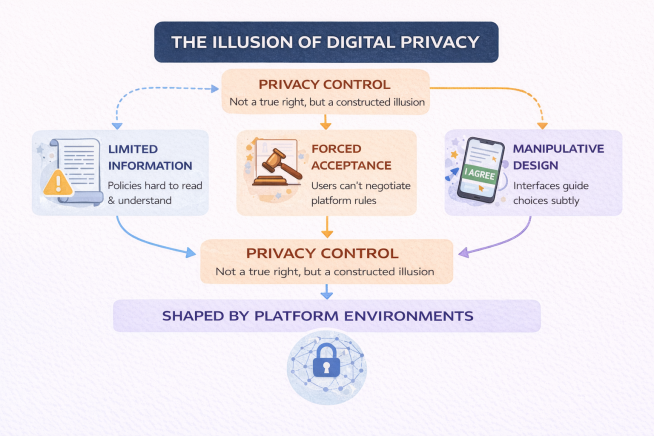
Figure 3: OpenAI. (2026). A conceptual illustration of the illusion of digital privacy in platform environments [AI-generated image]. ChatGPT.
A clear example of these problems is the Cambridge Analytica scandal.
According to The New York Times (2018), this case revealed that a data company had collected and used a large amount of Facebook user data without the users’ knowledge and used it for political advertisements and election campaigns. Although this kind of data collection seems on the surface to be based on users clicking that button and seemingly having agreed, in fact, they were not aware at that time that their data would be used beyond its original purpose or influence their views.
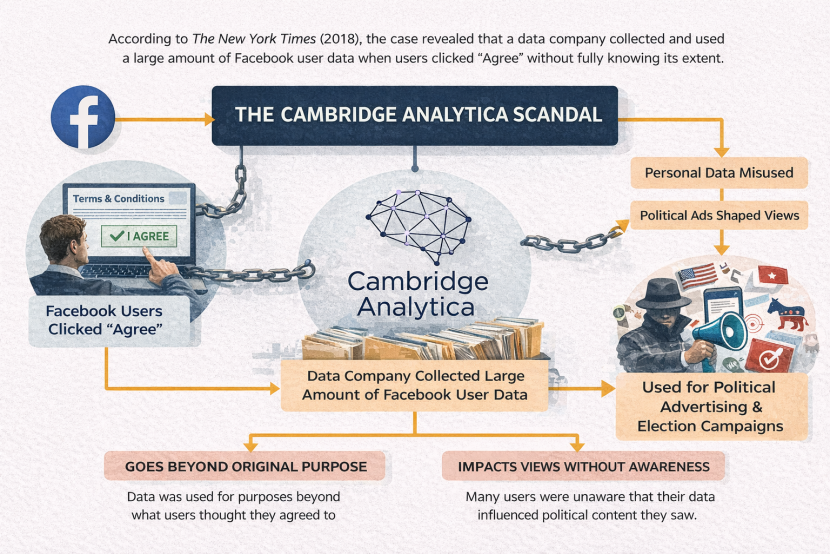
Figure 4: OpenAI. (2026). Cambridge Analytica scandal 2 [AI-generated image]. ChatGPT.
Academic research further indicates that approximately 87 million users have been affected. These data are used to establish detailed user profiles and provide highly targeted content, which enables the platform to predict and influence individual behavior to a large extent (Hinds et al., 2020).
This case shows that privacy is indeed to a large extent an illusion. The reason for this is not a single accidental abuse of data, but rather due to loopholes in the system itself or the purpose.
First of all, pressing a button is not at all to expect us to truly understand, but rather as a formal and necessary step to allow the platform to legally collect data. As Hinds et al. (2020) pointed out, users often underestimate the scale and impact of data collection, which weakens the importance of consent.
Secondly, data collection is not limited to individuals but is disseminated through the Internet. More specifically, the platform collects data by associating survey tools with social media accounts and uses the “seeding” process to extend data collection to users’ friends, which means that one user can bring data from hundreds of other users. Then, these data were used to establish psychological profiles and analyze personality traits, which were employed to predict and influence behavior (Boldyreva, 2018, p. 95-96).
More importantly, these data are not only stored but also actively used to shape behavior. Through personalized political advertisements, the platform not only reflects users’ preferences but also reshapes their ways of thinking and making choices, transforming data usage into indirect control over behavior. Further research indicates that this process employs analysis and targeted information to influence individuals and public opinion, transforming data analysis into a system capable of influencing large populations (University of Adelaide, 2023, p. 97).
Therefore, “privacy control” does not truly empower users, but rather makes the collection and use of data seem acceptable, or rather, it is best not to be noticed by others. In such a system, the user’s “consent” is more of a condition for allowing the system to operate rather than a way to protect the user. In other words, privacy is something that has been restricted and shaped within the platform structure from the very beginning, which makes it a persistent illusion.
On this basis, the key issue is no longer merely how to collect or use data, but how these processes reshape users’ positions in the digital environment.
Users are no longer merely served by the platform. On the contrary, they have become objects that can be measured, tracked and improved. During this process, user behavior is decomposed into small data points and incorporated into the platform’s system. Gradually, people have transformed from active decision-makers to objects of study and adjustment. Looking further, prediction and influence are not neutral tools. They are the key ways for platforms to exercise power. Once behavior can be predicted, the platform can even shape choices before users make decisions. They achieve this through rankings, recommendations and information displays. This means that users are not making choices in a completely open space, but in a space that has already been organized and restricted by the platform. Research also shows that when platforms understand users’ habits and preferences, they can identify weaknesses and take action at the most effective time. By using targeted content and interface design, they can guide decision-making without users’ obvious notice (Susser et al., 2019, pp. 1-2).
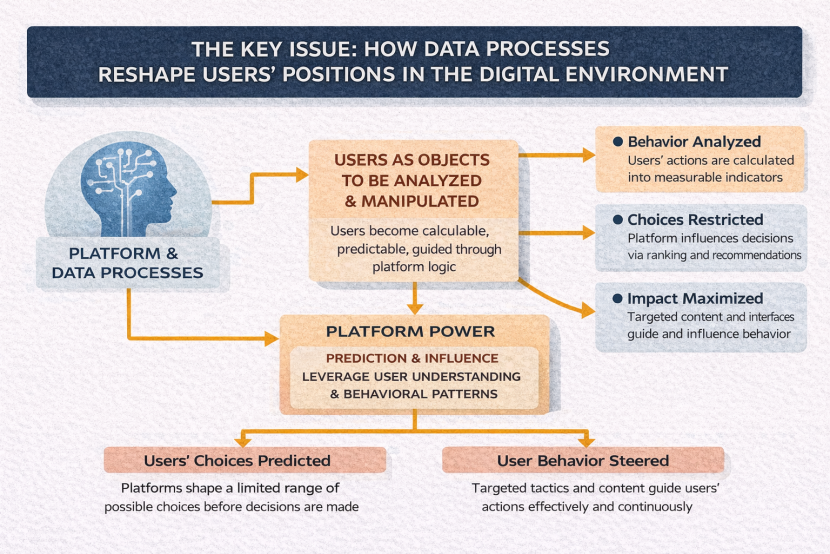
Figure 5: OpenAI. (2026). The key issue: how data processes reshape users’ positions in the digital environment [AI-generated image]. ChatGPT.
However, the influence of the platform on user behavior does not mean that users have completely lost their autonomy. As Klenk and Hancock (2019) argued, although digital technology can shape decisions through data analysis, prediction and positioning, this influence does not automatically undermine a person’s ability to think, judge or choose. Therefore, it would be too absolute to say that the platform can completely control users. This view might oversimplify the relationship between users and technology, as if individuals were merely passive objects, lacking the ability to respond, question or resist. In reality, users are not completely powerless. They can still reflect on what they have seen, be aware of the patterns in the platform design, and adjust their behavior accordingly.
At the same time, this limited thinking ability should not be confused with completely independent choices. The fact that users can still think and respond does not mean that the conditions under which they make decisions are neutral. The autonomy here is not merely about existence or non. On the contrary, it exists in an environment that has already been constructed in a way that shapes attention, preferences and actions. This is why platform influence should not be understood as direct domination, but rather as a more subtle form of power that functions through the design of digital environments. Users still have a choice, but they usually select visible, convenient and ideal content within an already organized system.
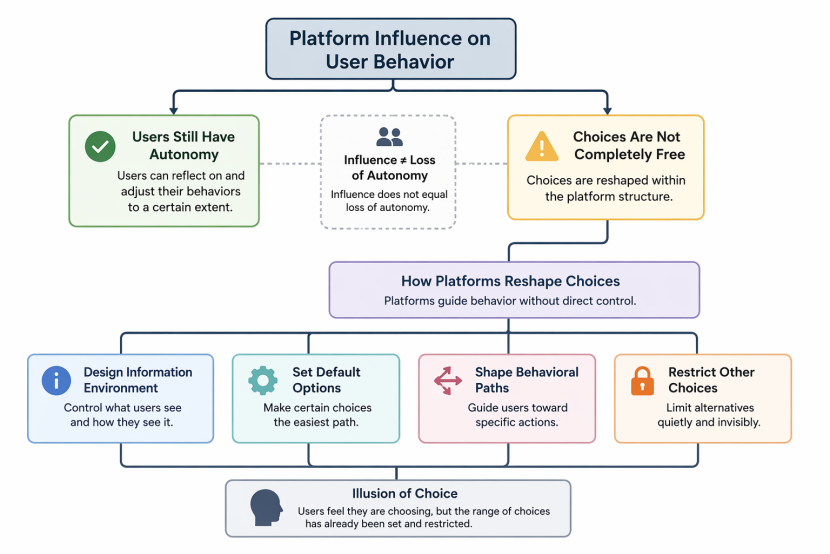
Figure 6: OpenAI. (2026). Platform INfluence on user behavior [AI-generated image]. ChatGPT.
NOW!
Let’s ask a more interesting question: Where will this digital world lead our choices and our views on privacy?
In simple terms, as more and more data is collected and algorithms improve, the platform can gain a more detailed understanding of users. In the future, they may not only know what we see or click on, but also predict exactly when we might make certain specific choices. Some areas of the platform are no longer merely for showcasing the content you might like. It can guide you to take action at the right time in a subtle way. What’s important is that this influence may feel very natural, almost invisible and imperceptible, just like air existing in our lives.
For instance, a recommendation might align with your interests, a ranking might make you feel useful, and a default option might save you time. But when these small design choices occur again and again, they will accumulate. Over time, they can shape our habits and even our way of thinking.
In this case, we will still make choices, but these choices increasingly depend on the paths set by the platform. We are still making decisions, but the circumstances in which these decisions are made are determined by the system.
Therefore, the key issue lies not only in whether privacy is protected, but also in whether we understand how our choices are formed. If this situation continues, the concept of privacy may become less clear. It is not only about what data has been collected, but also about whether we can see and understand the systems around us.
In this sense, rethinking privacy is not merely for protecting data, but for a part of freedom.
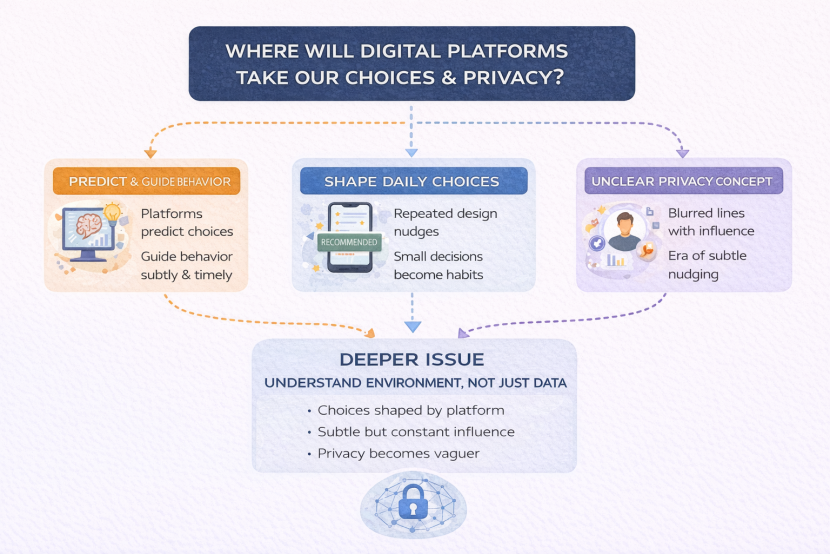
Figure 7: OpenAI. (2026). Where will digital platforms take our choices and privacy [AI-generated image]. ChatGPT.
Finally, digital privacy is not merely about controlling personal data. In today’s platform world, it is built into the way the platform works and uses data. By constantly collecting and analyzing data, we not only attempt to understand users but also subtly shape their way of making choices.
From an individual perspective, as I mentioned earlier, users seem to have the freedom to agree and choose. But these choices occur in a limited space that has already been designed. This means that people still have some control, but it is guided by the platform. The “free choice” usually depends on the options provided by the platform. Therefore, privacy protection should not only focus on data but also on how these choices are formed.
On the other hand, from a social perspective, digital privacy has never been merely an individual’s right. Through algorithms, rules and design, the platform not only shapes people’s behaviors, but also the way information is disseminated and public discussions occur. This will affect people’s thinking and Judgment. Therefore, privacy is also a matter of platform responsibility, transparency and public interest.
Ultimately, rethinking digital privacy is not only about protecting data, but also about understanding our position in the platform society and how these systems shape us.
This leads to a deeper question: In a world shaped by platforms, can we still have true freedom of choice?
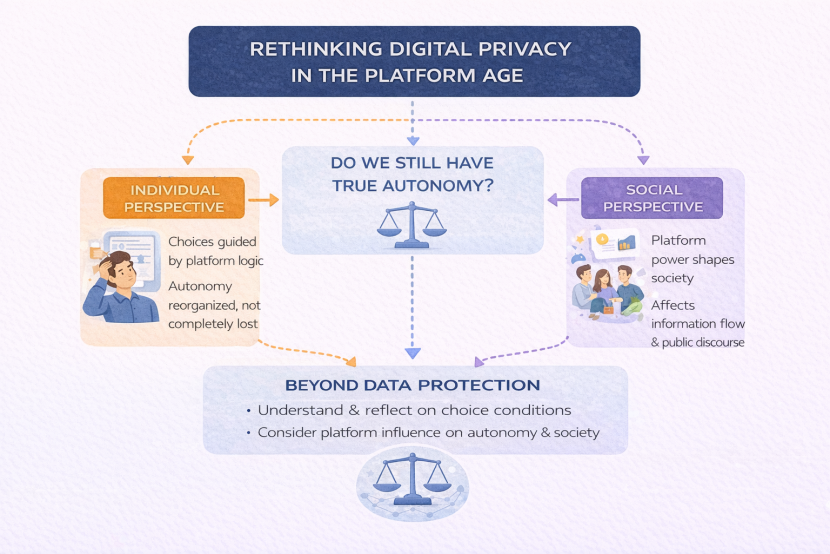
Figure 8: OpenAI. (2026). Rethinking digital privacy in the platform age [AI-generated image]. ChatGPT.
Thank you!
Word count:2059
References:
Australian Competition and Consumer Commission. (2021). Digital advertising services inquiry: Final report. https://www.accc.gov.au/system/files/Digital%20advertising%20services%20inquiry%20-%20final%20report.pdf
Boldyreva, E. (2018). Cambridge Analytica: Ethics and online manipulation with decision-making process. In 18th PCSF 2018: Professional culture of the specialist of the future. https://doi.org/10.15405/epsbs.2018.12.02.10
Confessore, N. (2018). Cambridge Analytica and Facebook: The scandal and the fallout so far. The New York Times. https://www.nytimes.com/2018/04/04/us/politics/cambridge-analytica-scandal-fallout.html
Flew, T. (2021). Regulating platforms. Polity Press.
Hinds, J., Williams, E. J., & Joinson, A. N. (2020). “It wouldn’t happen to me”: Privacy concerns and perspectives following the Cambridge Analytica scandal. International Journal of Human-Computer Studies, 143, 102498. https://doi.org/10.1016/j.ijhcs.2020.102498
Nissenbaum, H. (2018). Respecting context to protect privacy: Why meaning matters. Science and Engineering Ethics, 24(3), 831–852. https://doi.org/10.1007/s11948-015-9674-9
OpenAI. (2026). A conceptual illustration of the illusion of digital privacy in platform environments [AI-generated image]. ChatGPT.
OpenAI. (2026). Cambridge Analytica scandal [AI-generated image]. ChatGPT.
OpenAI. (2026). Cambridge Analytica scandal 2 [AI-generated image]. ChatGPT.
OpenAI. (2026). Do we really know what agreement we have reached? To put it more deeply, can we really control our personal data?[AI-generated image]. ChatGPT.
OpenAI. (2026). Illustration of a digital platform shaping user choices through algorithms [AI-generated image]. ChatGPT.
OpenAI. (2026). Platform INfluence on user behavior [AI-generated image]. ChatGPT.
OpenAI. (2026). Rethinking digital privacy in the platform age [AI-generated image]. ChatGPT.
OpenAI. (2026). The key issue: how data processes reshape users’ positions in the digital environment [AI-generated image]. ChatGPT.
OpenAI. (2026). Where will digital platforms take our choices and privacy [AI-generated image]. ChatGPT.
Susser, D., Roessler, B., & Nissenbaum, H. (2019). Technology, autonomy, and manipulation. Internet Policy Review, 8(2). https://doi.org/10.14763/2019.2.1410
Suzor, N. P. (2019). Lawless: The secret rules that govern our digital lives. Cambridge University Press. https://doi.org/10.1017/9781108666428
University of Adelaide. (2021). Understanding mass influence: A case study of Cambridge Analytica as a contemporary mass influence campaign. https://www.unsw.edu.au/content/dam/pdfs/unsw-canberra/dri/2023-02-research/2023-02-Understanding-Mass-Influence—A-case-study-of-Cambridge-Analytica.pdf
Be the first to comment