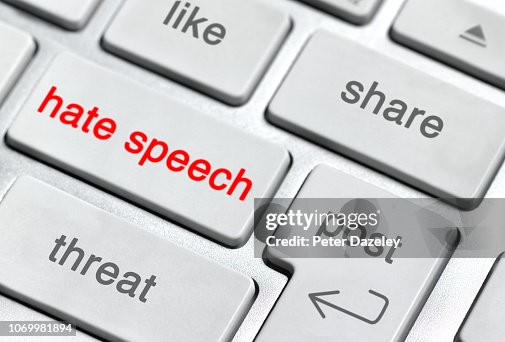
Passing the matriculation and get the offer from top universities can be one’s life milestone in China. Chinese people attach incredible importance on pursing degrees; this tradition still goes extremely prevalent in Chinese society. In July 2022, a young Chinese girl called Zheng, just got the offer from a top graduate school in China. She’s the pride of her whole family and she posted her offer on social media to celebrate, but things turned toward an unexpected direction, she didn’t get much applause, she got hate speeches instead. Just a few days later, the exposure of Zheng’s post was over 3 million times, Zheng received tons of censure, hate speeches and even sexual harassment since July 2022, just because the haters thought Zheng’s personal image was a shame to the graduate school. Six months later, the young, innocent and intelligent girl with a bright future passed away due to the serious depressive disorder, she committed suicide silently. Hate speech wins, and Zheng was gone.
This is not just a random story made by unscrupulous writer; it’s a real tragedy happened in China in 2022. In this tragedy, hate speech and online harassment directly resulted in the death of a young girl eventually. Why does the online hate speech have such a strong impact on people’s mental and physical health? What should us reflect from these tragedies? What can we do to prevent such hate speeches tragedies happen again? Let’s keep on reading this blog and figure it out together.

Zheng played ukulele. Image resources: https://www.bbc.com/zhongwen/simp/chinese-news-65095783
Unequal Power Relations of Online Hate Speech
In my opinions, there exists extremely unequal power relations when hate speech emerged. It’s also one of the reasons why hate speeches and online harassment can cause serious damage to victims’ mental and physical health.
Before Zheng decided to commit suicide to end her life, she suffered a lot of offensive name-calling, such as ‘slut’, ‘shameless barmaid’ (Deep Training Camp, 2023). Zheng got the graduate school offer from a famous normal university, some haters even insulted that she is not deserved to be teacher in the future. Zheng feels extremely terrible that, these hate speeches insulted her based on her social connection, haters recognized her membership in a special social group and then attacked her social identity ( Guan & Chen, 2025). Zheng used to regard the membership of postgraduate school as her honor, now the honor became the sword that stabbed into her heart. Faced with this horrible situation, she asked for the legal aid to protect herself, then she typed and replied to these hate speech messages one by one, day and night.

There came to the unequal power relations features, hate speeches are always about a huge group targeting on one person, or a smaller group. There is a huge numerical disparity between the haters and the victims, it’s apparently a battle that victims can hardly win. Just as Terry Flew (2021) mentioned that one of the features of hate speech is, hate speech always against specific individuals or a group of individuals based on random and normatively irrelevant feature.
It’s impossible for Zheng to make proper reply to all hate speeches, she was too lonely and isolated when she against people who hide behind the screen. Hate speech puts the victims in a confrontation position, but victims are always in inferior positions. Most of the times, the victims are just overwhelmed by the hate speeches, haters bully others by the huge numbers of people. In other words, the internet and digital media have become an asset or weapon for haters to transmit hate speeches and other propaganda, because internet and digital media make it so much easier, cheaper and quicker to do the information distribution ( Guan & Chen, 2025). It’s so easy to type some offensive words and send them to a stranger on social media and other digital platform today.
Here, I want to make a metaphor that, the drivers need to get a driver license before they get on the road, they would be punished immediately when they disobey the traffic rules; the digital platforms such as social media are also busy ‘roads’, they transmit and commute so much information every single day, but no one is asked to get a internet license to ensure that they would respect others and ‘drive on the road’ safely. Technology is a double-edged sword, it’s especially obvious when individuals or small groups of people are getting harm from the online hate speech.
Haters Always Hate, Especially for Superficial Reasons
According to our reading materials, the reasons for online harassment can vary from political or religious beliefs, physical appearance and gender. (Flew, 2021) Here, the hate speeches that Zheng received mainly focus on her personal appearance, especially her pink hair.
It’s such a pity that, besides Zheng’s physical appearance, she was such a wonderful person with so many merits, which the haters choose to relatively ignore. Zheng was raised by her grandfather, her biggest wish was to get the offer as soon as possible, because her grandpa was in a bad health situation (Deep Training Camp, 2023). When she finally got the physical offer, she went to the hospital and visited her grandpa immediately, she showed her offer to her grandpa and recorded a video and posted on social media, then the hate speeches came like a tsunami.
Zheng was an obedient, intelligent and hardworking person. However, even if Zheng got so many obvious meris, these merits didn’t make her escape from the online attacks and bad words, just because the color of her hair. She got the message that curse her grandpa to pass away earlier (Deep Training Camp, 2023) which was extremely horrible, harmful and inhumane.

The logic of why haters sent hate speeches was very simple, somehow stupid. They roughly categorized people who dye their hair into shameful groups, and they followed this logic to extend the range of targeted victim group. Zheng was going to graduate school of a normal universities, haters then start to disseminate hate speeches about, all the normal university students were nasty and unethical to try bold physical appearance (Deep Training Camp, 2023). Just as Terry Flew (2021) mentioned that one of the features of hate speeches is that, hate speeches can disparage the target group by implicitly or explicitly attributing bad characters on it. In other words, the hate speech not only directly cause the death of Zheng but also hurt other innocent groups which is related to Zheng.
Deeper harm happened later
For little poor Zheng, the hate speeches were like wounds on her heart, she got hurt ever since she saw these bad words and hate speech. Then these hate speeches continuously hurt her until she committed suicide. She chooses to be brave and fight for herself, but the process of reporting hate speeches and obtaining evidence made little Zheng feel disappointed and painful again.
The process of asserting Zheng’s own right was another problem to her. According to Zhang (2023), Zheng asked for legal aid to obtain the evidence of being abused by hate speeches, and she had all the evidence she got notarized at a notary public office. One officer from social media platform said, it was so hard to identify whether a sentence was hate speech or just a joke, words were too subjective, the identity of speakers can also define whether words were offensive (Zhang, 2023). Just as Terry Flew (2021) mentioned that language itself is not the critical standard to be used to identify whether words are hate speeches or not, sometimes racist viewpoints can even be presented as a funny joke.
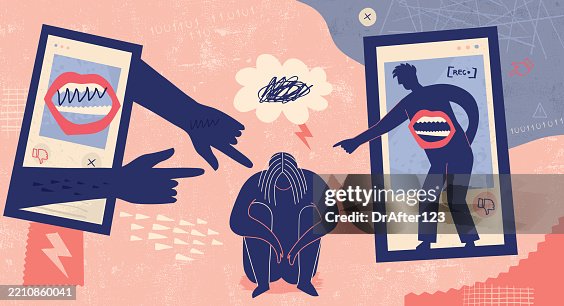
What’s worse, the range of regulation is still limited. If we hold Facebook as an example of digital platform, when it talks about the hate speech and bad words, if they happened in private conversation, it ought not to be regulated (Sinpeng et al., 2021). But for Zheng, many of the hate speeches were sent in private messages, and if the platform tried to regulate and punish these haters, it may refer to the violation of user privacy (Zhang, 2023). Such a dilemma put Zheng into an embarrassing position, she was just 23 years old when these hate speeches emerged, she put lots of time and financial cost to assert her own rights and protect her dignity, she didn’t even have time and energy to heal herself from the first round of hate speeches, she got hurt twice.
Up to now, little poor Zheng suffered from hate speech itself continuously, and she suffered twice during she fight back for herself. She had done all the things she can do, but the cyberbully and hate speeches still took away her vivid and beautiful life. As a fragile and weak individual, Zheng was not able to confront all the hate speeches from social media. In my opinions, Zheng was mainly suffered emotionally and mentally, she was under extreme pressure. The harm of online abuse, the pressure from social media, the isolated emotion, these are things that can’t be quantified or described in specific data. No one can calculate the actual damage in Zheng’s heart. If an individual couldn’t fight back to the online abuse and hate speech, the regulation can.
Regulation Is The Key
When we talk about the regulation of digital platforms, there always exists a classic and controversial dilemma, people in the whole world have their civil rights to speak out loud their minds, viewpoints and stand, search and receive information (Flew, 2021) while we’re trying to prevent people from getting hurt by bad words and hate speeches. Just as Terry Flew (2021) officially claimed in his book that, there exist a question about how to balance he principles of encouraging to speak and express without barriers and having powerful regulatory and legal punishments against hate speeches and online abuse.

Image resources: https://www.gettyimages.com.au/search/2/image?alloweduse=availableforalluses&family=creative&phrase=regulatory%20technology&sort=mostpopular
In my opinions, we should dialectically build our viewpoints towards this question. As I mentioned in previous paragraphs that, language and emotions are subjective and they’re hard to be quantified, we can avoid hate speech tragedy from a higher order dimension. In order to improve the duty of care of digital platforms, it was suggested that regulation should also target on the mechanism of the whole platform, such as the design of services, the supports and resources for user complaints and user safety, instead of just focusing on the content and languages (Woods, 2021).
Let’s go back to Zheng’s case, after she got the online abuse and called the police, the police suggested her to seek more help with digital platforms officers (Zhang, 2023). However, the platforms called Douyin in China didn’t response to Zheng’s reports immediately, some haters stolen Zheng’s images to make fake news, but Douyin claimed that the complaints and reports from Zheng were not supported by Douyin (Deep Training Camp, 2023). I personally judged that, Douyin lack of the support and duty care to their users, Douyin responded slowly and ineffectively when Zheng asked for help, which directly caused the further dissemination of hate speech and misinformation. Douyin, you’re responsible.
The Battle Will Not Stop
In conclusion, after I stated about how much it would hurt to individuals and small groups of people when hate speech emerged, it’s time to make difference to the hate speech and online abuse issue.
For individuals, if you got online abuse and hate speech unfortunately, don’t try to prove you’re not guilty, and don’t communicate with the haters one by one, you can never defend the vast venom which is on purpose. Turn off your phone and forget about the social media, asked for legal aid and mental health help. Protect yourself and stay away from these devils behind the screen.

For platforms, the regulations of hate speech among digital platforms are still in a developing stage. Fast response, strict regulations and supportive duty care are the essential elements of preventing hate speech tragedy. More importantly, the mechanism of a digital platform should not be designed only for profits and exposure, but also for the user safety.
I wish there is no more tragedy like Zheng’s case. Good night little girl, we’ll finish the battle that you didn’t.
References
Deep Training Camp. (2023, April 8). How the media reported the online abuse faced by the “pink–haired girl”: An event review. The Paper · Pengpaihao · Paike.https://www.thepaper.cn/newsDetail_forward_22614224
Flew, T. (2021) Issues of Concern., In Regulating platforms (pp. 91–96). Polity.
Guan, T., & Chen, X. (2025). Threat Perception, Otherness and Hate Speech in China’s Cyberspace. The Journal of Contemporary China. https://doi.org/10.1080/10670564.2025.2475051
Sinpeng, A., Martin, F. R., Gelber, K., & Shields, K. (2021). Facebook: Regulating hate speech in the Asia Pacific (Research report). Department of Media and Communications, The University of Sydney.
Woods, L. (2021). Obliging Platforms to Accept a Duty of Care. In Martin Moore and Damian Tambini, M. Moore, & D. Tambini (Eds), Regulating Big Tech: policy responses to digital dominance (pp. 93–109). Oxford University Press.
Zhang, S. (2023, February 23). How difficult is it to track down the mastermind behind the cyberbullying that led to the “pink–haired girl’s” death? Legal Daily WeChat Official Account. https://www.bj148.org/zz1/shaq/202302/t20230223_1647538.html
Be the first to comment