Imagine a scenario: when you want to send an email, you simply ask OpenClaw “Send the data-analysis.xlsx on my desktop to Client A as an email attachment.” The AI will automatically draft the email with the appropriate content and send it through Gmail — all on its own.
In January 2026, a software called OpenClaw became a global phenomenon.
That marks a fundamental leap for AI: from conversational assistant to autonomous executor. Users can describe their needs in natural language, and OpenClaw will independently plan, coordinate, and invoke cross-platform software to fulfil them. Some also believe it is a milestone signalling the arrival of the Artificial General Intelligence (AGI) era.
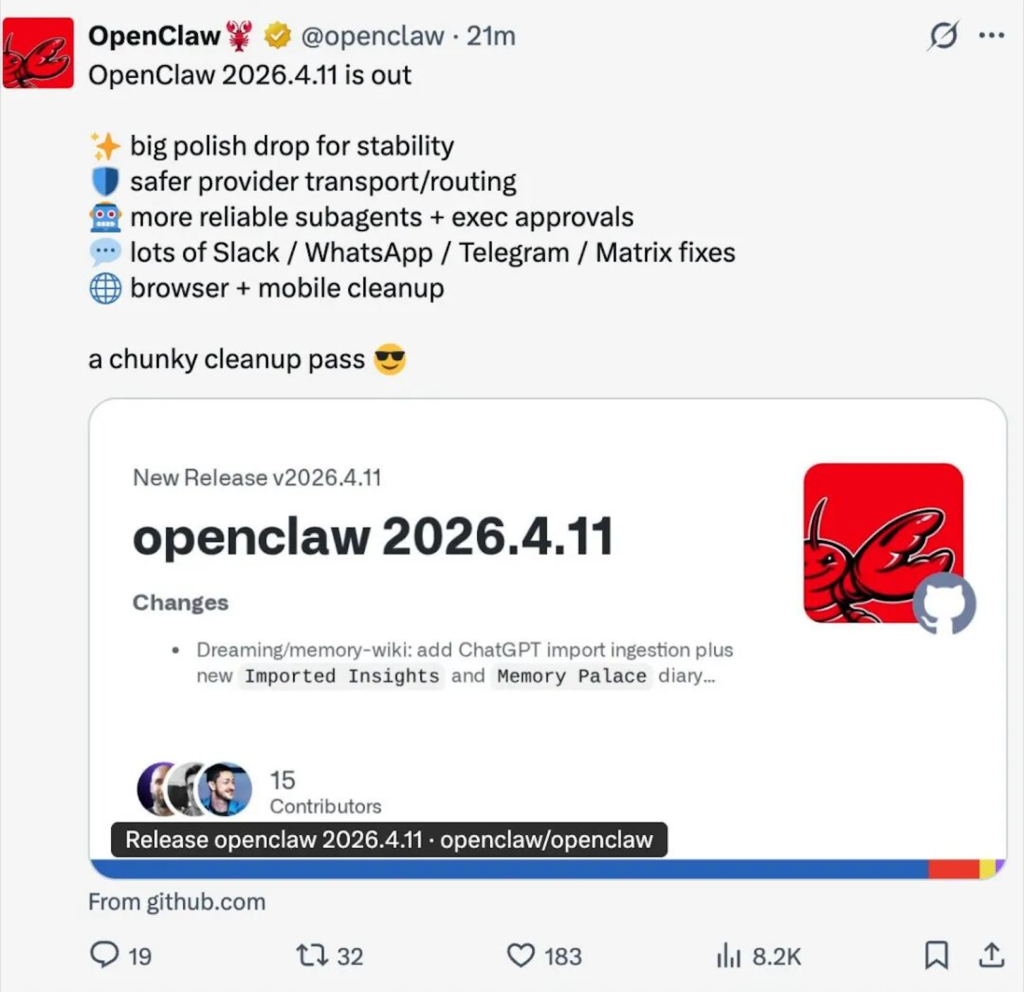
By April 2026, OpenClaw had surpassed 340,000 Stars on GitHub, making it the fastest-growing open-source project in history. Its founder has also been invited to join the core team at OpenAI.
However, the rise of OpenClaw has sparked widespread anxiety about the future. When AI can independently manage tasks, does this mean people no longer need to learn how to use various software tools? Furthermore, as machines become increasingly intelligent, does this mean humans will be replaced by machines in the job market?
On August 20, 2011, Marc Andreessen (2011) published his famous essay, “Why Software Is Eating the World”. At that time, nearly every industry was reshaped by software including design, accounting, gaming, and transportation. Today, we face a new question: Is software itself, along with industries and jobs being eaten by AI?
We can already see that happening: ChatGPT can handle documents and spreadsheets, enabling users to generate Excel files and PowerPoint presentations on demand. Meanwhile, both Gemini and Claude offer powerful coding capabilities that allow users to build software and games directly. These developments all point to AI beginning to replace some software.
In a recent speech at the World Economic Forum, NVIDIA CEO Jensen Huang (2026) remarked that AI is becoming the cornerstone of the “largest infrastructure buildout in human history.” It is an industrial transformation that reshapes how energy is produced and consumed, how factories are built, how work is organized and how economies grow.
This article argues that AI agents are already disrupting software ecosystems and labour markets at an unprecedented speed. The critical question is not whether this disruption will happen, it already is, but whether governments and societies will act in time to ensure it leads to technological democratisation rather than deeper inequality. Drawing on Crawford’s (2021) framework of AI as a system of power, this piece examines how AI reshapes software, restructures industries, and transforms employment — and what policy responses are urgently needed.
Is the Agent Eating Software?
OpenClaw is fundamentally different from an ordinary chatbot. While tools like ChatGPT, Claude, or Gemini are limited to answering questions, OpenClaw can proactively convert natural language into complete workflows, and invoke the appropriate software to finish tasks, eg, browsing website news, extracting key information, generating reports, organizing files in folders, all without human intervention.
This kind of general-purpose AI poses a serious threat to all specialised software like Office, Photoshop, ERP, CRM, and so on. For decades, offering those specialised tools as a service has been the core business model for many technology companies. At that time, each job function required its own dedicated tool, and companies paid substantial amounts for software licences, training, and maintenance. Software vendors must continually adapt to user needs, ensuring their software services are easy and intuitive for humans to operate.
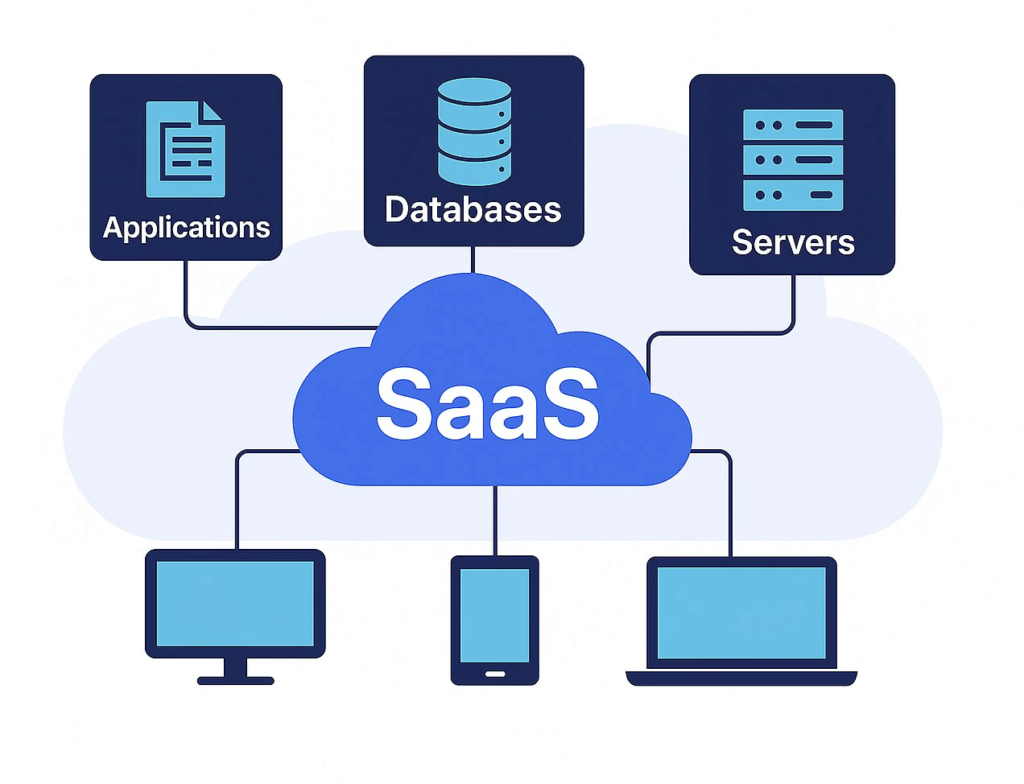
However, nowadays, users no longer need to open any software at all. Instead, they can simply let an agent call upon whatever tools it needs to complete the task. Those agents can also bypass conventional software, directly invoking their skills. What’s more, agents can create new tools and utilize skills at a speed that surpasses the rate at which SaaS vendors can upgrade and maintain their products, and all at a fraction of the cost. This presents an enormous challenge to the software industry’s future.
The following categories of software are most likely to be displaced by AI:
- Single-function utility software. Software with simple, singular functions, including translation tools, document editors, data collection and sorting apps. Functions in those software can be broken down into clear execution steps easily and internalised as basic skills of an AI agent. ChatGPT and Doubao, for instance, already offer online translation, document generation, and data analysis skills, so that users no longer need to jump to a dedicated app.
- Interaction-dependent software. Tools like Photoshop (for basic retouching) and similar creative applications are vulnerable as their core functions can be described in natural language, making them easier for AI to replicate.
- Information-distribution software. Platforms like Wikipedia, Bing, and Google News face risk because users no longer need intermediaries to search for information. AI can generate answers directly.
💡 By contrast, social-network-centric software such as Facebook and WeChat, which have accumulated deep personal relationships and user assets are considerably harder to displace. Similarly, data-moated platforms like Bloomberg whose proprietary datasets cannot be publicly scraped and used to train large models, that are currently well-protected from competition (Wang, 2026).
This raises an urgent governance question: if AI agents can bypass entire software industries, who can stop the power concentrated in a few AI platform providers? As Crawford (2021) argues, AI is not a neutral tool, it is a system embedded in structures of power, and its capacity to displace software industries only intensifies the need for robust platform governance.
Is the Agent Reshaping Industries?
The emergence of general-purpose agents like OpenClaw will not merely replace software — it will restructure industries and overturn existing business models.
The first major shift is that the business model changes from “ease of interaction” to “ease of invocation”, because agent become the final user to many products and services. For decades, industries have regarded humans as the ultimate end-user, giving rise to entire product thinking: user personas, customer journey maps, usability testing. But in the future, all of them will be changed, as the primary “user” will be the agent itself. As a result, qualities like ease of invocation, reliability, brand authority, and the modularity of functions will matter far more than aesthetic appeal or user-friendliness. The performance of products will be evaluated based on how often it is invoked by AI.
The second major shift is that AI will become foundational infrastructure across various industries including traditional industries, physical manufacturing, consumer goods and services. AI will serve as a productive force, empowering those industries and driving growth in productivity. For example, in healthcare, DeepMind has employed AI in the analysis of retinal scans (OCT imaging). By using deep learning models to assist in medical diagnosis substantially improve its accuracy and speed.
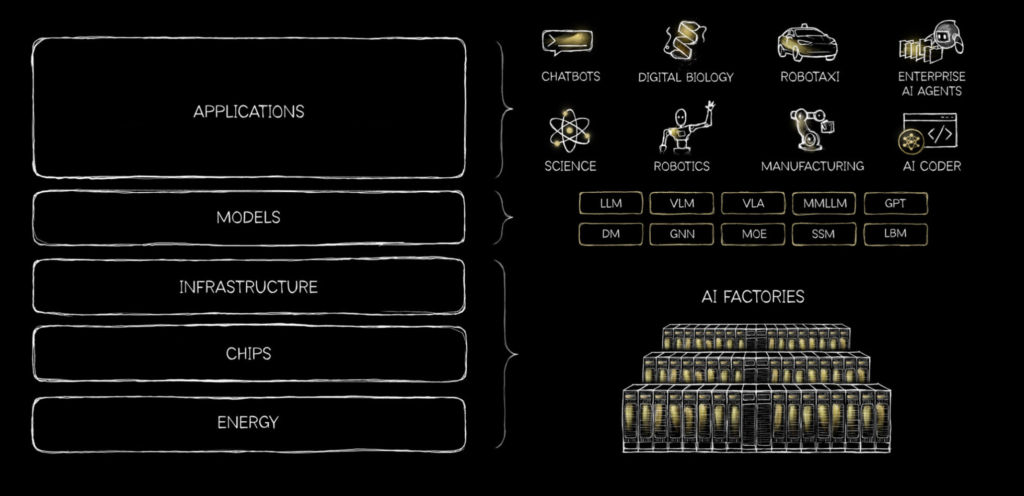
The third major shift is that technological competition will increasingly revolve around energy competition. As Jensen Huang (2026) mentioned in his blog, AI can be compared to a five-layer cake: Energy → chips → infrastructure → models → applications. That is to say, the foundation of AI is energy. Every token produced is the result of electrons moving, heat being managed and energy being converted into computation. Thus, Crawford (2021) makes this point vividly: building AI is not only a mining of data, but also a mining of global energy resources. The AI revolution is related to environmental justice and geopolitical competition.
These shifts demand that policymakers move beyond regulating individual technologies and start governing entire AI ecosystems — from energy supply chains to algorithmic market power.
Technological Democratization or an Employment Crisis?
For many people, a primary concern is whether AI agents will threaten their jobs. These worries are valid, and we have already witnessed examples of workforce reductions due to the application of AI.
Klarna (2024), a Swedish fintech company, announced that its AI customer service system handled the workload of 700 full-time employees in one month. It subsequently reduced its customer service team from 3,000 to around 2,000 people. CEO Sebastian Siemiatkowski explicitly attributed this to AI.
Jaimovich and Siu (2020) identified the phenomenon known as job polarisation: high-skill and low-skill positions both grow in number, while middle-skill jobs decline. This suggests that without intervention, AI may intensify this polarisation, compressing the information-relay hierarchy and eliminating many middle-management positions that are responsible for coordination and communication, leaving only strategic leadership at the top and frontline executors at the bottom.
Some optimistic voices argue that AI creates new jobs even as it destroys old ones (Budak, 2025). The World Economic Forum (2025) estimated that automation may eliminate 85 million jobs by 2025, but could simultaneously create 97 million new ones — a net gain of 12 million positions. Areas likely to see growth include data analysis, AI and machine learning, the green economy, healthcare, and education. The WEF also pointed to web developers, social media managers, and SEO specialists as examples of professions that did not exist a few decades ago, born from the rise of the internet. Similarly, AI is expected to generate entirely new roles: AI ethicists, human–AI interaction designers, and machine learning engineers. Interestingly, Klarna, the company mentioned above rehired staff after discovering that AI could not handle complex or emotionally sensitive queries (Charles, 2025).
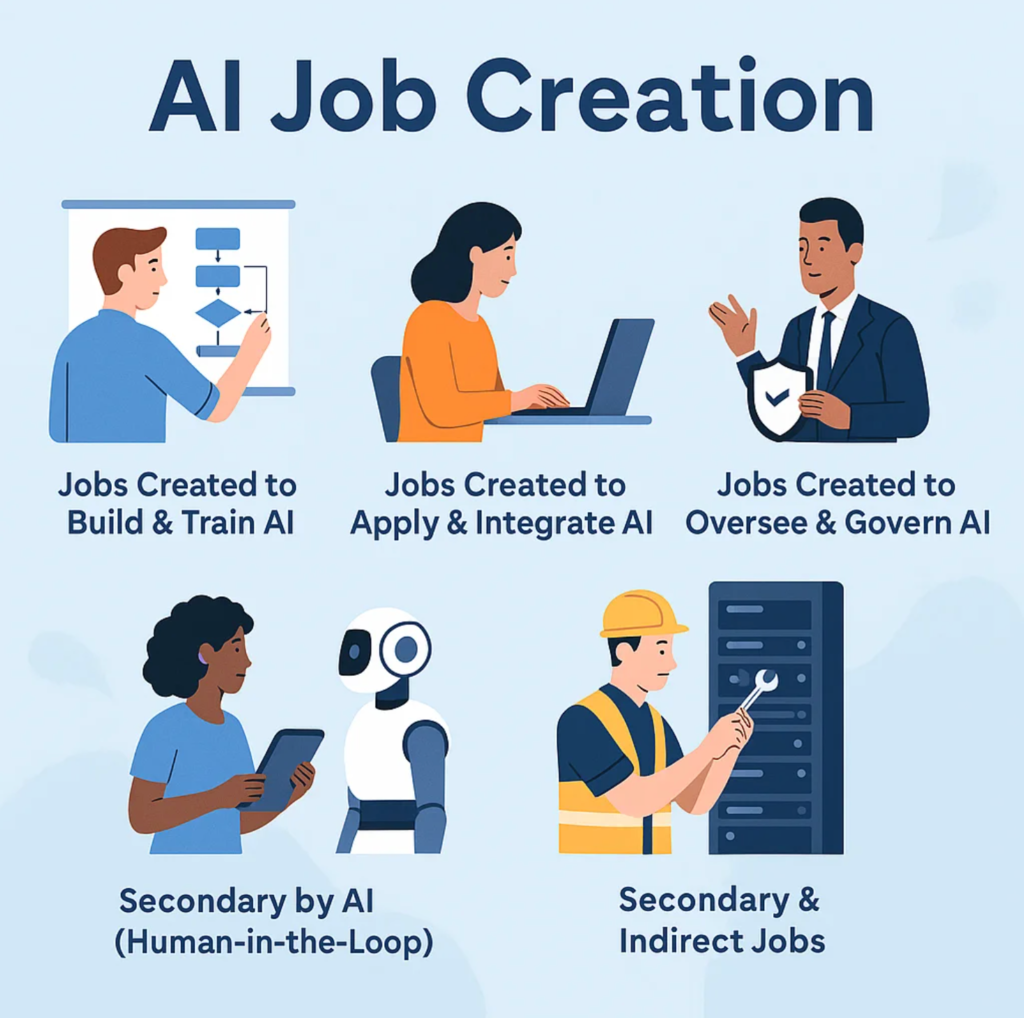
Some also believe that AI is a technological democratization which lowers barriers to some specialised fields and boosts productivity and innovation. OpenClaw, for instance, can help someone with no programming background develop software or design interfaces without knowing Java. Huang (2026) also mentioned in his blog that ‘productivity creates capacity. Capacity creates growth. A strong proof is that AI now assists with reading scans, but demand for radiologists continues to grow. When AI takes on more of the routine work, radiologists can focus on judgment, communication and care. Hospitals become more productive. They serve more patients. They hire more people.
The more pessimistic view holds that AI will intensify skill polarisation. As routine tasks are automated, the labour market will split into two tiers: high-skill, high-wage positions that complement AI — such as algorithm engineers — and low-skill, low-wage positions that remain uneconomical to automate. Workers who lack the skills to compete in the high-skill market risk being trapped in dead-end, low-wage jobs with no prospect of advancement.
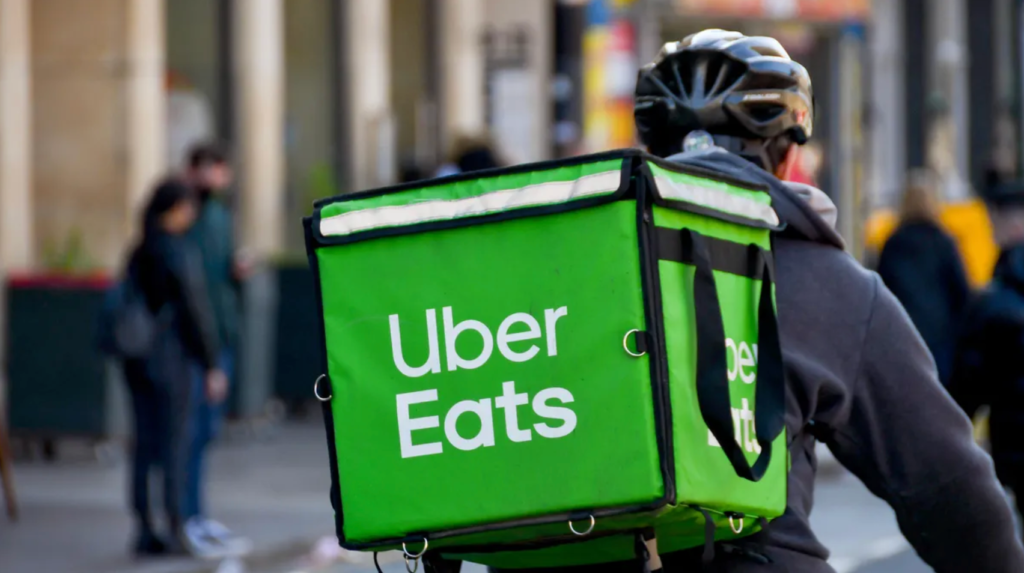
Furthermore, the relationship between algorithms and workers is not one of equal collaboration, but of surveillance and control. AI can calculate with precision the work schedule that maximises output per employee, treating workers as perpetually available machines, slotting them into task after task without pause. Algorithms from platforms like Meituan and Uber precisely calculate the time required for each delivery and seamlessly queue the next order. AI replaces the employee as planner, while simultaneously recording every movement.
Crawford (2021) argues that AI implements new forms of surveillance and evaluation of labour, extracting the maximum possible labour. So we should think about who benefits from it and who pays.
Can AI Bring Humanity a Better Future?
OpenClaw and the wider movement of general-purpose AI agents are already reshaping the world. The central question about whether AI will disrupt software, industries, and jobs is clear: Definitely, it will. The next question is who bears the costs and who captures the gains.
We are already seeing signs of resistance. Many people are calling for stronger regulations on big tech and AI, increased antitrust actions to protect jobs from AI. And the European Union’s AI Act, which entered into force in 2024, represents the world’s first comprehensive attempt to govern AI by risk level, classifying applications from “minimal risk” to “unacceptable risk” and imposing obligations on providers of high-risk systems. It is a model for other governments to follow.
But regulation alone is not enough. As Budak (2025) argues, the transition requires a comprehensive policy architecture: lifelong learning systems to reskill displaced workers, rights-based protections against algorithmic surveillance, and progressive taxation on AI-generated productivity gains to fund social safety nets. Crawford (2021) goes further, insisting that we must see AI not as a purely technical question but as a political one — involving choices about who controls infrastructure, who profits from data, and who is made vulnerable.
All in all, I believe if we want to achieve genuine technological democratisation, societies should concentrate on worker protections, fair redistribution of AI’s gains and fair competition in the market. If we do not pay attention to that, AI may accelerate inequality rather than empowering humanity.
The technology is already here. The policy response must catch up.
References
Andreessen, M. (2011, August). Why software is eating the world. The Wall Street Journal. https://a16z.com/why-software-is-eating-the-world/
Huang, J. (2026, March). AI is a 5-layer cake. NVIDIA Blog. https://blogs.nvidia.com/blog/ai-5-layer-cake/
Crawford, K. (2021). The atlas of ai : Power, politics, and the planetary costs of artificial intelligence. Yale University Press. https://ebookcentral.proquest.com/lib/usyd/detail.action?pq-origsite=primo&docID=6478659#
Jaimovich, N., & Siu, H. E. (2020). Job polarization and jobless recoveries. The Review of Economics and Statistics. https://doi.org/10.1162/rest_a_00875
Budak, Y. (2025). The second great disruption? Artificial intelligence, technological unemployment, and policies for a resilient workforce – A literature review. European Journal of Formal Sciences and Engineering. https://doi.org/10.26417/zazrxp84
World Economic Forum (2025). Future of Jobs Report 2025. World Economic Forum. https://www.weforum.org
Klarna. (2024). Klarna AI assistant handles two-thirds of customer service chats in its first month. Klarna Press Release. https://www.klarna.com/international/press/klarna-ai-assistant-handles-two-thirds-of-customer-service-chats-in-its-first-month/
Charles, D. (2025, May). Klarna turns from AI to real-person customer service. Bloomberg. https://www.bloomberg.com/news/articles/2025-05-08/klarna-turns-from-ai-to-real-person-customer-service

Be the first to comment