
Since Weibo has clearly stated that the “toilet accounts” is harmful and taken relevant measures, why does it appear again and again?
At first glance, this seems to be a simple audit mistake, which may be because the platform’s supervision is not strict enough, or it may be because users create new accounts too fast. On Weibo, the so-called “toilet account” has become a common form of cyber violence. These accounts are usually anonymous accounts or contribution accounts. They use other people’s photos, comments or behaviors as materials for mockery, humiliation and group attacks. They may not always fully meet the legal definition of hate speech, but they obviously fall into a broader category of cyber hazards. They will cause people to suffer harassment, cyber violence,and sometimes even doxxing.

The continuous existence of the “toilet accounts” after the “Qinglang Operation” not only proves that the platform lacks an effective audit mechanism, but also proves that the deeper problem lies in structural factors.Rules may exist, but due to poor implementation, obscure language, platform culture, and platform economy that continuously rewards exposure and attention, the harm will continue to breed.
The problem is not the lack of rules.
For the problem of “toilet account” on Weibo, a common reaction is that the platform is “not doing enough”. This statement sounds reasonable, but there is also a risk of oversimplification. Qinglang Action shows that the problem is not the lack of governance on paper.
In November 2023, the Cyberspace Administration of China launched the “clear, that is, rectifying network hostility” action, and clearly listed “toilet account” and doxxing as governance targets (Cyberspace Administration of China [CAC], 2023). It is worth noting that the official notice not only requires the deletion of harmful posts, but also requires the platform to manage recommendation functions, topic pages, comment areas and message functions. In other words, regulators have long realized that the spread of network harm is not only because users publish bad content, and the platform also promotes the visibility of these contents.
Weibo publicly responded to this view. Its “online hostility rectification” reporting zone lists toilet accounts, human flesh searches, malicious mockery and obscure hostility as reportable hazards. This is very important. It shows that the Weibo official does not regard these accounts as harmless gossip, and the platform itself admits their harmfulness.
However, these accounts have not disappeared. A report of the Yangcheng Evening News in December 2024 pointed out that after a year of rectification, the toilet account not only did not disappear, but also “transferred to a deeper shadow” (Yangcheng Evening News, 2024). In 2025, the Cyberspace Administration once again issued a notice calling for more efforts to crack down on “unboxed” human flesh search, and requiring major platforms, including Weibo, to strengthen control measures (CAC, 2025). This follow-up action is of great significance and indicates that the broader problem has not been solved.
Therefore, the Weibo incident should be more understood as a dilemma of governance, not just a problem of “lack of audit”. Rules exist, and the more difficult question is why these rules are still difficult to work in practice.
The harm is not only spread through posts, but also through the system.
It is difficult to eradicate the “toilet number”. One of the main reasons is that these bad content will be spread through the regular functions of the platform: recommendation, forwarding, screenshots, comments, anonymous contributions. In other words, the problem lies not only in the concentration of bad content here, but also in the system itself that allows these contents to spread.
Woods and Perrin (2022) believe that network harm should not be regarded as just an isolated content problem. Governance also needs to consider service design, business models, platform tools, and resources that can be used for complaints and security, because these factors will affect the flow and dissemination of information on the platform. Because the toilet account is not just a “bad page”, it is more like a small system. If someone posts content, the account will be forwarded, and fans will identify or interpret the content. These retweets and comments contribute to the spread of harmful content. From this perspective, Qinglang’s emphasis on recommendation systems and visibility tools is more meaningful.
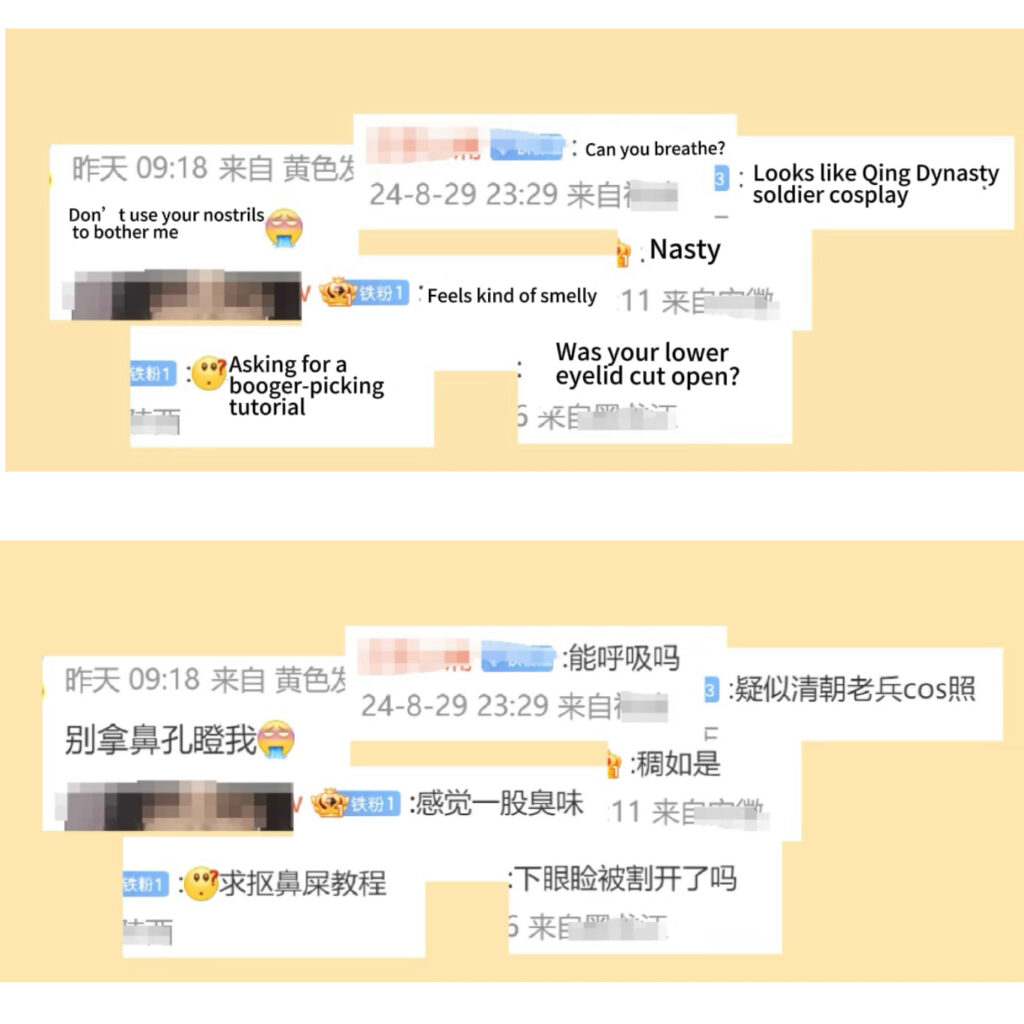
However, finding a problem is not the same as solving the problem. Through the crackdown, the account may be deleted, but they can’t delete the system that promotes the spread of harm. That’s why it’s difficult to solve the problem just by blocking the account.
The most imperceptible injuries are often the most difficult to identify.
There is another reason why “toilet accounts” are difficult to supervise. Some of the most destructive network injuries are not shown in the most obvious way. Platforms are usually better at identifying direct insults, obvious threats or invasions of privacy, while those content and behaviors spread on the Internet in a more hidden form are often ignored. “Toilet accounts” are wandering around this vague boundary.
Sinpeng et al. (2021) pointed out in their research on the regulation of hate speech in the Asia-Pacific region that harmful speech is closely related to language and context. Platform rules often fail to capture the way the target group is actually harmed. This view is particularly important for understanding the “toilet account”, because its injury mechanism does not only rely on straightforward abuse, but also relies on more contextal forms of expression such as hints, in-circle involvement, screenshots, visual clues and group interaction.
A post may not contain any formal insulting remarks at all, but it will still cause humiliation, because the followers clearly know who is being ridiculed. It is this that makes this kind of injury difficult to control. From the perspective of the platform, the post may be vague, but from the perspective of the victim, its meaning is clear.
This also explains why there is such a huge difference between the official regulations and the actual experience. The platform may solemnly declare that harassment is prohibited, but victims still feel that the protection is too late. Because harm does not always come from obvious illegal speech, it usually comes from accumulated context, repeated attacks, and insecurity exposed to the public’s vision.

Guan and chen (2025) pointed out that China’s cyberspace is deeply influenced by identity politics, identity competition and “otherization” logic.
They also added
“The self-referential nature of identity and recognition, in conjunction with the marginalization of perceived out-groups, intersects with the digital era’s ‘attention economy’ logic, in which sensational, emotional-arising, and negative narratives naturally get more visibility.”
In this communication environment, even if insulting posts do not appear in a clear and explicit form, as long as they can be identified and understood by the relevant audience in a specific context, they may still have a significant social impact.
The toilet account is not only a personal illegal account, but also a culture that can be copied.
It can be seen that the “toilet account” is not a few illegal pages that accidentally escaped the review. They are more like part of the broader platform culture.
The reason why they can exist for a long time is not only because users create them, but also because they perfectly fit people’s familiar social media habits, such as anonymous contributions, exposure, screenshot dissemination, moral judgment and comments. In this sense, “toilet accounts” are not just a “bad account”. They are a replicable interactive model that turns mockery into content and collective attacks into interaction.
The investigation of Yangcheng Evening News has important reference value here because it describes the “toilet account” as hidden but active. Its content often depends on the secret language, context and contribution mechanism that only people in the circle can understand. The attachment and forwarding in the comment section will further amplify the attack effect (Yangcheng Evening News, 2024). It can be seen that the “toilet number” is not only an occasional account, but also a replicable interactive mode. And what is really copied is not the account itself, but the social script that has been running smoothly. Change a set of text, change a page, change a set of audience, and the account will be revived again. The same thing can happen again.
The attention economy makes this problem more difficult.
Some of the answers that are difficult to eradicate may lie not only in insufficient supervision or user avoidance, but also in the economic logic of the platform itself. This is exactly where content review and interests begin to intertwine.
As Roberts (2019) pointed out, commercial content review is not a subsidiary link outside platform governance, but a key link in commercial websites and social media platforms. It not only serves brand protection, rule enforcement and compliance requirements, but also helps to create a platform environment where users are willing to continue to upload, watch and participate. And this “better user experience” is ultimately beneficial to the platform company itself.
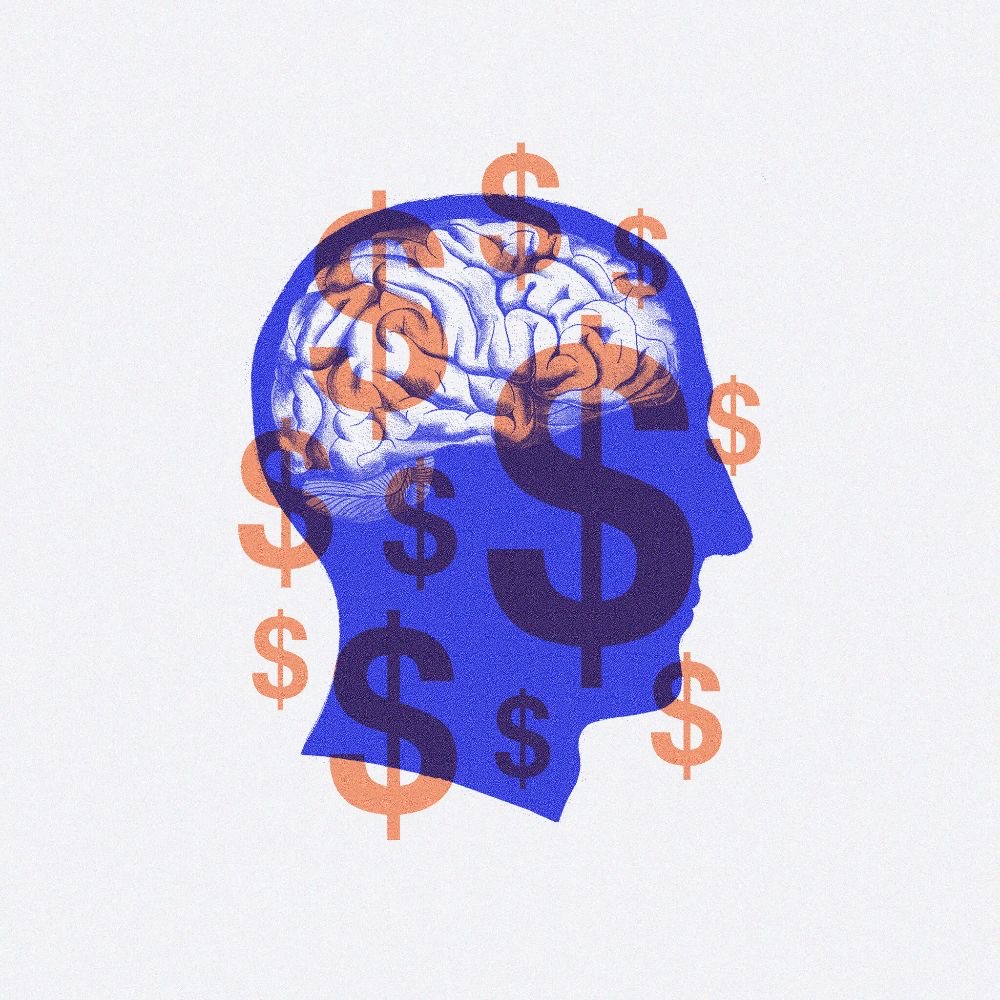
According to the information disclosed by investors on Weibo, advertising and marketing are still the core of its profit model. Although this statement is too arbitrary, it does support a broader structural view, that is, a platform that relies heavily on traffic, interaction and repeated attention, it is difficult to completely eliminate a form of content that can stably stimulate curiosity, anger and participation, and the toilet account is good at triggering these reactions.
They encourage users to visit again, share screenshots, make comments, forward posts and discuss and even cause quarrels. Once a large number of discussions are triggered, the popularity will rise in a short time. Even users who don’t like these contents may click, read and follow. This creates a real contradiction. Platforms should suppress harmful content, but the attention economy still rewards those who promote the dissemination of harmful content.
So, what should more effective supervision be like?
From this perspective, you will find that it is not enough to delete the account after the fact. As Woods and Perrin (2022) said, we need a more systematic way to solve network risks. This means that we need to go beyond a single post and pay attention to the overall situation, including the design of the platform, risk management, content recommendation mechanism, the effectiveness of the complaint mechanism, and how much energy the platform has invested in ensuring user security.
Putting these problems on platforms such as Weibo means that we should not only discuss whether harmful accounts will eventually be deleted, but also discuss why it is so easy to post anonymously, why some high-risk content is so easy to be exposed, whether reports will be handled in time, and whether the function of the platform itself will promote organization.
The End
The reason why it is difficult to eradicate the Weibo “toilet account” is not that the platform has no rules at all, but that such hazards are constantly copied at different levels of the platform. Paper rules may be difficult to implement effectively in practice, and the official definition of harmful content does not always cover those more hidden and context-dependent forms of network harm. In addition, the platform culture encourages bystanders, comments, forwarding and siege, while the attention economy rewards exposure, discussion and interaction. Under the above conditions, humiliation can easily evolve from a one-time attack to a form of content that can be repeated and spread and is very easy to spread. Therefore, for digital governance, the more important question is not whether the platform has made rules, but how much role these rules can play in the environment of rewarding attention, conflict and communication. If the conditions that promote the spread of harmful information remain unchanged, it is difficult to solve the problem fundamentally.
Reference list
关于开展“清朗·网络戾气整治”专项行动的通知_中央网络安全和信息化委员会办公室. (n.d.-c). https://www.cac.gov.cn/2023-11/17/c_1701809613019558.htm
李丹萍. (n.d.). “网络厕所”为何禁而不绝? https://m.cyol.com/gb/articles/2024-12/25/content_gGKzoRIlnw.html
中央网信办部署进一步加强“开盒”问题整治工作_中央网络安全和信息化委员会办公室. (n.d.). https://www.cac.gov.cn/2025-05/27/c_1749968642745140.htm?utm_source=chatgpt.com
Woods, L. (2021). Obliging Platforms to Accept a Duty of Care. In Martin Moore and Damian Tambini, M. Moore, & D. Tambini (Eds), Regulating Big Tech : policy responses to digital dominance (pp. 93–109). Oxford University Press.
Sinpeng, A., Martin, F. R., Gelber, K., & Shields, K. (2021). Facebook: Regulating Hate Speech in the Asia Pacific. Department of Media and Communications, The University of Sydney. https://hdl.handle.net/2123/25116.3
Guan, T., & Chen, X. (2025). Threat Perception, Otherness and Hate Speech in China’s Cyberspace. The Journal of Contemporary China, 1–16. https://doi.org/10.1080/10670564.2025.2475051
Roberts, S. T. (2019). Behind the Screen : Content Moderation in the Shadows of Social Media . Yale University Press,. https://doi.org/10.12987/9780300245318
Be the first to comment