When “choice” becomes a guided process
On an ordinary evening, you might have just walked home from the company; you might have just finished an assignment, or you might have just ended a date. Right now, you need some time to yourself to relax and play on your phone. I originally just wanted to play for a few minutes. But when I take my head , three hours have passed. Also, the content you are reading happens to be what interests you. Or you just want to relax, but the more you look, you become anxious and angry. This experience has become a daily reality for so many people.
In today’s life, algorithms influence many decisions. Algorithms guide us through every step. Our behaviors, emotions and choices are all created by algorithms. I will do it through two ways: invisible labor and emotional control. Let’s explore a core question: As algorithms become more and more integrated into our lives, do we still have the real right to choose?

Image licensed from Flickr
Invisible Labor-when workers and audiences are exploited at the same time
I’d like to start with a question that is most easily overlooked: Many people believe that AI and algorithms are automated, and they can complete all work on their own. In fact, it is not.
AI lacks autonomy; it relies on external resources and institutional support, and its development is driven by a big industrial ecosystem (Crawford, 2021, p.8). At the same time, according to research by the International Labour Organization. The operation of AI systems relies on a large amount of “microtask labor,” including image annotation, text classification, and emotion analysis, etc (Berg et al., 2018, p.15).
There are many types of microtasks, and different platforms have different types of tasks. And this work is typically carried out by workers located around the world.These jobs are not highly paid, but they form the foundation for AI and algorithms to become “clever”.
For example, an image recognition system can detect “flowers” and “grass”. It is because more and more pictures have been marked by humans that algorithms remember them, and AI can directly recognize them. So I think that behind much of what appears to be high-level automation, there is actually a great amount of human labor.

Image licensed from Flickr
On the other hand, I think “invisible labor” is very close to our daily life. We often use free platforms, but in reality, we are often working for them. For example, when we watch short videos, the platform records actions include liking, commenting, and sharing with friends. This data is not always stored in the background; instead, it is used to improve recommendation systems. Use algorithms to have the system recommend more videos we like. In other words, while we use the platform, we also help improve its algorithms. None of us get paid, yet we are always creating value.
Case 1: Food delivery riders – “Digital workers” managed by algorithms

Image licensed from Flickr
In the platform economy, food delivery riders are often considered “freelancers”. In fact, their work process relies on and is limited by algorithmic systems. The platform uses algorithms to provide full control over order allocation, route planning, delivery times, and performance evaluations for each rider (Zhao et al., 2026, p.370).
For example, during lunch and dinner times, the system will constantly push new orders and shorten the delivery time. Some riders are forced to run red lights to avoid being late and getting paid less. This behavior may appear to be the result of the rider choosing to drive dangerously, but in reality, it is a decision guided by the algorithm.
In addition, riders are required to enable location services and Bluetooth on their phones to share their location in real time (Zhao et al., 2026, p.382). If they are not opened, orders cannot be accepted. On the surface, riders appear to be making “choices”. But in reality, every action from getting orders and picking up food to final delivery—is controlled by algorithms.
Case 2: You think you are making money, but in fact, most people are working for nothing
Many people see top influencers making a lot of money and think, “Creating content must be pretty easy to make money, right?”
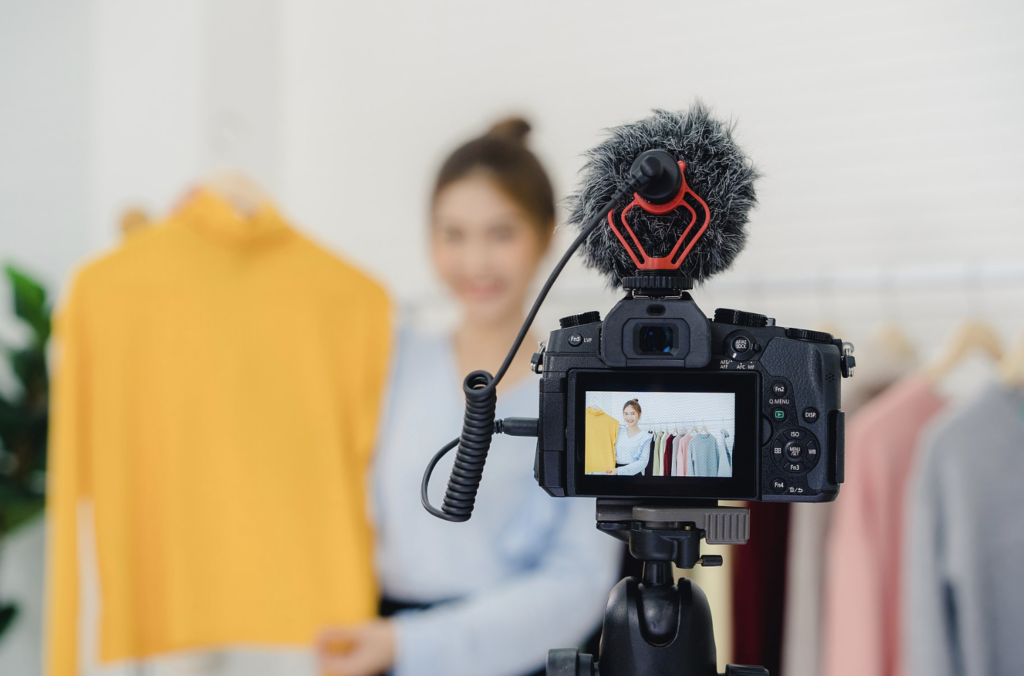
Image licensed from Wikimedia
A report states that an estimated 14.8 million Americans earn income by posting their creative work on social media platforms (Rieder et al., 2023). I think many people including myself feel that becoming a content creator is very free. You can create videos you love, express your ideas, and earn a good income.
However, creators’ work also depends on algorithmic metrics, such as views, likes, and shares (Liang et al., 2025, p.788). Simply put, you can create freely, but whether anyone sees your work is not up to you, it is up to the algorithm. In this environment, many creators have started researching what the platform prefers—such as video length, how to craft titles, and how to design covers. These seem to be choices made by the creators, they are actually just trying to please the algorithm.
On the other hand, creators often adjust their content based on data like views and likes, and this process means using their own time and energy to optimize content for the platform (Liang et al., 2025). However, on the media platform YouTube, only a small number of creators have gained significant views and income, while many others earn almost nothing (Rieder et al., 2023). Content creators are under pressure from algorithms.
You will discover what truly makes invisible labor so troubling. It is not just the hard work; it is that while it appears to be voluntary, it is actually impossible to refuse.
The platform does not require you to like or comment on posts, accept food delivery orders, or post videos. But if you want to make money, drive views, or gain more attention, you have to play by the rules.
However, these rules are unclear and subject to change at any time. This invisible labor causes everyone to provide data and value to the platform without even realizing it. You might just be using tools, but in fact, it is the algorithm that shapes your behavior step by step and guides your choices.
Emotional Control-how algorithms shape our feelings
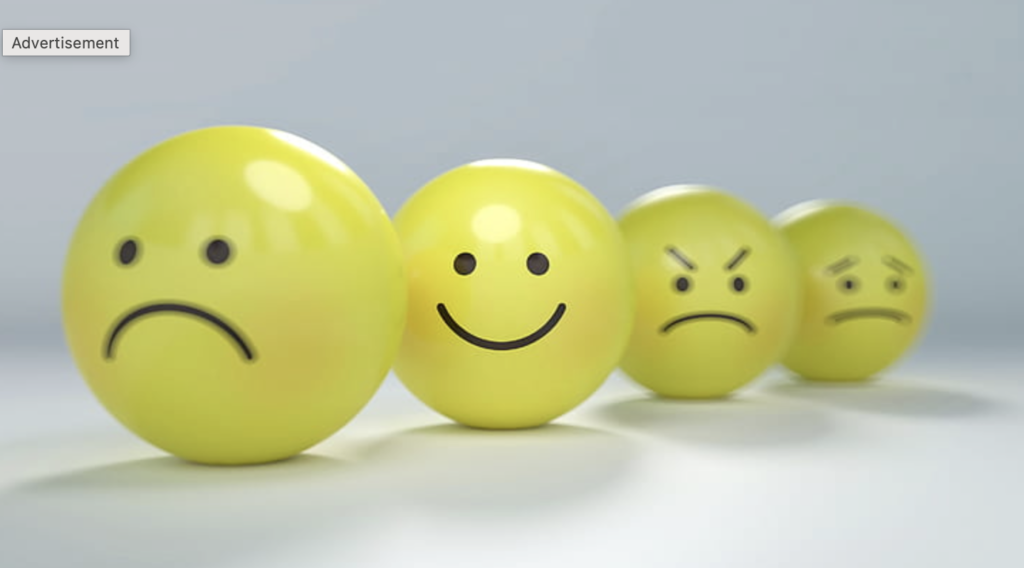
Image licensed from Pickpik
In addition to relying on human labor, algorithms also control our emotional states. The real goal of many platforms is not to help you learn more, or to make you happy. Rather, they want you to stay longer and interact more. The cheapest and easiest way to do this is to keep stimulating your emotions. Emotions such as anger and anxiety spread more easily than calm or neutral content (Altay et al., 2025).
Case 3: Social Media’s “Anger Amplifier”

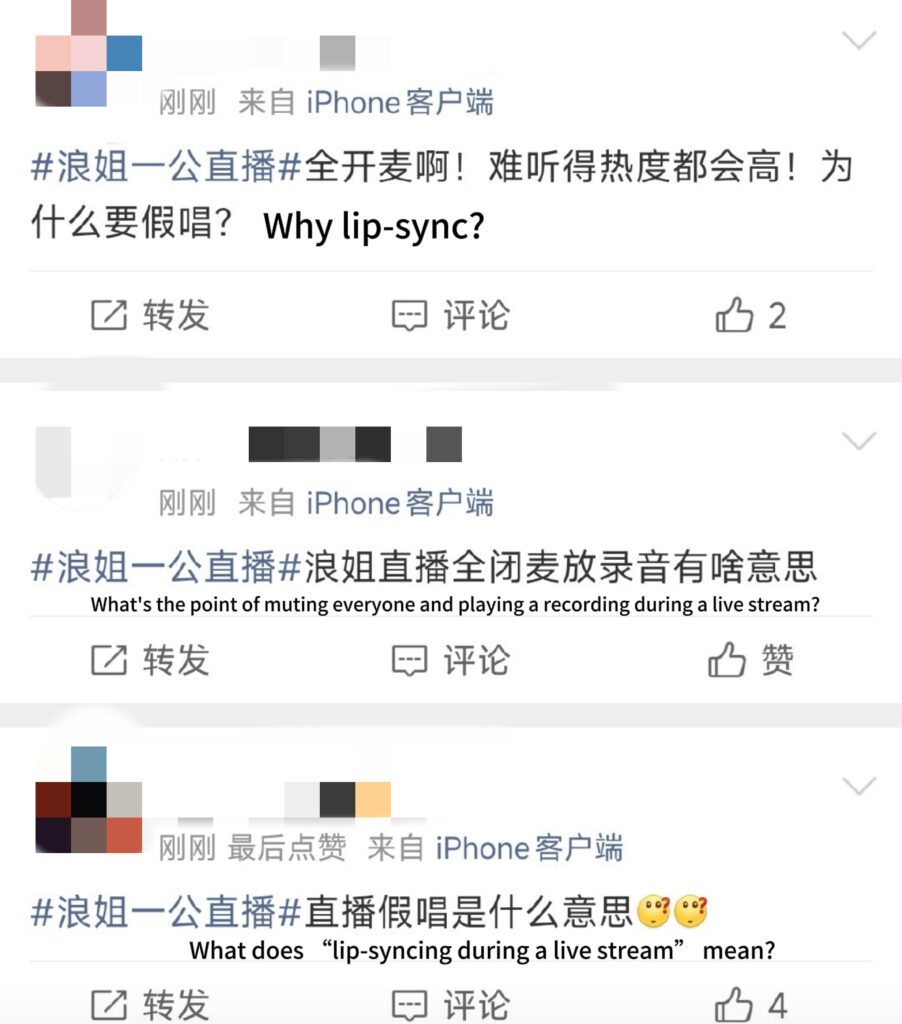
Recently, a live broadcast of the Chinese variety show “Ride the Wind 2026” on Weibo has sparked a lot of discussion. At first, it was just viewers complaining about the show’s rhythm and the hosts’ performance. However, as the discussion expanded, the stage performances of many sisters sparked a lot of controversy due to the related topics of “fully closed microphone lip-syncing”.
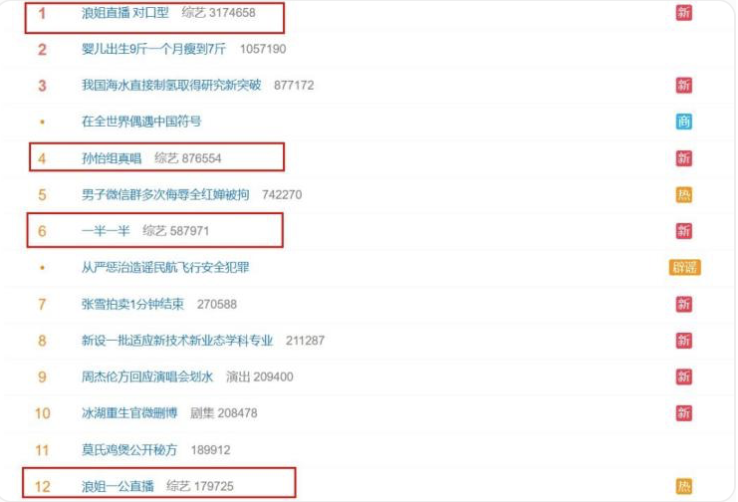
A Harvard research team has suggested that information on China’s Sina Weibo is often controlled by fake accounts (Bolsover & Howard, 2019, p.2066). I think this is why the comments section has gradually become dominated by anger and discontent. The high engagement generated by these fake accounts further boosts the content’s reach. Ensure that relevant topics are pushed to more users regularly.
Case 4: E-commerce platforms that create anxiety
Once, I was browsing clothes on an e-commerce platform, I was just doing it for fun and did not have any specific intention to buy anything. However, when I click on a product, the page immediately displays messages such as “5 minutes left in the limited-time flash sale” and “Only 1 left”.
This information made me feel anxious. I started to worry that if I did not place the order right away, I might miss out on the opportunity. Under the influence of that feeling, I quickly completed the purchase. I believe that the platform has magnified users’ anxiety in a short period of time, leading them to make faster or more impulsive purchasing decisions. This process shows that algorithms influence users’ choices by controlling their emotions.
On social media, algorithms amplify anger. On e-commerce platforms, algorithms create anxiety. These emotions make us more likely to engage in discussions and make purchasing decisions. So, our feelings are also guided and manipulated by algorithms. Algorithms are influencing how we view things and how we make choices.
Do we have any other choice? -The Possibility of Resistance
Reading this, you might feel a little bit sad. Do we really have to let algorithms guide our choices? I want to say that’s not the case. When we become aware of the problem, it marks the beginning of resistance. We can resist through two aspects.
First, let’s talk about the personal aspect
· Take the initiative to break out of your information cocoon. We can regularly clean up the recommendation history. You can also use platforms that do not use algorithms. The most important thing is that we should actively seek out information rather than rely on recommendations.
· Limit the amount of time you spend on the platform. Use a timer to limit the amount of time spent on short-video or shopping apps. Turn off personalized recommendations.
· Explore a wide diversity of content. If you do not like something, just click “Not Interested”. And actively search for diverse content so that algorithms can not categorize you.
Next is the institutional aspect
· The EU’s Digital Services Act already requires platforms to increase the transparency of their algorithms and allows users to turn off personalized recommendations (Turillazzi et al., 2023).
· China’s Personal Information Protection Law also sets out requirements for automated decision-making, including transparency and equity (Creemers & Webster, 2021).
· We need more third-party organizations like “algorithm auditors” to check whether algorithms contain biases or are being controlled.
I believe that resistance is difficult , but it is also possible. Therefore, it requires users to be more mindful and calls for stricter regulation. True resistance requires a combination of individual and institutional efforts.
Return the “choice” to yourself
Algorithms make our online video-watching smoother and our online shopping faster. Let’s also use algorithms to understand others’ emotions and become more perceptive of our own. So we seldom doubt how many of these “convenient” choices are truly ours.
So, let’s return to the core question of this article: In the age where algorithms rule everything, do we really still have a choice? My answer is: Yes.
But this choice is becoming more and more rare, and more and more requires us to actively pursue it. Because our daily comments, likes, and purchases may seem like free choices, but in reality, we are often simply following the path designed for us by algorithms.
This does not mean that we should reject algorithms or return to the past without technology. More importantly, we need to start becoming aware of the existence of algorithms. The so-called “choice” is not just about the decision you make in that moment.
It is about whether, before making that choice, you have ever asked yourself: Why did I see this? If I don’t click it, might there be other possibilities? When you start thinking this way, you are actually slowly regaining control over your own choices.
Perhaps what algorithms fear most is not that we stop using them, but that we begin to see them. So, we will still live in algorithms. We need to be clear in it. The true choice is not to completely get rid of algorithms. But, we still have the ability to think in algorithms.
References
Altay, S., Hoes, E., & Wojcieszak, M. (2025). Following news on social media boosts knowledge, belief accuracy and trust. Nature Human Behaviour, 9(9), 1833–1842.
Berg, J., Furrer, M., Harmon, E., Rani, U., & Silberman, M. S. (2018). Digital labour platforms and the future of work: Towards decent work in the online world (1st ed.). International Labour Organisation (ILO).
Bolsover, G., & Howard, P. (2019). Chinese computational propaganda: automation, algorithms and the manipulation of information about Chinese politics on Twitter and Weibo. Information, Communication & Society, 22(14), 2063–2080.
Crawford, K. (2021). The Atlas of AI: Power, Politics, and the Planetary Costs of Artificial Intelligence. Yale University Press, pp. 1-21.
Creemers, R., & Webster, G. (2021). Translation: Personal Information Protection Law of the People’s Republic of China–Effective Nov. 1, 2021. DigiChina Project, August, 20.
Liang, Y., Li, J., Aroles, J., & Granter, E. (2025). Content Creation within the Algorithmic Environment: A Systematic Review. Work, Employment and Society, 39(4), 787–813.
Rieder, B., Borra, E., Coromina, Ò., & Matamoros-Fernández, A. (2023). Making a Living in the Creator Economy: A Large-Scale Study of Linking on YouTube. Social Media + Society, 9(2).
Turillazzi, A., Taddeo, M., Floridi, L., & Casolari, F. (2023). The digital services act: an analysis of its ethical, legal, and social implications. Law, Innovation and Technology, 15(1), 83-106.
Zhao, H., Yuan, B., Gong, Y., & Liao, Y. (2026). Platform algorithmic control and work outcomes of food delivery employees. The Service Industries Journal, 46(5–6), 369–415.
Be the first to comment