
Unless you’ve been living under a rock, you’ll know that Australia has become the first country to introduce a national ban on social media for children under the age of sixteen (Australian Government, 2024).
And now the international dominoes are starting to fall.
In January, France began moving toward similar restrictions (Smith et al., 2026). Spain, Malaysia, Denmark and Poland followed suit. And now, as of last week, Greece has joined the party. Prime Minister Kyriakos Mitsotakis has proposed the country’s own ban for under-15s, citing anxiety, poor sleep and a growing sense that something about this whole system is… off (Smith et al., 2026).
This is no longer a one-off Aussie experiment. This is a global shift.
And as a dad raising two screen-obsessed kids, I get it.
If you’re a parent right now, you’ve been feeling that digital pressure too. It can feel like you’re raising your kids inside of a machine. One that’s always on, always evolving and didn’t come with instructions.
The protective instinct is simple: if something is harming our kids, we remove it.
Or, in the case of these national restrictions, we ban it. Right?
“Save the children”, as the saying goes.
But here’s the uncomfortable question I’m not hearing people ask: What if the problem isn’t with the users… but with the product?

The “Ban It” Instinct
The logic behind these bans in countries like Greece is emotionally compelling.
Kids are experiencing rising levels of anxiety (Galanti, 2024), with research linking social media use to “an increase in mental distress, self-harming behaviors, and suicidality” (Khalaf et al., 2023).
At the same time, young people are navigating cyberbullying, constant connection and chronic sleep disruption. It’s no surprise, then, that social media is increasingly framed as the problem and that governments feel pressure to step in.
So what does government intervention actually look like?
In theory, governments could go after the platforms themselves. They could legally attack the systems, the algorithms and the design choices. But in practice, that’s a far more difficult fight.
In 2023, a coalition of U.S. states sued Meta, alleging the company had “knowingly designed and deployed harmful features” to hook young users (New York State Office of the Attorney General, 2023). The case is still making its way through the courts in 2026. This is a harsh reminder that regulating platforms is slow, complex and deeply contested.
So what happens next?
In the meantime, governments act where they can. Without the ability to meaningfully reshape the platforms themselves, governments instead regulate access by pushing exposure to a later age.
Because regulating systems is hard. Regulating kids is easier.
The Work Isn’t Done. It’s Just Been Redirected.
For policymakers in Greece and Australia, this can feel like real progress.
A law is passed. A restriction is introduced. A headline in The Guardian is written.
For everyday people, it looks like something is really being done. We wake up one day here in Australia and discover that social media is now banned for our children.
“Something is finally being done”, we say. “The problem is solved.”
But I’d argue it isn’t solved. It’s just redistributed, shifting the burden onto kids and their parents.
Kids are suddenly expected to navigate their social lives without the platforms they’ve grown up on, reconfiguring how they communicate with their peers in real time.
Parents, many of whom are caught in the same systems, are left to manage the grey areas: the pushback, the loopholes, the fake accounts.
It’s not platforms that lose here. It’s families.
Meanwhile, the platforms continue with business as usual. They are largely untouched, largely unchanged and under very little pressure to rethink the systems driving these outcomes.
And that’s where the real problems begin.
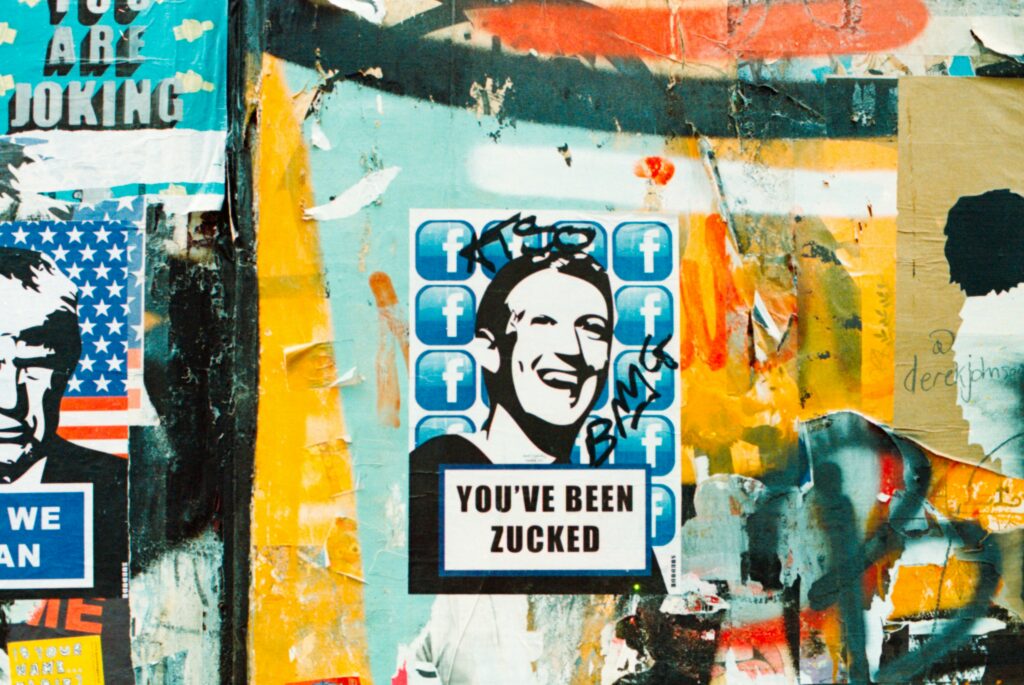
Each time a new country jumps on board the social media ban train, it feels to me like we’re accepting defeat. As though someone, somewhere inside Meta, can breathe a quiet sigh of relief knowing they won’t have to address the underlying issue:
Their algorithm.
The Algorithm Problem
So what are we actually talking about when we say “algorithm”?
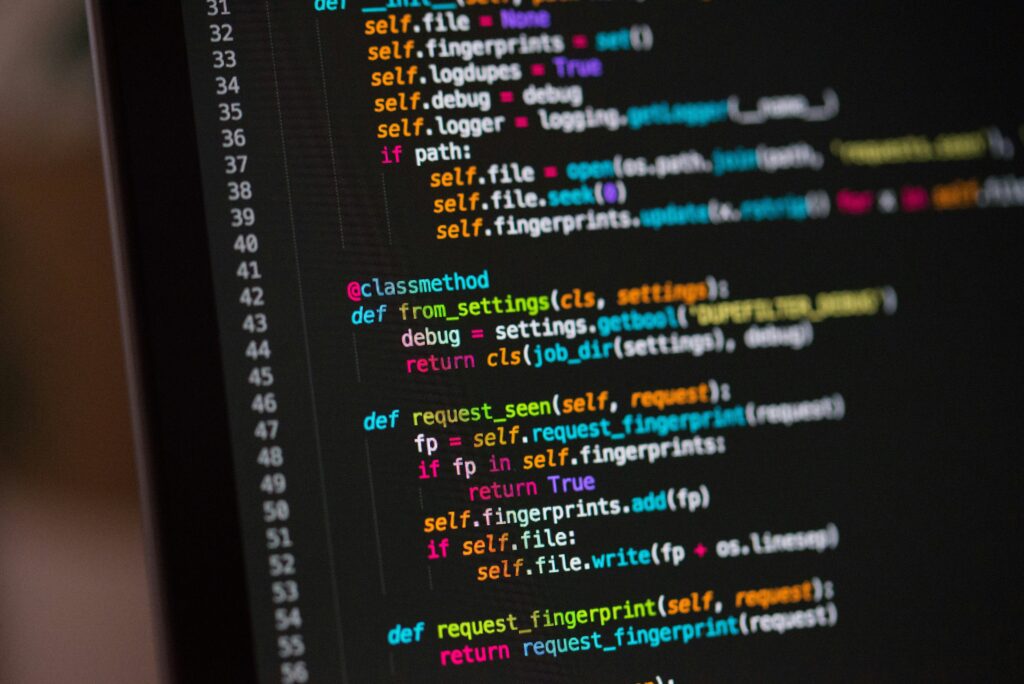
According to media scholars Natascha Just and Michael Latzer, algorithms are, when put quite simply, “problem-solving mechanisms” (Just & Latzer, 2017). At their core, they are just sets of instructions used to sort, rank and recommend information.
On social media platforms, like the ones our children are now being banned from, these systems decide what content shows up on our screens and what doesn’t. They sift through massive amounts of data (content, in this case) and determine what’s most “relevant” to each user.
And that matters. A lot.
Because, as Just and Latzer argue, algorithms play a central role in shaping “social reality”, influencing how we see the world and how we behave (Just & Latzer, 2017).
In other words: It’s governance. What political scientists Volker Schneider and Patrick Kenis’ describe as “institutional steering”, where systems beyond government actively guide behaviour and outcomes (Schneider & Kenis, 1996).
This idea sits in stark contrast to the universally believed myth that platforms simply “mirror” society. SO many people believe that what rises to the top of social media is what people want to – and in many cases should – see.
But that’s not how these systems work.
Dr Safiya Umoja Noble dismantles this idea entirely, arguing that algorithms are not neutral or objective, but instead embed and reproduce social inequalities through the values and assumptions built into them (Noble, 2018).
Even something as simple as a Google search result is shaped by commercial incentives, historical bias, design decisions and underlying data patterns (Just & Latzer, 2017; Noble, 2018).
So, when harmful content spreads, or extreme content is amplified, it isn’t random. When our kids become addicted to their phones and fall prey to the downsides of social media, it isn’t an unavoidable accident.

The Attention Economy
To understand why this matters so much, you must also understand what these platforms are built for. Or more accurately, what they’ve evolved to optimise.
It’s not connection, as they were originally positioned. It’s not community either, as they’d like us all to believe. And as the research shows, it’s certainly not wellbeing.
They are built – and constantly rebuilt – for attention.
These platforms, and the algorithms that power them, are designed to predict what we’ll engage with. And once they figure that out, they give us more of it. As Just and Latzer explain, these systems aim to “predict output sought by users” by learning from our behavioural data (Just & Latzer, 2017).
At its core, it’s a feedback loop.
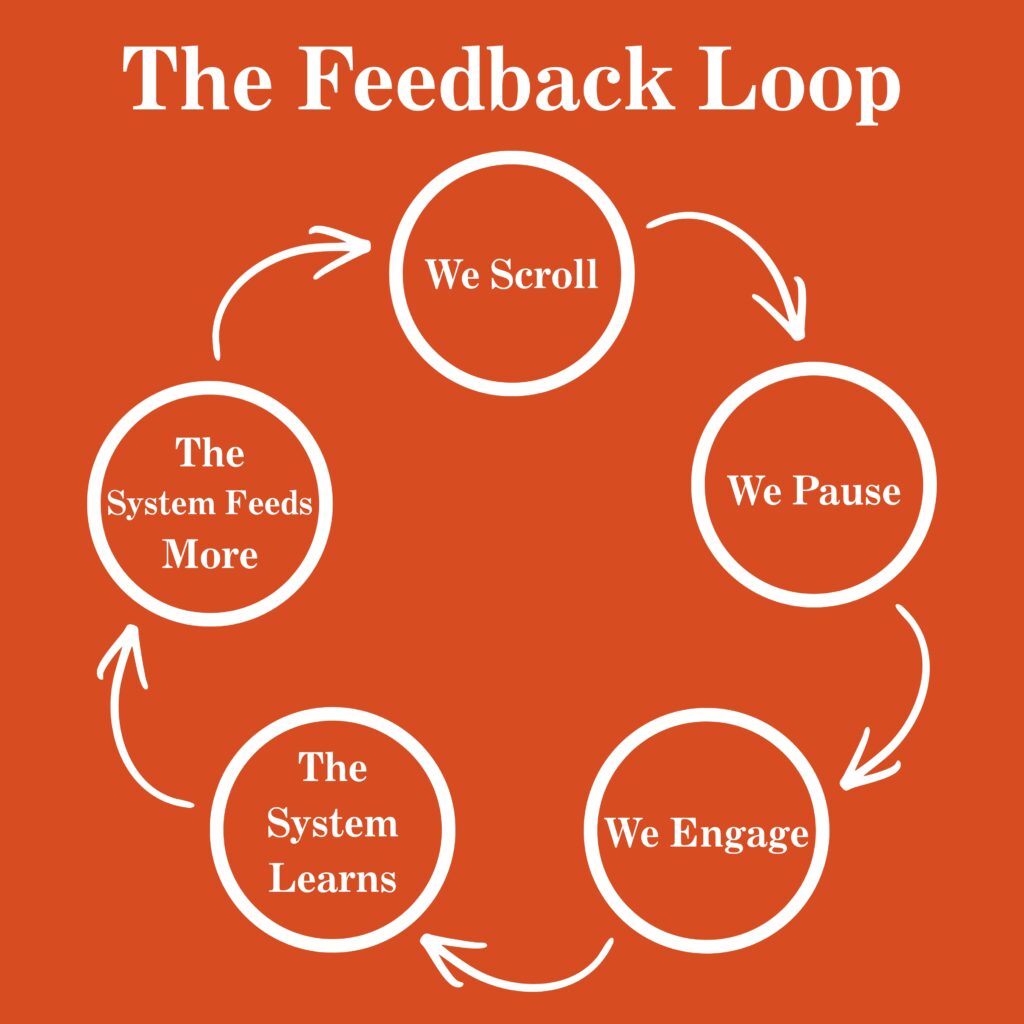
We scroll. We pause. We engage. The system learns. The system feeds us more stuff we’re likely to not scroll past.
We’re basically digital lab rats being fed different content pellets. The system learns what “pellets” we enjoy the taste of and then keeps serving up more of it. Only instead of gaining weight, we’re losing time. Because these systems are designed to make us stay.
Because attention is the product.
And right now, somewhere inside a social media company, someone is tweaking the algorithm – your algorithm – to figure out how to keep you coming back for more.
When attention becomes the goal, the content changes. Not the content we share, but the content they chose to give exposure. It’s no longer about what’s good for people to see, but instead what will get a reaction.
As Noble argues, systems shaped by commercial incentives consistently reward content that is extreme, emotional, and attention-grabbing (Noble, 2018).
This, my friends, is why outrage spreads. It’s why extremes rise to the top. It’s why we log online, time and again, and discover emotional intensity at every turn.
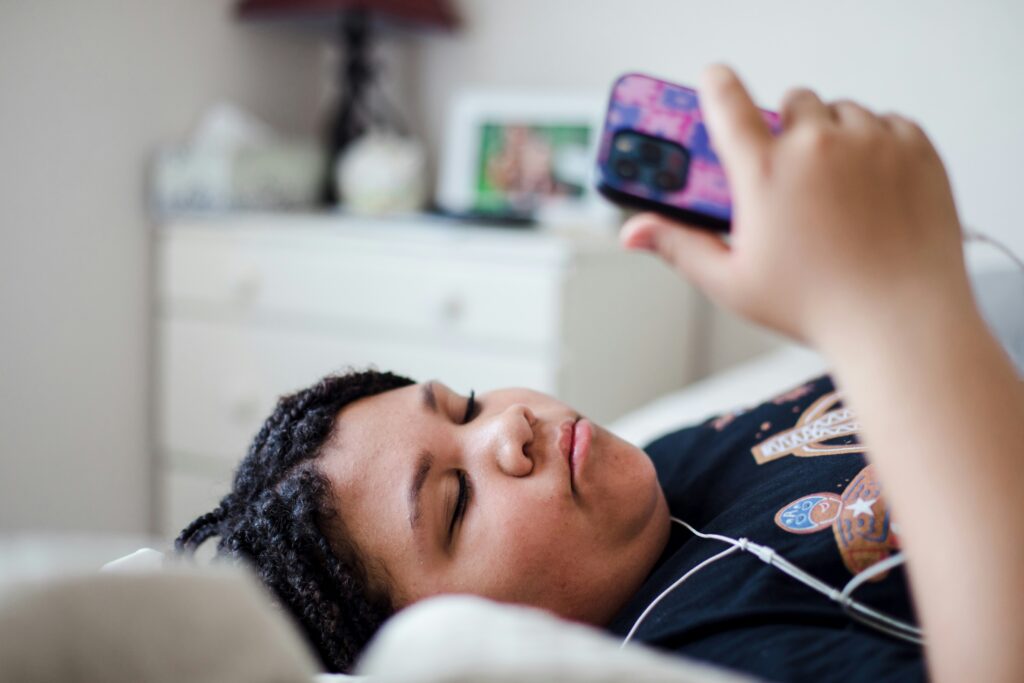
And when kids whose identities and emotional regulation are still developing enter that system, they aren’t just using it. They’re being shaped by it.
What’s Missing from the Conversation
To bring this back to the story at hand – the proposed social media ban in Greece – it’s worth asking a simple question: what’s actually being discussed here?
To be clear, what Greece (and Australia) are doing isn’t wrong. It’s undeniably a step in the right direction. But if you read through coverage of the proposed policy, including The Guardian article itself that inspired this piece, you’ll find a familiar pattern.
There’s talk of anxiety. There are mentions of sleep disruption and the real harms our children are experiencing.
But what’s noticeably absent? Platform failure.
There’s a brief but important acknowledgment that these platforms are built with “addictive design”, but that’s where the conversation stops. There’s no real exploration of what that design looks like and certainly no interrogation of the algorithms that are shaping our behaviour.
And that’s the gap we must address.
Because recognising harm without addressing the system that produces it doesn’t solve the problem. It just delays it.
When we remove systems from the conversation, even unintentionally, we’re left with only one place to put the blame: the user.
Somehow, the blame ends up with the most vulnerable in this situation: our children.
The Problem You Can’t See
Part of the reasons these systems are missing from the conversation is because they’re incredibly difficult to see.
Frank Pasquale describes modern digital platforms as “black boxes” where we can observe the inputs and outputs, but not the decision-making processes in-between (Pasquale, 2015).
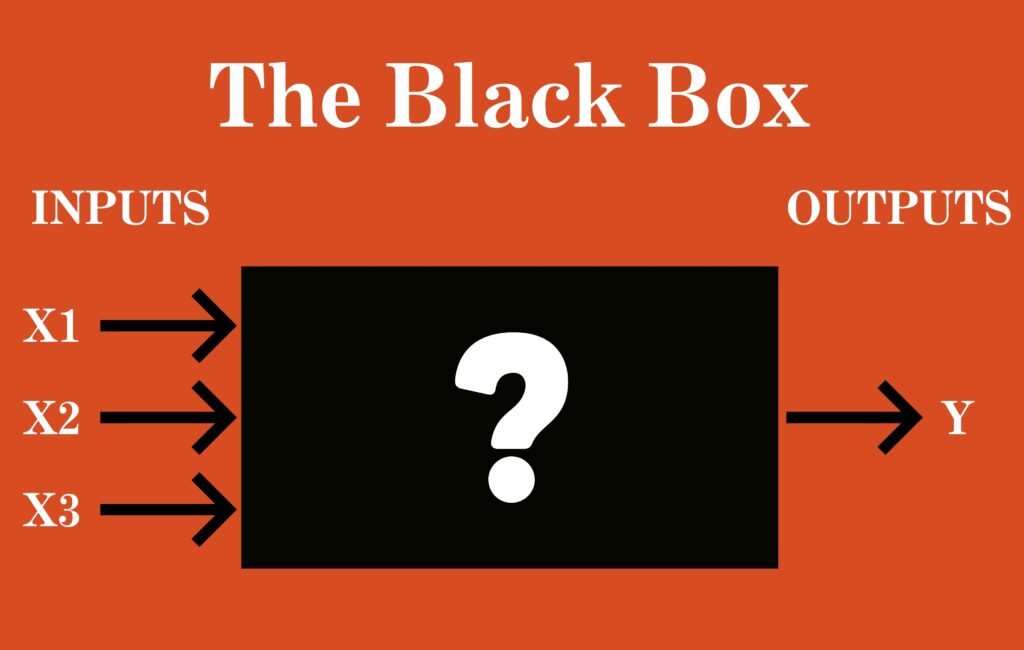
We see the content. Maybe we even make it ourselves. We can feel the effects. Maybe we watch the video, cry about it and reshare it to our own followers.
But we don’t see – deliberately – how or what the video was selected and amplified. Or even worse, why we didn’t see another video. Why our own content was suppressed from the very people who follow us.
This opacity isn’t accidental, it’s structural.
Because when the system is invisible, it’s harder to question. And one could argue easier to accept the outcome as… inevitable.
Now imagine a world where every piece of content had to explain itself. Where every post came with a disclaimer:
“This video is not verified to be accurate, but has been shown to provoke strong emotional reactions. Users similar to you are more likely to engage with content like this, so we are prioritising it in your feed to increase your time on the platform.”
It’s hard to imagine the platforms ever volunteering that level of transparency.
Is it because we can’t handle the truth? Or is it because the truth tellers wouldn’t be able to handle us knowing it? I believe it’s the latter.
Instead of us asking “why is this system sharing content that is shaping our behaviour and therefore changing society and culture”, we’re asking “why can’t kids handle it?”
What Happens Next?
If we truly believe these platforms are causing harm (and the evidence increasingly suggests they are) then restricting access can’t be the only solution.
It has to be one part of a much bigger conversation.
Right now, we’re regulating who can use these systems. But we’re not regulating how those systems work.
What would it look like if we did?
It would mean demanding algorithmic transparency so that users understand why they’re seeing what they’re seeing. It would mean holding platforms accountable for what the content their systems favour. And it would mean rethinking design entirely.
It’s a big ask, I know. We’d need less optimisation for engagement, which would require less amplification of outrage. And we’d need more clarity.
I suggest we return to something simpler. A nostalgic trip down memory lane…
A chronological feed.
It would be a version of social media where we see content from the people we choose to follow, in the order they posted it. It would be without algorithmic interference shaping what rises and what disappears.
Because at the moment, we’re treating children as the problem. When in reality, they’ve just been dropped into a system that was never designed with their wellbeing in mind.
And until we address that system (destroy and rebuild it again), we’re not solving the problem. We’re just postponing it.

References
Australian Government. (2024). Online Safety Amendment (Social Media Minimum Age) Act 2024. https://parlinfo.aph.gov.au/parlInfo/download/legislation/bills/r7284_aspassed/toc_pdf/24150b01.pdf;fileType=application%2Fpdf#search=%22legislation/bills/r7284_aspassed/0000%22
Chirkov, P. (2021, November 22). Girl on Athens mountain [Photograph]. Unsplash. https://unsplash.com
Galanti, R. (2024). Parenting Anxious Kids : Understanding Anxiety in Children by Age and Stage. (1st ed.). Sourcebooks, Incorporated.
Grey, A. (2018, November 10). Portrait of a twenty-five year old woman using her mobile phone after showering [Photograph]. Unsplash. https://unsplash.com
Just, N., & Latzer, M. (2017). Governance by algorithms: Reality construction by algorithmic selection on the internet. Media, Culture & Society, 39(2), 238–258. Khalaf, A. M., Alubied, A. A., Khalaf, A. M., & Rifaey, A. A. (2023). The Impact of Social Media on the Mental Health of Adolescents and Young Adults: A Systematic Review. Curēus (Palo Alto, CA), 15(8), e42990. https://doi.org/10.7759/cureus.42990
New York State Office of the Attorney General. (2023, October 24). Attorney General James and multistate coalition sue Meta for harming youth. https://ag.ny.gov/press-release/2023/attorney-general-james-and-multistate-coalition-sue-meta-harming-youth
Noble, S. U. (2018). Algorithms of oppression: How search engines reinforce racism. New York University Press.
Pasquale, F. (2015). The black box society: The secret algorithms that control money and information. Harvard University Press.
Ried, C. (2018, January 14). [Brief description of the image] [Photograph]. Unsplash. https://unsplash.com
Schneider V and Kenis P (1996) Verteilte Kontrolle: institutionelle Steuerung in modernen Gesellschaften. In: Schneider V and Kenis P (eds) Organisation und Netzwerk. Institutionelle Steuerung in Wirtschaft und Politik. Frankfurt: Campus Verlag, pp. 9–43.
Sixteen Miles Out. (2023, April 15). A girl lying on a bed with a cell phone [Photograph]. Unsplash. https://unsplash.com
Smith, H., Henley, J., & [Third Author Initial]. (2026, April 8). Greece announces social media ban for under-15s, citing anxiety and sleep problems. The Guardian. https://www.theguardian.com/world/2026/apr/08/greece-proposes-social-media-ban-under-15s-anxiety-sleep-problems
Spratt, A. (2019, September 13). You’ve been zucked. London street art, Shoreditch [Photograph]. Unsplash. https://unsplash.com
Swancar, A. (2020, June 22). I am blue [Photograph]. Unsplash. https://unsplash.com

Be the first to comment