The Invisible Price Tag
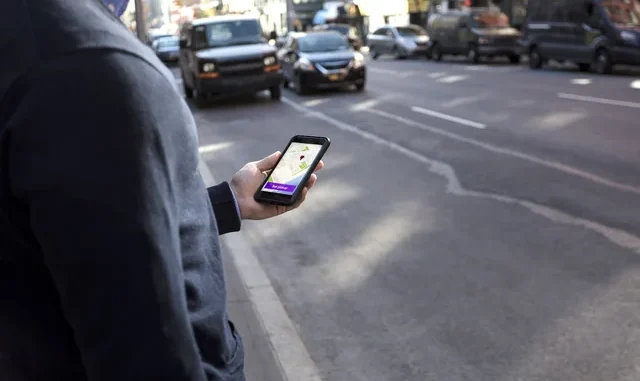
Imagine you are standing on Broadway, right outside the University of Sydney, after a long day of lectures.
It’s raining, you’re tired, and your phone battery is at a critical 3%.
You and a friend—standing right next to you—both open your ride-sharing apps to head home to Newtown.
Your app shows a fare of $42. Theirs shows $31.
Is it just “bad luck”? Or is the algorithm sensing your desperation to get home before your phone dies?
This phenomenon is known as “Surveillance Pricing.”
It represents the latest, most aggressive frontier of datafication—the process of turning our lives into streams of data for profit.
In this post, I want to pull back the curtain on the “Black Box” of these algorithms.
We will explore how your digital footprint is being weaponized against your wallet.
Most importantly, we will discuss why our current digital policies are struggling to keep up with a machine that knows you better than you know yourself.
The Concept: We Are All “Datafied”
To understand the fluctuating price on your screen, we must first understand the core theme of our unit: Datafication.
In our ARIN6902 lectures, we’ve discussed how almost every human action is now captured and quantified.
You are no longer just a “customer” looking for a ride or a meal.
In the eyes of an algorithm, you are a collection of keywords, scrolling speeds, and “predictive scores.”
As Cathy O’Neil (2016) argues in Weapons of Math Destruction, these models are often “opinions embedded in code”.
When a company uses AI to set a price, they aren’t just looking at supply and demand.
They are looking at the digital version of you—your device type, your location history, and even your current battery level.
The Loss of Complexity
In the age of datafication, privacy isn’t just about keeping secrets.
It is about your economic autonomy.
When we are reduced to data sets, we lose our complexity as human beings.
We become targets for precision extraction, where our behavior is modeled to find the absolute maximum we are willing to pay.
This is not “efficient” markets at work; it is the systemic harvesting of human desperation.
Case Study: The 2026 “Surge” in Everyday Life
While we’ve grown used to “surge pricing” for flights and Ubers, the trend is moving into even more personal territory.
In 2024 and 2025, global retail and fast-food giants began experimenting with AI-driven dynamic pricing.
Digital menu boards can now change prices in real-time based on foot traffic, weather, or your individual digital profile.
Imagine a world where a burger costs $2 more because the store is busy, or because the algorithm knows you usually pay extra for bacon.
A specific example that sparked global outrage involved US fast-food chain Wendy’s.
Their announcement of “dynamic pricing” led to a fierce public debate about the fairness of automated systems.
While corporations frame this as “efficiency” or “flexibility,” it creates what Virginia Eubanks (2018) calls a “Digital Poorhouse.”
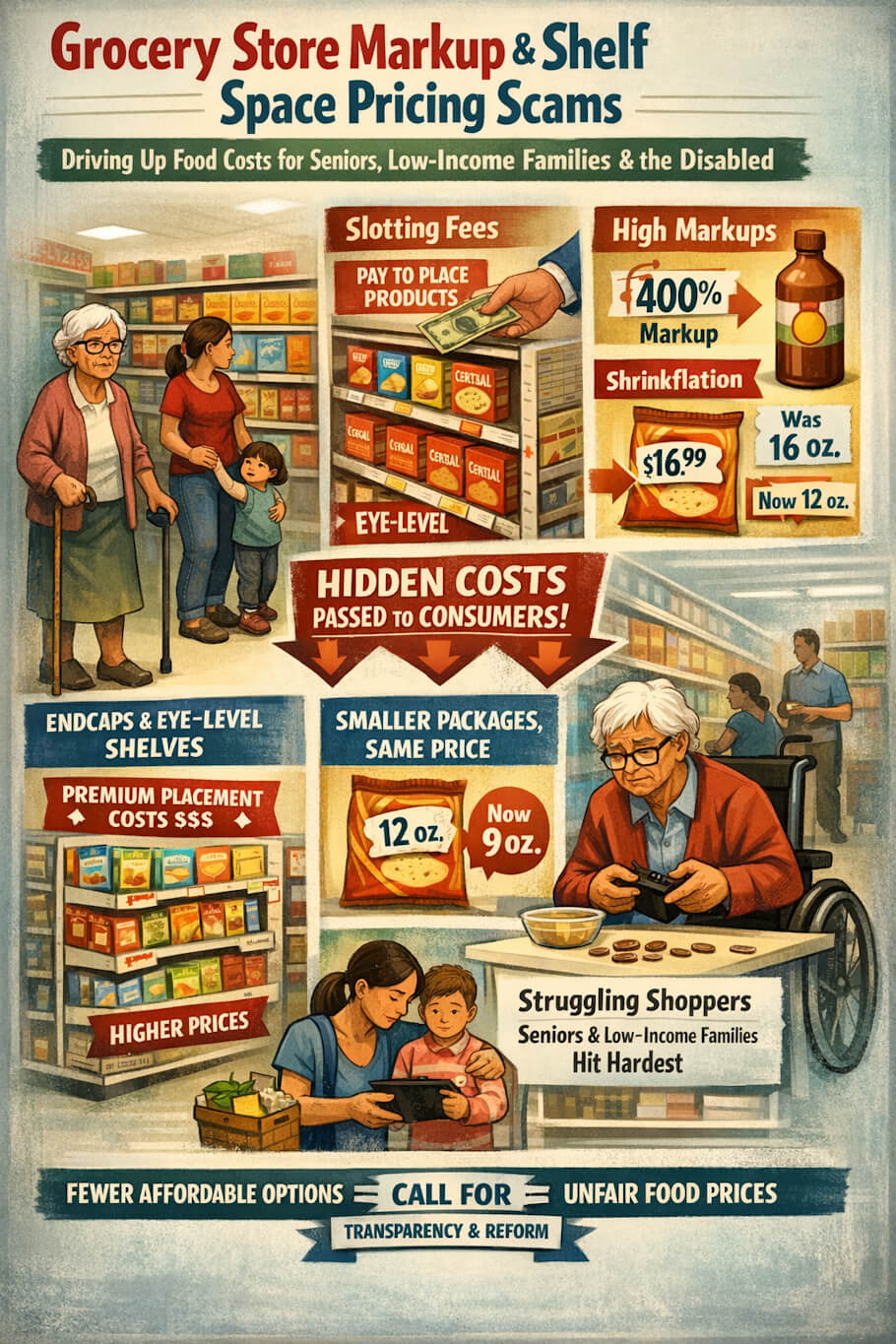
When algorithms prioritize profit over equity, the most vulnerable members of society pay the highest price.
The “Poverty Penalty” of Automated Systems
For a wealthy person, an extra $2 on a meal is an annoyance.
For a low-income worker on a strict budget, it is a “poverty penalty.”
Algorithms that punish “urgency” are inherently biased against those who don’t have the luxury of time.
Consider a shift worker who only has a 15-minute window to eat.
They cannot wait for the “surge” to end; they are forced to pay the higher price.
This is a direct threat to the digital rights we discussed in Week 4.
It is the right to be treated fairly and not to be exploited by invisible automated systems.
The Black Box: The Secret Logic of Modern Power
If a physical shopkeeper tried to charge you more because they saw you looked tired, you could argue with them.
But how do you argue with an algorithm?
This brings us to Frank Pasquale’s (2015) concept of the “Black Box Society.”
Companies guard their pricing algorithms as “proprietary secrets” or “intellectual property.”
This creates a massive power imbalance.
When an algorithm decides you should pay more, you have no way of knowing why.
You cannot see the “gears” turning inside the machine to know if you are being discriminated against.
As Pasquale points out, when we allow secret algorithms to control money without oversight, we risk a society where the powerful can hide their biases behind code.
If we cannot audit the algorithm, we cannot hold the company accountable.
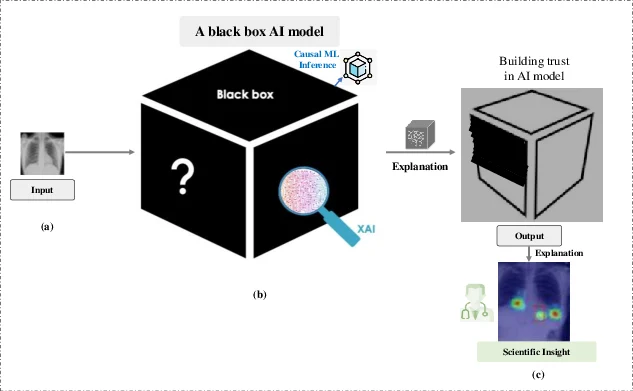
AI-black-box model. Algorithms like Explainable AI, feature visualization or causal inference can be used to interpret the predictions. Gradcams visualization can highlight important regions that can build the trust of healthcare professionals.
Beyond the Wallet: Information as the Next Frontier
The logic of surveillance pricing doesn’t stop at your bank account; it extends to your very perception of reality.
The same automation that sorts prices also sorts your newsfeed.
In their study of “Computational Propaganda,” Bolsover and Howard (2019) show how algorithms can be “weaponized” to manipulate public opinion.
Just as a pricing algorithm shows you a specific price to get you to buy, a propaganda algorithm shows you specific information to get you to believe.
They found that automation is often used to “flood” the digital zone with specific narratives to drown out dissent.
If we accept a world where algorithms can secretly manipulate our economic choices, we are only one step away from a world where they manipulate our political choices.
The “Black Box” doesn’t just hide prices; it hides the manipulation of truth itself.
Surveillance Capitalism: The Fight for Our Behavior
We are currently living in what Shoshana Zuboff (2019) calls the “Age of Surveillance Capitalism.”
In this system, our “behavioral surplus”—the data we leave behind while just living our lives—is the raw material for profit.
Surveillance pricing is the ultimate expression of this system.
It is not just about selling you a product; it is about “behavioral modification.”
The algorithm nudges you to act in ways that maximize corporate profit, often at the expense of your own best interests.
This is why digital policy can no longer just be about “privacy” in the old sense of keeping secrets.
It must be about Digital Sovereignty—our right to live a life that is not predicted and pre-determined by an automated system.
The Policy Gap: Why Australia Must Act
You might be thinking, “Surely our laws protect us from this?”
The reality is that our current frameworks are struggling to keep pace with the speed of technical change.
While Australia’s Privacy Act is undergoing significant reform in 2026, it still has major gaps regarding Automated Decision-Making (ADM).
The Australian Competition and Consumer Commission (ACCC) has begun looking into dynamic pricing, but the legal hurdles are high.
To protect our digital rights, we need a massive shift in how we govern the digital world:
- Algorithmic Accountability: We need laws that force companies to audit their AI for bias and exploitation.
- The Right to Explanation: Borrowing from the EU’s GDPR, we should all have a “Right to Explanation.”
- Transparency Shields: We must ensure that “commercial secrecy” cannot be used as an excuse to hide discriminatory pricing practices.
Digital governance isn’t just about technical rules; it’s about power and who gets to exercise it in the dark.
Conclusion: Reclaiming the Future
As we move further into 2026, the technology behind surveillance pricing will only become more sophisticated.
However, we must remember that technology is not a force of nature; it is a choice we make as a society.
From “Harvested” Subjects to Digital Citizens
We currently stand at a crossroads where we must redefine our relationship with our own data.
We are not just sources of “behavioral surplus” to be harvested by profit-driven algorithms.
As citizens, we must be active participants in a digital ecosystem, rather than passive victims of it.
True digital governance means liberating these systems from the “Black Box” and making them accountable to the public.
Transparency is Not Enough: We Need “Legibility”
As Frank Pasquale (2015) emphasizes, merely seeing the code is not enough; we need to understand the logic behind it.
This means policy should not just sit on the surface of legal text but must enforce “explainability” in algorithms.
If we cannot understand why we are flagged as “high-willingness-to-pay” users, we cannot exercise our legal right to contest that decision.
A Fight for Human Dignity and Autonomy
This is more than just a fight over our wallets; it is a battle for our human dignity and our future.
Shoshana Zuboff (2019) warns us that the core of surveillance capitalism is the theft of our “right to the future tense”.
Digital sovereignty means we have the right to choose a life that is not predicted, pre-determined, or manipulated by an automated system.
This right should be non-negotiable and must become a cornerstone of Australia’s future digital policy.
Final Call to Action: Peer Inside the Box
Next time you see a price jump on your screen, don’t just hit “accept.”
Ask yourself: What does the machine think it knows about me? What vulnerabilities is it exploiting?
Our digital rights are not a gift; they depend on our awareness and our continued demand for transparency.
By supporting stronger algorithmic accountability, we can ensure that technology serves human wellbeing rather than just corporate extraction.
It is time to peer inside the Black Box and reclaim our digital lives.
References (APA 7)
Zuboff, S. (2019). The age of surveillance capitalism: The fight for a human future at the new frontier of power. PublicAffairs.
Bolsover, G., & Howard, P. (2019). Chinese computational propaganda: Automation, algorithms and the manipulation of information about Chinese politics on Twitter and Weibo. Information, Communication & Society, 22(14), 2063–2080.
Eubanks, V. (2018). Automating inequality: How high-tech tools profile, police, and punish the poor. St. Martin’s Press.
Noble, S. U. (2018). Algorithms of oppression: How search engines reinforce racism. NYU Press.
O’Neil, C. (2016). Weapons of math destruction: How big data increases inequality and threatens democracy. Crown.
Pasquale, F. (2015). The black box society: The secret algorithms that control money and information. Harvard University Press.


Be the first to comment