The idea of the Internet as a free world was once a fantasy to people.
Anyone on the internet is able to share their thoughts and interact with others unrestrictedly. The idea of openness has been the essence behind the initial idea of social media. Additionally, it continues to influence how numerous users discuss the platform.
Theoretically, the Internet remains a place where one can freely express oneself, but today the reality of the platform environment is more complex. The social media is not just a neutral communication area but rather an extremely organized system. It is influenced by algorithms, business plans and audit solutions. The systems influence how information is spread, choosing what content is to be promoted and what can be viewed by anyone. That is why, the issue is not only about freedom of speech, but also about controlling and managing the speech on the internet.
Currently, sites such as X, TikTok and Instagram are the main positions in the sphere of public communication. The platforms are not just a means through which individuals can share content, but also venues where they consume news, engage in political discussions, and cultural debates. It is this factor that renders the problem of online harms and responsibility of networks more and more urgent.

To my mind, the sites such as X cannot be regarded as absolutely impartial. Despite the fact that these sites state they are a free speech zone, the design of their algorithms actually influences the visibility and popularity of the contents. In this way, they will also affect the way online harms are spread. In this way, they will also affect the way online harms are spread.
What do we mean by online harm?
Online harms don’t just refer to rude or unpleasant interactions. It also includes harassment, threats, hate speech, organised attacks, and the dissemination of extremist or misleading content. These behaviours may target an individual or a whole group, usually based on identity factors such as race, gender, sexual orientation, religion or nationality.
Hate speech is particularly important because it not only affects individual users, but also leads to broader social consequences by normalising hostility and exclusion. Over time, repeated exposure to harmful content will change people’s perception of acceptable speech on the Internet.
Importantly, the harm of the network is not limited to the digital environment. Research shows that cyber violence can have real-world consequences, including the impact on mental health, emotional health and civic participation (Tufekci, 2015). Some users have completely withdrawn from cyberspace due to repeated harassment, which has raised concerns about inequality in public communication participation.
Cyber damage is also cumulative. A harmful post seems insignificant, but through sharing, forwarding and algorithmic amplification, it can quickly spread to a large audience. This scale is the key to distinguishing cyber damage from many offline communication methods.
Why is harmful content so easy to spread?
If we want to understand the network damage, it is necessary to examine the design of the platform. Social media platforms are built around attracting attention. Their business model depends on user participation, including likes, comments, sharing and viewing time.
Content that can trigger a strong emotional response is more likely to be involved by users. This includes those posts that are shocking, controversial or emotional. From the perspective of the platform, this kind of participation is valuable because it allows users to remain active for a longer time.
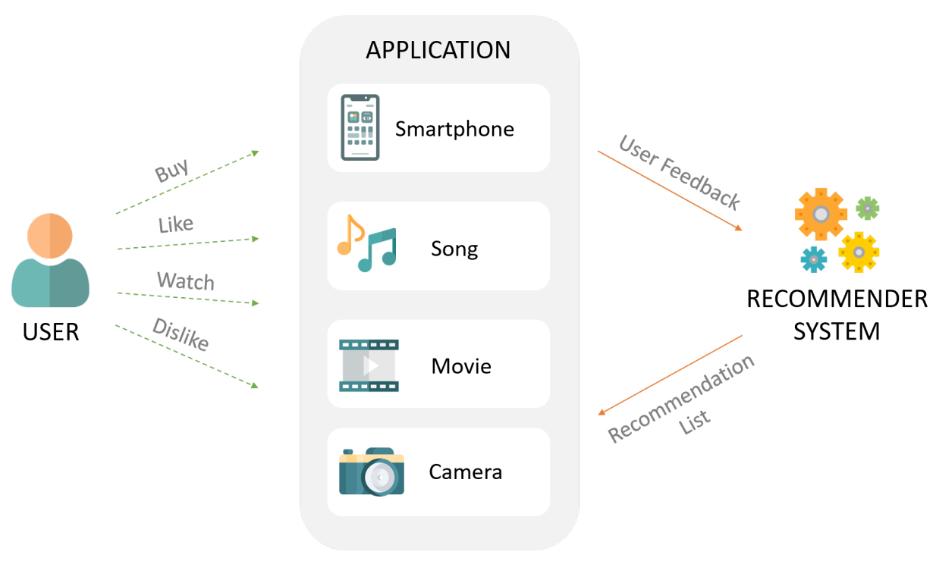
Recommendation algorithms prioritise content that drives engagement, which can amplify emotional or controversial posts.
However, this also brings unexpected consequences. Emotional intensity has become the driving factor of content exposure. Regardless of the accuracy of the content or the social impact, the content that causes anger or indignation is often rewarded by the algorithm system. Therefore, harmful or misleading content may spread faster than neutral or objective information.
Zeynep Tufekci believes that algorithmic recommendation systems tend to prioritise the amount of interaction rather than content quality or authenticity. This means that the platform not only reflects the needs of users, but also actively shapes the content that users come into contact with by amplifying certain types of content.
This process will form a feedback loop. A controversial post gets interaction, thus increasing its exposure and thus triggering more interaction. Over time, this cycle will spread harmful speech far beyond its original audience.
The platform is not a neutral intermediary.
Many social media companies trout themselves as neutral platforms. They usually claim that they only host user-generated content instead of actively shaping it. However, considering the actual operation of the platform, this statement is difficult to stand up.
The platform will constantly decide which content should be recommended, prioritised or blocked. Even if the content is not explicitly deleted, the platform will filter the visibility of the content through the ranking system and algorithm. These design choices directly affect what users see in the information flow.
As Gillespie (2018) notes, content review is not only a technical process, but also a form of governance. The platform formulates rules, implements norms and defines the boundaries of acceptable speech. In this sense, they play the role of regulators, even if they don’t call themselves.
This means that neutrality cannot truly describe the behaviour of the platform. Each design decision reflects the values, priorities and trade-offs of the platform. For example, prioritising user participation over security will produce completely different results from prioritising harm reduction.
Why is X a particularly important case?
X provides a useful case study because it clearly emphasises freedom of speech. Since Elon Musk acquired the platform, X has been advocating the concept of reducing audit and improving openness. The platform positions itself as a defender of unrestricted expression.

At first glance, this practice seems to be in line with the principle of freedom of speech. However, in practice, reducing the review will not only increase the diversity of opinions, but also increase the visibility of harmful or abusive content.
A number of studies and reports show that the change in the X platform audit policy is related to the increased visibility of hate speech and harmful language. At the same time, the user interaction model shows that controversial content has gained greater dissemination in the platform’s recommendation system.
This highlights an important difference. The freedom of speech policy determines what content can be published, and the platform design determines what content will be seen by users. Even if the content is technically allowed, the amplification effect of the algorithm can significantly expand its dissemination range.
Therefore, the problem lies not only in speech itself, but also in the dissemination of power. The platform determines which sounds will be amplified and which will be marginalised.
Content review is a kind of governance, not a review.
Discussions on content review tend to be polarised. On the one hand, people are concerned about censorship and excessive expansion of power; on the other hand, there are concerns about uncontrolled harm and abuse. Both views raise reasonable questions.
However, simply defining content review as review may be misleading. Content review is not only about deleting content, but also about maintaining a safe and meaningful participation environment.
If there is no content review, harmful content may occupy the attention of users and hinder the participation of marginalised groups. This may lead to inequality in the right to speak in public, and some users are afraid to speak freely for fear of being harassed.
At the same time, the content review system is not neutral. The judgement of what harmful content is may reflect cultural, political and institutional biases. Therefore, transparency and accountability are crucial.
Noble (2018) pointed out how the digital system will replicate existing inequalities without supervision. This further emphasises the need to critically examine the way platform governance operates, rather than taking it for granted that it is objective or neutral.
A broader regulatory environment
The growing influence of the platform has attracted more attention from the government and regulators. In many regions, it is now recognised that platforms play an important role in shaping public communication.
For example, the Australian Cyber Security Commissioner has launched a relevant framework that requires the platform to bear greater responsibility for harmful content.The fact that regulators are beginning to regard platforms more seriously is demonstrated by the European Unions Digital Services Act (DSA). Platforms can no longer be regarded as neutral areas that merely host third-party content. Effectively, platforms influence what people view via the use of moderation, ranking and recommendation engines.
It is part of a larger trend in the conceptualization of platforms. Platforms are no longer merely passive intermediaries in the background but are viewed more and more as active contributors to the online information ecosystem. When we realize that platforms are affecting visibility in such a manner, questions of responsibility can be much more difficult to evade. Platforms cannot simply distance themselves entirely when it comes to the social repercussions that follow if they assist in determining what receives attention.
What should platforms do?
A helpful conceptualization of this responsibility is the concept of a duty of care. It shifts the attention off individual posts and onto the overall platform. Not only does the issue involve whether one harmful post ought to be taken down, but whether or not the design of the platform makes some types of harm more probable to begin with.
It covers the manner in which algorithms rank content, the functioning of recommendation systems, and the type of user behavior that is rewarded with increased visibility and engagement. With this viewpoint, online harm is frequently non-random and non-isolated. It is able to become an element of the overall design of the platform itself, particularly when its systems facilitate users to post, respond, and engage in a competition of attention in such a way as to amplify the harm.
Importantly, a duty of care does not imply limiting free speech completely. It rather implies whether platforms are providing such conditions under which harmful messages are more likely to be disseminated. In this context, the idea is not to contradict the concept of freedom of expression but to ask if the design of platforms can undermine it by increasing harmful speech and making certain voices more prominent than others.
The bigger issue
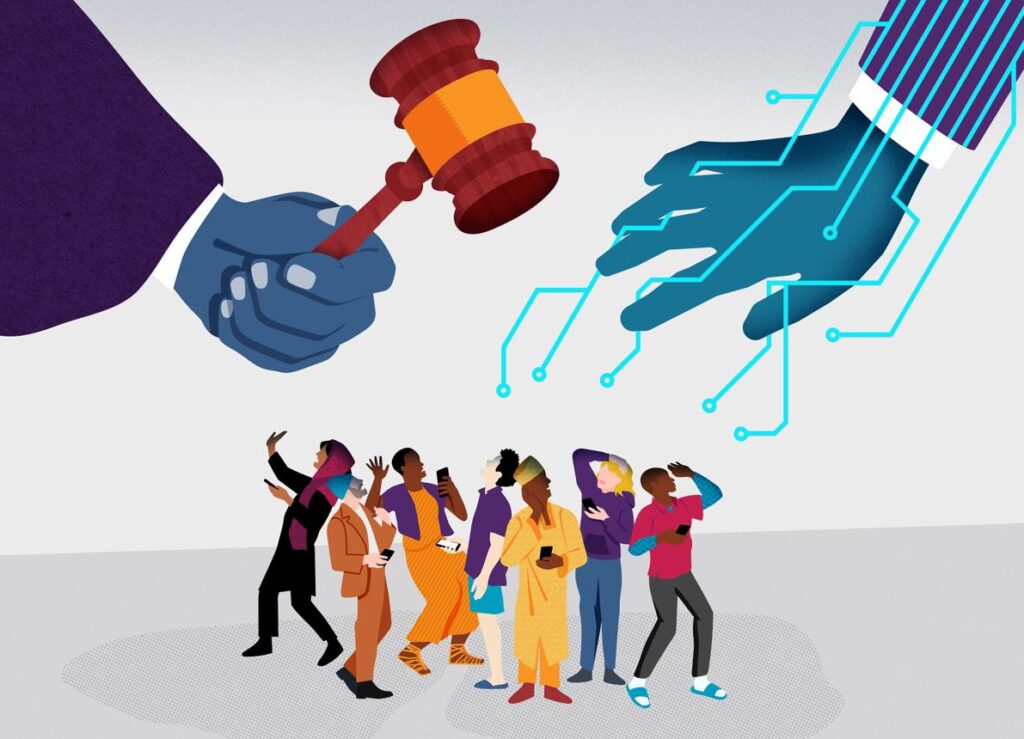
The concept of social media networks as neutral areas of free expression is no longer consistent with the way the systems have been operated. X and other similar platforms are not merely hosting speech. They also sort, rank and amplify content using algorithms designed to optimise engagement.
It implies that they are also creating the circumstances where online harm spreads. The harmful content is not circulating merely because people decide to post it. It may also be circulated because the systems of platforms tend to reward the attention-grabbing content, including those that are misleading, abusive or extreme.
The example of X indicates that limiting moderation to the cause of free speech does not necessarily lead to a healthier form of discussion in the public sphere. At times it can enhance the presence of harmful materials and turn online environments into more aggressive venues.
This is why the problem is not just about the choice of free speech or safety. A more significant concern is what measures can be taken to make platforms liable to the environment that they provide without undermining the idea of open expression.
When platforms define visibility on a large scale, it is no longer possible to consider them as impartial gateways. They become a component of the larger architecture that organises and regulates digital public life.
References
Gillespie, T. (2018). Custodians of the Internet: Platforms, content moderation, and the hidden decisions that shape social media. Yale University Press.
Noble, S. U. (2018). Algorithms of oppression: How search engines reinforce racism. New York University Press.
Tufekci, Z. (2015). Algorithmic harms beyond Facebook and Google: Emergent challenges of computational agency. Colorado Technology Law Journal, 13(1), 203–218.
Be the first to comment