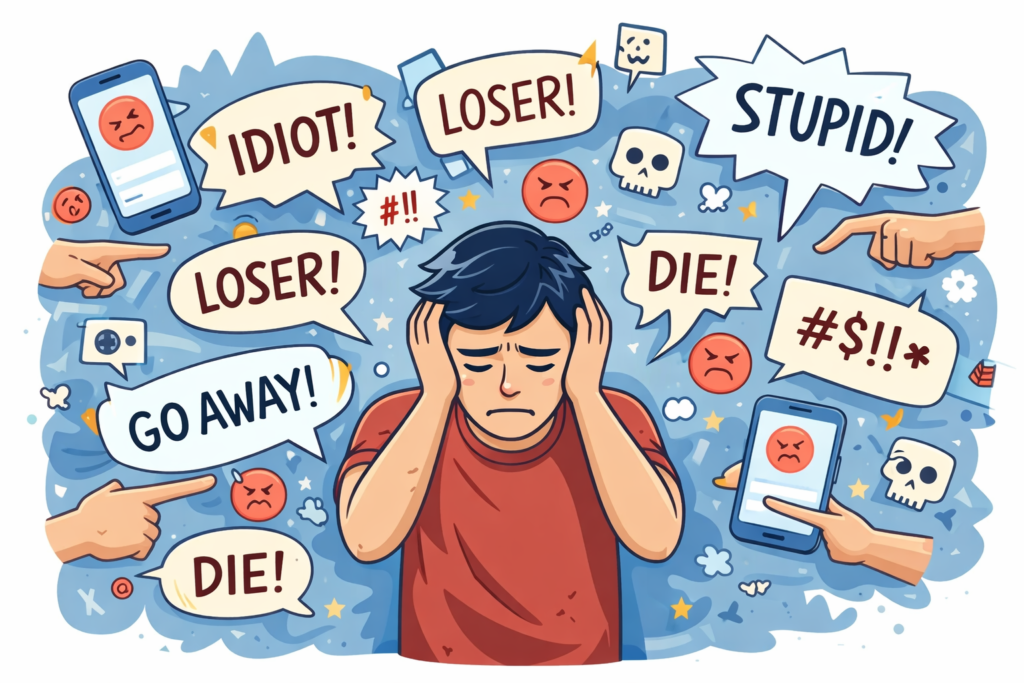
The power of speech on social media is growing stronger, while the moderation, digital policy and governance have not adapted quickly enough, which has already led to online harms. Many people can feel that the power of public opinion is strong, so that it can turn right things wrong. As long as I scroll through to one of the arguments, there will be more of that argument on my recommendation page. Another side of the argument would probably be blocked in my recommendation page. So what happened to this kind of phenomenon on social media? Is it because people become bad and aggressive or is it something else about the platforms? We will mainly discuss the relationship among online harms, hate speech and the moderation of social media in this blog.
With the growing number of online harms, we can see a rise in the news of tighter regulation and platform moderation. Australia has announced that platforms featuring user feedback and infinite scrolling feeds are restricted to users under 16 (Digital Policy Alert, 2026). The prevention of children under 16 from accessing interactive social media can largely reduce the risks of exposure to online harms and keep them safe in the digital world. Also, the UK government has questioned the reason why platforms’ moderation fails to keep up with the current scale of online harms, such as AI-generated child sexual abuse content and hateful content from banned accounts (Lewis Silkin, 2026). The problems seem to arise from the users, but the platforms might also need to take responsibility for their designs and moderation systems. The freedom to share your thoughts and debatable opinions is gradually being lost. This is because a growing amount of hateful content on the internet that we can easily scroll through. The moderation systems are not sufficiently improving in order to protect safety online and maintain the social order in reality. Do you think we can balance speech freedom and moderation effectively?
The current landscape: increasing scale of online harms
According to UNESCO (2025), about 67% of internet users in 16 countries have experienced hate speech online. The majority of internet users might face online harms, which becomes a social issue. Hate speech is not a marginal phenomenon but a global problem that people will need to pay attention to and take initiatives to protect users’ safety online. The overall scale of hate speech is large. We might be concerned about the transformation of focus from online to offline. This can lead to more serious social security problems. Meanwhile, some reports pointed out that the platforms’ design might cause this problem, such as algorithms, moderation and engagement systems. Hickey et al. (2025) had reported that hate speech had increased by 50% from 2022 to 2023, with a 70% increase in engagement in hate posts on X. Those are really impressive growth, especially in this digital age. A single platform had this large number, which could indicate the platform itself had internal moderation or mechanism problems. They are increasing with the increase in hateful content, which lacks moderation. Users were too free to speak and share their opinions, even if they are controversial. Besides, the governments also suggested that the younger generation is more likely to encounter hate speech online. eSafety Commissioner (2020) has illustrated that around 15-20% of adult users in Australia and New Zealand, while 18% of European young age users experienced hate speech online. The younger generation is more vulnerable than mature adults. Hence, in order to reduce the online harms, all parties will need to take their own responsibility. Removing hateful posts, imposing strict moderation, and recommending hateful content to the page are all important actions to keep safety and peace. It is not only about an individual but also means to the whole community.
The current landscape shows intense online harms. Therefore, we might not allow for speech freedom until the mechanisms and regulations are improved, as the harms can be transmitted from online to reality. However, in this way, there will be no more free speech online than before. Speech freedom and online safety are hard to exist simultaneously.
The reason behind the increase in hate speech: More extreme, more attention
How can hateful content spread easily and cause those serious social issues? The platforms’ design issues are not found just now. It has been a time but it has still not efficiently reduced the online harms. One reason might be that the platforms earn money or obtain traffic through the hot topic to draw attention from users and potential users. Some platforms set an algorithm to care about how long you spend on the post. Hateful content is more likely to engage users to like, comment and share. Platforms earn traffic and attention in this way without strict moderation and cause a negative impact. If the platforms remove all extreme or hateful content, user activity would decrease. So we can assume that the traffic is money and that is why the platform fails to moderate inappropriate content.
Another reason might be the bias towards negativity. Imagine a negative gossip and positive news both appear on the homepage, which post would you like to spend more time with? In general, most people would prefer the gossip. All extreme topics will be dug out for the public to rebut. This can result in online harms to the parties involved or even users who comment. Hence, we can say that content involving extreme topics will be more likely to trigger your brain to explore. Once you stay on the hateful posts, algorithms may assume you are interested in this kind of content and recommend more to you. This refers back to the algorithms previously discussed. Hartmann et al. (2025) defined “echo chambers” as repeated interactions with a similar topic that can reinforce the environment in some platforms. So hate speech might be amplified with human brain biases, algorithms and moderation, leading to echo chambers.
Case Study: TikTok removed an ultranationalist influencer’s account after the Guardian flagged
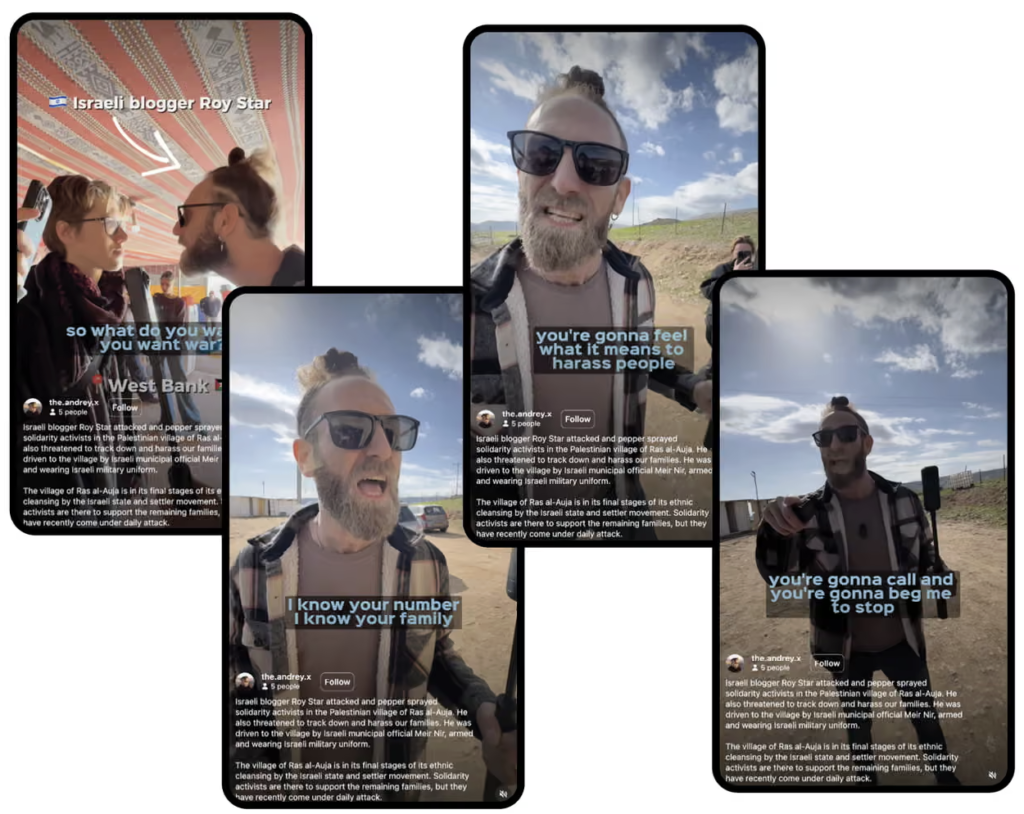
Screenshots showing the harassment of Palestinians and activists by the Israeli ultranationalist influencer Roi Star. https://www.theguardian.com/world/2026/apr/02/tiktok-israeli-ultranationalist-account-west-bank-settlers
Imagine that you are scrolling through a video of someone showing off how they bully and abuse innocent people. This is a true story that happened a few months ago on the US TikTok. Roi Star, who is an Israeli ultranationalist influencer, posted a video online and attracted many followers, as reported by Tondo et al. (2026). He was not only attracting followers but also bringing thousands of likes and cheers. This is likely leading to the gathering of ultranationalists or extremists and causing social instability. Roi Star turned bullying into a performance and shared it on TikTok as his stage. TikTok (n.d.) does not allow hate speech and behaviour and does not recommend content that contains negative stereotypes about the protected group. Although this video, which contains hate speech and bullying, not only passed TikTok’s moderation but also gained a lot of views. Why did the video remain on TikTok for a while even though it violated the platform’s rules? That should be narrowed down to the platform itself. Even with a well-defined definition of “negative attacks” on TikTok (n.d.), the automated moderation systems still do not recognise degrading language and attacks on their race in Roi Star’s video. However, the video still existed for a while and was recommended to more people by the algorithm due to its high engagement. TikTok removed the Roi Star account after the flagged by the Guardian (Tondo et al., 2026). There is no way TikTok was not aware of a viral video containing hateful content before. Removing the account does not remove the memory of the internet, where many people have already seen the video with violence and hate speech. Removing the account is a post-incident response plan that cannot prevent social order stability. This might prove that the automated system is not really moderating trending video or responding slowly but reacting to the negative reporting.
Do you think this is just a technical issue? The platform prioritises trending content first to gain traffic more than humanity. The negative impact of free speech online is harmful to individuals and the whole community. The failure of moderation is an excuse for their wants and commercial value. When the algorithm rewards videos like Roi Star posted with traffic, it is essentially encouraging other people to mimic him and gain the same rewards. If the moderation systems work as decoration, more violence, harm, and all related to threats to society can be spread and cause the instability of the community. It could also be said that TikTok does not lack moderation, but it is often slow to respond or implement selectively. If the platform cannot take its responsibility for moderating hateful content, how much toxic information will internet users consume?
Free Speech vs. Safety
Imagine that another TikTok user, who is like Roi Star, calls for an attack on a certain group and expresses their extreme views on the platform. What would be the result?
Do you place free speech first or safety first?
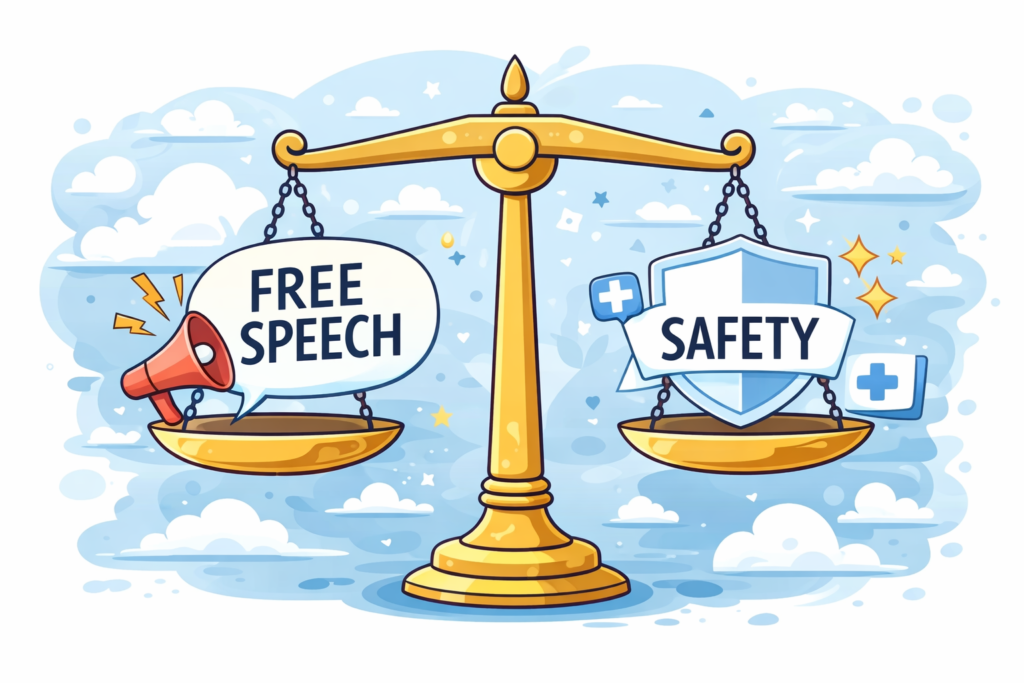
Moderation and regulation are hard to control their level of strictness. If they are too strict, the user engagement will remain low and the internet will lose its nature of speech freedom. However, if moderation is more flexible, the situation might be similar to how Roi Star caused. This is hard to balance for the governments and platforms.
Nevertheless, the moderation could be stricter to protect the social order. It protects the content safety for all users. Assuming the content is food for us to consume, we all hope it is safe. Australian social media strictly bans under-16s (Digital Policy Alert, 2026). This is the action to protect teenagers accessing hateful content and also prevent them from becoming hateful people online in the future. However, it may affect teenagers’ freedom to have normal online discussions. This might be unfair for under-16s. Privacy could also be one problem when teenagers verify their age on the platforms. Besides, Kalsnes and Ihlebæk (2020) found that some political accounts might delete or hide hateful speech on Facebook to avoid moderation. Facebook keep hiring more human moderators to supervise the content (Sinpeng et al., 2021).
Overall, complete speech freedom or safety is unrealistic. The platform might combine more approaches to create a healthy platform. For example, they can create a system with fast-response human moderation and automated moderation. Also, transparency rules are important. Platforms have obligations to report not only the definition of hate speech, but also who made the decisions and moderation standards (Rogers, 2025). So that users will know what can be expressed freely within reasonable boundaries.
Conclusion
The internet is shaped by many parties. It is not just users, but also the platforms, the regulatory bodies, and algorithms, for example. The hateful content we can easily see online is operated by the systems. Removal of accounts is a temporary fix rather than addressing the root. All parties participating in the internet would need to improve their ability to feel empathy and understand each other. As the balance of speech freedom and safety is hard to find.
The cost of speech freedom may be greater than we thought. The reasons can be more than the failure of moderation. It can also be the individuals themselves. While we are waiting for the change of moderation and regulation, everyone should make efforts to contribute to a healthy internet environment. Thinking before posting and commenting and you are trying to be a peaceful user.
References
Digital Policy Alert. (2026). Australia: Online Safety (Age-Restricted Social Media Platforms) Amendment Rules 2026 enter into force. https://digitalpolicyalert.org/event/38894-online-safety-age-restricted-social-media-platforms-amendment-rules-2026-enters-into-force
eSafety Commissioner. (2020). Online hate speech. https://www.esafety.gov.au/research/online-hate-speech
Hartmann, D., Wang, S. M., Pohlmann, L., & Berendt, B. (2025). A systematic review of echo chamber research: comparative analysis of conceptualizations, operationalizations, and varying outcomes. Journal of Computational Social Science, 8(52). https://doi.org/10.1007/s42001-025-00381-z
Hickey, D., Fessler, D. M. T., Lerman, K., & Burghardt, K. (2025). X under Musk’s leadership: Substantial hate and no reduction in inauthentic activity. PLOS ONE, 20(2). https://doi.org/10.1371/journal.pone.0313293
Kalsnes, B., & Ihlebæk, K. A. (2020). Hiding hate speech: political moderation on Facebook. Media, Culture & Society, 43(2). https://doi.org/10.1177/016344372095756
Lewis Silkin. (2026, March 31). The move to combat addictive design features signals increased liability for social media, gaming and AI platforms. https://www.lewissilkin.com/insights/2026/03/31/the-move-to-combat-addictive-design-features-signals-increased-liability-for-soci-102mohe
Rogers, E. (2025). The need for greater transparency in the moderation of borderline terrorist and violent extremist content. Internet Policy Review, 14(3). https://doi.org/10.14763/2025.3.2012
Sinpeng, A., Martin, F. R., Gelber, K., & Shields, K. (2021). Facebook: Regulating Hate Speech in the Asia Pacific. Department of Media and Communications, The University of Sydney.
TikTok. (n.d.). Countering hate speech & behavior. Retrieved April 11, 2026, from https://www.tiktok.com/safety/en/community-support/countering-hate
Tondo, L., Kierszenbaum, Q., & Risheq, J. (2026, April 3). TikTok pulls Israeli ultranationalist’s account for breach of hate speech rules. The Guardian. https://www.theguardian.com/world/2026/apr/02/tiktok-israeli-ultranationalist-account-west-bank-settlers
UNESCO. (2025). World trends in freedom of expression and media development: global report 2022/2025; Journalism: shaping a world at peace. United Nations Educational, Scientific and Cultural Organization.
Be the first to comment