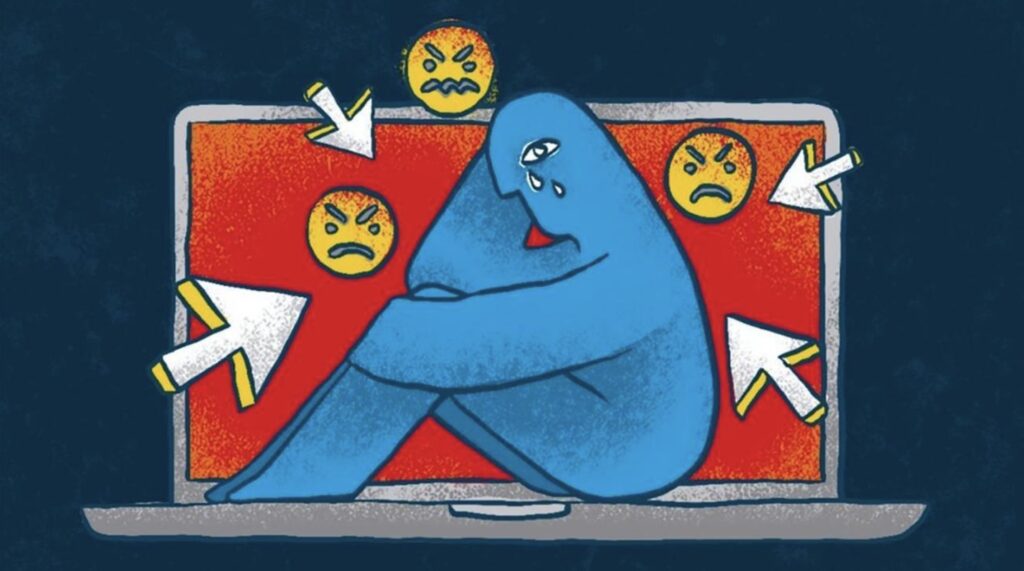
https://unsdg.un.org/latest/stories/combating-hate-speech-lessons-asia
Hate speech don’t always start with obvious offense.
Sometimes, everything just starts with an ordinary short video. The picture is clean and the rhythm is easy. A person expresses a certain “opinion” in a calm or even polite tone. Or, the video itself does not have a clear position, but just splices some memes in a joking way, which are constantly copied, rewritten and extended in the comment area.
You may scroll through the video, but scroll it back. Not because of the shock, but because it sounds… It is very “reasonable” and full of hints.
It is this vague feeling that makes some online comments extremely difficult to handle. These remarks, videos and images are not like hatred, nor are they obviously offensive. They don’t cross the border, but always stay near the border. This is not defined as a problem, but it is difficult to say that there is no problem at all. They leave a space for the audience to understand by themselves.
An Ideal Beginning: The Internet and the Promise of Free Expression
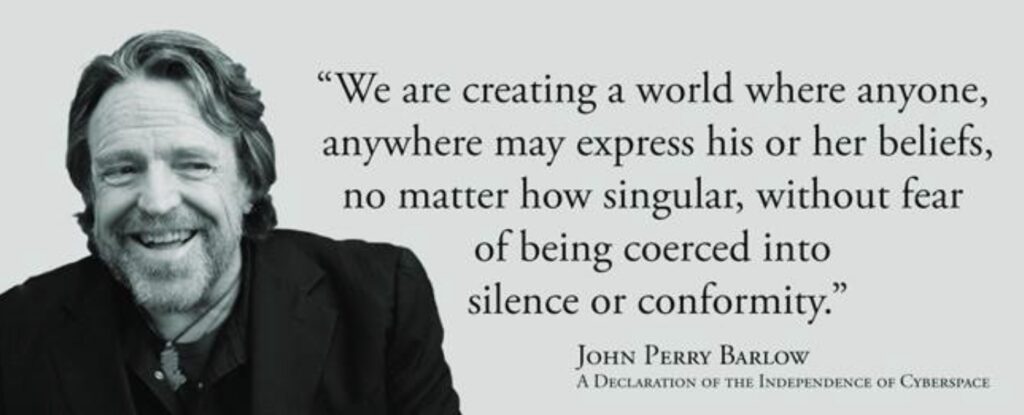
The Internet was originally imagined as a highly open space. In the famous Declaration of Independence of Cyberspace, John Perry Barlow (1996) proposed that the Internet should be a world where “anyone can express their beliefs anywhere without worrying about being forced to be silent or obedient”. This concept of freedom of expression still affects our understanding and establishment of cyberspace. Platforms like Twitter (X) shape themselves into defenders of freedom of speech through flag-building, and even describe themselves as “the liberals of speech of the Freedom Party of Speech” (Costolo, 2013).
However, this ideal has always been accompanied by complex and cruel facts. The platform is not only a space for expression, but also a system that determines what is seen and what is amplified. With the development of the Internet platform, network damage is also increasing. Hate speech, harassment, discrimination and abuse are no longer marginal issues, but a sharp blade in the core challenges of the digital society.
Research shows that cyber damage is on the rise worldwide and is often intertwined with misinformation and extremist content, especially in areas with turbulent political and social environments (Sinpeng et al., 2021, pp. 6–7)
So the problem began to change. Perhaps what we need to ask is not “can people speak”, but how some expressions that should not be accepted become “sounds okay” little by little.
When hate speech doesn’t look like hated
We usually understand hate speech as something obvious – direct, fierce and easy to identify. A common definition is that hate speech is a speech that expresses, encourages, incites or provokes hatred against a certain group (Parekh, 2012, p.40).
But in today’s network environment, many truly influential expressions do not work in this way.
Sinpeng et al. (2021) stated that hate speech is not only offensive, but also speech that can cause harm to others immediately or in the long term (p.6).
Once you understand the problem from this perspective, you will see a different picture. Not all harmful remarks are obvious. Some remarks are not direct, but indirect; not serious, or even funny. It may be a problem, a joke or a “common sense”.
That’s why it’s worth paying attention to. Because vague boundaries often cannot be bound by specific rules.
How It Works:Not by Persuasion, but by Making It Feel Normal
There is actually a vague space between obviously harmful and completely harmless. This space is not easy to define, but once people notice it, it is easy to identify.
This is exactly the “mild hate speech” I want to propose. Hate speech is usually divided into two dimensions: one is explicit incitement under legal sanctions, that is, “hard hate speech”; the other is the so-called “soft hate speech”. Although such speech is legal within the legal framework, it is not wide. Tolerance and discriminatory views have caused serious harm to society (Assimakopoulos et al., 2025).
It does not rely on abuse or direct attack, but plays a role through tone, expression and repetition. A sentence may sound neutral, but it contains some assumptions; a joke seems harmless, but it reinforces stereotypes. It will not immediately disgust people, but it will slowly begin to change people’s feelings. If you analyze it more deeply, the reason why this kind of content is effective is that it will not trigger people’s defense.
Flew (2021) mentioned that problematic expressions are often embedded in daily communication, so it is difficult to identify and supervise. It will not stand out, but be integrated into it. In the face of obvious hostility, people will instinctively reject it. But when the same meaning is packaged as “just saying”, “just joking” and “just asking a question”, people tend to let down their guard. There may even be an idea, “Isn’t it a little reasonable?” In many cases, these remarks do not directly give you a conclusion, but set a premise first. Once you start to think about this premise, you have already accepted part of it. More importantly, this impact is not completed in one time. You won’t change your mind because of a video, but you will see the second, third, and even more similar content. When similar messages are repeated, they become familiar. And the sense of familiarity will bring a subtle change – people are no longer so easy to question. People may not agree immediately, but they will gradually reduce their doubts. With the accumulation of time, the acceptance will become higher.
This is the real way of mild hate speech. It’s not persuasion, but to get used to it.
A more hidden but more representative case can be seen in some videos on Tiktok that rely on “memes” and online culture. In a video, a creator shows a cute pet rabbit. It seems to be just an ordinary pet content. He stroked the rabbit’s ears back repeatedly with his hand. But this video combines the plot in the animation Family Guys to indirectly map the image of the Asian, that is, the rabbit’s eyes become squinting.
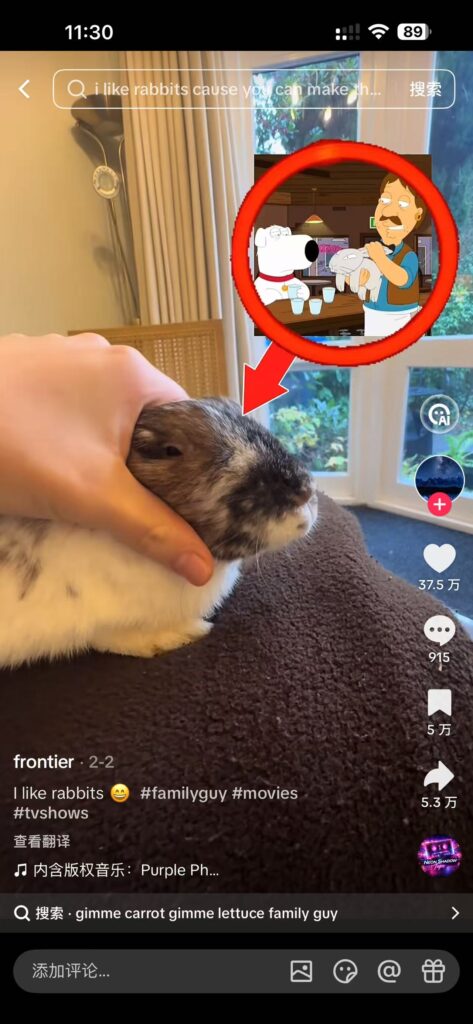


https://vt.tiktok.com/ZSH4mYVFT https://vt.tiktok.com/ZSH4ubudk https://vt.tiktok.com/ZSH4uTvv3/
The Comment Section:Where Meaning Gets Filled In
On the surface, these videos seem to be just a joke. Some creators with rabbit pets are trying to participate and get more attention. They use popular memes and cultural symbols, without explicit abusive language and no obvious violation of platform rules.
However, when we observe the comment area, the meaning of hatred will gradually become obvious. The video itself may be blurry, but the comment section will not. Many users will read these hints and further reinforce these associations in the comments, and even the vast majority of people will express the racial implications more directly. These interactions have formed a consensus that “everyone understands but can’t say it clearly”. And this consensus will encourage more similar content to appear. Because it proves one thing – this expression is effective. Through long-term output, people will become more and more used to it, and even develop a trend. That is to say, as long as you make a side-sided and implied discriminatory remarks, you can gain attention even if it is harmful. When someone points out or condemns a problem, the response often becomes “Are you too sensitive?” Isn’t this just a joke?” Everyone does this, only you are the messenger of justice” and so on. People who point out problems will be attacked, so fewer and fewer people are willing to point out mistakes. And the problem itself was slowly transferred.
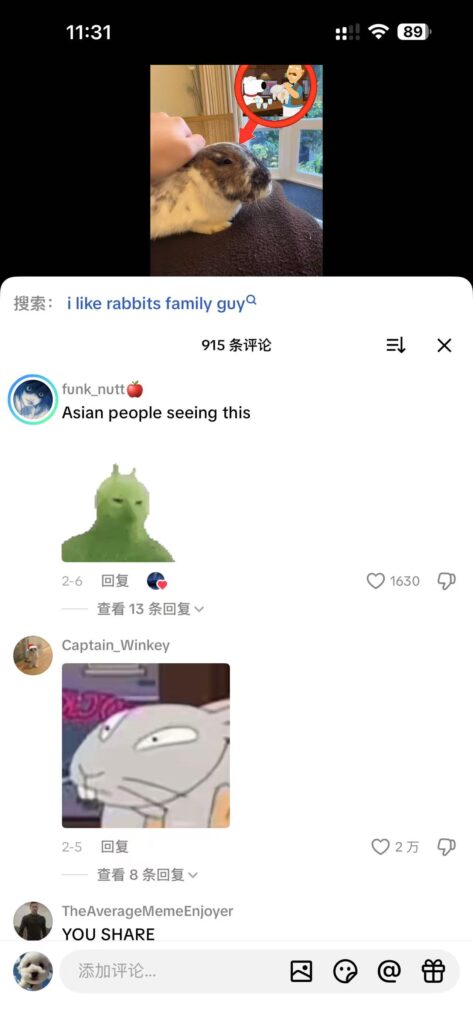
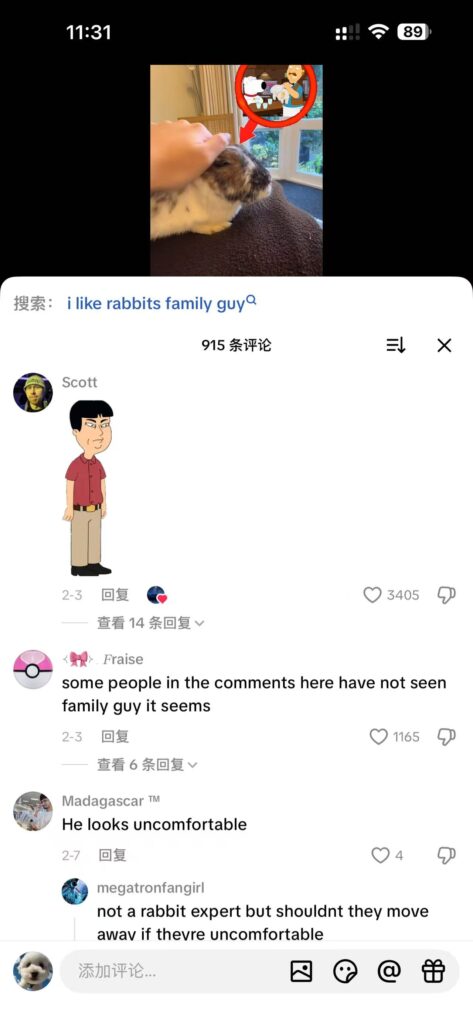
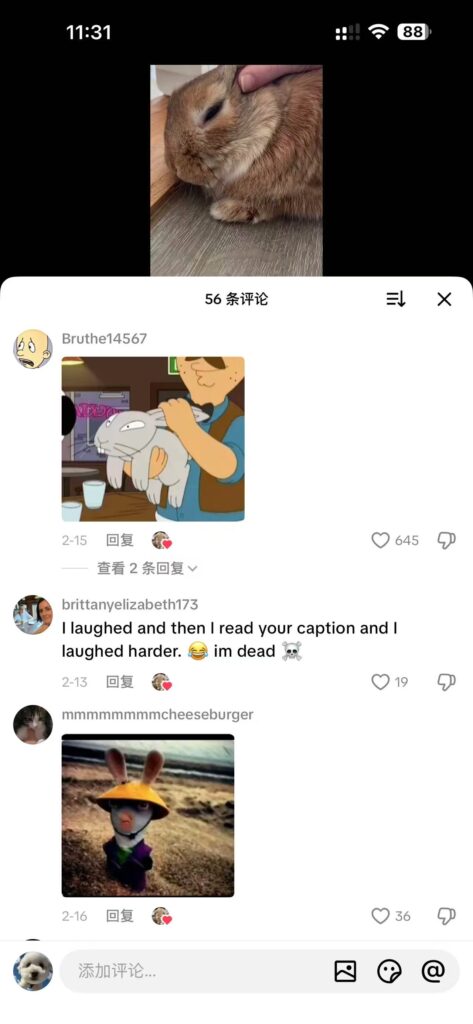

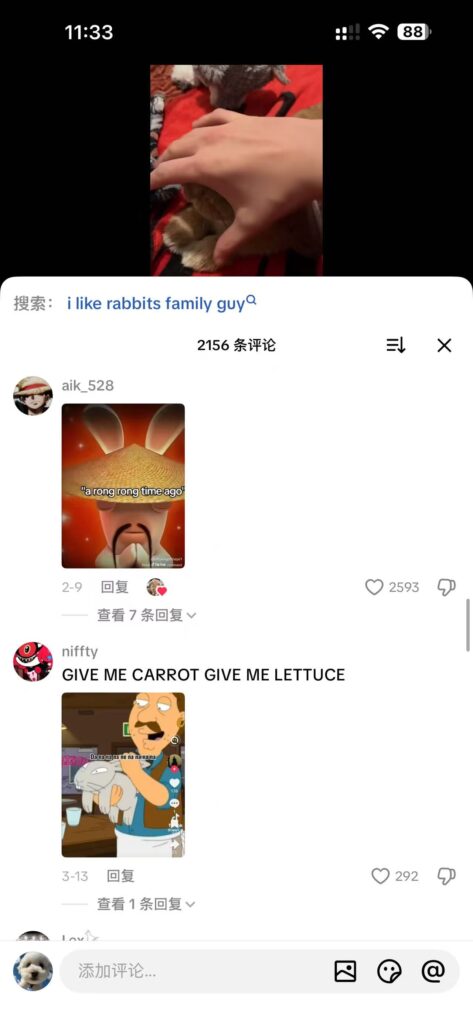
This is the typical manifestation of “soft hate speech”. The content itself does not openly express hostility, but creates stereotypes again by connecting visual symbols and seemingly humor. Because this expression is a carefully fabricated hint rather than a direct statement of hatred, it is difficult for the platform to carry out effective supervision. After all, the most common explanation is “it’s just a rabbit”.
It Changes More Than Content-Also Environment
But the problem is much more than that.
What really changes this way of expression is not only the content itself, but also the whole environment. For bystanders, it often does not bring recognition. It’s a kind of gradually accumulated “it doesn’t matter”. People may feel uncomfortable at first, and then gradually take it for granted. In the end, I won’t even notice it again.
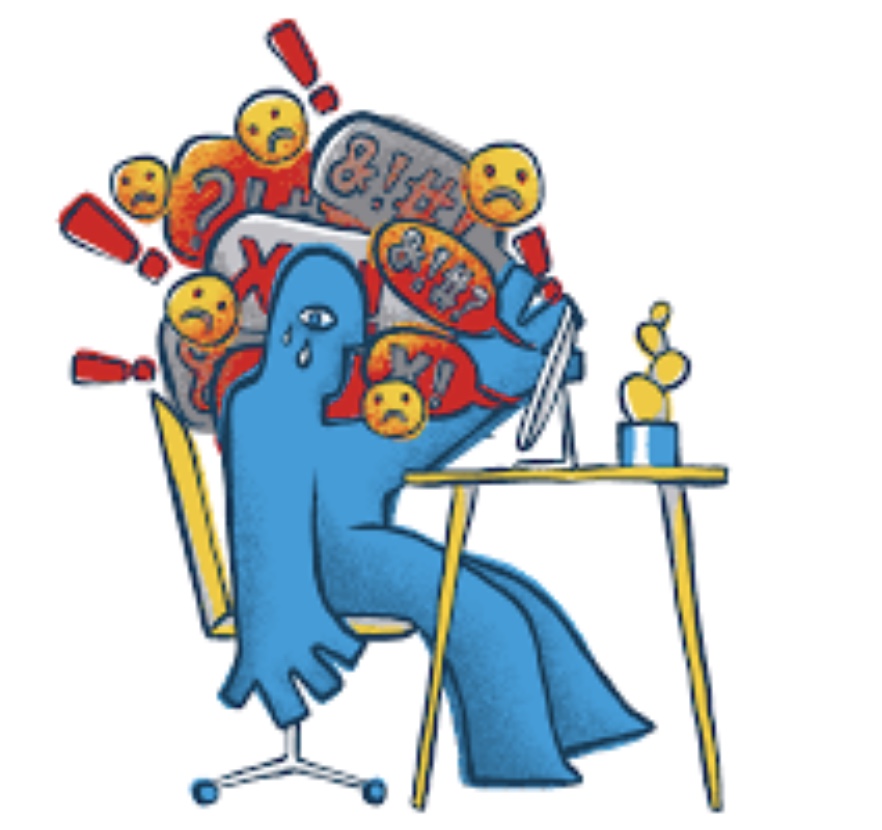
This is not a drastic change in attitude, but a change in perception. When a certain expression keeps appearing, people’s sensitivity to it will decrease. At the same time, those who are really affected are often in the opposite situation. They will be easier to notice these hints and more difficult to ignore. But this kind of injury is difficult to explain clearly. Because looking at each content alone, it “didn’t say anything”.
https://www.un.org/en/hate-speech/understanding-hate-speech/what-is-hate-speech
In this case, the content of “just a joke” actually constitutes an exclusion mechanism. It implicitly reinforces the idea that certain identities can be simplified into symbols or stereotypes, while providing space for creators who like to hurt others to deny the intention to hurt others.
Not through direct attack, but through continuous accumulation. But accumulation is difficult to be discussed as a specific problem. So there was a kind of fracture. Some people feel nothing; others continue to feel uncomfortable. And this kind of discomfort is easily criticized as an overreaction at present.
Looking further, the reason why this kind of content can persist is also because it almost does not bear the consequences. This expression stops in a vague position. Platform rules are difficult to deal with tone, hints and cultural contexts, especially when memes and online culture are constantly changing. At the same time, the platform mechanism tends to amplify this kind of content. The more vague it is, the easier it is to trigger discussions; the more discussions, the wider the spread. So this forms a cycle. No one is clearly promoting hatred, but a certain way of expression is strengthened little by little.
So the problem may not be just to distinguish whether this is a hate speech, but when a way of expression can change our judgment of “what is normal” little by little without being noticed, have we underestimated its impact?
https://www.sydneycriminallawyers.com.au/blog/tough-new-laws-against-hate-speech/
Conclusion
The damage in the network is not always obvious. Some injuries are slow, hidden and easy to be ignored. And it is this characteristic that makes it both difficult to control and influential. Perhaps, what really needs to be alert is not the most extreme voices. If we only pay attention to those extreme cases, we will ignore those more routine ways of communication. Because change often does not start with conflict. But from that moment on – you wanted to row away, but stopped and took a closer look.
References
Assimakopoulos, S., & Serafis, D. (2025a). Why soft hate speech matters: Argumentativity and the dispersion of hatred towards minorities. Critical Discourse Studies, 1–20. https://doi.org/10.1080/17405904.2024.2440869
Barlow, John Perry (1996) ‘Declaration of the Independence of Cyberspace’ https://www.eff.org/cyberspace-independence
Flew, Terry (2021) Hate Speech and Online Abuse. In Regulating Platforms.
Parekh, B. (2012). Is there a case for banning hate speech? In M. Herz and P. Molnar (eds), The Content and Context of Hate Speech: Rethinking Regulation and Responses (pp. 37–56). Cambridge: Cambridge University Press.
Sinpeng, A., Martin, F., Gelber, K., & Shields, K. (2021, July 5). Facebook: Regulating hate speech in the Asia Pacific. Final Report to Facebook under the auspices of its Content Policy Research on Social Media Platforms Award. Dept of Media and Communication, University of Sydney and School of Political Science and International Studies, University of Queensland. https://r2pasiapacific.org/files/7099/2021_Facebook_hate_speech_Asia_report.pdf
Links to an external site.
Be the first to comment