
Have you ever had this happen to you?
You just casually search for a pair of shoes you want to buy, like a popular sports shoe. Then, for the next few days, that shoe seems to be stuck to your phone. It just won’t go away. No matter where you look – on Instagram, YouTube, Taobao, Xiaohongshu, or even on some websites you don’t remember visiting – you see ads for that same pair of shoes. Usually, this only stops after you actually buy the shoes. Then the ads slowly go away.
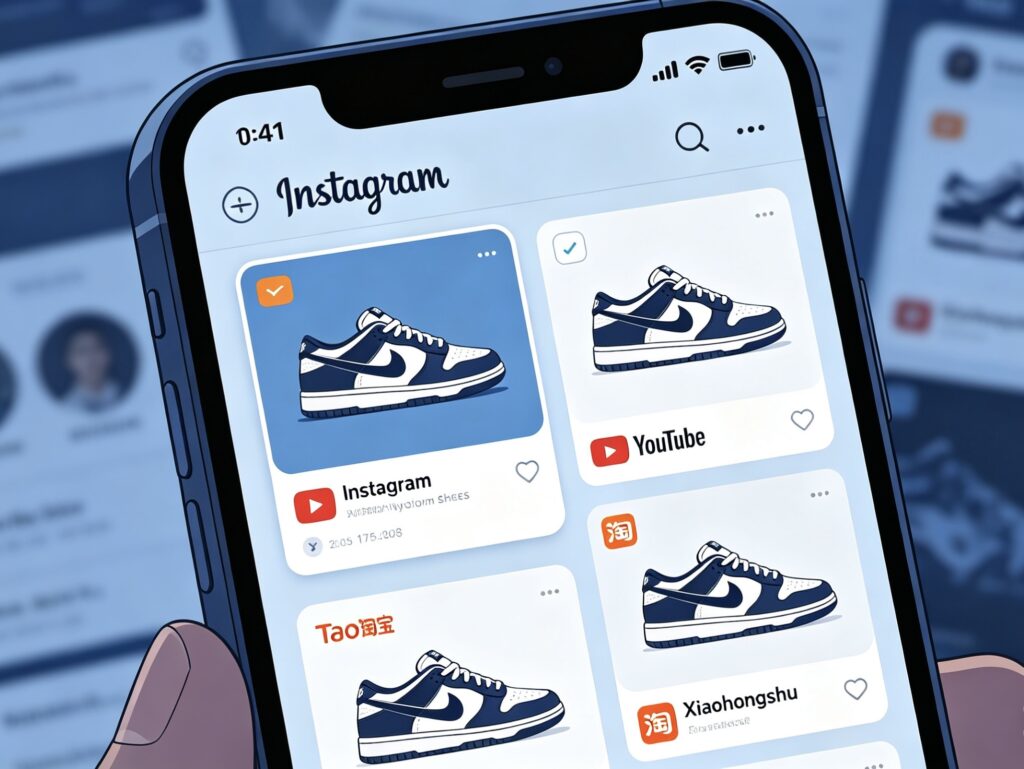
Or here is another example. One day, you are having dinner with some friends. You just mention that you want to go to Iceland to see the northern lights. The next day, you pick up your phone. Suddenly, your home page is full of travel guides and vlogs about Iceland. You also start seeing ads for flights and tour groups. You did not search for anything about Iceland. But at that moment, you cannot help but wonder: Did my phone hear me?
This feeling is a bit uncomfortable. But it is also very familiar. And over time, it seems that we have just gotten used to it.
Now think about your daily life. Every time you download a new app, something happens. Within the first second of opening it, a pop-up almost always appears. It asks you to “accept all cookies.” Or it asks for permission to look at your photos, use your microphone, or access other parts of your phone. Most of the time, we do not think about it. We just click “agree” so we can start using the app as quickly as possible.
Here is a common situation. You sign up for a free fitness app. It asks for your age, weight, and activity level. Then it asks for permission to track your location, even when you are not using the app. You click “allow” because you want to see your running route. Later, you start seeing ads for weight loss programs and sports gear. You did not ask for them, but they keep showing up.
Another real-life example is a weather app. You download it because you want to know if it will rain tomorrow. It asks for your location. That makes sense, right? But then it also asks for access to your contacts and your microphone. Why does a weather app need that? Most people still click “allow” because they just want to see the temperature. Later, that weather app sells your location data to advertising companies. Then you start getting ads for shops near you, even though you never asked for them.
These things actually happen every day. We have grown used to platforms “understanding” us. And we are also used to giving away a little bit of our personal information. In return, we get a more convenient and more personalized experience. This is often described as a “privacy trade-off” — we give up personal data in exchange for convenience and free services. But the key question is whether this trade-off is really fair.
But here is the problem. Is this “privacy exchange” really a choice we make by ourselves? This blog argues that what looks like a simple and voluntary exchange is actually shaped by platform design, unequal power, and limited real choice.
Let me explain a little more. In today’s digital world, almost all the apps we use are promoted as “free.” We watch videos, chat with friends, and shop online. It seems like we never have to pay anything. But at the same time, these platforms still make a lot of money. So how does that work?
The reason is actually very simple. We have not paid with money. But without realizing it, we have paid with two other things that are even more important. First, we pay with our data. Second, we pay with our time and attention.
For example, when we watch short videos, browse products, or click “like” or “save,” these platforms record almost everything we do. They see what you have watched. They see how long you stayed on each video. They see what you are interested in. They even notice which page you stayed on for a few extra seconds. Then, slowly, these small pieces of information are put together. They form a “user profile” about you. Sometimes, this profile knows you even better than you know yourself.
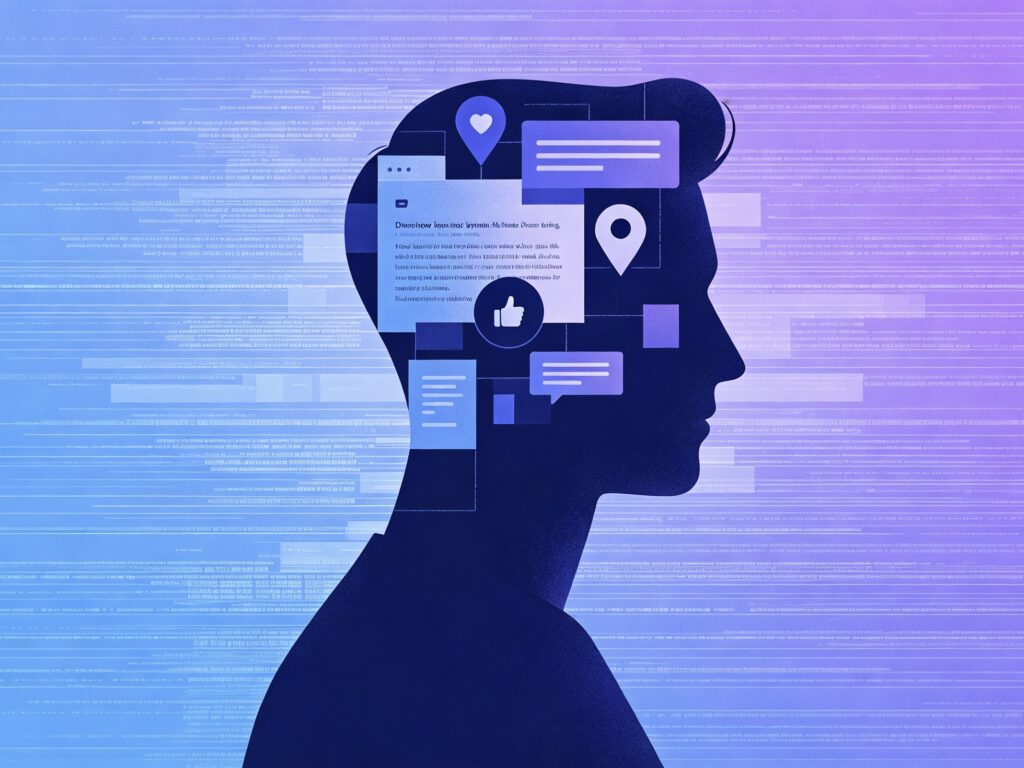
Think about a time when you searched for a gift for a friend. You looked at a few handbags online, just to get an idea. Then for the next week, every app you opened showed you ads for handbags. You were not interested anymore, but the platform kept pushing. That is because your profile already marked you as “interested in handbags.”
Next, the platform uses this information to push content and ads to you. Those videos and products that seem to be “just your taste” are not really coincidences. They are the result of calculations. In other words, these platforms are not just simple tools. They are always watching you. And at the same time, they are slowly influencing what you see, what you like, and even how you make choices.
So how does all this data end up in the hands of the platforms? The answer is actually quite simple. Very often, it is us who click “agree” and give it away.
Think about it. Every time you register an account, download an app, or open a webpage, pop-ups appear. They show you privacy agreements, cookie notifications, and permission requests. These documents are usually very long and hard to understand. Most people do not read them carefully. Over time, we have developed a habit. We click “Agree All” right away. We do this because we want to use the app’s functions as fast as possible. We give permission for the app to see our location, our photos, our microphone, and even our contact lists. But we seldom stop to think about how this data will be used later.
Here is another important point. This data is often not kept inside just one platform. It can be analyzed, shared, or even moved between different companies. They do this for advertising or for predicting what users will do next. From the point of view of privacy research, the issue is not just about whether information has been collected. It is also about whether it is being used in situations that “we would normally accept.” But right now, it is very hard for us to truly know where our data will be used. So this kind of “agreement” is often more like a guided choice. As privacy scholar Helen Nissenbaum argues, privacy is not just about whether data is collected, but whether it is used in ways that match what people reasonably expect in a given context.
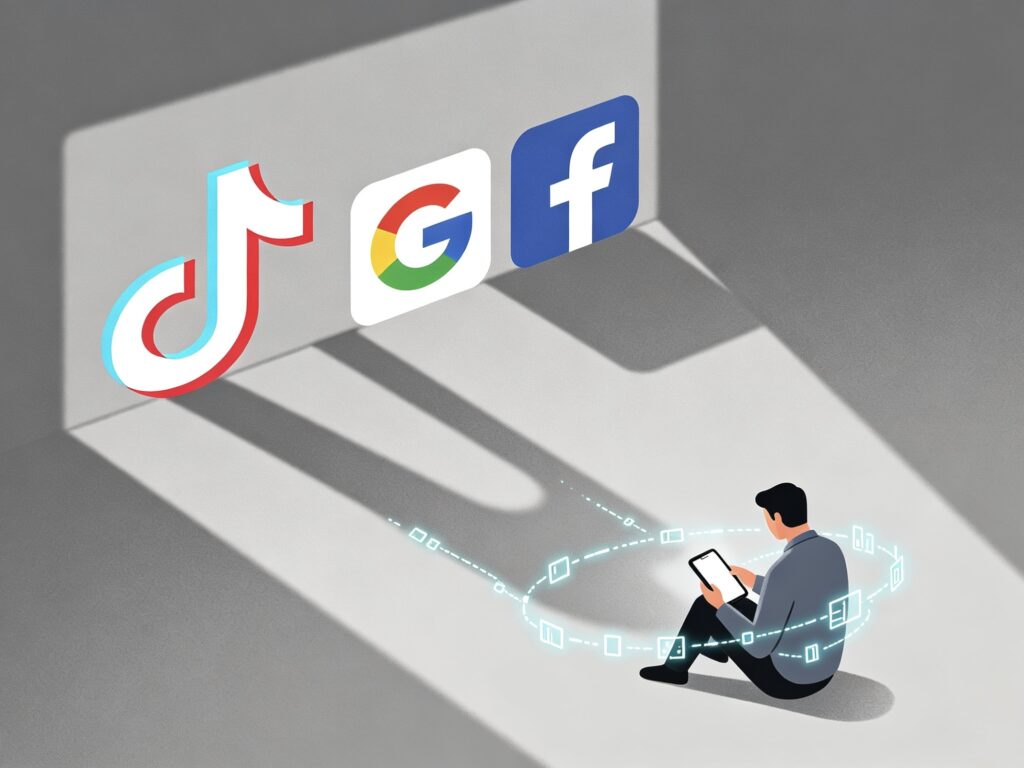
Now you might ask: if we do not want to do things this way, can we just choose not to use these platforms? To be honest, that is very hard.
Nowadays, life cannot be separated from these apps. We use social media to talk to our family. We use shopping apps to buy things. We use apps to order food, call a taxi, look up information, and relax. If we stopped using all of them, it would not just be “inconvenient.” Our lives would basically stop working. So in the end, this is not just a question of “Do you want to agree or not?” It is a question of “Do you really have a choice?” It seems like we are making choices. But in fact, we are making choices inside an environment that has already been designed for us.
So in this kind of relationship, who really has the final say? The answer is actually quite clear. It is the platform.
The platform decides what content you will see. It decides how ads will appear. It decides how your data will be collected and used. We think we are just casually browsing our phones. But in fact, most of what we see has already been filtered and ranked.
For example, the more you like to watch a certain kind of video, the more the platform will recommend that kind of video to you. Slowly, your interests will be reinforced again and again. The content you see will become more and more narrow. For instance, you might just casually watch a few fashion videos at the beginning. But then you keep scrolling. After a while, your home page might be full of the same type of content. Then you might start to feel that “everyone is watching these things.” But in fact, the platform is just filtering things for you. So these platforms do not just provide content. They also set the rules.
As Nicolas Suzor points out, digital platforms are not neutral tools. They act as rule-makers, and they shape how users behave online. This power is a big problem, because users have very little ability to challenge or change these rules. In traditional markets, consumers can switch to another provider. But digital platforms are different. They are now the main tools for communication, work, and social life. So leaving them is very hard. Because there are no good alternatives, the “choice” that users have is not real. This makes the power imbalance between platforms and users even worse.
Most of the time, we just follow the rules as we use them. So this is not just an unequal relationship. It is a structural imbalance. Platforms have much more power than individual users. And yes, these platforms have made our lives much more convenient. But at the same time, we need to see that this convenience has never been free.
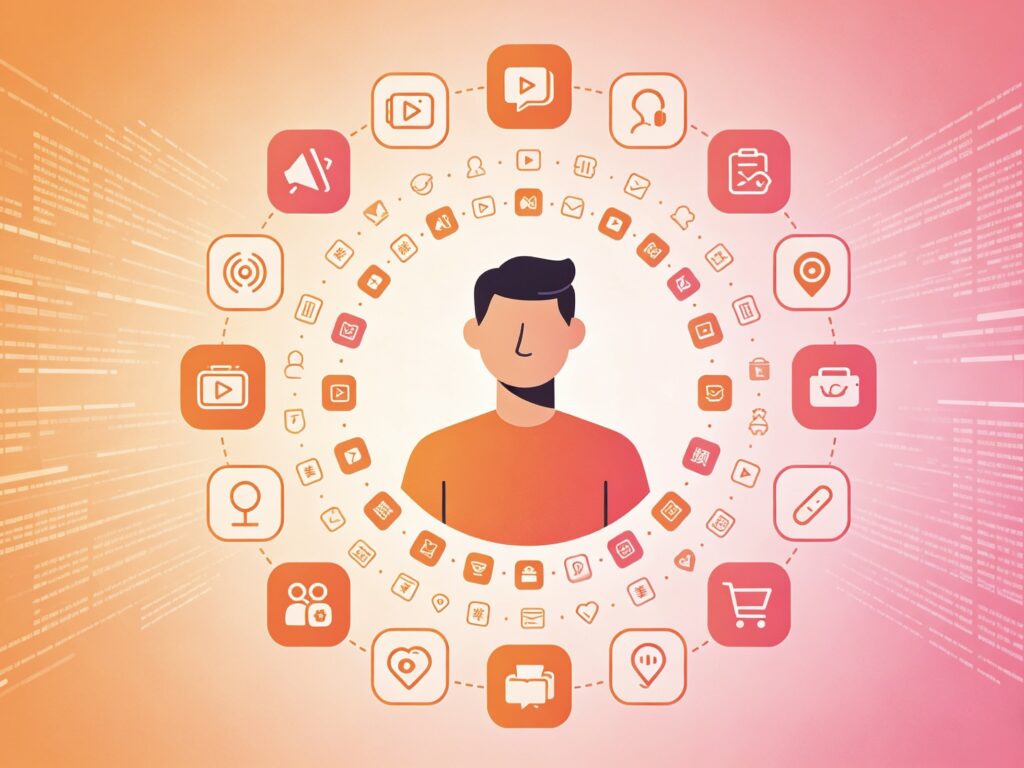
So in the end, this issue is not only about whether each of us is careful or not. It is about how these platforms were built from the very beginning. Their rules, their recommendation methods, and their data collection logic have already decided how we will use them. This is what scholars call “platform governance.” That means platforms govern users not just through laws, but through design, algorithms, and data systems.
And if we take this one step further, here is a bigger question. If the content we see every day is all calculated by the platform as “the most suitable for us” based on our data, then the world we see has actually been filtered once. What you like to watch is what the platform keeps pushing to you. Slowly, your interests become more and more fixed. And the content you see becomes more and more narrow. At this point, a very real question appears. Are we really making our own choices? Or are we just choosing from within a range that the platform has arranged for us?
If most people live inside their own “customized” information environments, then the world that different people see may become more and more different from each other. This also shows that privacy issues are not just about the data itself. They also affect how we see the world and how we make decisions.
So what can we do about this? I am not saying we should throw away our phones or stop using the internet. That is not realistic. But maybe we can start by being more aware.
The next time a pop-up window asks you to “accept all cookies,” maybe you can stop for a second. Ask yourself this. Is this a choice I truly want to make? Or am I just clicking “agree” because it is too much trouble to do anything else?
We may find it very hard to completely leave these platforms. But at least we can start to notice that this daily “privacy exchange” is not as fair as it seems on the surface. Recognising this imbalance is important, because it shifts the conversation from individual responsibility to broader questions about how platforms should be regulated. In Australia, talks about privacy reform and digital platform rules try to fix these issues. So this shows that privacy is not just a personal worry. It is a bigger policy problem. One example is the Australian Privacy Act. This law tries to control how personal info is collected and used. But many experts say this law was made for an older online world. So it has a hard time keeping up with the size and difficulty of data collection today. The EU has rules called GDPR. These rules focus more on user permission and data rights. So Australian rules are often seen as not as strong. Then we can ask: can current laws really protect users? Because data collection is now built into everyday platform use.
These examples tell us that privacy today is not just about keeping info secret. It is about how data is always collected, studied, and used to change user experiences. So the problem is that platforms know more about us, and they use this knowledge to arrange the choices we see and the decisions we make. So privacy becomes a social and political problem. It is not just each person’s own job.
That is really the first step. Just being aware. Because once you see how things really work, you can start to make more thoughtful choices. Even small changes can help. For example, you can take a few extra seconds to read the permission pop-up before you click. You can turn off some permissions that an app does not really need. You can use privacy settings to limit how much data is collected. These little actions will not change the whole system overnight. But they can give you back a little bit of control.
And maybe, if more people start paying attention, platforms will have to change too. But that is a bigger conversation. For now, just remember this. When something is free, you are usually the product. Your data, your time, your attention – these are valuable. So the next time you see an ad that feels a little too personal, do not be surprised. Now you know why.
References:
Flew, T. (2021). Regulating platforms. Polity Press.
Marwick, A., & boyd, d. (2019). Understanding privacy at the margins. International Journal of Communication, 13, 1157–1165.
Nissenbaum, H. (2018). Respecting context to protect privacy: Why meaning matters. Science and Engineering Ethics, 24(3), 831–852. https://doi.org/10.1007/s11948-015-9674-9
Suzor, N. P. (2019). Lawless: The secret rules that govern our lives online. Cambridge University Press
Be the first to comment