A safer home — or another point of entry?
At 2 a.m., the screen of the mobile phone lit up: there was movement in the front door.
A woman opened the background application of the smart home system to check the real-time screen, and then she was relieved. There is no one at the front door. The camera is working normally. The smart home system is running normally. Everything at home made her feel at ease.
This moment is the charm of smart home. The doorbell camera allows you to see who is outside the door. The smart door lock will send a notification when someone enters the door. The supporting applications make the whole system easy, efficient and under control. These devices are advertised as safety tools, but what they really sell is a sense of security: a concept that can monitor, manage and protect your home wherever you are.
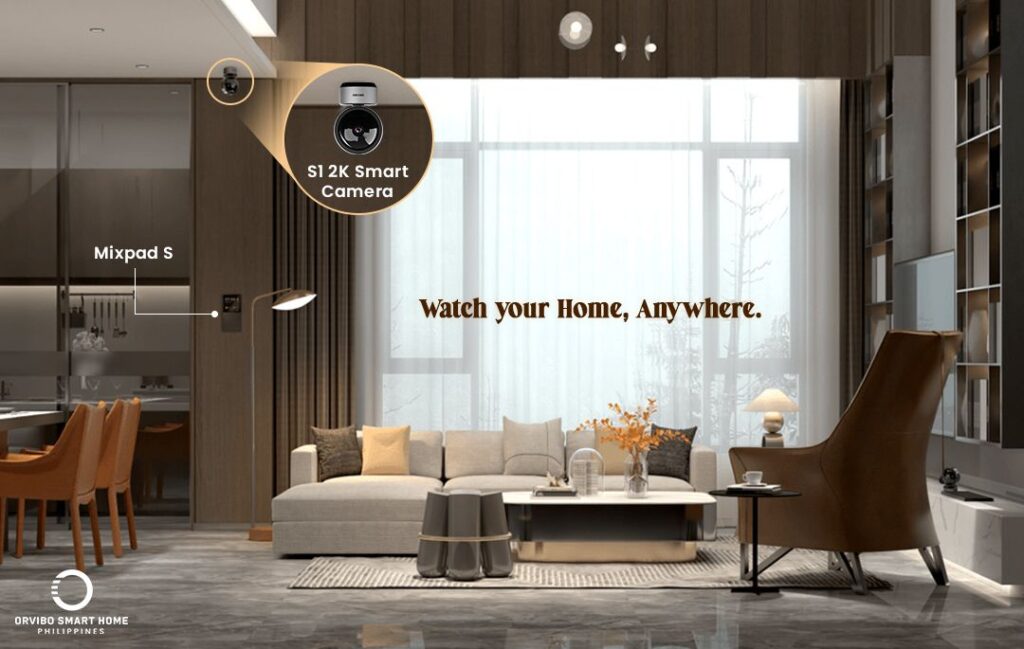
Figure 1. Smart home advertising usually wraps security into continuous visibility. This promotional picture promises users that they can “view [their] home anytime and anywhere”.
Source: Mysolutions Inc., Facebook post promoting the Orvibo S1 2K Smart Camera, 30 March 2026.
However, when you want to buy a set of smart home devices for your home, you are also required to download the app of its brand.
Therefore, we must be clear that smart home is not only a home device connected to the Internet, but also a data system.This distinction is crucial. The smart camera is not just for taking pictures, and the smart door lock is not just about opening the door. These devices generate records, logs, timestamps and behaviour tracks. Once this is the case, privacy is no longer just about walls, doors and physical space, but has become a matter of how family life is transformed into digital information.
Smart home should be included in the discussion of digital privacy, not just network security. Network security focusses on whether the system may be attacked; digital privacy focusses on what information the system is collecting, where it flows, how long it will be stored, and who can access it. In an online home environment, this problem becomes particularly private. Social media platforms may know what you clicked or liked. And the smart home system may know when you wake up, when you go out, when you come back, and every corner you shuttle around the house. Isn’t it very scary to think about it carefully?
David Buyle-Gill and his co-authors combined the study of criminology, cybercrime and digital harm to find that “privacy intrusions are the most common type of harm identified in the literature” . This conclusion shows that the loss of privacy is not a side effect of smart home, but one of the core risks inherent in the operation mechanism of these systems.
What the Nest case reveals
A distinct recent case occurred in February 2026, when Reuters reported the controversy over the video of Google Nest doorbell. The detail that worries privacy advocates is not only that the camera records important content, but also that even if the user does not subscribe to the paid package that is usually associated with video storage services, these videos can still be restored from Google’s “backend system”. Reuters also reported that Nest users must agree to “Google processes Nest Cam audio/video data” to use the device, and some new models will keep hours of event video records even if there is no subscription service.
This case shows that buying a smart home device is no longer just about buying a device. This usually means entering a platform system. In order for the camera to work properly, users must download the company’s application, create or link accounts, agree to process audio or video data, and allow some family life to be recorded through the back-end infrastructure that they cannot really see. The camera may be installed at the front door, but the system that drives it is far away from home.
Traditional security cameras may only store videos locally, while the function of smart cameras can transmit video through applications, synchronise to cloud services, create retrievable history, generate event logs, and leave traceable traces in the back-end system. Therefore, the privacy problem lies not only in what the device sees, but also in what the system retains.
Reuters quoted Chris Hofnager, a professor at Berkeley Law School, as saying: “Technology companies almost always have access to more information than users understand.” This sentence points to the core of the problem. The rund of the disease is not simply that the user has not read the details, but that the system itself is difficult to understand from the outside. A person may know that he has installed a camera, but he may not know how much of the family data will persist once it enters the company’s data infrastructure.
Your device is also a platform
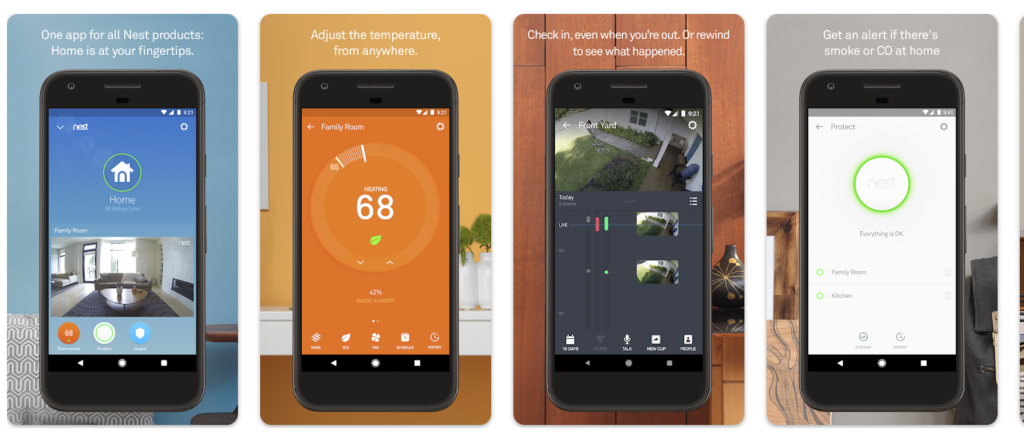
Figure 2. Screenshot from the Apple App Store page for the Nest app. It shows that Nest smart-home products are designed to be used through the brand’s app, which centralises device control, alerts and video access in one software system.
Source: Apple App Store screenshot of the Nest app page.
This is a point that is rarely emphasised in smart home marketing. Smart home products are not just a product. They also include an application, a cloud service, a set of permissions, and a continuous connection with the enterprise backend system.

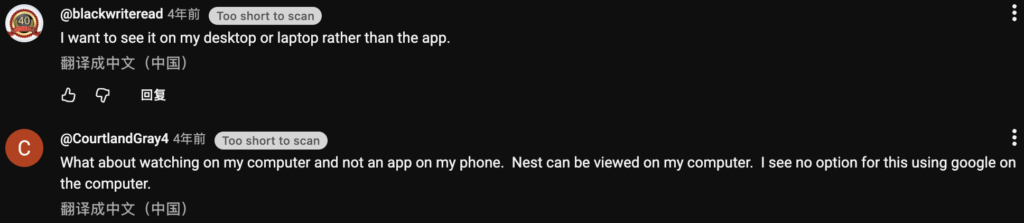
Figures 3 & 4. Comments on YouTube regarding the Nest video Source: Youtube
This explains why privacy concerns surrounding smart homes are not merely about hacking or surveillance, but also about dependency. In the comments section of a YouTube video about using Nest cameras, users complained that they did not want to have to keep opening the app just to view or save video clips. One person wrote: “ ‘I’d prefer to view them on my desktop or laptop rather than in the app,’ whilst another remarked, ‘They force you to use the Nest app to save video clips.’ What may appear to be a minor usability complaint actually touches upon a more significant privacy issue. If users can only access their home videos via an app controlled by the manufacturer, then the company not only provides the device but also controls the access to the data generated by that device.
This has completely changed the issue of privacy. When you buy a network doorbell camera, you not only install a device at the door of your home. At the same time, you put your home in a software environment that stores video clips, pushes alerts, tracks usage patterns and controls access rights. The device seems to be localised, but the system is not.
Alexander Orlowski and Wulf Loh pointed out in AI & Society that data collection in the smart home environment and the processing is still “lack of transparency and control”. This brief statement explains why users tend to feel uneasy even if there is no major accident. The problem does not always come from hacking or data leakage. It is the daily operation of the system that quietly transforms family life into data.
This view helps to understand the Nest event, what is disturbing is not only the existence of the video, but also the life cycle of these data in Google’s system is much longer and more complex than many users reasonably expected. This does not mean that the company is necessarily illegal or malicious. But this does mean that the privacy problem of smart home cannot be simply attributed to personal choice. Once home devices rely on applications, cloud services and back-end recovery systems, privacy becomes a problem of platform design and data governance.
This is also the point where the relationship between smart home and digital privacy has become more acute.
Whenever private life is transformed into data, and this data can transcend the immediate context it generates, the problem of digital privacy arises. This is exactly what smart home does. They transform family life – including mobility, sound, presence, absence, and daily habits – into information that can be recorded, stored and processed. The Nest event shows that the boundaries of smart home are not only walls or front doors, but extend to applications, servers and backend systems.
What happens to the idea of home?
Smart home systems improve the efficiency of the house, but they also change the meaning of “home”.
Justin Humphrey and Chris Chescher, researchers in the field of media and culture, pointed out that smart home systems create a tension between security and visuality. In their words, these devices make it possible to “watch the home from afar” and to “record these observations over time.”Their views are valuable because they show that smart home is not only a technical device, but also a cultural system that redefines the boundaries of family life.
Traditionally, family privacy depends on closedness. Walls, doors and curtains separate family life from the outside world. Smart home makes this model complicated. The boundaries of the family no longer stop at the wall, but extend to the mobile phone in your hand, the company’s server, cloud files, and the platform policies you accept when setting up the device. This does not mean that the family has completely lost privacy, but that privacy now depends on systems and infrastructure that many users cannot fully see.
That’s why the privacy issue of smart home is completely different from many other digital privacy debates. People may expect that search engines, social media platforms or shopping websites will track their activities. But what’s more disturbing is that the system at home can actually collect the rhythm of daily life: when the child comes home from school, when the lights in the corridor turn on, when the front door opens, or when the house is empty. These data seem bland, but when summarised, they become private and sensitive.
The problem with the Nest incident is not only that the user has installed the doorbell camera, but also that the system itself seems to be able to save and retrieve more data than the user expected. This leads to a basic but crucial question: when enterprises can obtain traces of family life from the background system, who is the real controller of the family boundaries?
Did users really know what they agreed to?
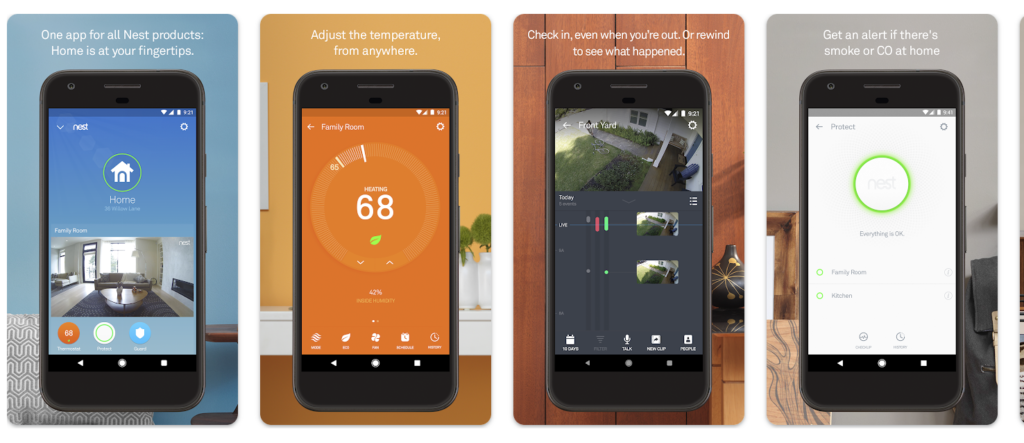
Figure 5. Screenshot from the Apple App Store page for the Nest app. It shows that Nest smart-home products are designed to be used through the brand’s app, which centralises device control, alerts and video access in one software system.
Source: Apple App Store screenshot of the Nest app page.
This brings us to consent.
Theoretically, when users install applications, connect devices and accept the terms, they agree to these systems. But in fact, this kind of agreement often seems to be formal. People usually only want the product to work normally and do not negotiate with the company about the data retention period, back-end retrieval practises or the exact meaning of “processing” audio and video data.
Flew’s discussion on privacy is quite inspiring because he defines digital privacy as a structural problem caused by information asymmetry, bundled consent and weak user cognition, rather than simply attributing it to personal negligence. Suzor further deepened this view in his book Lawless, aruguing that although from a legal point of view, digital rules are still private contracts formulated by enterprises for consumers, their function is increasingly towards governance documents. In fact, there is no right for users to bargain on the terms, but are forced to accept the terms or leave.
When users click “agree” to process audio and video data, they may not know how long the event records will be kept, how the back-end system will process residual data, or how much other information the company will have in addition to the information seen by the user through the application interface. Although written consent may be possible, substantive recognition may still be missing.
Orlovsky and Lo’s warning about the lack of transparency and control also pointed out that the problem is not only whether the user agrees, but also whether the user has sufficient information and substantive control to make such consent really meaningful in practice.
The illusion of control
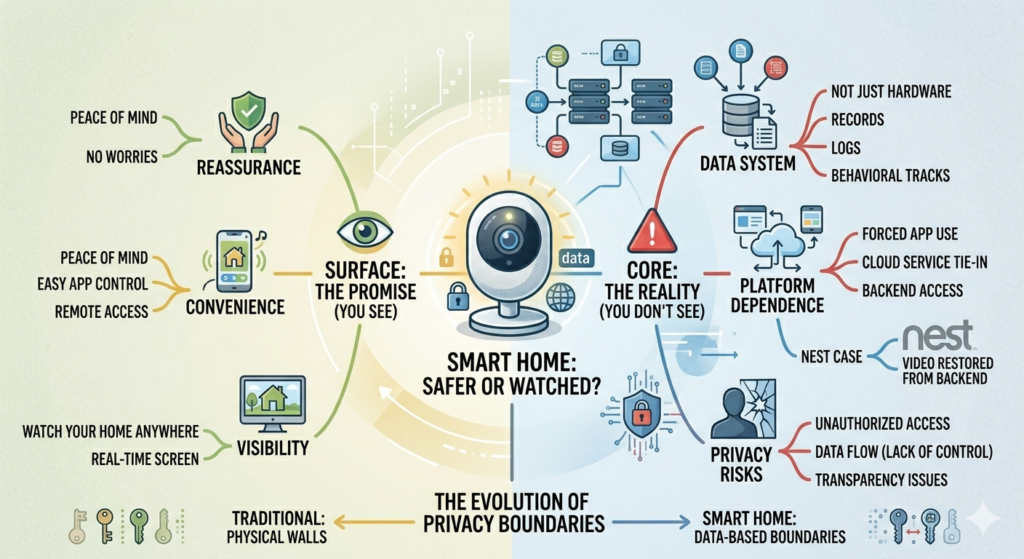
Figure 6. The blog mindmap is generated by Gemini.
We recognise that smart homes are indeed very practical and generally convenient, and they can offer people a greater sense of security, particularly when they are away from home. However, in today’s digital age, we should be mindful of protecting our privacy.
The more grim reality is that although smart home can bring a strong sense of control, it often limits users’ actual control over the data generated in their home. A person may be able to check the home situation at work, but it is still unclear how long the video clip can be saved, what exactly the backend system stores, and how much access the company has in addition to the content displayed by the application.
Smart home promises to bring a sense of control. But often, they only provide the illusion of control.
This is exactly why they should be included in the discussion of digital privacy. The biggest problem is not only that the device may be hacked, but also that ordinary family life is being continuously transformed into data by the system that users only partially understand. If privacy should still be guaranteed at home, users need more than appeasement and vague consent. They need real transparency about what the device collects, where the data flows, how long it will be stored, and who has access to the data.
What can you do?
Although privacy concerns surrounding smart homes are a systemic issue, as users we can still take practical steps to minimise the risks. The video below explains in detail how to carry out a ‘smart home permissions audit’ to protect your digital footprint.
References
Buil-Gil, D., Kemp, S., Kuenzel, S., Coventry, L., Zakhary, S., Tilley, D., & Nicholson, J. (2023). The digital harms of smart home devices: A systematic literature review. Computers in Human Behavior, 145, Article 107770. https://doi.org/10.1016/j.chb.2023.107770
Flew, T. (2021). Regulating platforms. Polity, pp. 72-79.
Humphry, J., & Chesher, C. (2021). Visibility and security in the smart home. Convergence: The International Journal of Research into New Media Technologies, 27(5), 1170–1188. https://doi.org/10.1177/13548565211030073
Orlowski, A., & Loh, W. (2025). Data autonomy and privacy in the smart home: The case for a privacy smart home meta-assistant. AI & Society, 40(6), 4171–4184. https://link.springer.com/article/10.1007/s00146-025-02182-4
Reuters. (2026, February 12). Guthrie doorbell video delayed by difficult data recovery, but privacy advocates still worry. Reuters. https://www.reuters.com/world/guthrie-doorbell-video-delayed-by-difficult-data-recovery-privacy-advocates-2026-02-12/
Suzor, N. P. (2019). Lawless: The secret rules that govern our digital lives. Cambridge University Press.https://doi.org/10.1017/9781108666428


Be the first to comment